
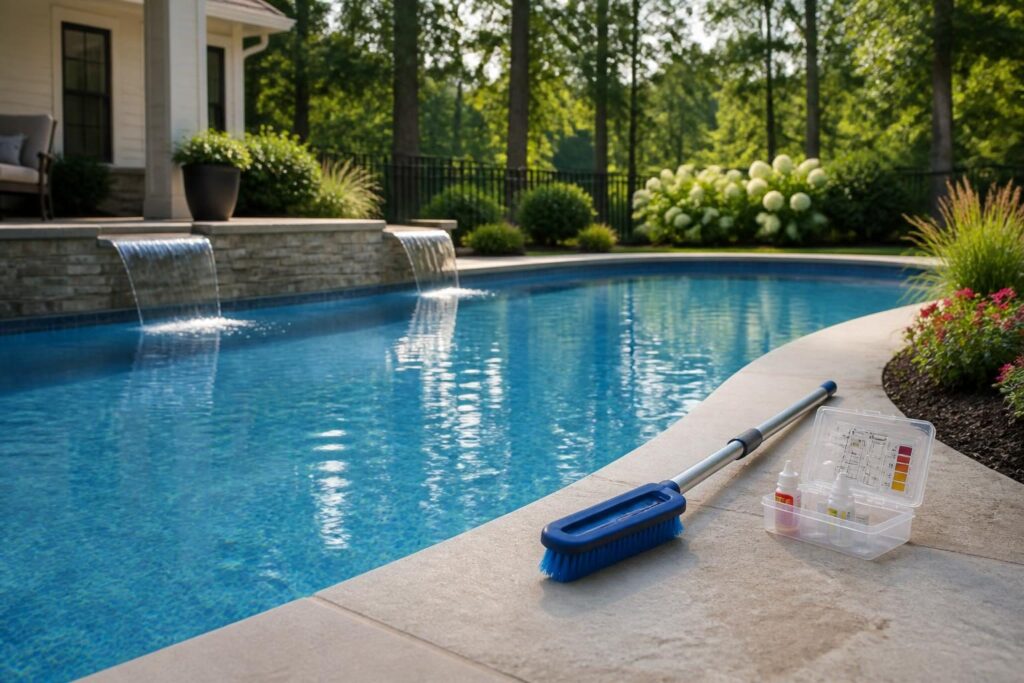
A newly resurfaced pool needs a deliberate start-up period. Pool surface startup care after resurfacing helps the finish cure evenly, limits unwanted deposits, and gives you a clear record of early water conditions. The right routine depends on the finish, products, weather, water source, and instructions from the resurfacing contractor or finish manufacturer.

Plaster, quartz, pebble, aggregate, and other finishes can have different requirements. Do not treat a general checklist as a substitute for the written start-up procedure supplied for your pool. If instructions conflict, pause and ask the responsible pool professional to explain which direction applies to your specific surface.
Before filling: collect the start-up instructions
The early care period begins before water enters the pool. Ask for a written handover packet that identifies the surface product, approved start-up method, first brushing instructions, testing schedule, chemical restrictions, and any limits on swimming or equipment use.
Some finishes use a traditional start-up approach. Others use a procedure designed to reduce dust or manage early water chemistry in a different way. The product name matters because the surface may react to pH, alkalinity, calcium, sanitizer, metals, or cleaning methods while it cures.
Keep these records together
- The finish name, color, texture, and installation date.
- The contractor’s written start-up instructions.
- Product labels and safety data for chemicals used during the process.
- Water source information, including whether the pool was filled from a municipal supply, well, or delivered water.
- Photos of the empty finish, fittings, steps, drains, and waterline before filling.
- Every test result, chemical addition, brushing session, equipment change, and unusual observation.
For background on finish differences, see our guide to comparing pool surface finishes for maintenance. The goal is not to choose a treatment from a blog post. It is to understand why the written instructions for your finish deserve close attention.
Pool surface startup care after resurfacing: manage circulation first
Circulation moves water through the pool, filter, and return fittings. It also distributes chemicals and helps prevent stagnant areas. During start-up, follow the supplied pump and filtration schedule rather than assuming your normal seasonal settings are appropriate.
Confirm that water reaches the expected level before operating equipment. Check that valves are in the correct positions and that the pump is not running dry. If the pump loses prime, makes an unusual noise, shows an error, or fails to produce normal return flow, stop and contact a qualified pool professional.
Do not change several settings at once. Record the original schedule, the change you made, and the reason for it. This simple habit can help a service professional understand what happened if water clarity, pressure, or circulation changes.
Circulation questions to ask
- When should the pump begin running after filling?
- How long should filtration operate during the finish’s start-up period?
- Should the heater, cleaner, salt system, or automation features remain off?
- When should the filter be checked or cleaned?
- What pressure, flow, or alarm changes should prompt a service call?
Equipment settings can vary by system. Use the manuals and handover instructions for your pump, filter, valves, and controls. Our pool equipment start-up checklist can help you organize those questions.
Test water carefully and record trends
New surface materials can affect water balance during the first weeks. Water chemistry means the measurable condition of the water, including pH, alkalinity, sanitizer, calcium hardness, and other factors relevant to the finish and local water supply.
Test as often as the written procedure requires. Use a suitable test method, follow its instructions, and record the time of each reading. A single result is less useful than a trend showing how conditions change after filling, circulation, brushing, rain, or a chemical adjustment.
The Centers for Disease Control and Prevention provides general information about residential pool water treatment and testing, including chlorine and pH. Read its home pool water treatment and testing guidance, then compare it with the finish-specific instructions for your pool.
Use a simple water log
| Date and time | Test results | Action taken | Observation |
|---|---|---|---|
| Record each reading | Write the values and test method | Note product and amount only as directed | Record cloudiness, dust, stains, or equipment changes |
Avoid guessing at chemical doses. Never combine products unless the label and a qualified professional confirm that the use is appropriate. Store chemicals securely, keep them in original labeled containers, and follow each product’s handling instructions.
Brush the surface using the approved method
Brushing can remove loose material and help keep early deposits from settling. However, the correct brush type, frequency, direction, and duration depend on the finish and the manufacturer’s procedure.
Use only the brush recommended for the surface. A tool that suits one finish may damage another. Ask whether the waterline, steps, benches, walls, floor, and fittings should receive the same treatment.
Brush methodically. Work in sections and record where you started. Pay attention to corners, transitions, steps, and areas with limited circulation. Do not scrape, pressure-wash, drain, or use abrasive tools unless the responsible professional specifically directs you to do so.
Watch the brush and the water
- Check the brush for damaged or missing parts before use.
- Notice whether brushing produces expected dust or unusual flakes.
- Look for persistent discoloration, rough patches, streaks, or exposed areas.
- Photograph changes with the date and location.
- Report unusual conditions before trying an aggressive cleaning method.
Do not interpret every color variation as a failure. Early finishes may look different while wet, while curing, or while fine material enters the filter. A qualified professional can evaluate the surface in context.
Control cleaning, swimming, and outside contamination
During start-up, keep leaves, soil, grass clippings, fertilizer, and other debris out of the water. North Carolina weather can bring pollen, thunderstorms, heat, and rapid changes in water conditions. A clean surrounding area reduces the work required from the filter and limits extra chemical demand.
Ask when swimming is allowed. The answer may depend on the finish, water chemistry, equipment operation, and the instructions provided for the project. Do not allow swimmers into the pool simply because it appears full or clear.
Likewise, confirm when an automatic cleaner, robotic vacuum, heater, salt chlorine generator, or water-feature pump may be used. Some equipment may need to remain off while the surface cures or while start-up chemistry is being managed.
Keep pets, toys, construction materials, and loose landscaping material away from the water. If rain causes runoff, unusual dilution, or debris entry, follow the project instructions before making adjustments. Our guide to pool maintenance after storms covers broader inspection considerations.
Know when to stop and ask for help
Call the resurfacing contractor or a qualified pool service professional when written instructions are missing, unclear, or contradictory. Early questions are easier to resolve when you have dated photos and test records.
Ask for help promptly if the pump will not circulate, the filter pressure changes sharply, water becomes persistently cloudy, a chemical reaction is suspected, or the surface develops an unusual pattern. Do not drain a newly resurfaced pool without professional direction. Water pressure, groundwater, weather, and the pool structure can make draining a site-specific decision.
North Carolina homeowners should also account for local conditions. Water chemistry, equipment, property drainage, adopted requirements, and service practices can vary by location. This article does not replace advice from a licensed contractor, water-care professional, electrician, engineer, or local authority.
A practical handover checklist
- Obtain the finish name and manufacturer’s written start-up procedure.
- Confirm filling, circulation, filtration, brushing, testing, and cleaning steps.
- Ask when swimming and each accessory may begin operating.
- Record the source and date of the fill water.
- Test and log water conditions according to the supplied schedule.
- Use only approved tools and products.
- Photograph unusual changes before attempting repairs or adjustments.
- Save invoices, labels, test results, manuals, and service notes.
Good pool surface startup care after resurfacing is steady rather than aggressive. Follow the finish-specific procedure, keep circulation and testing records, brush as directed, and ask questions before making a major change. Consult the resurfacing contractor, a licensed pool professional, electrician, engineer, water-treatment specialist, or local inspections department when the issue involves their area of expertise.
For a complete start-up record, use pool surface startup care after resurfacing as a daily reminder during the initial period. Build a Pool in North Carolina provides homeowner education, but your project instructions and qualified professionals should guide decisions specific to the finish and property.