
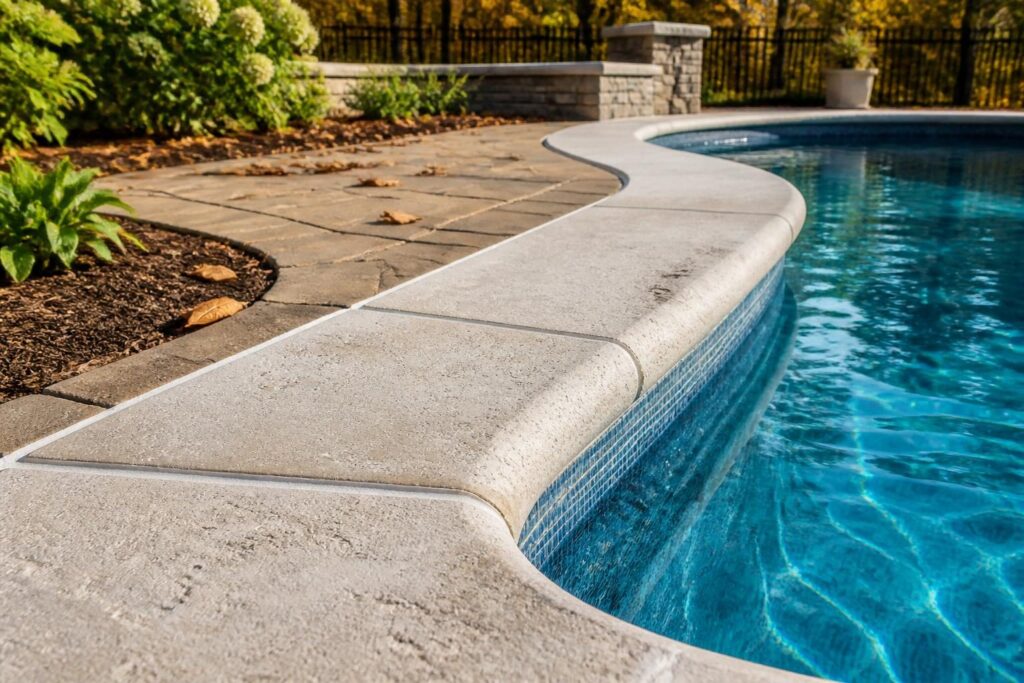
Pool coping joint maintenance North Carolina homeowners can manage starts with simple observation. Coping is the edge material installed around a pool, while a joint is the planned gap between coping pieces or between the coping and nearby deck. Sealant fills some gaps and helps accommodate movement, moisture, and debris.

These details deserve attention because a pool surround experiences sun, rain, temperature changes, cleaning, and ordinary use. A joint that looks small may still separate materials that move differently. The goal is not to diagnose a structural problem from a photograph. Instead, build a clear record and arrange the right evaluation when conditions change.
Why coping joints and sealants need regular attention
Coping can use concrete, brick, stone, or manufactured units. Each material responds differently to heat, moisture, settlement, and cleaning. The adjacent deck may also expand or contract at a different rate. A flexible sealant joint can help manage that interface, but sealant cannot replace proper drainage, stable construction, or a sound substrate.
North Carolina weather creates several inspection conditions. Hot summer surfaces may become very warm, while winter cold can reduce sealant flexibility. Heavy rain can expose low spots and runoff paths. Spring debris and pollen can collect in narrow openings, making early changes harder to see.
Review installation documents before making assumptions. Look for the coping material, joint locations, sealant product information, color, installation notes, and care instructions. If records are missing, ask the original pool contractor or a qualified repair professional what information they can confirm. Good pool coping joint maintenance North Carolina planning starts with knowing the original materials.
Pool coping joint maintenance North Carolina inspection points
A short visual inspection works best when you follow the same route each time. Walk around the pool when the area is dry and reasonably clean. Do not stand on loose coping or probe a joint with a sharp tool. Photograph anything unusual from several angles, including one wider view that shows its location.
Check the coping-to-deck interface
- Look for gaps that have widened, narrowed, or changed shape.
- Note sealant that is split, pulled away, brittle, bubbled, or missing.
- Watch for a visible height difference between coping and adjacent deck.
- Record loose, rocking, chipped, or displaced coping pieces.
- Check whether water, soil, mulch, or organic debris collects beside the joint.
A joint that changes appearance may reflect normal movement, surface wear, settlement, drainage conditions, or another issue. The visual clue alone does not identify the cause. Record the change rather than trying to force materials back into position.
Inspect corners, steps, and transitions
Corners and curved sections often deserve extra attention because joint lines change direction there. Also inspect steps, raised walls, spillways, skimmer areas, ladders, diving features, and places where different materials meet. These transitions can collect water and debris or show movement more clearly than a long, straight run.
Compare similar locations around the pool. One isolated defect may need a different response from a pattern that appears around much of the perimeter. A qualified professional can help determine whether the concern involves sealant replacement, coping stability, drainage, deck movement, or another component.
Seasonal changes and sealant movement
Seasonal checks should focus on changes, not just a single snapshot. Take baseline photographs after installation or a completed repair. Use the same viewpoints and, where practical, note the date, recent weather, and whether the surface was wet or dry.
In spring, remove loose debris and inspect joints before outdoor activity increases. Pollen can hide fine gaps and make sealant look uneven. A gentle surface cleaning may improve visibility, but use only cleaning methods approved for the coping and adjacent finish.
During summer, inspect after strong heat and thunderstorms. Look for standing water, washed-in soil, erosion, or new staining near joints. Avoid assuming that every dark line is a leak. Wet debris, algae, rust, sealant discoloration, and mineral deposits can have different causes.
In autumn, leaves and organic matter can hold moisture against joints. Clear debris without cutting, scraping, or tearing the sealant. Before colder weather, record open gaps, peeling edges, or coping movement that may need professional review.
Winter checks require caution. Wet surfaces may be slippery, and cold sealant can feel less flexible. Do not apply a repair product unless its suitability, surface preparation, weather limits, and compatibility are confirmed by product instructions or a qualified professional.
Water intrusion clues around pool coping
Water-related clues can appear on the deck, at the coping edge, or below nearby surfaces. None proves the source by itself. Pool water, rain, irrigation, roof runoff, condensation, cleaning water, and groundwater may follow different paths.
- Persistent dampness beside a joint after surrounding areas have dried.
- Efflorescence, a pale mineral deposit left as water evaporates.
- Discoloration, softened soil, or recurring organic growth near one location.
- Erosion or a small depression that directs water toward the pool edge.
- Interior or exterior staining that appears after rain or pool use.
- A change in coping stability, joint width, or adjacent surface level.
Track when each clue appears. Note whether it follows rain, irrigation, pool use, cleaning, or a change in water level. A simple log can help a professional compare timing with drainage and plumbing information. Avoid opening the joint or removing coping to search for a source without appropriate advice.
Drainage deserves separate attention. Keep downspouts, deck drains, and runoff paths from concentrating water at the coping. For related guidance, review pool deck drainage maintenance and the practical considerations for directing pool drainage away from house structures.
Document conditions before repairs
Good records help separate an old condition from a new one. They also give a repair professional useful context before sealant removal or surface cleaning. A focused pool coping joint maintenance North Carolina record can make later comparisons easier.
Build a focused inspection record
- Assign each concern a location, such as “north side, beside step three.”
- Record the date, weather, recent rain, irrigation, and cleaning activity.
- Take wide, medium, and close photographs from consistent viewpoints.
- Describe the appearance without guessing at the cause.
- Note whether the area feels loose, stays damp, or changes after drying.
- Save invoices, product labels, installation records, and prior repair notes.
A maintenance log can keep these observations with water-care and equipment records. The residential pool maintenance log template offers a useful structure for dates, conditions, service, and unresolved questions.
Keep original photographs when you edit copies for easier sharing. Label files with the date and location. If a contractor or specialist visits, record the date, areas reviewed, recommendations, product information, and follow-up questions. Ask for repair details in writing before work starts.
Questions to ask before sealant or coping repairs
Repair scope depends on the material, joint design, substrate, drainage, and extent of movement. Ask clear questions before approving work:
- What condition does the proposed work address, and what observations support that conclusion?
- Will the crew clean, prepare, and dry the joint before installing new sealant?
- Is the proposed product compatible with the existing coping, deck, and prior sealant?
- How will the repair protect the joint’s intended movement?
- Could drainage or settlement contribute to the condition?
- Which areas will the crew repair, and how will they mark the boundaries?
- What weather and curing conditions does the product require?
- What maintenance or inspection steps should follow the repair?
Do not rely on color matching alone. A visually neat bead may still fail if the joint remains damp or contaminated, or if the installer uses poor preparation or an incompatible material. Conversely, a weathered appearance does not automatically mean the coping is unstable.
When to pause and request professional evaluation
Arrange an evaluation when coping rocks under normal contact, several pieces shift, a gap changes quickly, water intrusion persists, or the deck and coping show a significant level difference. Also seek help when staining accompanies erosion, settlement, repeated dampness, or damage near a pool wall or structure.
Use caution around electrical equipment, pool lighting, buried plumbing, and structural features. Do not cut into a deck, remove coping, redirect drainage, or perform electrical work based only on general online information. A licensed pool contractor, qualified repair professional, engineer, surveyor, electrician, or drainage specialist may fit the observed condition.
North Carolina requirements can vary by jurisdiction, adopted codes, property conditions, and project scope. For code and inspection questions, consult your local inspections department and review current state materials from the North Carolina Office of State Fire Marshal. Build a Pool in North Carolina provides homeowner education, not a substitute for site-specific professional advice.
Routine observation, seasonal photographs, and careful records make coping maintenance more manageable. When a joint or sealant condition changes, document it first, control nearby water where appropriate, and obtain a qualified assessment before choosing a repair.