
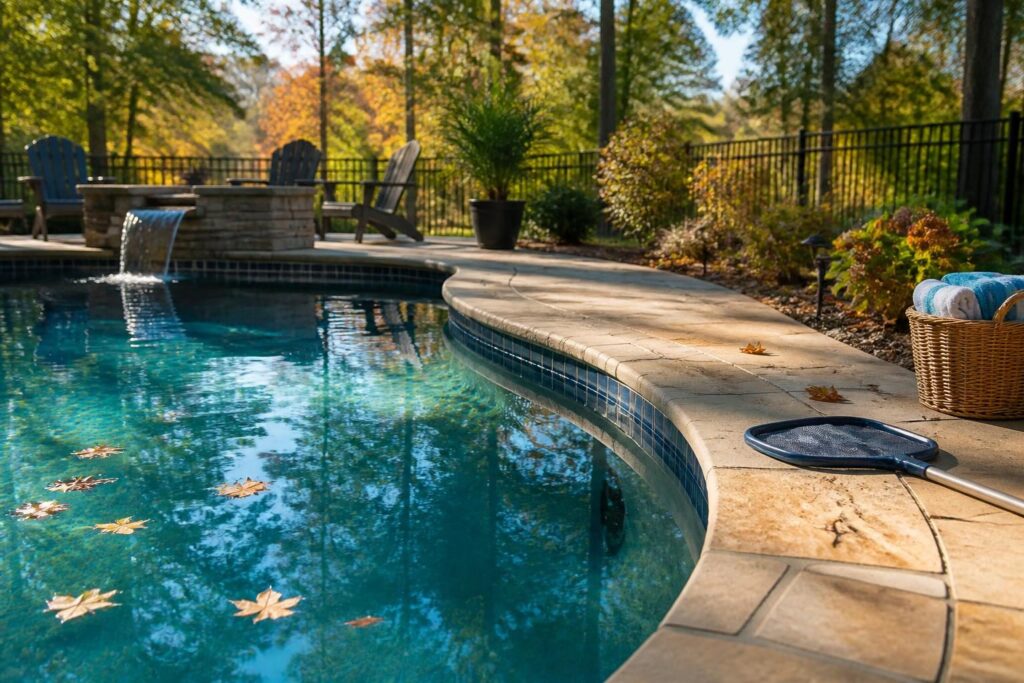
Pool tile and coping maintenance North Carolina homeowners perform throughout the year can reveal small changes before they become difficult to evaluate. Tile lines collect oils and minerals. Grout can discolor or loosen. Coping joints may open as materials move with heat, moisture, and seasonal temperature changes.
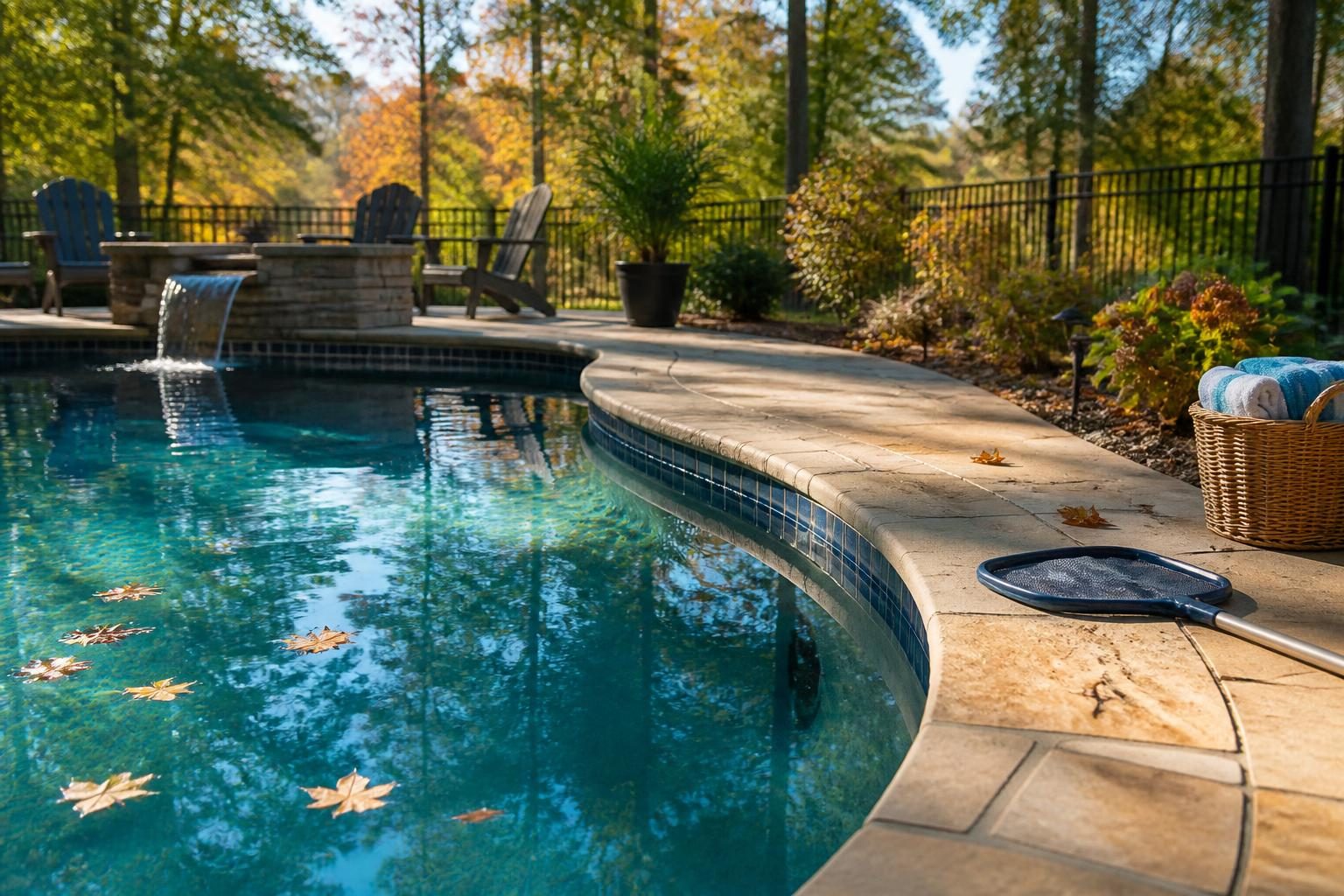
A simple inspection routine helps you separate routine cleaning from conditions that need professional review. The goal is not to diagnose a structural, waterproofing, or code issue yourself. Instead, look, record, clean carefully, and ask the right qualified person when a change continues or worsens. Consistent pool tile and coping maintenance North Carolina homeowners can document also makes seasonal comparisons easier.
Why seasonal changes affect pool tile and coping
North Carolina pools experience hot summers, rain, humidity, pollen, falling leaves, and occasional freezing weather. Conditions also differ across the mountains, Piedmont, and coastal plain. Your pool may face different risks based on its materials, drainage, water chemistry, shade, landscaping, and exposure.
Tile is the finished material installed along part of the pool wall or waterline. Grout fills the narrow spaces between tiles. Coping is the edge material around the pool shell. It may be stone, brick, concrete, or another product. A joint is the planned gap or seal between adjacent materials.
These parts do not all respond to weather in the same way. A dark coping surface may become very hot in direct sun. A shaded edge may stay damp longer. Rain can carry soil and organic debris onto the deck. Hard water or unbalanced water can leave deposits near the waterline.
For background on material choices, see the guide to pool coping and decking materials for North Carolina weather. Material information can help you identify what you are looking at, but it does not replace the manufacturer’s care instructions.
Build a monthly inspection routine
Choose a regular day each month when the pool is clean and the water level is typical. Walk the entire perimeter slowly. Use the same route each time so you do not overlook a corner, step, return fitting, or raised section. This repeatable approach supports pool tile and coping maintenance North Carolina routines without requiring homeowners to diagnose defects.
- Look for cracked, chipped, hollow-sounding, loose, or displaced tile.
- Check grout for missing sections, dark staining, powdery areas, or open lines.
- Inspect coping for cracks, rocking pieces, sharp edges, and changes in alignment.
- Examine joints between coping pieces and between coping and the deck.
- Check whether staining appears limited to the surface or follows a growing line.
- Look for waterline buildup, scale, oily film, pollen, and plant residue.
- Note changes near steps, corners, skimmers, returns, and other openings.
- Photograph any change from the same angle and record the date.
Do not pry at tile, lift coping, drill into a joint, or use an aggressive acid cleaner without product-specific guidance. A cleaning attempt can alter evidence or damage a finish. Keep photos, notes, receipts, product labels, and service records in one project file.
Use a simple condition record
A useful record includes the location, material if known, visible symptom, approximate size, date first noticed, recent cleaning, water observations, and whether the condition changed. Add a photo that includes a nearby fixed feature for scale.
Record patterns rather than conclusions. “Open line at the west corner, visible on two dates” is more useful than “foundation failure.” If water movement, soil settlement, or a deck problem may be involved, ask an appropriate specialist to assess the condition.
Manage waterline buildup and stains carefully
Waterline buildup often appears as a dull ring, white crust, gray film, or brownish mark. The cause may involve minerals, body oils, sunscreen, dust, leaves, metal, or water chemistry. A visible mark does not identify the cause by itself.
Start with the least aggressive method allowed by the tile and grout manufacturer. Remove loose debris with a soft brush. Test any cleaner on a small, inconspicuous area. Follow label directions, protect nearby surfaces, and never mix pool chemicals or household cleaners.
Water chemistry also affects deposits and surface appearance. Keep a log of test results, adjustments, rainfall, and unusual water conditions. The CDC guidance on home pool water treatment and testing provides general information about testing, chlorine, and pH.
If buildup returns quickly, spreads below the usual waterline, or resists safe cleaning, pause repeated scrubbing. Ask a pool water-care professional whether testing may help identify the pattern. Ask a tile or pool contractor to evaluate persistent surface damage or loose materials.
Check coping joints and signs of movement
Coping joints are designed locations for movement or separation between pieces. Their appearance depends on the material and installation method. A narrow, consistent joint may be normal. A joint that changes shape, opens suddenly, or allows a coping piece to move deserves closer attention.
During each inspection, compare opposite sides and nearby sections. Look for a change in height, a new gap, a shifted corner, or a joint that no longer resembles adjacent joints. Check whether the deck surface beside the coping has settled, cracked, or begun directing water toward the pool edge.
Movement can have several possible causes. Weather exposure, moisture, settlement, drainage, material expansion, installation details, or nearby work may contribute. Homeowners should not assume one cause from a visual check.
- Do not walk on a loose or rocking coping piece.
- Keep children away from sharp or displaced edges.
- Do not fill a moving joint before documenting it.
- Ask whether the repair requires matching sealant, mortar, grout, or another system.
- Request written care instructions for any repair material used.
For related deck and edge observations, review pool deck drainage maintenance in North Carolina. Drainage changes can matter because water that collects beside an edge may affect surrounding materials and soils.
Adjust the routine for each North Carolina season
Spring: remove winter residue
Spring inspections should focus on pollen, leaves, rain, and changes that appeared after colder weather. Clean gently after removing debris. Inspect every joint and corner before outdoor furniture, planters, or decorations hide the edge.
Compare spring photos with records from the previous fall. Look for longer cracks, new discoloration, loose tile, or coping movement. Check nearby downspouts and planting areas as well. Irrigation overspray and soil splash can add staining and moisture to the pool edge.
Summer: watch heat, use, and water chemistry
Summer brings intense sun, frequent swimming, sunscreen, oils, and more regular cleaning. Inspect the waterline after heavy use and before deposits become difficult to remove. Pay attention to coping surfaces that become unusually hot or uncomfortable to touch.
Keep furniture, toys, and cleaning tools from striking the edge. Trim plants only as needed and avoid placing containers where they trap moisture against coping or block inspection access. A consistent water-care routine supports cleaner tile, but it does not correct damaged grout or moving materials.
Fall: clear organic debris and prepare records
Falling leaves and decomposing plant material can stain surfaces and hide joint changes. Remove debris regularly with tools suited to the finish. Do not drag heavy equipment across coping or use metal tools on delicate tile.
Before colder weather, photograph the full perimeter and note any open joints, chips, or loose sections. If your pool needs seasonal equipment or plumbing preparation, use a qualified professional when the work exceeds your training. The North Carolina pool winterization guide offers broader questions for reviewing cold-weather preparation.
Winter: monitor freeze-related concerns
Freezing weather can affect water trapped in cracks, porous materials, joints, and exposed components. Regional weather varies, so do not assume one winter routine suits every property. Follow the pool, tile, coping, and equipment manufacturers’ instructions.
After a freeze or hard temperature swing, inspect for new chips, lifted edges, open joints, and changes around steps or fittings. Avoid rapid temperature changes from unapproved cleaning or de-icing products. Never use salt, ice melt, or a heating method on pool materials unless the product manufacturer approves it.
Know when a professional review is appropriate
Some conditions call for prompt review rather than another cleaning attempt. Contact a qualified pool contractor, tile specialist, masonry professional, or engineer based on the suspected issue. Ask the professional to explain what they observed, what they cannot determine visually, and what documentation would support the recommendation.
- A coping piece rocks, rises, sinks, or has a sharp broken edge.
- Tile becomes loose, repeats a crack, or falls into the pool.
- A joint opens rapidly or separates across several connected areas.
- Cracking appears with deck settlement, drainage changes, or soil movement.
- Water enters a joint or damaged area in a way you cannot explain.
- Staining continues despite safe cleaning and normal water-care records.
- Freeze-related damage appears near plumbing openings or structural transitions.
Keep the area safe while waiting. Mark the location on a sketch, take clear photos, and avoid cosmetic repairs that could hide the original condition. If electrical equipment, drainage, structural movement, or water intrusion is involved, use the appropriate licensed or qualified specialist.
A practical homeowner checklist
Use this short routine after cleaning and after major weather changes:
- Walk the entire edge and inspect tile, grout, coping, and joints.
- Compare the condition with dated photographs.
- Remove loose debris using finish-safe tools.
- Test cleaners in a small area before broader use.
- Log stains, buildup, cracks, gaps, movement, and water observations.
- Check drainage and irrigation near the pool edge.
- Review manufacturer instructions before seasonal treatment.
- Escalate persistent, spreading, loose, sharp, or moving conditions.
Build a Pool in North Carolina encourages homeowners to treat maintenance records as part of responsible ownership. This careful recordkeeping strengthens pool tile and coping maintenance North Carolina by making seasonal comparisons easier without turning every mark into an emergency.
When a condition involves permits, adopted requirements, electrical systems, structural movement, drainage design, or repair methods, consult the local inspections department, a licensed pool contractor, electrician, engineer, surveyor, masonry or tile specialist, or other qualified professional. North Carolina requirements and suitable repair methods can vary by jurisdiction, property conditions, materials, and project scope.