
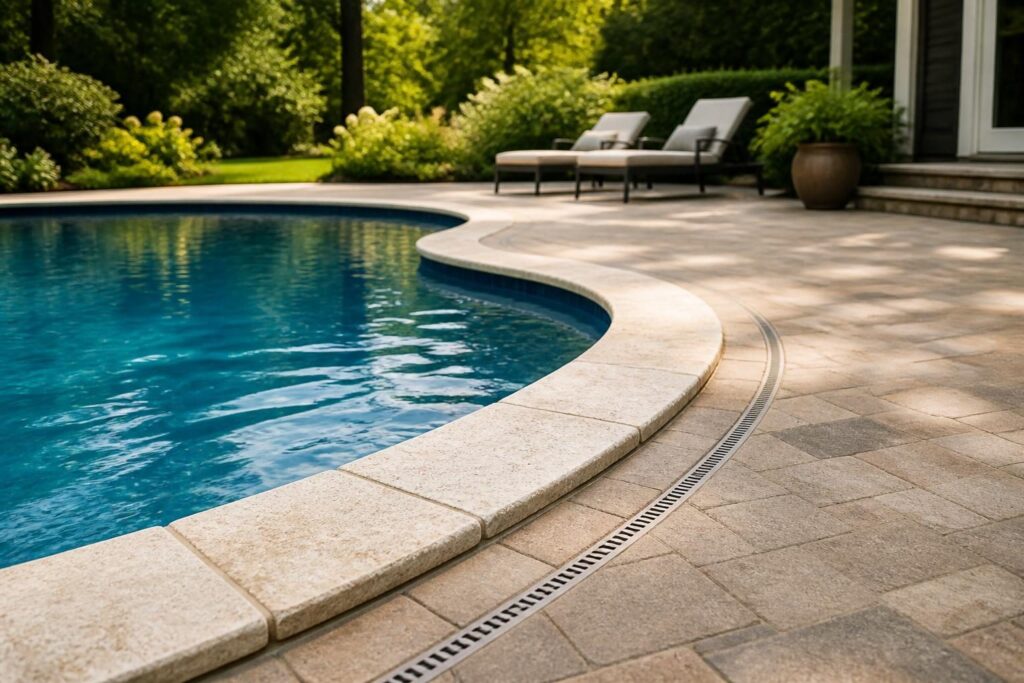
Choosing materials for pool decking North Carolina weather can handle requires more than matching a color to your house. A pool deck faces hot sun, rain, humidity, organic debris, cleaning chemicals, and occasional freezing conditions. Coping, the material at the pool edge, also has a safety and water-management role.
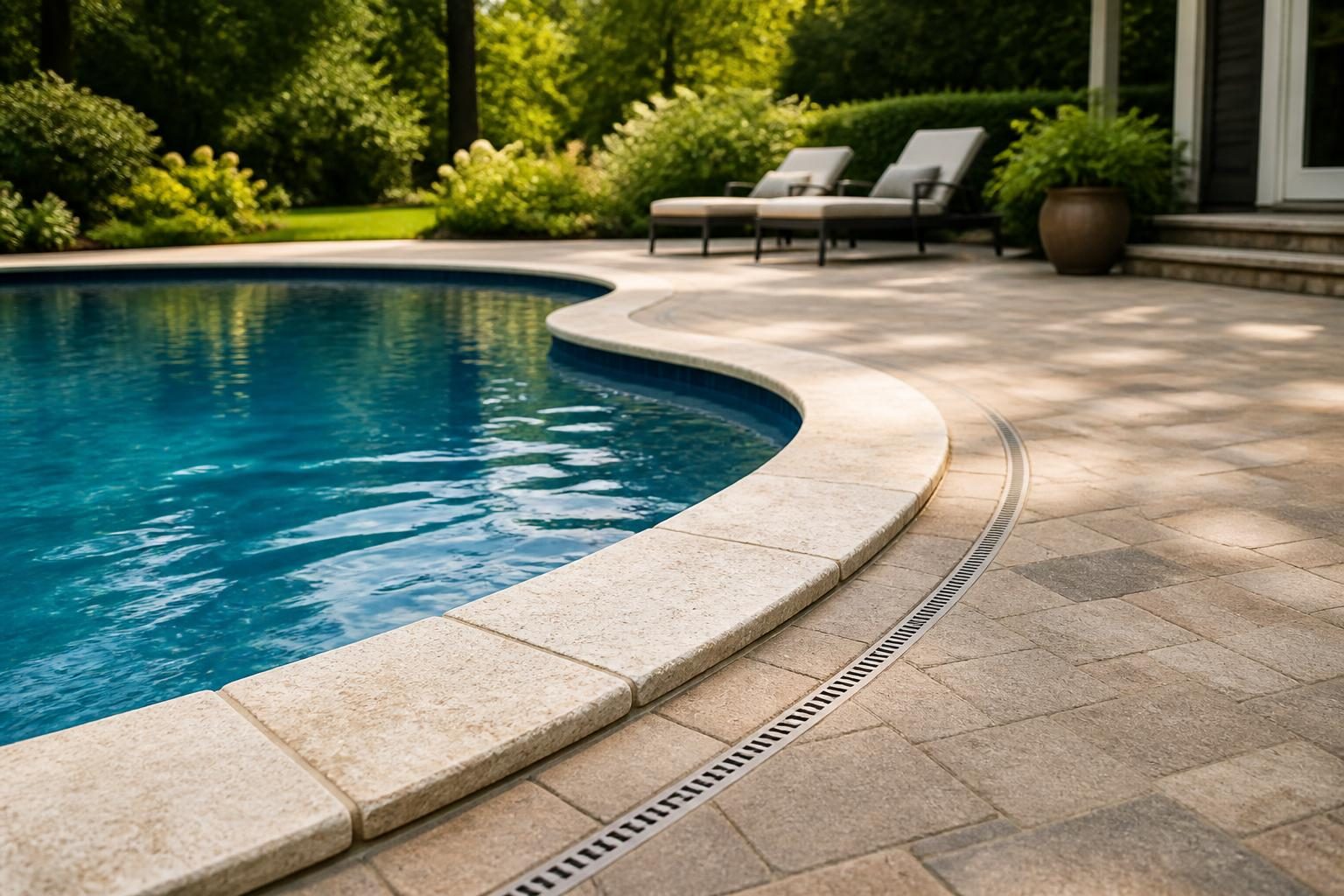
Material samples help, but they do not answer every practical question. Homeowners should compare surface grip, heat retention, drainage, movement, upkeep, appearance, and future repair options. The right choice depends on the site, the pool structure, the surrounding grade, and how your household will use the space.
When comparing pool decking North Carolina weather performance, consider the complete surface assembly rather than the finish alone. The base, joints, edges, drainage, and nearby landscaping can affect long-term results. This whole-system view is central to choosing pool decking North Carolina weather conditions can challenge.
Start with the pool edge and the deck as one system
Coping creates the transition between the pool shell and the surrounding deck. It may use concrete, natural stone, brick, porcelain, or another approved finish. The deck extends beyond that edge and provides walking, seating, furniture, and access around the pool.
Review these components together. A coping piece can shed water toward the deck. The deck then needs a planned slope, surface texture, and collection or discharge method. If the materials move differently, the joints between them need careful detailing.
Ask your designer or pool contractor to show the edge condition in drawings or samples. Confirm how the coping receives support, where joints occur, how water leaves the area, and which surfaces the contractor can replace if damage develops.
- Where will rainwater flow during a heavy storm?
- How will the deck meet doors, steps, retaining walls, and planting beds?
- Which joints function as intentional movement joints rather than cracks to be filled?
- Can a damaged section be removed without disturbing the pool shell?
Compare common pool deck and coping materials
Poured or stamped concrete
Concrete offers broad design flexibility. Installers can broom-finish, color, texture, or pattern it. A simple textured finish may prove easier to repair visually than a complex stamped pattern, especially when a small area needs replacement.
Concrete can become hot in direct sun, depending on its color, location, and surface characteristics. It may also crack or move when the base, drainage, joints, or surrounding soil do not perform as intended. Ask how the contractor plans joints, reinforcement, base preparation, and water runoff. Those details matter as much as the surface pattern.
Pavers and brick
Concrete pavers and brick can provide a more modular surface. Installers may lift and reset individual units when access is needed for a buried line or when localized movement occurs. That repairability can prove valuable over a long ownership period.
However, pavers depend on a stable, well-prepared base. Uneven settlement can create trip points or low areas that hold water. Joint material and edge restraint also affect movement and maintenance. Confirm whether the proposed product suits wet-area use and whether replacement units will remain available.
Natural stone
Natural stone offers varied color and texture, but performance differs by stone type and finish. Some surfaces can become slippery when wet or polished. Others may absorb water, show mineral deposits, or need periodic cleaning and sealing.
Color variation adds appeal, yet a small repair may not match the original installation. Keep extra pieces, product information, and installation records. Request a wet sample rather than judging only a dry showroom sample.
Porcelain and manufactured tile
Exterior-rated porcelain can provide consistent color and a broad range of patterns. Its suitability depends on the specific product, installation method, edge details, and substrate. Do not assume that a product designed for indoor use suits a pool surround.
Tile can chip, crack, or become difficult to replace if the installation lacks proper support. Ask how the material handles freeze-thaw exposure, what slip-resistance information the manufacturer provides, and whether the installer will retain spare pieces.
Evaluate slip resistance and summer heat
Wet feet, sunscreen, leaves, and algae can change how a surface feels underfoot. A visually rough surface does not automatically provide safe footing, and a smooth surface does not automatically prove unsuitable. Review the product’s intended use and available slip-resistance information with the designer or supplier.
Consider the entire route people will walk. Steps, coping, shallow ledges, outdoor showers, and areas near the pool may stay wet longer than the main deck. A consistent transition can reduce surprises at the edge.
Heat also varies with color, shade, material density, and exposure. Dark finishes often feel warmer in full sun, while lighter finishes may show dirt, leaves, or splash marks more clearly. Visit a local installation if possible, or compare samples outdoors at different times.
- Test samples when wet, not only when dry.
- Check bare-foot comfort during sunny conditions.
- Look for sharp edges, uneven joints, and changes in texture.
- Plan shade without directing roof runoff onto the deck.
Pool safety is broader than material selection. For federal consumer-safety guidance about barriers and layers of protection, review Pool Safely safety tips. Local requirements remain controlling, so verify current barrier and access rules with the local inspections department.
Plan for rain, drainage, and freeze-thaw movement
North Carolina weather can bring intense rain as well as long periods of heat and humidity. A beautiful surface will not solve poor grading. Consider the deck, coping, roof drainage, planting areas, and surrounding soil as one water-management plan.
Discuss where water will go after it leaves the deck. Depending on the property, that may involve grading, surface drains, swales, or other measures that qualified professionals design. Do not assume that directing runoff toward a property line, septic area, foundation, or wooded slope is acceptable.
For more planning detail, read pool drainage planning for North Carolina yards. If the project disturbs enough land or affects stormwater patterns, ask the local authority or a qualified site professional which requirements apply. NC DEQ also provides information through its Construction Stormwater Program.
Freeze-thaw exposure occurs when water enters a material or joint, freezes, expands, and later thaws. The risk varies with the material, installation, drainage, joint design, and local conditions. North Carolina does not have one uniform weather experience; mountain, Piedmont, and coastal properties can differ.
Ask specifically how the proposed system accommodates movement. Important details may include flexible joints, perimeter separation, bedding, reinforcement, curing, sealants, and the connection between the deck and pool shell. A qualified contractor or engineer should address site-specific movement concerns.
Homeowners comparing pool decking North Carolina weather performance should give drainage and joint details the same attention as color and texture.
Compare maintenance, color, and repairability
Every outdoor pool surface needs cleaning. The question is how much effort it requires and how noticeable normal wear will be. Textured finishes may collect dirt in their low points. Light colors can reveal leaves and splash marks. Porous materials may need more careful cleaning or sealing.
Sealers can change color, sheen, traction, and maintenance needs. They also wear over time. Ask what the manufacturer recommends, who should apply the product, and what happens if the surface needs cleaning before resealing. Avoid treating a sealer as a substitute for sound drainage or installation.
Color stability deserves a practical discussion. Sun exposure, cleaning products, minerals, and weathering can affect the appearance of different surfaces. Ask for the manufacturer’s care instructions and keep the exact color, batch, model, and finish information.
Homeowners often overlook repairability during design. A poured surface may require a patched or saw-cut area. Pavers may allow more localized access, but matching can change as materials weather. Stone and tile may have natural or manufactured variation.
- Request the cleaning method and approved products in writing.
- Ask whether pressure washing is allowed and at what limits.
- Confirm how cracks, chipped edges, settled units, and failed joints are handled.
- Store spare pieces in a dry, labeled location.
- Photograph the completed pattern and keep layout drawings.
Build a material comparison before selecting finishes
A side-by-side comparison can make a sales presentation more useful. Give each candidate material a rating for your priorities, then record the assumptions behind each rating. Do not compare only the installed appearance.
| Question | What to verify |
|---|---|
| Wet traction | Intended use, surface texture, and available manufacturer information |
| Heat | Outdoor samples, shade conditions, color, and bare-foot comfort |
| Movement | Base, joints, edges, substrate, and freeze-thaw considerations |
| Drainage | Finished slopes, drains, discharge, and nearby structures or septic areas |
| Maintenance | Cleaning, sealing, staining, algae, and approved products |
| Color | Sun exposure, variation, fading, and expected weathering |
| Repairs | Replacement availability, matching, access, and likely repair method |
Put the selected product names, colors, edge profiles, joint details, and responsibilities into the project documents. Changes later can affect appearance, drainage, cost, and schedule. A clear written scope helps everyone compare the finished work with the approved design.
Material availability and weather can affect construction progress. See pool construction timeline factors for related planning issues, including materials, site conditions, and weather.
Use a practical selection checklist
Before approving the finish package, walk through these questions with the appropriate project professionals:
- Is each product rated or intended for the proposed exterior, wet-area use?
- How will the coping meet the pool shell, deck, steps, and expansion joints?
- Where will stormwater go during ordinary rain and unusually heavy rainfall?
- What surface will remain comfortable and reasonably slip-resistant when wet?
- How will the finish look after several seasons of sun, leaves, and cleaning?
- Are spare units, color records, care instructions, and product data included in handover documents?
- Which trades handle the base, drainage, coping, deck, sealing, lighting, and final cleanup?
Keep samples, drawings, approved changes, invoices, product data, photographs, and maintenance instructions together. Records make routine care easier and give a future repair professional useful information.
Make the decision around your property, not a showroom
The best material is not the same for every North Carolina yard. A shaded wooded lot may prioritize debris cleaning and drainage. Sunny patios may make heat and color more important. Sloped sites may require closer review of runoff, retaining elements, and movement.
Homeowners comparing pool decking North Carolina weather demands should judge the complete assembly rather than one sample. Coping, joints, base preparation, grade, drains, and nearby landscaping all influence performance.
Before construction begins, verify current local requirements with the inspections department. Ask a licensed pool contractor about installation details, an electrician about electrical work near the pool, and an engineer, surveyor, or septic professional when site conditions require their expertise. Build a Pool in North Carolina offers homeowner education, but it does not replace site-specific professional advice.