
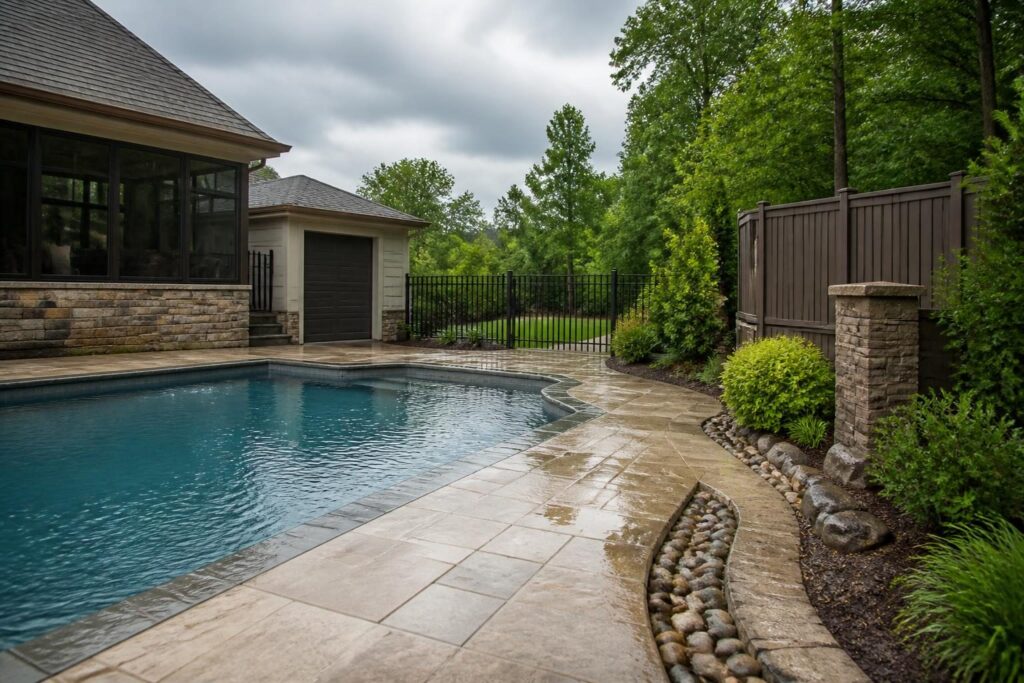
Good pool hurricane preparation North Carolina homeowners can follow starts before the forecast becomes urgent. Hurricanes and tropical storms can bring high winds, intense rain, flooding, power outages, fallen branches, and contaminated runoff. A pool may tolerate some weather, but surrounding equipment, chemicals, drainage paths, fences, and outdoor furniture need separate attention.
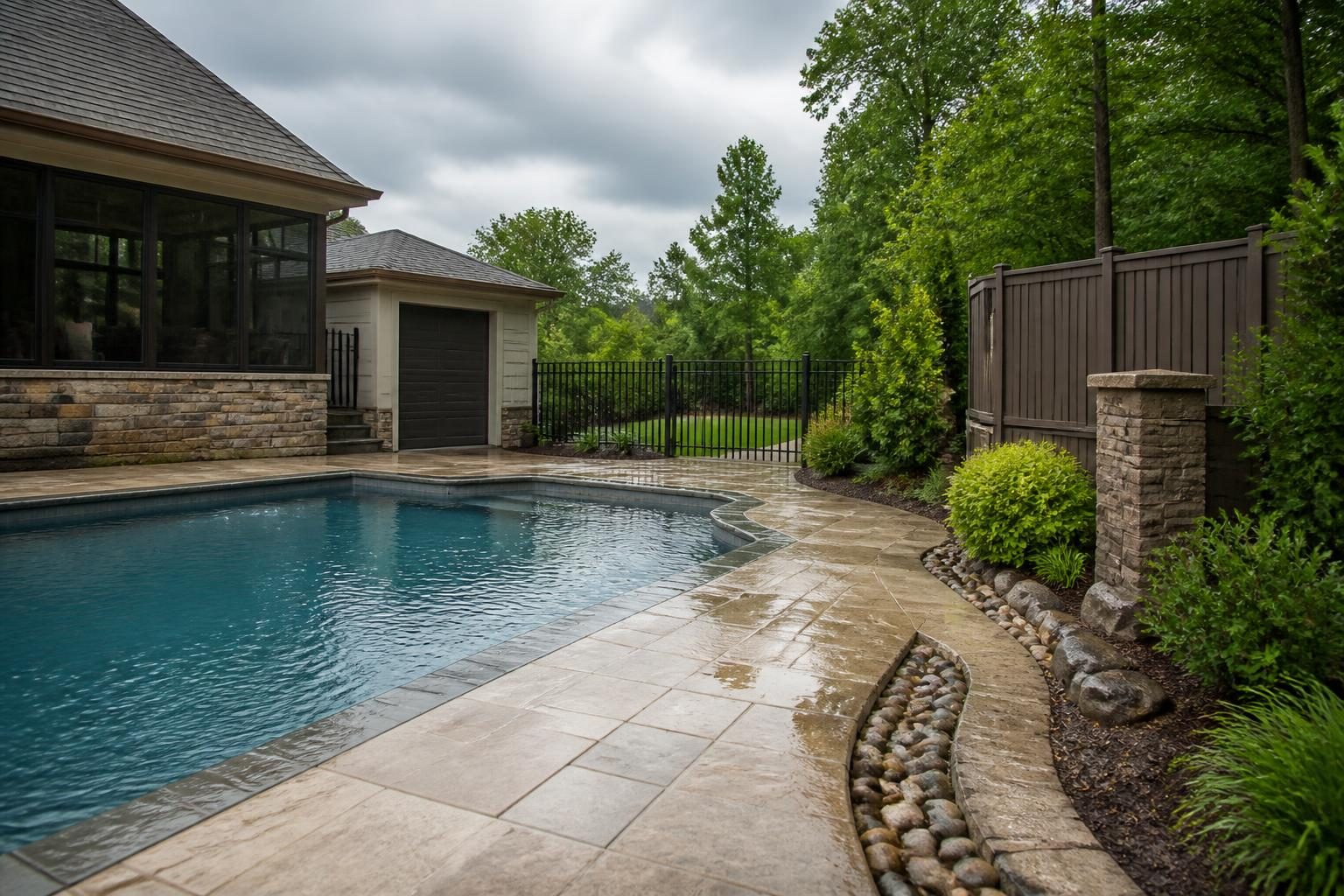
This guide gives you a practical process. It does not replace instructions from your pool contractor, equipment manufacturer, utility, local inspections department, or emergency officials. Conditions vary across North Carolina, so adjust the plan for your property, flood risk, septic system, and pool design.
Begin pool hurricane preparation North Carolina homeowners can repeat
Make a storm checklist while conditions are calm. Keep it with your pool records, and update it after equipment changes or landscaping work. A written plan helps reduce rushed decisions when wind and rain are approaching.
- Record equipment locations, shutoffs, model numbers, and service contacts.
- Photograph the pool, deck, fence, equipment pad, retaining features, and drainage routes.
- Note which items can move indoors and where they will be stored.
- Check whether the property has known low areas, flood exposure, or a septic repair area.
- Confirm how your contractor wants the circulation system handled during severe weather.
Do not wait for a named storm. Heavy thunderstorms can create similar problems on a smaller scale. A short review after each major weather event also helps you spot gradual erosion, shifting materials, or blocked drains. This repeatable form of pool hurricane preparation North Carolina homeowners use can become part of ordinary seasonal care.
Manage rain, runoff, and changing water levels
Rainwater should not be treated as harmless just because it enters the pool. Runoff can carry soil, mulch, fertilizer, leaves, and other debris into the water. It can also erode slopes or push water toward the house, equipment, septic components, or neighboring property.
Walk the yard before the storm if it is safe. Look for blocked deck drains, clogged gutters, loose downspout extensions, exposed soil, and places where water already collects. Never create a new discharge route without checking the site and local requirements. The guide Pool Drainage Planning North Carolina Homeowners Can Use explains why grading, roof water, erosion, and discharge deserve early attention.
Septic properties need extra care. Keep stormwater away from septic tanks, drain fields, and areas reserved for future repair work. Heavy saturation and vehicle traffic can damage those areas. Review how pool construction near septic system components can affect your property if your pool and septic features share limited yard space.
Use caution with the pool water level
Do not automatically drain a pool before a hurricane. An empty or partly empty pool can face different structural and groundwater pressures, depending on its construction and site conditions. Lowering water may also create discharge, erosion, or contamination concerns.
Ask your licensed pool professional what water level is appropriate for your specific pool. Follow the equipment and structural guidance for your shell, liner, cover, drainage system, and local conditions. If floodwater enters the yard, keep people away until the area is safe. Never assume the water is sanitary after contact with floodwater or sewage.
Secure furniture, covers, gates, and loose objects
Wind can turn ordinary backyard items into projectiles. Bring in chairs, umbrellas, toys, removable ladders, planters, cushions, cleaning tools, and decorations. If an item cannot move indoors, secure it only in a way that will not damage the pool, deck, fence, coping, or drainage system.
Do not place heavy objects on a pool cover unless the cover manufacturer specifically permits that method. Do not tie furniture to a fence or barrier. A damaged fence can create a safety problem after the storm, even if the pool itself looks normal.
Inspect gates and latches before severe weather. Keep doors from the house to the pool area closed, and check that alarms or other safety features have power if they are part of your safety plan. The U.S. Consumer Product Safety Commission provides general guidance on layers of protection through Pool Safely safety tips. Local requirements and the installed product instructions still control your decisions.
Make equipment power decisions with professionals
Pool pumps, heaters, lights, salt systems, controls, and other devices may be affected by lightning, flooding, surges, or a power outage. Never operate electrical equipment while standing in water. Keep people away from flooded equipment and damaged cords, conduits, panels, or outlets.
Before the storm, ask a qualified electrician or pool professional for site-specific instructions. Questions may include:
- Which equipment should be turned off before power is interrupted?
- Which disconnect or breaker serves each pool component?
- What signs of water entry require professional inspection?
- Should a surge-protection device or generator connection be evaluated?
- When is it safe to restore power after the storm?
Do not improvise with extension cords, portable generators, bypassed safety devices, or wet electrical components. A generator must never be operated in an enclosed area. Utility and emergency guidance takes priority during an active outage. Power restoration may create a hazard if equipment has flooded or wiring has been damaged. Professional advice is a central part of pool hurricane preparation North Carolina homeowners should arrange before an outage.
Protect and document pool chemicals
Move pool chemicals to their normal secure storage location before the storm. Keep products in original containers with readable labels. Store them in a dry, ventilated place away from children, pets, fuel, fertilizer, and incompatible products. Do not place chemicals where rising water can reach them.
Never mix products or transfer them into unmarked containers. Do not leave containers outside because rain can damage labels, weaken packaging, or spread material into the yard. After flooding, treat wet, damaged, leaking, or unlabeled containers as a professional-handling concern.
Keep an inventory and photograph the labels before the storm. Your records can help a qualified pool professional determine what may be usable. For additional storage reminders, see this guide to storing pool chemicals safely.
Keep records before and after severe weather
Documentation supports safe decisions and helps separate storm damage from pre-existing conditions. Use dated photos and short notes. Photograph the water level, coping, deck, fence, gates, equipment, drains, retaining features, landscaping, and nearby structures. These baseline records make pool hurricane preparation North Carolina homeowners can document more useful after the weather passes.
Save equipment manuals, installation records, warranties, chemical inventories, service notes, and prior repair invoices in one location. If you have property or insurance records, follow your policy instructions and avoid discarding damaged items until you understand the documentation process. Do not make assumptions about coverage or liability.
A useful storm record includes:
- Date and time of the photos.
- Weather event and whether power was interrupted.
- Visible water entry, erosion, debris, cracks, movement, or staining.
- Equipment status before shutdown and after power returns.
- Names and contact details for professionals you consult.
- Actions taken, such as removing debris or isolating equipment.
Complete a careful post-storm inspection
Wait until officials say the area is safe. Look from a distance first. Downed wires, unstable trees, contaminated water, broken glass, gas leaks, and damaged structures can make the pool area unsafe.
Once access is safe, do not let children or pets enter the area. Check the barrier, gates, doors, alarms, cover, deck, coping, steps, handrails, lighting, drains, and equipment enclosure. Look for displaced soil, undermined surfaces, exposed pipes, standing water near electrical components, and damage to septic or drainage areas.
Do not start the pump simply because power has returned. Have a qualified pool professional or electrician evaluate flooded, submerged, wet, damaged, or questionable equipment. Water chemistry may also need professional testing if floodwater or heavy runoff entered the pool.
Use a simple stop-and-call rule
- Stop: If you see electrical damage, structural movement, sewage, chemical leakage, exposed utilities, or unstable ground.
- Keep out: Restrict access with a safe temporary barrier that does not create another hazard.
- Call: Contact the appropriate electrician, pool professional, septic professional, engineer, surveyor, utility, or local authority.
- Document: Photograph conditions before cleanup when doing so is safe.
If erosion or sediment reaches the pool area, avoid washing soil into storm drains or neighboring property. State resources on erosion and construction stormwater can help you identify the right questions, including the NC DEQ Erosion and Sediment Control Manual.
Build the plan into regular pool care
Storm preparation works best as routine maintenance. Check gutters, downspouts, drains, grading, barriers, equipment access, and chemical storage at the start of hurricane season and after major yard changes. Keep trees trimmed by qualified professionals when branches threaten the pool, home, lines, or equipment.
Review flood exposure through the FEMA Flood Map Service Center, then confirm how local site conditions may differ from a map. A map is a planning resource, not a substitute for property-specific advice. Regular reviews keep pool hurricane preparation North Carolina homeowners follow practical instead of rushed.
For questions involving drainage, floodwater, electrical equipment, septic systems, structural movement, barriers, or current local requirements, consult the local inspections department and the appropriate licensed pool contractor, electrician, engineer, surveyor, septic professional, or other qualified specialist. Build a Pool in North Carolina offers homeowner education, not a site-specific storm plan or code determination.