
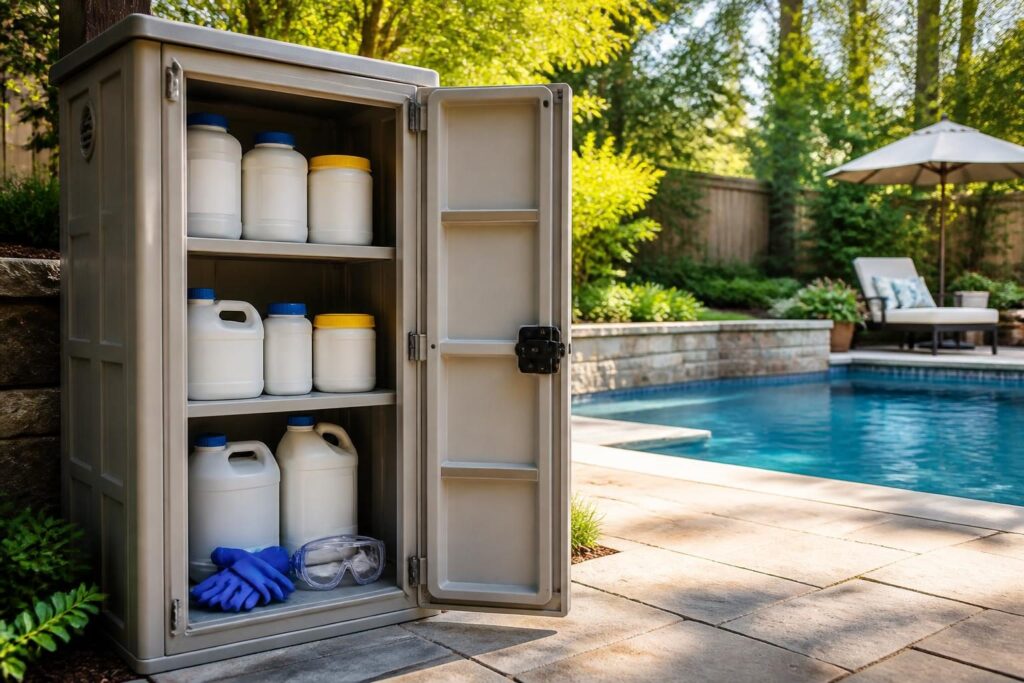
Good pool chemical storage safety starts with a simple rule: treat every product as a chemical that needs controlled storage. Pool chlorine, acid, algaecide, shock, and other treatments can react when mixed or stored carelessly. A safe setup protects household members, pets, pool equipment, and the home itself.
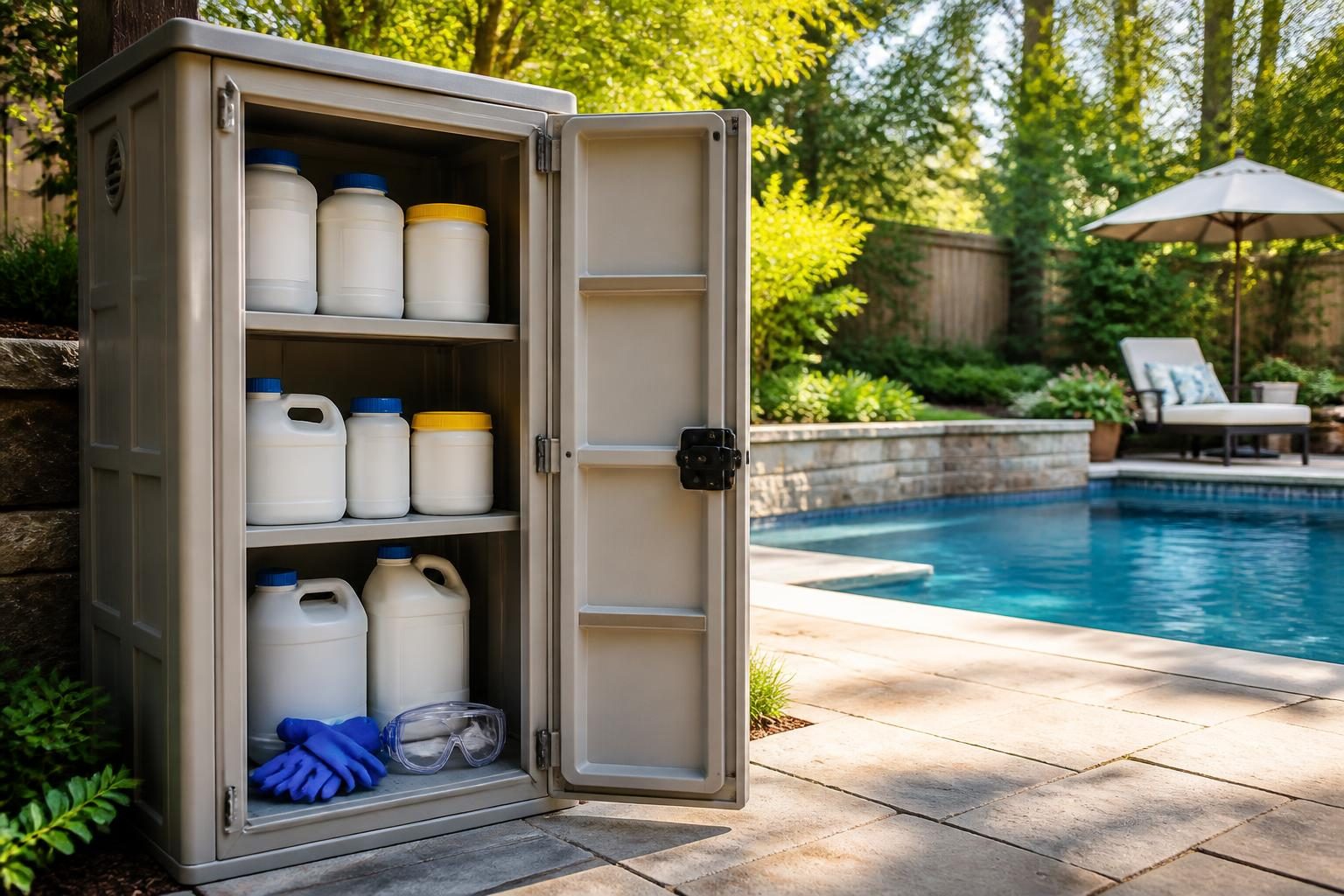
This guide focuses on everyday storage decisions. It does not replace the product label, safety data sheet, emergency guidance, local requirements, or advice from a qualified professional. Product formulas and directions vary, so read the container each time you buy or use a product.
Choose the right storage location for pool chemical storage safety
The best storage area is secure, dry, stable, and separate from living spaces. It should keep children and pets away while allowing an adult to read labels and handle containers without climbing over equipment.
A locked, well-maintained cabinet or storage area may work when it meets the product directions. Do not assume that a general outdoor shed is suitable. Heat, rain, humidity, poor airflow, and incompatible materials can create additional risks.
- Keep chemicals away from the house interior, food, animal feed, medicines, and household products.
- Choose a location protected from direct sun and weather.
- Keep the floor level and strong enough to support the containers.
- Prevent water from entering the storage area.
- Leave enough room to inspect labels and move each container safely.
- Keep the area away from ignition sources when the label requires that precaution.
Ventilation also matters. A closed cabinet can trap fumes, but an open shelf may provide easy access to children. Follow the label and safety data sheet for each product. If the location cannot provide both controlled access and suitable ventilation, ask a qualified pool professional or safety specialist for a better arrangement.
Keep original containers and readable labels
Original containers provide the product name, directions, warnings, first-aid information, and handling instructions. They also help you identify a product during an emergency. Never transfer pool chemicals into drink bottles, food containers, unmarked buckets, or another product’s container.
Do not remove a label because the container looks familiar. Replace a damaged container only through guidance from the product supplier or another qualified source. Avoid writing over warnings or storing a container where the label can become unreadable.
Check each container before storage
- Confirm that the lid is closed as the label directs.
- Look for swelling, leaks, corrosion, residue, or unusual damage.
- Make sure the product name and warnings remain readable.
- Keep the container upright unless the label says otherwise.
- Do not stack containers in a way that could cause a fall or spill.
If a container appears damaged, do not open it, smell it, combine it, or place it beside other products. Keep people away and seek product-specific instructions from the label, supplier, local emergency resources, or a qualified hazardous-materials professional. Disposal rules can vary, so do not pour unwanted chemicals into a drain, onto soil, or into the pool unless the label specifically directs that action.
Separate incompatible pool chemicals
Separation is central to pool chemical storage safety. Different products can react if they touch, leak into each other, or share contaminated tools. Store products according to their labels and safety data sheets. When the instructions are unclear, keep products apart until you receive reliable guidance.
At a minimum, do not store chlorine products beside acids or other chemicals that the label identifies as incompatible. Keep oxidizing products away from fuels, oils, paper, cloth, leaves, wood, and other materials that could burn. Do not place containers inside a secondary bin unless the product instructions support that arrangement.
Separate products physically rather than relying on memory. Dedicated shelves can help, but shelves do not make incompatible chemicals safe when a leak could reach another container. Avoid placing one container above another if a spill could drip onto the product below.
- Use separate, clearly identified storage areas when the instructions call for separation.
- Keep scoops, measuring cups, and tools dedicated to the product they serve.
- Never reuse a chemical container for another product.
- Do not store wet tools, damp bags, or water-soaked packaging with dry chemicals.
- Keep products in the packaging supplied by the manufacturer.
Control moisture, heat, and ventilation
Moisture can damage packaging, create residue, and change how some products behave. Pool areas are often humid, especially during North Carolina’s warm seasons. Store chemicals in a dry location, and keep lids closed whenever the label permits.
Do not leave open containers beside the pool while swimming, cleaning, or treating water. Rain, splashing, and wet hands can introduce moisture. Wipe up water around the storage area, but do not use a contaminated cloth or tool with another product.
Heat and direct sunlight can also affect products and packaging. Read the label for temperature and storage warnings. A location that feels comfortable to a person may still be unsuitable for a chemical container. Never place products beside a heater, motor, electrical equipment that produces heat, or a source of flame unless the product instructions expressly allow it.
Ventilation must match the storage design. Do not improvise by leaving a locked cabinet open if doing so creates a child-access hazard. Instead, review the location with a qualified pool professional or another appropriate specialist. Equipment areas also need careful planning; see pool equipment location guidance before combining chemical storage with pumps or controls.
Protect children, pets, and visitors
Keep pool chemicals inaccessible to children and pets, even when containers look closed. Use a secure barrier or locked storage solution that adults can operate safely. Do not keep chemicals in the pool house, garage, or shed if children can enter that space without supervision.
Tell household members not to handle products unless they understand the label and have permission. Visitors should not measure or add chemicals. Keep the storage key, code, or access method controlled.
Chemical storage is one layer of pool protection. The pool itself needs separate safeguards, including appropriate barriers and supervision. The U.S. Consumer Product Safety Commission provides general guidance through Pool Safely safety tips. Local North Carolina requirements can vary by jurisdiction, adopted code, property conditions, and project scope.
Use protective equipment and follow the label
Read the label before opening a container, even if you have used the product before. The label may specify gloves, eye protection, ventilation, clothing, application methods, or other precautions. Use only the protective equipment identified by the product instructions or recommended by a qualified professional.
Keep protective equipment clean, dry, and separate from household items. Do not assume one pair of gloves is suitable for every product. Wash or dispose of equipment as the label directs. Avoid touching your face, eating, drinking, or smoking while handling chemicals.
Measure only as directed. Do not estimate quantities, combine products in a scoop, or add water to a concentrated product unless the label specifically instructs you to do so. If the label is missing, damaged, or difficult to understand, stop and obtain the correct instructions before use.
Never mix products
The safest homeowner rule is simple: never mix pool chemicals with each other. Do not mix them in a bucket, container, feeder, skimmer, pump basket, or on the ground. Do not mix old and new product, even when both containers appear to hold the same type of treatment.
Follow the label for the order, location, and timing of additions to pool water. Some products may require the circulation system to operate or the water to meet a condition before use. Those directions are product-specific and should not be replaced with a general online formula.
If chemicals contact each other or produce an unusual odor, heat, smoke, bubbling, or fumes, move away. Keep people and pets out of the area. Do not investigate closely, add another substance, or attempt cleanup without product-specific emergency guidance. Contact the appropriate emergency or hazardous-materials resource for the situation.
Create a simple pool chemical storage safety checklist
A written routine reduces rushed decisions. Keep the following checklist near, but not inside, the locked storage area:
- Keep all products in original, labeled containers.
- Confirm that lids are closed and containers remain upright.
- Store incompatible products separately as directed.
- Check that the area is dry, shaded, stable, and suitably ventilated.
- Confirm that children, pets, and visitors cannot access it.
- Use measuring tools that are dedicated and clean.
- Keep the required protective equipment available.
- Read the label before each use.
- Know what to do if a spill or exposure occurs.
- Isolate damaged or unwanted products for proper guidance.
Keep product labels, safety data sheets, purchase records, and disposal instructions together in a dry household file. A new pool owner may also want manuals and chemical information in the project records. The new pool handover checklist can help organize those records. For broader planning, review how design choices affect cleaning and maintenance in pool shape and depth planning.
Review the setup as conditions change
Recheck storage after adding a pool house, changing equipment, buying a different product, or making the area accessible to children. A container that fits one storage arrangement may not fit another. Seasonal humidity, storm exposure, and household changes can also affect the setup.
Keep chemical storage separate from decisions about water testing and treatment. If you are unsure about a product, spill, exposure, ventilation concern, or disposal method, stop handling it and follow the label’s emergency instructions. Do not rely on color, smell, or appearance as a safety test.
For site-specific questions, consult the local inspections department when requirements may apply. A licensed pool contractor, electrician, engineer, surveyor, septic professional, hazardous-materials specialist, or other qualified professional may also be appropriate. North Carolina requirements and safe practices can vary with jurisdiction, property conditions, utilities, septic systems, flood zones, adopted code, and project scope. Maintaining pool chemical storage safety as conditions change can help keep the arrangement appropriate for the household.