

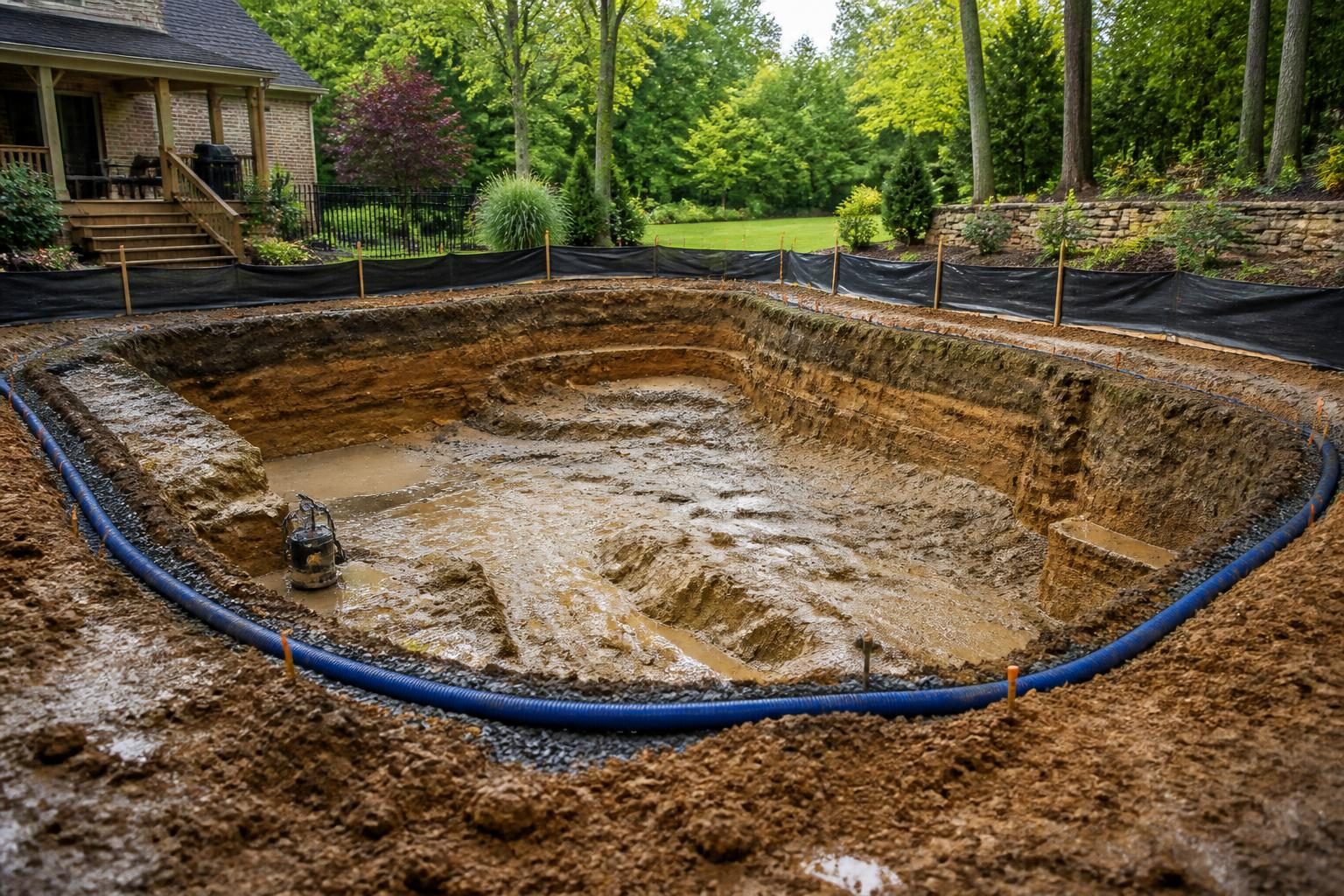
Pool hydrostatic relief planning North Carolina for a residential site with groundwater concerns
Learn how groundwater observations, shell protection, drainage design, and qualified reviews can inform pool planning on North Carolina sites with possible subsurface water.
Pool construction groundwater dewatering questions shown by a temporary pump beside a residential excavation
Learn how to recognize groundwater during pool excavation, plan temporary pumping, review discharge options, and document changing site conditions.
Pool excavation rock groundwater allowance questions shown at a North Carolina residential construction site
Learn how to review proposals for rock, groundwater, unsuitable soil, pumping, disposal, and written change procedures before pool excavation begins.
Pool groundwater hydrostatic pressure North Carolina excavation planning in a residential backyard
Groundwater can affect excavation, drainage, scheduling, and construction decisions. Learn what to observe and ask before work begins on a North Carolina pool.
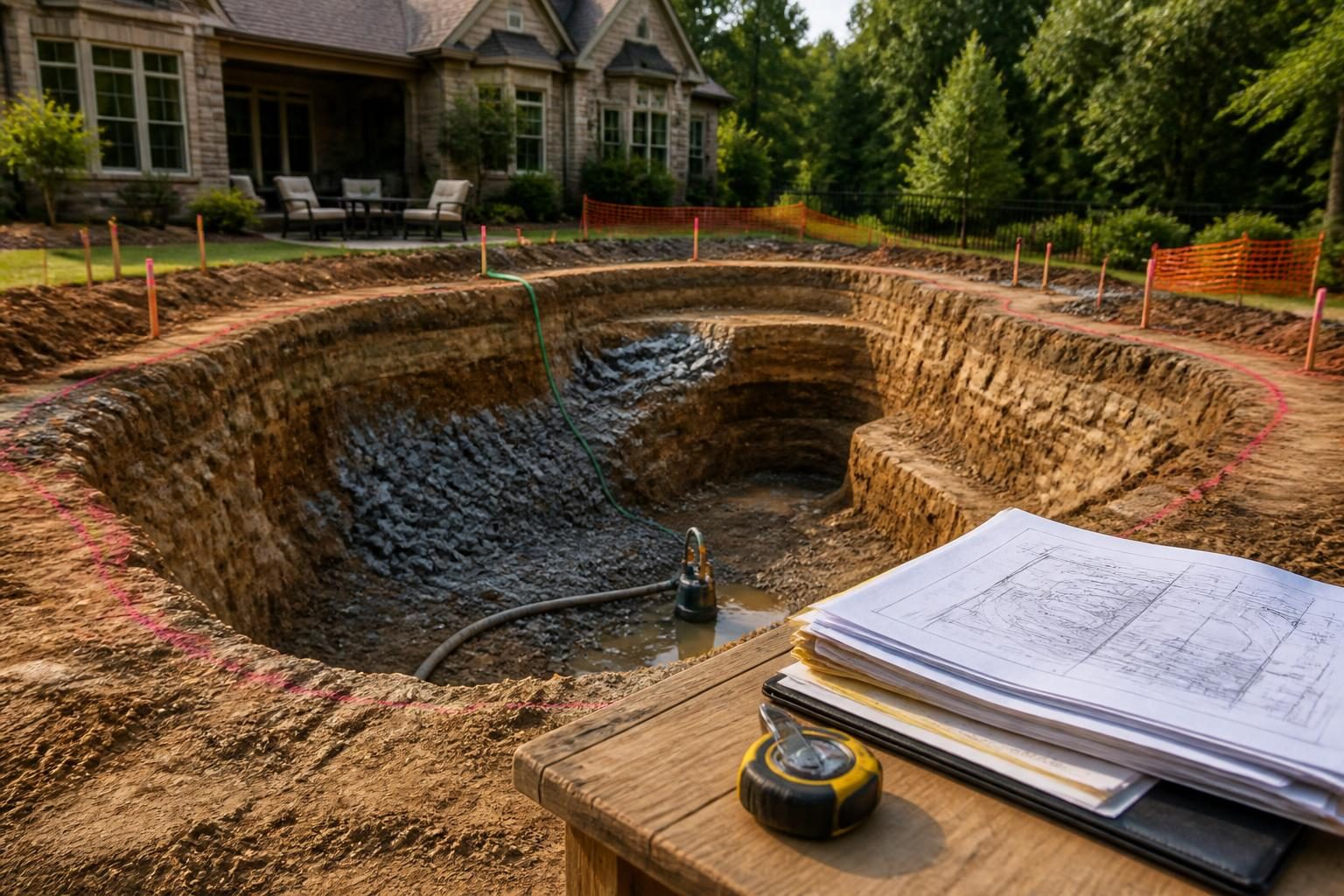
Pool excavation changes homeowner documentation beside a North Carolina residential pool excavation
Unexpected rock, groundwater, unstable soil, or revised dimensions can change a pool project. Learn what to document before excavation continues.
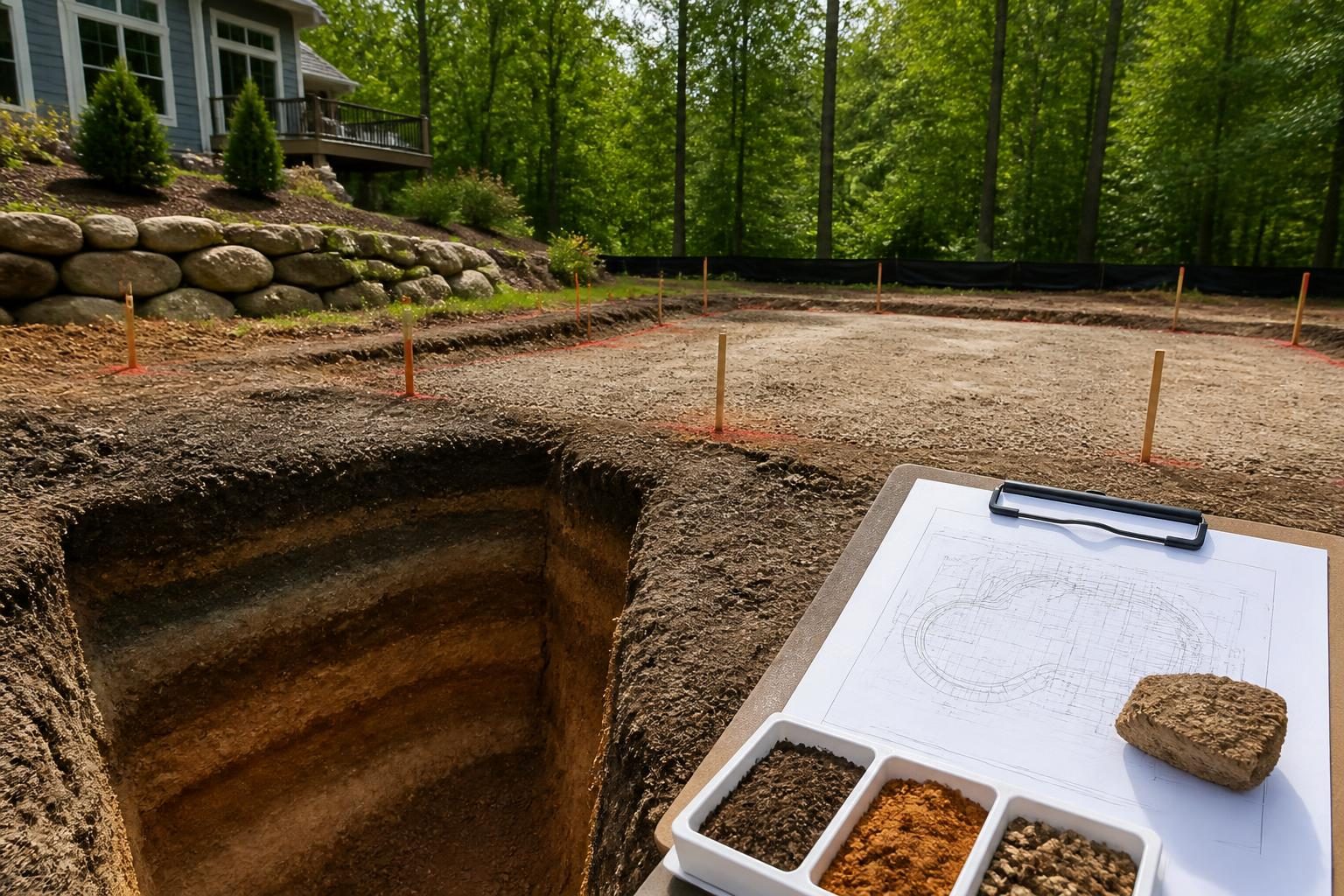
Soil testing before pool construction in North Carolina with a marked residential excavation site
Soil conditions can change pool excavation, drainage, structural design, and cost assumptions. Learn what North Carolina homeowners should ask for before digging.
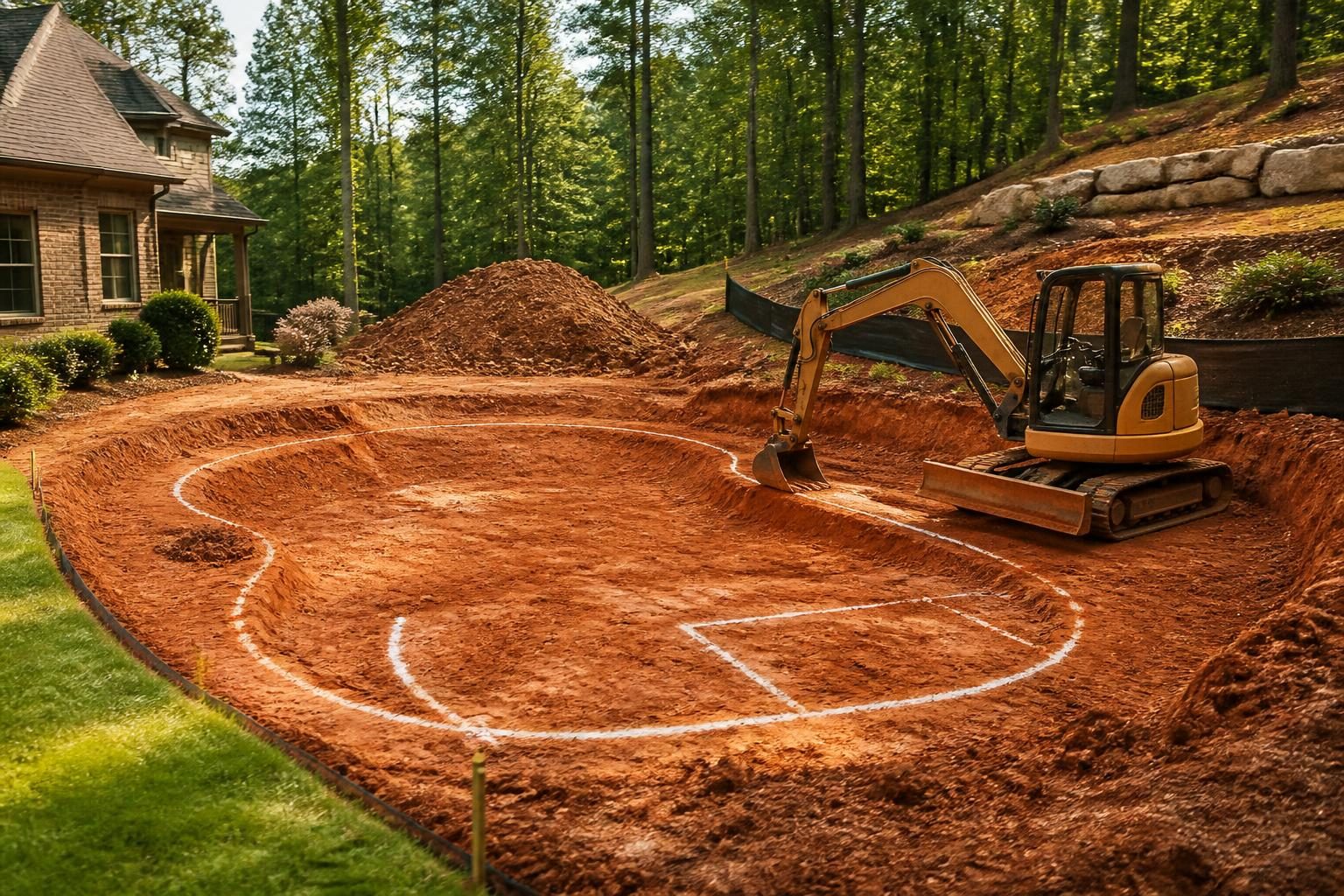
Pool excavation North Carolina clay soil planning with an excavator, marked backyard layout, and erosion controls
Learn how clay soil, limited access, spoil placement, groundwater, slopes, and compaction can affect pool excavation planning in North Carolina.