
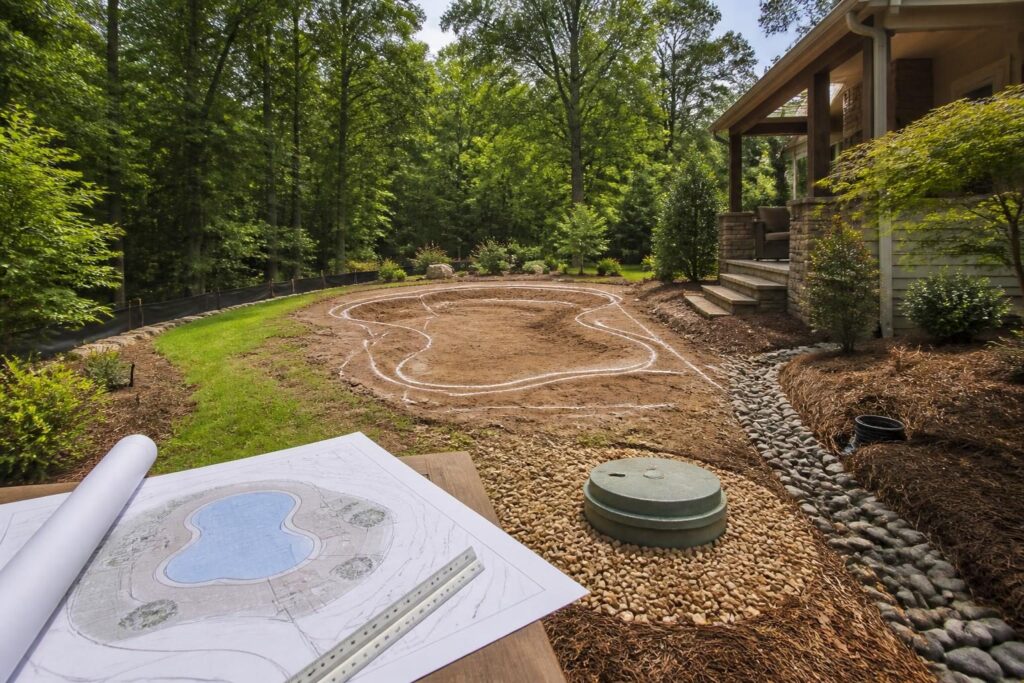
Pool planning with a private well in North Carolina deserves early attention. A well may supply the house reliably, yet filling or topping off a pool can create a different demand. Water quality, pump capacity, well location, septic areas, drainage, and local requirements can all affect the project.
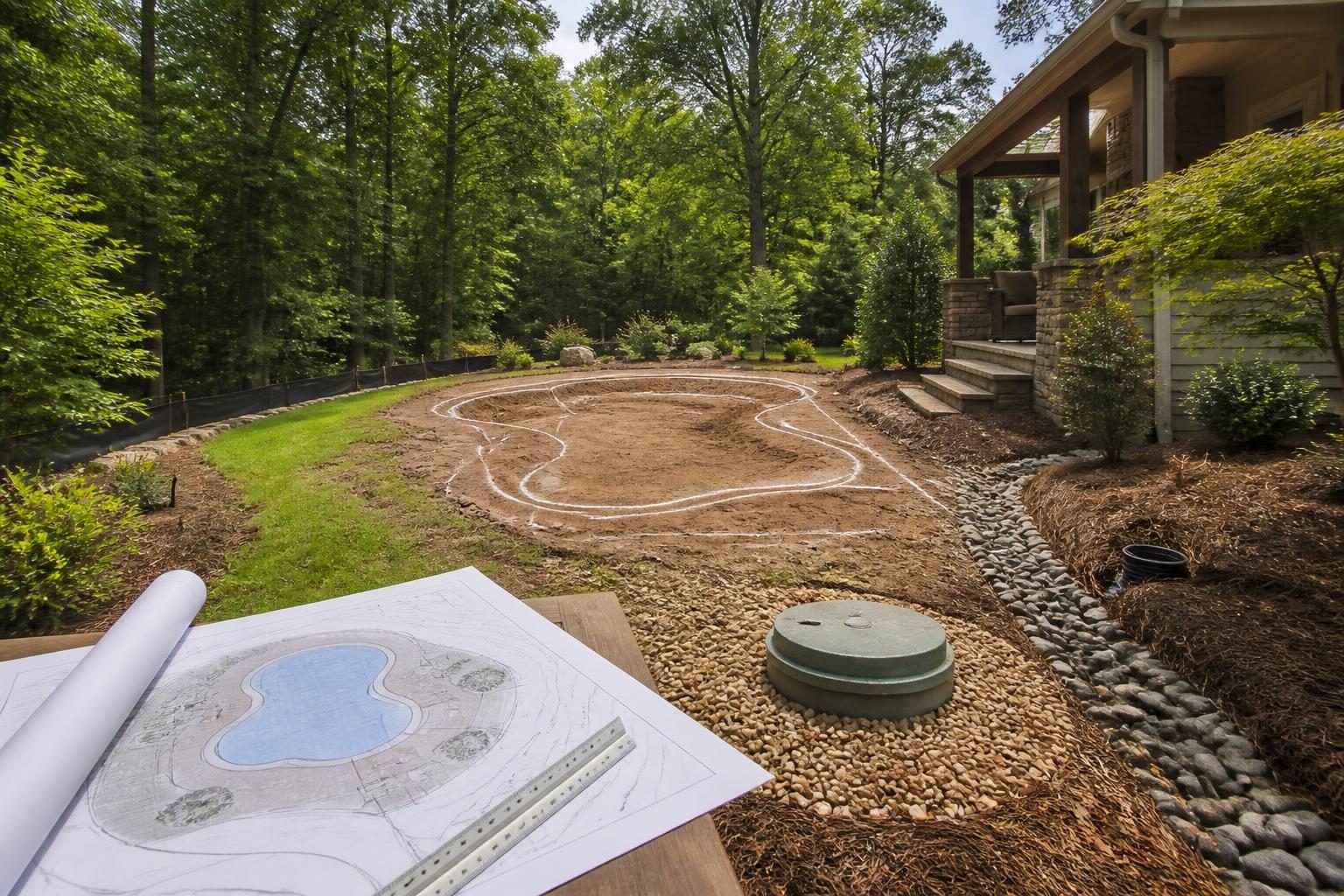
This guide is a question list for homeowners. It does not replace advice from the local inspections department, a well professional, septic professional, engineer, electrician, or qualified pool contractor. Property conditions and requirements vary by county, municipality, adopted code, utility service, flood zone, septic system, and project scope.
Start with well location records and site documents
Before choosing a pool footprint, gather every record you can find. A well location may appear on a property survey, site plan, closing documents, septic permit, well-construction record, or county file. Older records may lack detail or use landmarks that have changed.
Do not rely on a visible well cap alone. The well head might sit under landscaping, away from the home, or in the wrong place on an old drawing. Ask a qualified well professional to help identify and document the well, pressure tank, treatment equipment, buried lines, and access needs.
- Do you have a current survey showing the house, well, septic components, easements, and property lines?
- Where is the well head, and can it remain accessible after construction?
- Where are the electrical line, water line, pressure tank, storage tank, and treatment devices?
- Are there abandoned wells or old site features that need professional review?
- Will construction traffic, excavation, grading, or concrete work pass near the well?
Keep copies of maps, permits, inspection records, well reports, water tests, and correspondence. Mark uncertain locations as unverified rather than treating them as confirmed. A pool layout should not depend on an assumption that nobody has checked.
For state environmental-health resources about private wells and onsite wastewater, review North Carolina Environmental Health. Then confirm property-specific information with the appropriate county office or licensed professional.
Ask whether the well can support filling and refill needs
A pool can require a substantial initial fill, followed by smaller additions from evaporation, splash-out, filter cleaning, maintenance, and occasional draining. The important question is not simply whether the well produces water. Ask how the proposed demand fits the well’s recovery pattern and the household’s normal use.
Well yield describes how much water a well can produce over a period. Recovery describes how quickly the water level returns after use. A qualified well professional can explain the difference and identify whether a flow test, storage tank, or other evaluation makes sense.
Questions about water availability
- What is the documented or recently measured well yield?
- How does the well perform during dry weather or periods of high household use?
- Can the pressure system provide the flow needed for a practical fill method?
- Could filling the pool affect drinking water, appliances, irrigation, or fire-protection needs?
- Would the well professional recommend staged filling instead of one continuous fill?
- Should the home have temporary storage or a different refill arrangement?
Do not ask a pool contractor to guarantee well performance unless the contractor also holds suitable qualifications to evaluate the well. Likewise, do not assume a neighbor’s experience predicts your supply. Nearby properties can have different well depths, geology, pumps, storage, and usage patterns.
Include a written water-supply plan in your project file. It should identify who evaluates the well, what information that person provides, how filling will occur, and what happens if the available supply falls below expectations.
Compare pool refill options before construction
Pool planning with a private well in North Carolina should include a refill decision before the shell or plumbing work begins. The best option depends on your well, access, local water rules, hauling logistics, and the pool’s operating needs.
Possible approaches include using the well in stages, arranging delivered water, using a temporary storage tank, or connecting an approved source through a properly designed system. Each option has practical questions. Delivered water may require truck access and a suitable discharge or fill plan. A storage tank may require space, power, controls, and maintenance. A direct connection may raise backflow, plumbing, and approval questions.
Build a simple refill comparison
| Option | Questions to verify |
|---|---|
| Well supply | Can the well recover without disrupting household needs? |
| Delivered water | Can a truck reach the site without damaging the yard, driveway, or septic area? |
| Storage tank | Where will it sit, and who will design the pump and controls? |
| Other source | Is the source approved, suitable, and connected with required protections? |
Ask for the refill plan in writing. Include contact information for the supplier or professional, access limits, storage needs, testing responsibilities, and any restrictions on discharge. Do not discharge pool water onto a neighboring property, septic area, well area, roadway, or storm system without confirming the appropriate method locally.
Water use also connects with drainage. Review pool drainage planning for North Carolina yards when discussing overflow, backwash, rainwater, grading, and construction runoff.
Review well water quality and treatment needs
Well water can contain minerals or other characteristics that affect pool startup and maintenance. Common concerns may include hardness, iron, manganese, acidity, alkalinity, sediment, or odor. The relevant issues depend on the individual well, the water source, and previous testing.
Do not select treatment equipment from a generic recommendation. First test the water through an appropriate laboratory or qualified provider. Ask which tests apply to both household drinking-water concerns and pool filling. Pool water chemistry then needs separate testing after filling.
Questions for the well or water-treatment professional
- Which water-quality results could affect staining, scaling, cloudiness, or sanitizer use?
- Should the fill water pass through existing treatment equipment?
- Would treatment waste create a drainage or septic concern?
- Is temporary treatment needed for the initial fill, or is permanent equipment appropriate?
- Could treatment equipment reduce flow or pressure during filling?
- Which test results should be repeated after the pool operates?
Pool treatment means maintaining the water after it enters the vessel. It does not make every source-water concern disappear. Follow the equipment manufacturer’s instructions and use current, reliable guidance for chlorine, pH, and other pool measurements. The CDC guidance on home pool water treatment and testing can help explain routine testing concepts.
Record the source-water test date, laboratory or provider, results, treatment settings, and startup readings. If the water changes after heavy rain, drought, nearby work, or well maintenance, ask whether another test makes sense.
Check well, septic, drainage, and construction constraints together
Well planning cannot stand apart from the rest of the property. A pool excavation may conflict with septic tanks, drain fields, repair areas, buried utilities, easements, slopes, or drainage paths. Moving the pool a few feet can also affect setbacks, access, equipment placement, and barrier design.
Review the proposed layout with the relevant professionals before excavation. The local authority may need to confirm permit or setback requirements. A septic professional may need to identify protected areas and future repair access. An engineer or surveyor may need to address grading, slopes, structures, or uncertain site conditions.
Use these questions during the layout review:
- Has the well location been verified in the field?
- Does the pool preserve required access to the well and septic system?
- Could excavation or grading change surface water near the well head?
- Will the equipment pad, deck, fence, or retaining work affect service access?
- Are flood, erosion, stormwater, or soil conditions part of the site review?
- Which drawings and approvals must be updated if the pool moves?
For related layout questions, see North Carolina pool setbacks and what homeowners should verify. Requirements are location-specific, so treat online guidance as a starting point rather than a final determination.
Plan for startup, maintenance, and dry-weather decisions
Pool planning with a private well in North Carolina continues after construction. The first fill, equipment startup, seasonal evaporation, and unexpected water loss all affect the household water system.
Ask the pool professional to explain normal water loss, safe refill methods, equipment alarms, and signs of a leak. Ask the well professional what symptoms suggest low supply, pump strain, pressure problems, or a falling water level. Keep those instructions separate from emergency contacts for electrical or structural concerns.
Create a household refill policy:
- Decide who checks the pool level and how often.
- Set a rule for pausing refill during dry conditions or low household pressure.
- Identify a backup water source before it is urgently needed.
- Keep treatment results and maintenance logs with well records.
- Confirm how pool water will be handled during maintenance or draining.
Avoid running a hose unattended. A timer can reduce risk, but it does not replace supervision or a confirmed overflow plan. If water disappears faster than expected, stop adding water and ask a qualified pool professional to investigate before assuming the well is the problem.
A homeowner verification checklist
Before signing off on the layout or scheduling the first fill, confirm these items:
- Well and septic locations have documentation, with professional field verification where needed.
- The pool layout preserves required access and accounts for buried systems.
- Well yield, recovery, storage, and household demand have received professional review.
- A written initial-fill and refill plan identifies responsibilities.
- Source-water testing and treatment questions have received answers.
- Drainage, discharge, grading, and stormwater issues have received review.
- Local permits, inspections, setbacks, and adopted requirements have local confirmation.
- Records will include test results, diagrams, equipment instructions, and changes.
Keep this checklist with your contract documents and site plan. If a professional says an item does not apply, record who made that determination and why. Clear records help you revisit decisions when the property, water supply, or project scope changes.
Pool planning with a private well in North Carolina is ultimately a coordination task. The goal is not to predict every issue. It is to identify the questions early, verify facts for your property, and avoid making the well carry an unexamined burden.
Consult the local inspections department for current local requirements. Use a licensed pool contractor for pool design and construction questions, and contact a qualified well professional for yield, pump, and water-supply concerns. A septic professional, electrician, engineer, surveyor, or water-treatment specialist may also help with property-specific conditions.