
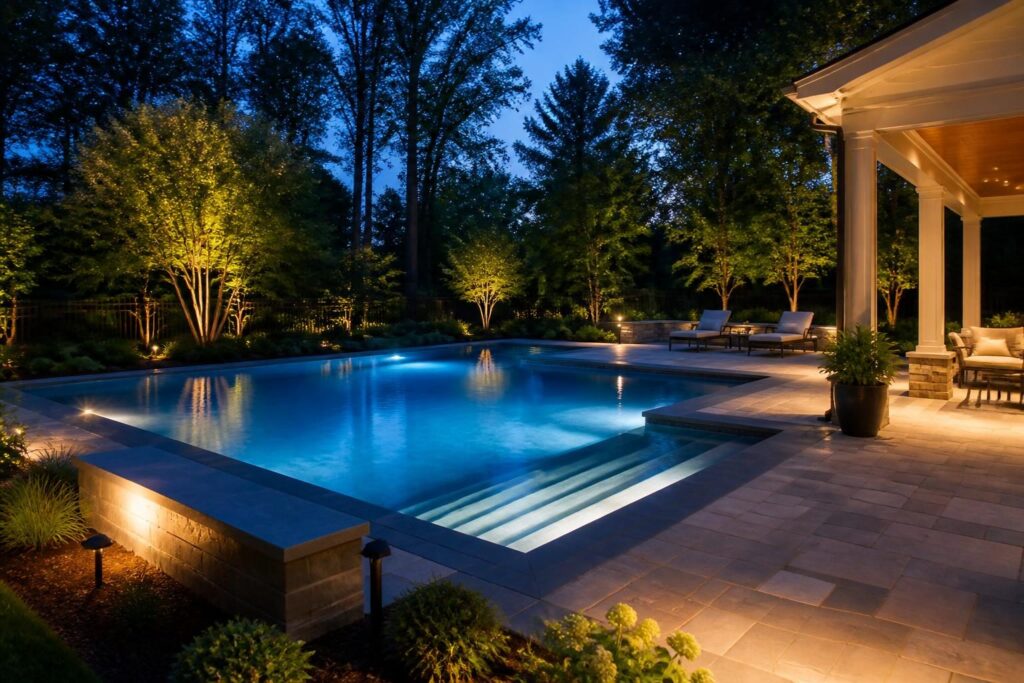
Pool lighting planning deserves attention before excavation, plumbing, and concrete make changes harder. A light can affect nighttime visibility, comfort, maintenance, electrical coordination, and the view from nearby homes.
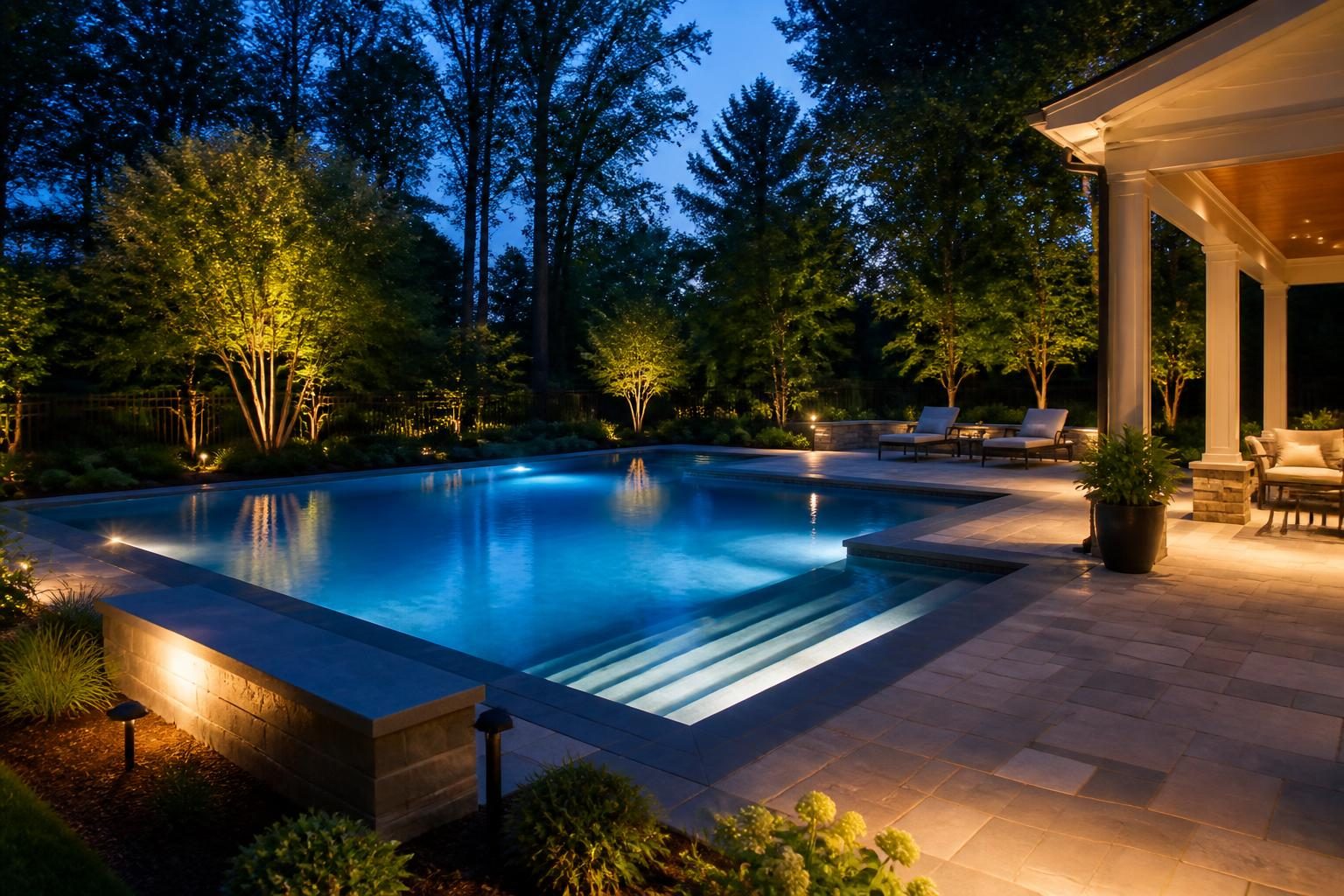
Homeowners often choose fixtures late because lighting seems like a finish detail. That approach can limit fixture locations, conduit routes, switch options, and access for future service. A better process starts with how the pool and yard should feel after sunset.
Start with intended use after sunset
First, describe how your household expects to use the pool at night. You may want quiet evening lounging, family play, lap swimming, entertaining, or only enough light for safe entry and cleaning. Each use can call for a different lighting arrangement.
Write down the activities that matter most. Then identify the areas that need visibility, such as steps, benches, shallow ledges, ladders, swim-outs, and paths between the pool and house. This simple list gives your designer and contractor a practical starting point.
- Will people enter the pool from one main location or several?
- Do swimmers need clear visibility across the full length?
- Will outdoor dining or seating share the same nighttime view?
- Do you want a calm setting, bright task lighting, or both?
- Will the pool be used during short winter afternoons as well as summer evenings?
Depth, shape, interior finish, water features, and nearby structures also affect how light appears. Review those choices together rather than treating the fixtures as an isolated product decision. The related guide on pool shape, depth, and everyday use can help frame that conversation.
Reduce glare and manage the view
Glare is excessive brightness that makes it harder to see comfortably. It can come from a fixture aimed toward the house, a seating area, a neighbor’s property, or a common line of sight. Bright reflections from water and pale decking can add to the problem.
Ask for a nighttime viewing discussion before final plans receive approval. Stand where people will sit, walk, and enter the pool. Consider how the light will look from inside the house and from adjacent properties. A fixture that seems well placed on paper may feel harsh from a nearby window.
Pool lighting planning should address fixture direction and brightness, not only fixture count. Depending on the design, a contractor may discuss recessed lights, nicheless fixtures, adjustable features, shields, lenses, or separate zones. Product selection belongs with the qualified pool and electrical professionals involved in your project.
Questions that reveal glare risks
- Where will each fixture face, and what areas will sit directly in view?
- Could a light shine toward a bedroom, road, sidewalk, or neighboring yard?
- Will water features create additional sparkle or reflected brightness?
- Can the system operate at lower brightness for ordinary evenings?
- How will the layout look when trees, screens, or other landscaping mature?
Do not assume that more light always improves safety. Even, comfortable visibility often works better than a few very bright points surrounded by darkness.
Find dark areas before the deck is installed
Dark areas can appear below raised walls, beside steps, under coping overhangs, behind waterfalls, or along a pool’s far edge. Landscaping and furniture may create additional shadows. These conditions can make entry, supervision, and cleanup less comfortable.
Request a lighting sketch that shows the pool, deck, stairs, house, seating, fences, planting beds, and major structures. Mark the places where people will walk or pause. Then ask how the proposed design addresses each shadow-prone location.
Underwater fixtures are only part of the plan. Path lights, wall lights, step lights, and low-glare area lights can support movement around the pool. Coordinate them so one system does not overwhelm another.
Pool lighting planning also needs to account for changing conditions. Water level, floating covers, umbrellas, furniture, seasonal planting, and wet surfaces can change what people see. Ask whether the proposed layout remains useful when the yard is furnished and occupied.
Plan fixture access and future service
A light may last for years, but no fixture should remain permanently unreachable. Ask how a technician will inspect, replace, clean, or troubleshoot each component. The answer may depend on the fixture type, pool construction, manufacturer instructions, and access to the equipment area.
Keep a record of fixture locations, product names, model numbers, installation documents, and control settings. Photograph concealed conduit routes and junction locations before workers cover them, when the contractor permits documentation. These records can help future professionals understand the installation.
- Where are the transformers, junction boxes, and control components?
- Can service access occur without removing finished landscaping or hardscape?
- Which parts can you replace, and which require a specific matching product?
- Will the handover include spare parts, manuals, and programming information?
- Who should be contacted for pool, lighting, and electrical service?
Equipment access matters beyond lighting. Review the guide to pool equipment location and service space when coordinating the lighting controls with pumps, heaters, sanitation equipment, and other systems.
Coordinate controls before construction
Decide how the lights should operate during normal use, entertaining, cleaning, and extended periods away from home. A simple switch may be enough for some yards. Other homeowners may want scheduled operation, separate zones, dimming, color settings, or integration with broader pool controls.
Discuss controls before workers finalize wiring and equipment locations. Confirm which functions the proposal includes, which require optional equipment, and who will program the system. Do not rely on a verbal description of an app or automation feature.
Ask for the control plan in writing. It should identify the lights or zones, control locations, compatible equipment, user instructions, and any limits the manufacturer places on operation. If automation is part of the design, review this guide on coordinating pool automation early.
Include electrical review in the design process
Pool lighting connects design decisions to electrical work. A licensed electrician should review the proposed equipment, power requirements, wiring method, bonding and grounding needs, protective devices, control locations, and inspection process. These details can vary with the property, equipment, adopted requirements, and project scope.
Do not select fixtures based only on appearance. Provide the electrician with the complete equipment schedule and the latest site plan. Ask the pool contractor and electrician to resolve differences before construction begins.
North Carolina requirements and local interpretations can change. Confirm current permit and inspection expectations with the local inspections department and the professionals responsible for the work. The North Carolina Office of State Fire Marshal documents provide official code-related materials, but local review remains important.
Records to request
- Final lighting layout and fixture schedule
- Electrical equipment information and installation instructions
- Control diagrams and programming notes
- Inspection records or approvals issued for the work
- Product warranties and service contact information
For a focused conversation with your electrician, use the questions in this pool electrical safety guide. It is a planning aid, not a substitute for site-specific electrical review.
Coordinate pool and landscape lighting
Landscape lighting can either support pool visibility or compete with it. Bright uplights, exposed bulbs, reflections from walls, and lights aimed across the water may create visual clutter. Pool lighting planning should include the entire nighttime scene.
Map the house, retaining walls, trees, fences, planting beds, walkways, outdoor rooms, and neighboring sightlines. Use lower-intensity path or step lighting where people need guidance. Keep decorative lighting separate when possible, so one adjustment does not change every light in the yard.
Plant growth deserves attention. A fixture that is comfortable today may become blocked or redirected by branches later. Ask who will maintain access and whether future landscape work could damage wiring or fixtures.
Consider neighbors and neighborhood impact
Pool lights can be visible beyond the property, especially on sloped lots or yards with open fencing. Unwanted brightness may enter windows or affect the appearance of shared outdoor spaces. Thoughtful placement helps reduce avoidable conflict.
Review the design from the property edges and nearby windows. Consider timers, reduced brightness, shields, planting screens, and operating hours. These choices may also improve your own view by limiting reflected light inside the house.
Neighborhood rules, recorded restrictions, or local review may affect exterior lighting. Check the documents that apply to your property, and ask the appropriate local authority or association representative about current requirements. Do not assume a pool lighting decision is private simply because the fixtures are inside your yard.
Use a preconstruction lighting checklist
Before signing off on the lighting plan, compare the drawings, proposal, equipment schedule, and electrical plan. Make sure they describe the same locations and features.
- Define nighttime activities and priority viewing areas.
- Mark steps, benches, ladders, walkways, and dark-area risks.
- Review glare from the house, seating, roads, and neighboring properties.
- Confirm fixture type, location, brightness options, and intended zones.
- Discuss service access, records, replacement parts, and future landscaping.
- Document controls, schedules, app features, and handover instructions.
- Have the licensed electrician review the complete lighting design.
- Confirm local permit and inspection questions before work starts.
Save the approved plan and note every later change. A marked-up drawing can help when construction conditions require a fixture to move or a route to change.
Good pool lighting planning balances visibility, comfort, serviceability, energy use, and neighborhood awareness. Review the plan before excavation and wiring, not after finished surfaces limit your options. Build a Pool in North Carolina encourages homeowners to keep these decisions in the project record.
For property-specific guidance, consult the local inspections department, a licensed pool contractor, licensed electrician, engineer, surveyor, landscape professional, or other qualified specialist as appropriate. They can verify current requirements and evaluate conditions that general planning information cannot address.