
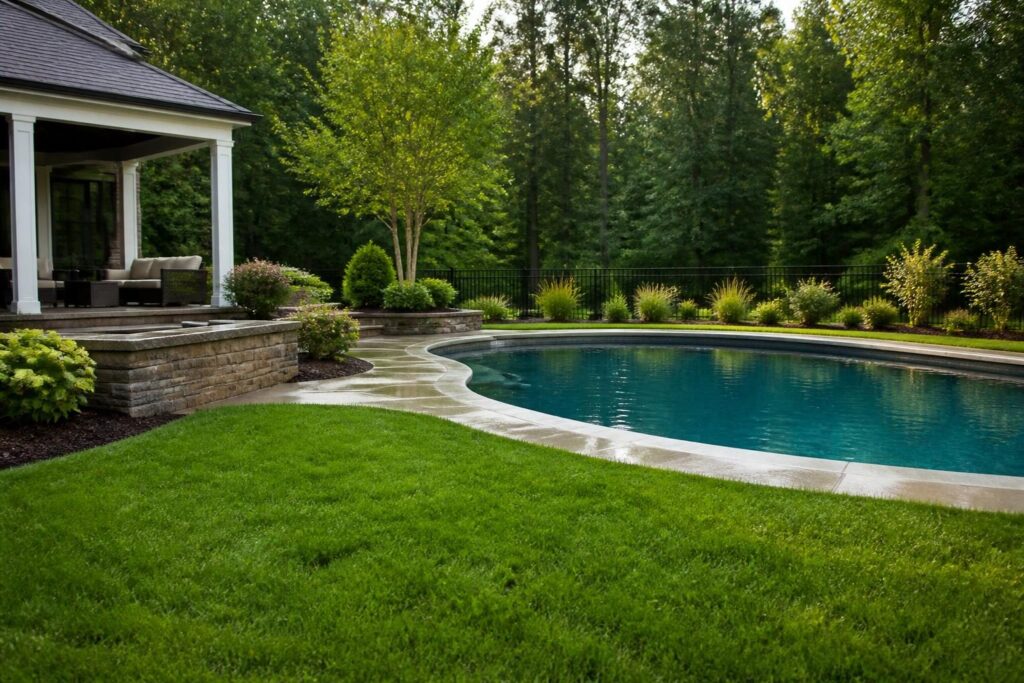
New sod can make a yard look finished, but it can also change how water moves. A pool drainage inspection after sod installation helps you observe altered grades, irrigation runoff, soil washout, and water moving toward the pool before small changes become harder to manage.

Sod installation often includes topsoil, grading, seams, edging, irrigation adjustments, and regular watering. Each step can affect the surface around a pool deck, coping, planting bed, equipment area, fence, or nearby foundation. The goal is not to redesign the site yourself. It is to notice patterns, record them clearly, and ask the right qualified professional to review concerns.
Why new turf deserves a drainage review
Grass and soil form part of the surface drainage system. When installers add soil or smooth a low area, the finished grade may differ from the earlier landscape. A grade is the slope or level relationship that guides water across the ground.
New sod may also hide loose soil, shallow depressions, or a seam that has not settled. Irrigation can then keep one area wet while rain sends water along a different route. Watch the yard through several watering and weather conditions rather than judging it from one dry afternoon.
- Look for water that remains beside the pool deck after the surrounding area dries.
- Check whether soil, mulch, or grass clippings collect against coping or deck edges.
- Notice new muddy paths, exposed roots, lifted sod, or narrow channels.
- Watch whether sprinklers wet the deck, pool water, equipment pad, or barrier.
- Compare water movement near doors, steps, retaining features, and low corners.
North Carolina conditions vary by soil, slope, rainfall, drainage features, flood exposure, and the way the property was landscaped. General observation cannot confirm whether a finished grade or drainage system meets a plan or local requirement.
Set a simple observation schedule
A consistent routine makes changes easier to identify. Begin after the sod has been installed and watered. Repeat the review during ordinary irrigation, after a moderate rain, and after a stronger storm when it is safe to go outside.
Before watering
Walk the pool perimeter and note the soil condition. Photograph areas that look soft, sunken, cracked, or newly raised. Include a wide view that shows the pool, deck, lawn, beds, and nearby structures. Close-up images alone can make direction and scale difficult to understand.
Check whether sod seams remain tight. Look for gaps that expose soil. Also inspect transitions where turf meets concrete, pavers, drainage grates, landscape edging, or a fence. These joints can reveal small changes in level as the ground settles.
During irrigation
Observe one irrigation zone at a time if the system allows it. Confirm where each sprinkler throws water. A head that was rotated during landscaping may spray the deck or send water toward the pool.
Look for ponding, fast-moving sheets, and water that crosses a walkway. Do not place your hands near electrical equipment or open irrigation components. If irrigation controls, wiring, or backflow devices need adjustment, use an appropriate qualified professional.
After rainfall
Only inspect during safe conditions. Stay away from flooded areas, lightning, unstable slopes, and standing water near electrical equipment. Observe from a stable location and take notes on where water starts, pauses, concentrates, and leaves the yard.
Repeat the walk after the rain stops. Compare the wet areas with your earlier photographs. A single puddle may not show a lasting problem, but repeated ponding or redirected flow deserves follow-up.
What altered grades can look like
A new lawn does not need to appear dramatically uneven to change runoff. Small adjustments near a pool can affect where water collects. During your pool drainage inspection after sod installation, focus on transitions rather than only the middle of the lawn.
- Raised edges: Sod or added soil may sit higher beside the deck than before.
- Low pockets: Depressions may hold water after nearby areas drain.
- Reverse flow: Water may move toward the pool, house, crawl space, or equipment area.
- Compressed strips: Foot traffic or machinery can create narrow low routes.
- Uneven settling: Seams and edges may dip after repeated watering.
Do not correct a suspected grade by adding soil or cutting turf without understanding the broader drainage plan. An adjustment in one location can redirect water to another location. Ask the landscape contractor, pool contractor, drainage specialist, surveyor, or engineer which records and measurements should control the review.
For broader context, compare your observations with pool grading after construction. That guide addresses finished grades and observation records around a completed pool.
Separate irrigation runoff from rainwater
Runoff is water that travels across a surface instead of soaking in where it lands. Irrigation runoff can be easier to miss because it happens on a schedule. It may also keep soil wet enough to weaken sod seams or expose a wash path.
During the pool drainage inspection after sod installation, record the irrigation zone, start time, weather, and visible flow. Note whether the same area becomes wet even when there has been no rain. Check for:
- Sprinkler arcs crossing the pool deck or coping.
- Water collecting near skimmers, steps, or low deck corners.
- Runoff leaving a lawn and entering a planting bed.
- Wet soil beside the equipment pad or electrical equipment.
- Water that reaches a gate, fence post, wall, or house foundation.
Sprinkler adjustment, pressure, drainage, and backflow questions can involve equipment and local requirements. Use the related irrigation overspray and backflow questions guide when preparing a conversation with the appropriate professional.
Spot soil washout before it spreads
Washout occurs when moving water carries soil away. It can begin at a sod seam, bed edge, slope break, downspout outlet, or place where irrigation repeatedly lands. Early signs include small fans of soil, exposed roots, muddy streaks, and gravel or mulch that has shifted.
Inspect the pool deck edge and nearby coping for sediment after rain. Check drainage grates and channels for soil or grass. Look below slopes, beside steps, and around any outlet that discharges onto the lawn. Do not remove a grate, enter a drainage structure, or disturb an outlet to investigate.
Photograph the same locations from similar angles. A dated comparison can show whether a channel is growing. For additional background on slopes and groundcover, see soil erosion control near a pool.
State guidance may apply to some land-disturbing or construction-related work. The NC DEQ Erosion and Sediment Control Manual provides official information about erosion and sedimentation planning. Applicability depends on the work, site, jurisdiction, and current requirements.
Keep a useful observation record
A good record helps people discuss the same location and condition. Use a simple table, note app, or project folder. Keep original photographs rather than editing them to mark up the only copy.
- Date and approximate time.
- Weather and whether irrigation ran that day.
- Irrigation zone or sprinkler area involved.
- Location in relation to the pool, deck, house, fence, or equipment.
- What you saw before, during, and after water moved.
- Photographs from wide, medium, and close views.
- Questions sent to the landscape or pool professional.
- Any approved changes, drawings, or maintenance instructions received.
Keep the sod invoice, landscape plan, irrigation zone map, grading information, drainage details, and pool site records together when available. Do not assume that a landscape drawing replaces a pool grading or drainage plan.
When to request a professional review
Ask for prompt review when water repeatedly moves toward the pool or house, remains near equipment, undermines a deck edge, exposes soil, or affects a barrier or gate area. A professional may need to compare current conditions with design documents and use tools or measurements that homeowners should not perform themselves.
Before requesting help, gather your dated observations and avoid making unapproved changes. Explain what changed, when it appeared, whether irrigation was running, and how often the condition repeats. Clear facts are more useful than a conclusion about the cause.
For a broader rain observation routine, read pool drainage inspection after planting. Landscaping can also affect barrier conditions, so recheck nearby gates, climbable objects, and clearances. If you need a pool drainage inspection after sod installation, provide this record to the qualified reviewer.
Closing review
A post-sod drainage check is a repeatable observation habit, not a substitute for design or code review. Consult the local inspections department when permits or inspections may be involved. Use a licensed pool contractor, irrigation professional, electrician, engineer, surveyor, septic professional, or other qualified specialist when the condition touches that field. Requirements can vary across North Carolina by jurisdiction, property conditions, utilities, septic systems, flood zones, adopted code, and project scope.