
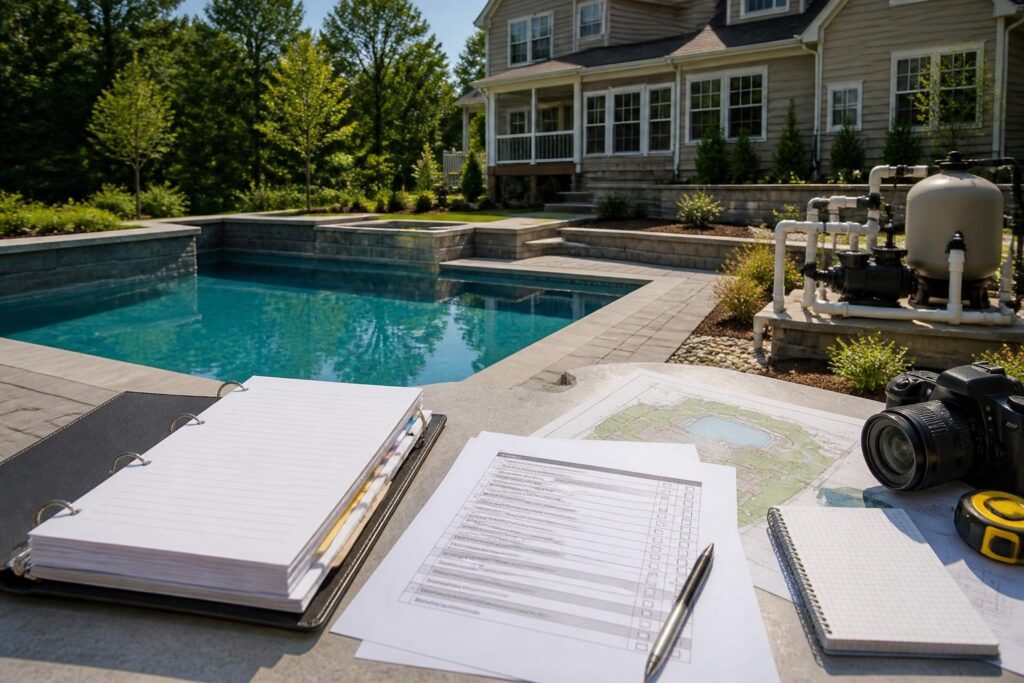
When an inspection identifies an open item, a pool inspection deficiency documentation checklist can help you separate the observation from the correction and the later recheck. That distinction matters because an inspection record may show what someone reviewed, while a correction record shows what happened afterward.

North Carolina procedures can vary by city or county, project scope, adopted code, property conditions, and inspection type. Use this system as a homeowner recordkeeping tool, not as a substitute for the local inspections department or a qualified professional.
Start with the official inspection record
Begin with the document from the inspecting authority or other qualified reviewer. It may carry the name inspection report, correction notice, deficiency list, field report, or another local term. Keep the original file unchanged, then make a working copy for notes.
Do not rewrite the inspector’s wording from memory. Copy the observation accurately, including any item number, date, location, status, and instructions. If the wording seems unclear, ask the issuing office or responsible professional what the note means. Avoid guessing whether an item is minor, complete, or acceptable. Add a second copy of this pool inspection deficiency documentation checklist to the working file if several people need to update it.
For broader file organization, see North Carolina pool permit inspection records. That record should sit beside, not replace, your active correction tracker.
Record these fields first
- Property address and permit or project reference, if provided.
- Inspection type, date, and issuing department or reviewer.
- Exact observation or deficiency wording.
- Area affected, such as equipment pad, barrier, drainage, electrical system, or pool shell.
- Status shown on the official record.
- Any stated deadline, required submission, or reinspection instruction.
- Names or roles of people who must respond, without assigning responsibility beyond the record.
Some observations may require a licensed electrician, engineer, surveyor, septic professional, or other specialist. Mark those items for professional review rather than turning a general description into technical instructions.
Build a correction tracker that stays neutral
A useful tracker answers five questions: What did the reviewer observe? Where is it? Who will coordinate the response? What evidence does the reviewer expect? How will completion receive confirmation?
Use one row for each distinct item. If one observation affects several trades, keep the original item in one row and add linked sub-rows. This approach reduces the risk of closing one part while losing another. The pool inspection deficiency documentation checklist should support that history, not replace the official report.
| Field | What to record |
|---|---|
| Item ID | Original number plus a simple household reference. |
| Observation | Exact wording from the report, in quotation marks only if copied exactly. |
| Location | Specific area, photo reference, drawing detail, or equipment label. |
| Coordinator | Person or company expected to arrange the response. |
| Proposed action | Plain-language description supplied by the responsible professional. |
| Evidence needed | Photo, revised drawing, receipt, test record, manufacturer document, or other requested material. |
| Date addressed | When the correction coordinator reported completion. |
| Recheck status | Requested, scheduled, passed, still open, or awaiting clarification. |
| Source records | File names, email dates, photo numbers, or document links. |
Use factual language such as “report lists,” “contractor proposed,” and “awaiting reinspection.” Avoid conclusions about fault or compliance. A neutral record is easier for the homeowner and qualified reviewers to follow.
Assign coordination without assuming technical responsibility
The homeowner often coordinates access and records, but that does not mean the homeowner should design the correction or approve technical work. Ask the pool contractor which trade or specialist will respond. Then confirm whether the local office requires a contractor, licensed professional, permit holder, or property owner to submit anything.
For contract-related questions, the North Carolina Licensing Board for General Contractors offers home-improvement contract guidance. Its guidance does not determine whether a particular correction is complete, so keep contract questions separate from inspection status.
Questions to send in writing
- Which inspection item are you addressing?
- What work or document do you propose?
- Who will perform or review the work?
- Will the correction affect another trade, plan sheet, grade, barrier, or equipment setting?
- What evidence should the homeowner receive?
- Who will request the reinspection, and through which process?
- Is access needed to a locked area, equipment, gate, crawl space, or yard?
Save the question and response together. If the answer changes scope, drawing, schedule, or cost, place it in the project record and follow the written contract process. A related payment documentation checklist can help keep correction-related invoices distinct from inspection conclusions.
Collect correction evidence at the right time
Evidence should make the correction easier to identify. Do not present it as proof of compliance unless the appropriate authority or qualified professional says so.
Take dated photos before work begins when you can safely document the condition. Afterward, take wider views and close-ups from similar positions. Include a reference object or location marker when it helps identify the area. Never enter an excavation, open utility area, electrical enclosure, unstable slope, or restricted work zone to obtain a picture.
Some work becomes hidden. Before backfill, covering, enclosure, or landscaping, ask the responsible professional whether photographs, measurements, test results, or a revised drawing would help. The backfill compaction documentation checklist provides a related example of recording work before it disappears from view.
Evidence checklist
- Copy of the original inspection observation.
- Before-and-after photographs with dates and locations.
- Written correction description from the responsible party.
- Revised plan, sketch, product information, or installation record, when applicable.
- Test, measurement, or commissioning record prepared by the qualified professional.
- Delivery, service, or work-completion record, if relevant.
- Communication showing that someone requested reinspection.
Separate correction completion from reinspection
A contractor may report that work is complete before the inspections department or another reviewer checks it again. Keep those events in separate columns. This prevents your file from implying that an open item closed too soon.
Record the date the responsible party reported completion. Then record the reinspection request date, scheduled date if supplied, and official result. If the reviewer asks for another correction, create a new linked entry rather than deleting prior history. Keep this pool inspection deficiency documentation checklist open until the official result arrives.
Local offices may use different scheduling systems and may require access, updated documents, fees, or specific participants. Confirm the process directly with the local inspections department. The North Carolina Office of State Fire Marshal documents page is a useful state resource for building-code documents and interpretations, but local requirements and current adopted provisions control the project.
Handle safety, electrical, drainage, and septic items carefully
Deficiency records often involve systems that people should not adjust casually. Electrical bonding, grounding, equipment connections, barriers, drainage, excavation support, and septic protections may require qualified review. Record the concern and arrange the correct professional response; do not use a checklist as a repair manual.
For barrier observations, note the gate, latch, door, fence line, surrounding grade, and nearby objects. Keep the barrier-related record separate from a general project punch list. You can compare observations over time with the pool safety barrier gate hardware inspection checklist, while still confirming current local requirements.
Drainage or septic observations deserve the same care. A correction may affect finished grades, surface water, an onsite wastewater area, or neighboring property. Ask the local authority or appropriate licensed professional which records and approvals apply. Do not assume that standing water, a changed swale, or a covered pipe has one obvious cause.
Prepare a reinspection packet
Before the recheck, create a short packet instead of sending a large, unindexed folder. Put the current deficiency tracker first. Follow it with the original report, correction evidence in item order, relevant plans, and written request or appointment details.
Use clear file names such as Item-03_after-photo_2026-08-10.jpg or Item-03_revised-detail.pdf. Keep original photographs and documents. If you crop or mark an image, save the marked copy separately.
- Mark each item “ready for review,” not “approved.”
- Identify any item that remains inaccessible or incomplete.
- List questions that need clarification at the recheck.
- Confirm the site is safe and accessible for the scheduled reviewer.
- Bring the current plan set and permit information requested locally.
Close the record only after the official result
When the reinspection occurs, record the result exactly as the authority or reviewer issues it. Keep any failed, deferred, partial, or unresolved status visible in the history. If an item receives approval, retain that record with the original observation and correction evidence.
A final file should show the sequence: observation, coordination, proposed response, completed work, evidence, reinspection, and official result. Add dates and sources for each step. This record can help with future maintenance, service calls, warranty discussions, property files, and later inspections.
For the closing file, retain the pool inspection deficiency documentation checklist with the official results rather than deleting open-item history. Build a Pool in North Carolina encourages homeowners to keep inspection records factual and easy to verify. When an item involves code interpretation, structural conditions, electrical work, drainage, septic systems, or safety barriers, consult the local inspections department and the appropriate licensed pool contractor, electrician, engineer, surveyor, septic professional, or other qualified specialist before proceeding.