
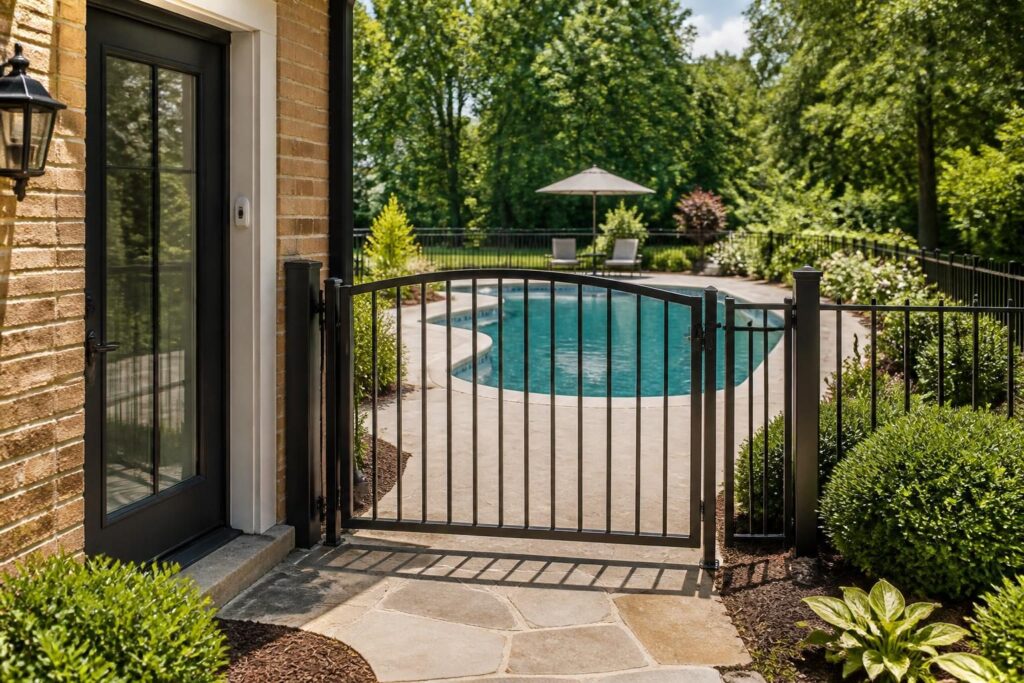
A residential pool gate and door safety checklist North Carolina homeowners can use should separate two questions: does an access point work reliably, and does it meet the requirements enforced at your property? A gate may appear secure but fail to close after a child, pet, wind gust, or uneven surface affects it.

This guide focuses on practical checks for doors and gates that lead to a residential pool area. It does not determine whether a barrier complies with your local code. A residential pool gate and door safety checklist North Carolina homeowners use should support, not replace, local review. Requirements can vary by jurisdiction, adopted code, property layout, pool type, and project scope.
Start with the barrier and access plan
Before testing hardware, identify every route someone could take to reach the water. Include pedestrian gates, doors from the house, garage access, side-yard openings, removable sections, and any path created by furniture or landscaping.
- Walk the property from the street, driveway, house, garage, and yard.
- Mark each access point on a simple sketch or site plan.
- Note whether each route is intended to remain locked, self-closing, alarmed, or controlled by another safety measure.
- Look for objects that could make climbing easier, such as chairs, planters, storage boxes, toys, and ladders.
- Check whether a future deck, planting bed, retaining feature, or grading change could alter the barrier.
The federal CPSC residential pool barrier guidance offers useful safety concepts. Treat it as consumer guidance, not as a replacement for the current requirements enforced in your location.
For broader planning questions, review the related North Carolina pool site evaluation checklist. A barrier plan works best when it is considered with access, grading, drainage, structures, and daily use.
Residential pool gate and door safety checklist North Carolina homeowners can perform
Self-closing gate test
Open the gate from several positions and release it without pushing. Observe whether it closes fully each time. Test it from a narrow opening, a wider opening, and the position people normally use.
- First, watch the gate move freely without rubbing the ground or posts.
- Next, confirm complete closure rather than a stop short of the latch.
- In windy conditions, check whether movement prevents closure.
- After repeated cycles, verify that the gate still closes reliably.
- Keep a temporary object, such as a hose, away from the swing and test again.
Do not rely on a single successful test. Ground movement, settling, rust, loose fasteners, worn hinges, or seasonal swelling can change performance. Keep the gate area clear and inspect it after landscaping, grading, fence work, or severe weather.
Self-latching gate test
A self-latching gate should engage its latch when released. Watch and listen for the latch to catch. Then pull the gate gently without operating the release. Do not force the hardware or defeat the latch during testing.
- Test the latch from both sides of the gate.
- Check whether the latch aligns consistently with its strike.
- Look for looseness, corrosion, missing screws, or damaged covers.
- Confirm that a child could not easily operate the release from the accessible side.
- Check whether a gate-mounted keypad, magnet, or other device affects closure.
Hardware adjustments can affect safety and may affect compliance. Ask the installer or a qualified fence or pool professional before changing the latch location, height, swing, or other design feature.
Door access test
Pool-area doors deserve the same attention as gates. Open and release each door normally. Check whether it closes fully, engages its latch, and remains secure when the handle is not held.
- Test doors from the inside and outside where both sides are accessible.
- Check for worn hinges, loose strike plates, damaged weather seals, and warped frames.
- Confirm that a screen door does not create a false sense of security.
- Keep chairs, benches, toys, and storage items away from the door.
- Review whether a dog door, pet door, or modified opening creates another route.
Ask a qualified professional about door alarms or other safeguards if a home door provides access to the pool area. An alarm is a supplement, not a substitute for a properly planned barrier and active supervision.
Separate general safety checks from local requirements
General safety practice asks whether an access point closes and latches every time. Local review asks whether its design, location, dimensions, hardware, openings, and relationship to the home satisfy the currently adopted requirements.
Those questions overlap, but they are not identical. A homeowner should not assume that a product label, a neighbor’s fence, an older installation, or a contractor’s verbal explanation establishes current compliance.
Before building, altering, or replacing a barrier, contact the local inspections or building department. Ask which rules apply to your pool and access points, which documents are needed, and whether an inspection is required. North Carolina code material and interpretations appear through the Office of State Fire Marshal documents page, but the local authority should confirm the applicable requirements and interpretation.
Record the name of the office, the date of your call, the questions asked, and any written guidance received. Requirements can differ with jurisdiction, adopted code, existing conditions, permits, and the exact work proposed.
Use a repeatable home inspection routine
A short routine helps reveal failures that a one-time walkthrough can miss. Choose a schedule that fits your household and repeat the same steps after changes to the yard or barrier.
- Walk every route to the pool.
- Remove or identify climbable objects near the barrier.
- Open and release each gate and door.
- Confirm complete closure.
- Confirm latch engagement without operating the release.
- Inspect hinges, posts, fasteners, frames, and ground clearance.
- Test alarms according to the manufacturer’s instructions.
- Close and secure the pool area after the test.
Make the check when the yard is dry and again after rain, high wind, heavy use, or landscaping work. Wet soil, erosion, fallen branches, and displaced mulch can affect a gate or create climbing opportunities.
Do not test by asking a child to approach the water or operate the latch. Adults should perform the check while children remain away from the pool area.
Document defects and repairs
Keep a simple barrier record. It can include the date, access point, observed condition, photo, action taken, and follow-up date. Photos should show the full gate or door and a close view of the problem.
- Describe the issue plainly: “gate stops before latch engages.”
- Record whether the issue is temporary or still present.
- Save product manuals and instructions for alarms, locks, and closers.
- Keep receipts, service notes, permits, inspection records, and written recommendations.
- Note who performed a repair without making assumptions about compliance.
If a defect affects access control, keep the pool area secured through another practical measure while waiting for qualified assistance. Do not improvise with unsafe cords, unstable furniture, damaged locks, or obstructed exits.
At project handover, ask for barrier and alarm instructions along with the other ownership records. The new pool handover checklist can help organize manuals, records, safety information, and maintenance details.
Questions for the installer or qualified professional
Use written questions so the answers remain clear:
- Which access points does the barrier design include?
- How should the closer and latch be tested and maintained?
- What conditions could prevent reliable closure?
- Which alarms or controls did the installer include, and how should you test them?
- What changes to landscaping, grading, doors, or gates should be reported?
- Which local office should confirm current requirements?
- What records should the installer provide at handover?
Ask for the scope and maintenance instructions in writing. If the project includes electrical alarms, powered locks, lighting, or other wiring, use a properly qualified electrician for that work.
Build safety habits around the hardware
Reliable gates and doors are only one layer of protection. The Pool Safely safety tips emphasize layers that can include barriers, supervision, alarms, and safe swimming practices.
Tell household members and visitors which doors and gates must remain closed. Do not prop them open for convenience. Recheck access after parties, deliveries, pet care, children’s play, and pool service.
Keep emergency contacts and rescue equipment easy to find. Adults responsible for supervision should know the pool location, entry routes, and household emergency plan.
A practical residential pool gate and door safety checklist North Carolina homeowners can use is a living record, not a one-time form. Inspect after repairs, weather, settling, and yard changes. If you are unsure about a local requirement or a hardware condition, consult the local inspections department, a licensed pool contractor, fence professional, electrician, or other qualified specialist before relying on the access point.