
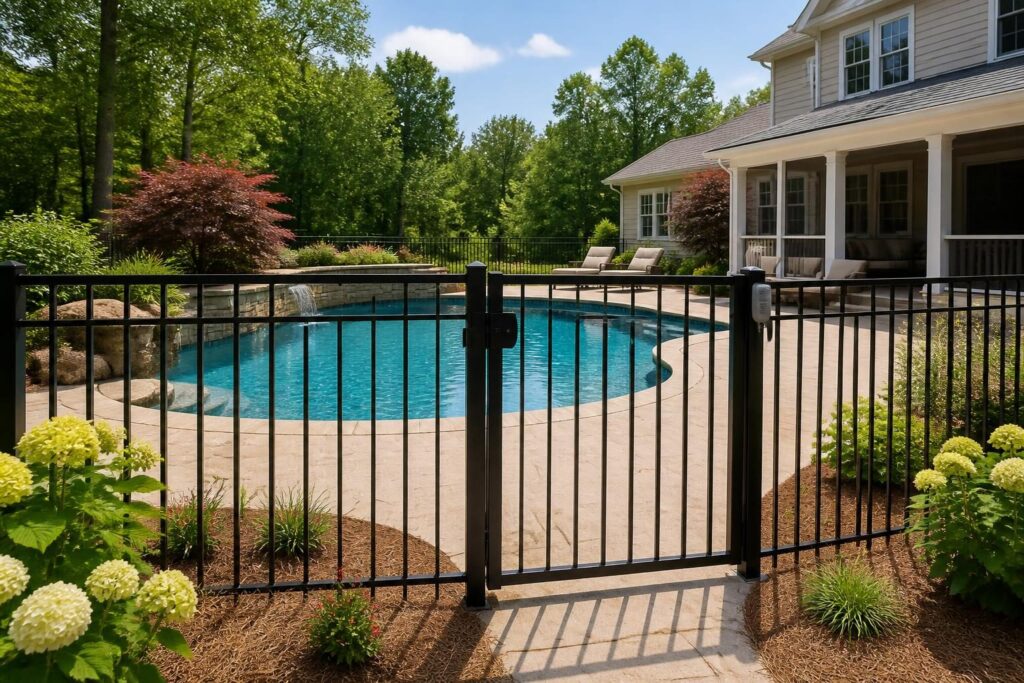
Choosing among pool alarm options North Carolina homeowners can find is easier when each device has a defined job. A perimeter alarm watches the area around the pool. A gate or door alarm monitors an access point. An in-water alarm reacts to movement in the water. These systems can add warning time, but none replaces a properly planned barrier, an attentive adult, or safe household habits.

North Carolina requirements can vary by jurisdiction, property conditions, adopted code, and project scope. An alarm may help your household without being required, or it may not satisfy a local requirement. Before buying, ask the local inspections department which current rules apply to your pool, doors, gates, barriers, and electrical connections.
Start with the safety problem you want to detect
Pool alarms do not all detect the same event. First identify how an unsupervised person, child, or pet could reach the water. The likely access route should guide your comparison. These pool alarm options North Carolina homeowners consider work best when the device matches that route.
- From the yard: A person may pass through an open area or climb over an unsuitable boundary.
- Through a gate: A gate may stay open, fail to latch, or open for someone who does not understand the risk.
- Through the house: A door leading toward the pool may open while adults feel distracted.
- Into the water: Someone already near the pool may fall or enter unexpectedly.
Walk the property at different times of day. Note doors, gates, retaining features, furniture, pet routes, landscaping, and places where supervision proves difficult. A device can only help if it covers the actual path and produces a signal someone can hear or receive.
The U.S. Consumer Product Safety Commission describes pool safety as a set of layers. Review its Pool Safely safety tips, then confirm local requirements with the authority having jurisdiction.
Perimeter alarms: watching the approach
A perimeter alarm creates an invisible detection zone around part of the pool or yard. Depending on the product, it may use infrared beams, motion detection, or another sensing method. The exact coverage, mounting height, detection range, and environmental limits differ by model.
This category may suit a pool with a defined open area where people must cross before reaching the water. It can provide an alert before entry, which may create useful response time. However, landscaping, slopes, furniture, pets, rain, insects, wind, and changing light can affect performance.
Questions for a perimeter alarm
- What area does one unit cover, and where are gaps?
- Can the system distinguish a child, adult, pet, falling branch, or blowing object?
- Does it work during rain, humidity, darkness, or bright sun?
- Can someone bypass the zone by walking around it?
- How will you check batteries, sensors, and alignment?
Do not treat a perimeter alarm as a substitute for a physical barrier. A fence or other approved barrier controls access even when the alarm sits off, falls out of range, or encounters difficult conditions.
Gate and door alarms: monitoring access points
Gate and door alarms monitor a specific opening. They may sound at the opening, send a notification, or do both. Some products detect opening only. Others may include a sensor for movement, latch status, or an attempt to defeat the device.
These alarms help when a gate or house door provides the normal route to the pool. They can remind occupants to close an opening and alert an adult when access occurs. The alarm may help less if the gate does not close reliably, the door stays propped open, or people cannot hear the signal from common living areas.
Review the installation carefully. A gate sensor must remain aligned after seasonal movement, maintenance, and landscaping. A door device should not encourage a household to leave the door unsecured because an alarm exists. Battery condition, adhesive failure, damaged wiring, and a muted chime can all reduce protection.
For a broader review of latches, access habits, and alarm placement, use this residential pool gate and door safety checklist. It should support, not replace, local verification.
In-water alarms: detecting water movement
An in-water alarm detects a disturbance at the pool surface. A floating unit may sense waves. A submerged sensor may monitor pressure or movement below the surface. Some devices let a homeowner adjust sensitivity or temporarily suspend detection during normal swimming.
This category can alert you after a person or pet enters the water. It does not prevent entry, and the alert may occur after the most important opportunity for prevention has passed. Waves from rain, return jets, cleaners, toys, or wind may cause unwanted alarms. Sensitivity settings can create a difficult balance between missed events and frequent alerts.
Check these in-water alarm limits
- Is the device suitable for your pool shape, depth, cover, and water features?
- Does it detect a small child or pet in the way the manufacturer describes?
- What happens when you install or remove a cover?
- Can you suspend normal swimming without leaving the system forgotten?
- How often must you remove, clean, charge, or test the unit?
Ask the installer or manufacturer for written operating instructions. Do not infer performance from a product label, a demonstration, or a general category description.
Features worth comparing before purchase
Focus on the complete system rather than the loudest siren or longest list of features. A practical comparison should include detection, notification, installation, maintenance, and household use. Among the pool alarm options North Carolina homeowners review, the best fit depends on the response plan, not just the device category.
For many households, pool alarm options North Carolina homeowners compare should be judged by reliable daily use, not by feature count alone.
| Feature | What to evaluate |
|---|---|
| Alert location | Can people near the pool and inside the home hear it? |
| Remote notification | Does it need Wi-Fi, cellular service, an app, or a hub? |
| Power | What happens when batteries, internet, or household power fail? |
| Weather resistance | Does the product suit outdoor exposure in your installation? |
| False-alarm control | Can you adjust sensitivity without reducing useful detection? |
| Testing | Are test steps clear, repeatable, and easy for every caregiver? |
| Maintenance | What must you clean, align, charge, replace, or update? |
Consider the people who must respond. A phone notification may fail if the app signs out or the phone stays silent. A siren may not help if windows remain closed or occupants stay far from the house. Choose a notification path that matches your daily routine.
Testing and everyday use matter as much as features
Read the manual before installation. Record the model, serial number, power source, installation date, and warranty information. Keep instructions where caregivers can find them. If a professional installs the device, ask for a demonstration and written confirmation of the system’s intended coverage.
Create a simple test routine. Test after installation, after battery replacement, after a gate or door adjustment, and after severe weather or landscaping work. Follow the manufacturer’s method. Confirm that the alarm activates, the notification reaches the intended people, and you can restore the system after testing.
- Test each access point separately.
- Check that the alarm sounds where adults normally occupy the home and yard.
- Confirm app accounts, contact numbers, and notification permissions.
- Inspect sensors for damage, corrosion, movement, or blocked detection areas.
- Record the test date and any corrective action.
Do not test by creating an unsafe entry situation. Use the manufacturer’s procedure, and keep children and pets away from the water during checks.
Build alarms into a layered safety plan
The strongest plan combines several independent protections. A physical barrier can slow access. A self-closing and self-latching gate can reduce an open route. Door controls can limit movement from the house. An alarm can provide warning. Supervision allows an adult to respond directly.
Use a cover only as directed for that product and pool. A cover designed for heat or evaporation may not provide the same protection as a safety cover. Ask a qualified professional how the selected cover works with your pool and household habits.
For planning purposes, write down who supervises, where phones stay, how visitors receive safety instructions, and what happens when the alarm sounds. Keep rescue equipment accessible. Teach household members not to silence an alarm without checking the pool and restoring the system.
Federal consumer-safety guidance is useful background, but local code controls the project. The North Carolina Office of State Fire Marshal documents page explains where to find state building-code materials and interpretations. Confirm the currently adopted requirements and local interpretation with your inspections department.
Questions to ask before choosing a pool alarm
- Which access route does this device cover?
- What event does it detect, and what events can it miss?
- What conditions create false alarms?
- Who will install, test, maintain, and document it?
- What happens during a power, battery, Wi-Fi, or phone failure?
- Does the product work with the planned cover, water features, pets, and landscaping?
- What local barrier, permit, inspection, or electrical questions remain?
Save product literature, receipts, manuals, installation notes, test records, and replacement dates with your pool documents. The new pool handover checklist can help you organize manuals, access details, and safety information when a new installation changes hands. Build a Pool in North Carolina can help homeowners organize planning questions, but product suitability and local compliance still require verification.
When to get professional help: Consult the local inspections department about current requirements. Ask a licensed pool contractor about placement and integration. Use a licensed electrician for required electrical work, and involve an engineer, surveyor, septic professional, or other qualified specialist when site conditions call for one.