
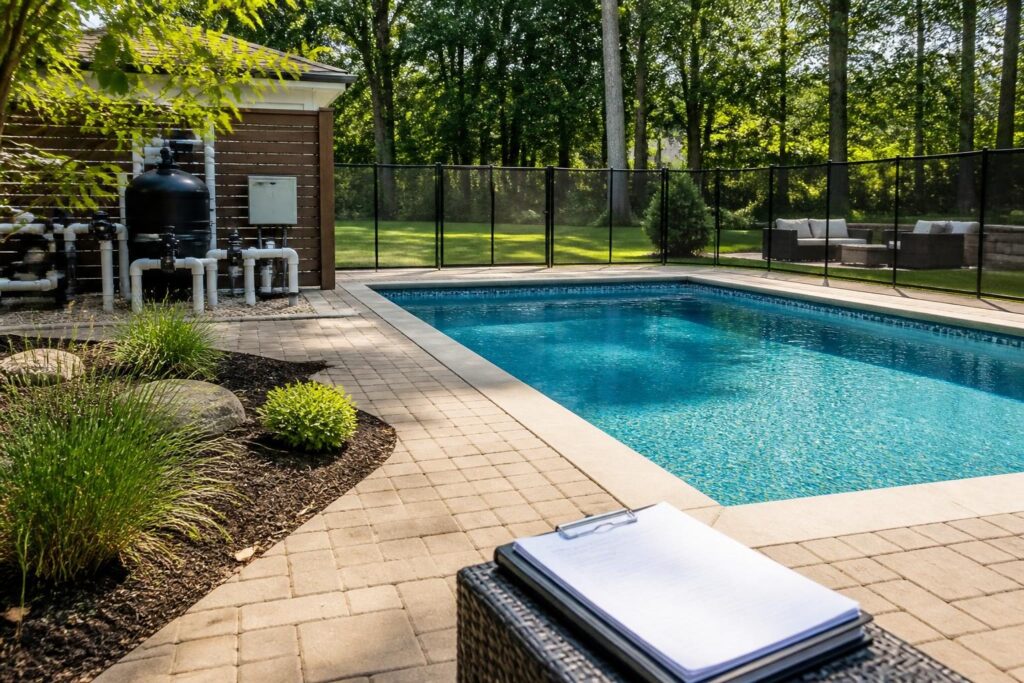
A new pool final walkthrough checklist North Carolina homeowners can use turns project handover into a structured review. The goal is not to find fault or replace professional inspections. It is to confirm what the team installed, learn how it operates, collect useful records, and list anything that still needs attention.

Schedule the walkthrough when the work is substantially complete and the relevant systems can operate safely. Bring your contract, approved drawings, change records, and notes from earlier decisions. Take dated photos, write down questions, and ask the project representative to demonstrate each feature rather than simply describing it.
Prepare before the new pool final walkthrough
A rushed review can overlook small details that matter later. Start by comparing the installed work with the latest approved plan and written scope. Check whether changes have written records, prices, and acceptance under your agreement. The allowances and exclusions checklist can help you identify scope items that need a clear status.
- Bring the latest plan set, finish selections, equipment schedule, and change orders.
- Ask which items the team completed, which remain pending, and which require a later service visit.
- Confirm that the project team has addressed required local inspections or approvals. Requirements can vary by jurisdiction and project scope.
- Use a written punch list with an owner, action, target date, and completion evidence for every open item.
- Keep copies of photos, demonstrations, readings, and signed handover documents in one project folder.
Do not treat a clean appearance as proof that every requirement is complete. Your local inspections department controls local permitting and inspection questions. For North Carolina code documents and interpretations, review the Office of State Fire Marshal resources, then confirm the current local position with the appropriate authority. This new pool final walkthrough checklist North Carolina homeowners use should support that local verification, not replace it.
Review finishes, surfaces, and the surrounding area
Walk slowly around the entire pool. Look at the waterline tile, coping, interior finish, steps, benches, ledges, returns, skimmers, and visible fittings. Compare colors and selected materials with your records. Some finishes can change as they cure or receive normal startup care, so ask the qualified pool professional which observations are expected and which require documentation.
Use a visual finish checklist
- Check tile alignment, transitions, visible cuts, and areas where fixtures meet the finish.
- Look for loose, cracked, chipped, stained, or incomplete materials without making a technical diagnosis.
- Confirm that the team supplied covers, grates, trim pieces, handrails, and removable components.
- Walk the deck and note unfinished edges, sealant gaps, trip concerns, drainage inlets, and areas needing cleaning.
- Observe doors, gates, latches, barriers, and landscaping interfaces from every normal access route.
Ask how to clean each finish, what products to avoid, and whom to contact if a condition changes. Record the location of every open item with a photo and simple description. Avoid applying sealants, adjusting fittings, or attempting repairs during the walkthrough unless the responsible professional directs you.
Operate pool equipment with the installer
Homeowner training should be practical. Ask the installer to start, stop, adjust, and safely shut down each system. You should understand normal controls without opening electrical enclosures, bypassing safeguards, or changing settings that require a qualified technician.
- Pump and filter: Identify normal operating modes, visible pressure information, cleaning indicators, and safe shutdown steps.
- Heater: Learn the control sequence, required clearances, normal start-up conditions, and situations that require service.
- Sanitation system: Confirm the purpose of the installed chlorination, salt, or chemical-feed equipment and its routine checks.
- Automation: Test schedules, app access, remote controls, sensors, and manual overrides. Confirm who owns the account.
- Lighting: Operate each circuit and record switch, transformer, timer, and replacement information. Keep the related lighting control documentation.
- Water features: Demonstrate waterfalls, bubblers, jets, fountains, and valves. Note their correct operating positions.
Ask for a normal operating baseline. This may include usual valve positions, control settings, filter information, and equipment sounds. Do not assume a single reading proves proper performance. A licensed pool professional, electrician, or other qualified specialist should address technical concerns. Add the demonstrated settings to your new pool final walkthrough checklist North Carolina records.
Confirm safety features and access controls
Safety equipment deserves its own review. Walk the barrier line and identify every route from the home, yard, deck, driveway, and neighboring areas. Check that gates and doors behave as intended, but do not declare code compliance yourself. North Carolina requirements can vary with jurisdiction, adopted code, property conditions, and project scope.
Review the federal consumer guidance in Pool Safely’s safety tips. It presents layers of protection, including supervision, barriers, alarms, and safe drain practices. Local requirements remain controlling, and professional confirmation is appropriate when a feature raises a code or safety question.
- Identify the pool barrier, gates, latches, door alarms, and any approved cover.
- Ask who should test each feature, how often, and what result requires service.
- Confirm that drain covers and suction fittings are installed and undamaged. Do not remove them.
- Locate rescue equipment, emergency contact information, shutoffs, and first-aid supplies.
- Discuss supervision expectations with everyone who may care for children or guests.
Keep safety features in their operating condition after handover. Furniture, toys, planters, decorative items, and landscaping can affect access or barrier performance. If the property has unusual grades, retaining walls, doors, or shared access, ask the local inspections department or qualified safety professional for property-specific guidance.
Collect records before signing completion documents
The finished project includes records. Ask for documents in a readable, durable format rather than relying on scattered emails. The permit and inspection records guide offers a useful way to organize approvals and related paperwork.
- Final plans, approved revisions, equipment schedules, and product selections.
- Permit information, inspection results, approval records, and correction documentation, when applicable.
- Manufacturer manuals, model and serial numbers, installation records, and service contacts.
- Warranty terms, registration instructions, exclusions, transfer conditions, and claim procedures.
- Water-care instructions, startup records, baseline settings, and maintenance recommendations.
- Electrical and gas documentation provided by qualified professionals, where applicable.
- Drainage, grading, retaining-wall, septic, well, or landscape records that affect future care.
- Keys, remotes, access credentials, software account ownership, and replacement-part information.
Ask which records are final and which remain pending. Save a backup away from the equipment area. Make a simple index so another household member or future service provider can find the pump manual, warranty, shutoff information, and safety documents quickly.
Resolve open items with a written punch list
A punch list is a controlled record of incomplete, damaged, missing, or unclear work. It should describe the item without assigning a legal conclusion. Separate cosmetic observations from operation, safety, drainage, or documentation questions. The responsible contractor should explain the proposed correction and any required follow-up.
| Record | What to note |
|---|---|
| Location | Use a photo, plan reference, or clear area description. |
| Condition | Describe what you see or what failed during the demonstration. |
| Responsible party | Identify the trade or project contact assigned to respond. |
| Next step | Record the proposed inspection, repair, replacement, training, or document delivery. |
| Closeout evidence | Note the date, new photo, test demonstration, or received document. |
Ask whether an open item affects safe use, normal operation, maintenance, or a required approval. That answer may affect whether you use the pool or sign a completion document. Payment and acceptance terms depend on your contract, so obtain independent legal advice if you need help interpreting them.
Practice homeowner training before handover
Training is complete only when you can repeat the basic tasks safely. Ask the trainer to watch you perform normal controls. Write down unfamiliar terms and request plain-language explanations.
- Show how to operate the pump, filter, heater, lights, cover, and water features.
- Explain which valves or settings should remain unchanged during normal use.
- Demonstrate the safe response to a pump alarm, equipment leak, power interruption, or unusual noise.
- Review routine water-care testing, chemical storage, personal protective equipment, and service boundaries.
- Practice locating electrical, gas, water, and equipment shutoffs without removing covers.
- Confirm seasonal questions, including cold-weather protection and reopening steps.
For seasonal records, retain the relevant equipment instructions and ask a qualified pool professional what applies to your system. A walkthrough is not a substitute for electrical, gas, structural, water-quality, or code review.
Decide when the project is ready for handover
Before final acceptance, compare the contract scope with the installed work and the punch list. Confirm that safety concerns, required approvals, operating demonstrations, and essential records have a documented status. Do not let pressure to finish replace a clear written record.
Use this final decision list:
- Can you identify every major system and operate it as instructed?
- Do you know which items remain open and who will address them?
- Have you received the records needed for maintenance, warranty, and future service?
- Are safety features installed, understood, and reviewed with the appropriate authority when needed?
- Have you saved photos, plans, approvals, settings, and training notes?
Use this new pool final walkthrough checklist North Carolina homeowners can keep with their project records. Build a Pool in North Carolina encourages homeowners to treat handover as a recordkeeping and learning step, not only a final appointment. Consult your local inspections department about current local requirements. Use a licensed pool contractor, electrician, engineer, surveyor, septic professional, or other qualified specialist when the question involves their field.