
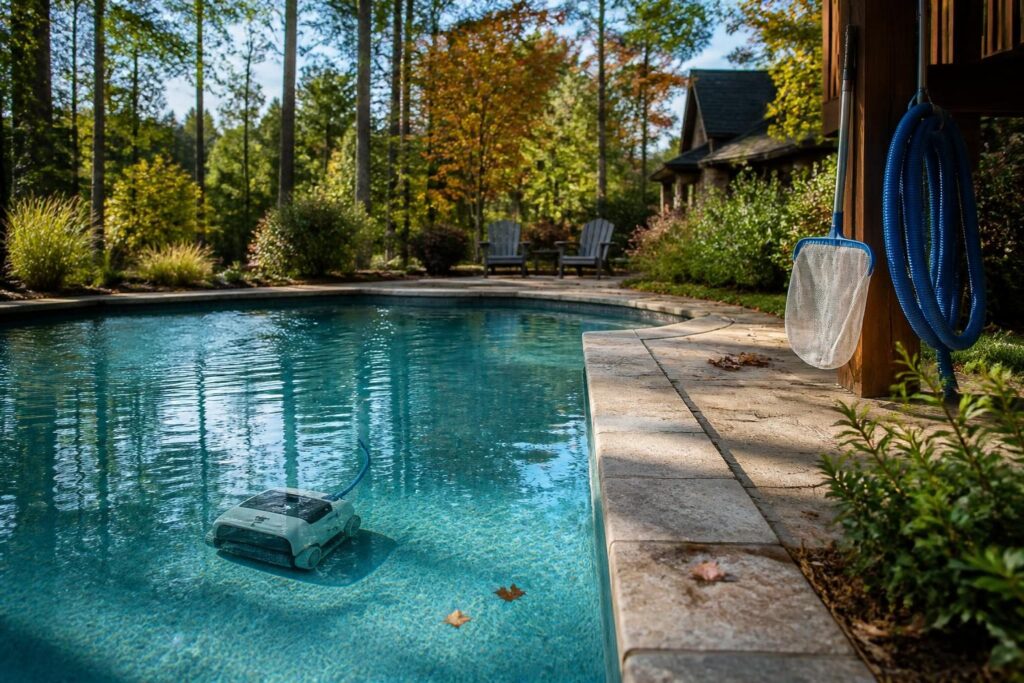
Choosing among pool cleaning system options North Carolina homeowners can use starts with the debris your yard produces and the effort you want to manage. A wooded lot, open lawn, nearby construction, or heavy seasonal pollen can create very different cleaning demands.

No system removes every maintenance task. Each approach moves or collects debris in a different way. Some use the pool’s circulation pump. Others use a separate motor, water pressure, or built-in floor outlets. The right comparison should include cleaning performance, storage, service access, operating energy, and storm cleanup. Reviewing pool cleaning system options North Carolina homeowners can actually maintain helps keep the purchase decision practical.
Start with debris, pool shape, and daily habits
Large leaves, pine needles, pollen, fine dust, grass clippings, and settled dirt do not behave alike. A surface skimmer can catch floating material, while a floor cleaner must reach debris that sinks. Fine particles may also pass through or load a filter quickly.
North Carolina yards can change through the year. Spring pollen may create a surface film. Summer storms can add leaves and sediment. Fall brings heavier leaf loads in many neighborhoods. Match your cleaner to the times when the pool needs the most help.
- Heavy leaves: Look for a system that collects larger debris without frequent clogging.
- Fine dust or pollen: Ask how the cleaner handles small particles and whether the filter needs more frequent service.
- Settled debris: Check floor coverage, wall-climbing ability, and performance on steps or ledges.
- Irregular shapes: Confirm whether the cleaner can navigate coves, benches, tanning ledges, and tight corners.
- Limited storage: Measure a dry, shaded location for hoses, poles, cords, bags, and accessories.
Pool size and shape also affect the practical result. A cleaner that works well on an open rectangle may need more supervision around curves, shelves, raised spas, or unusual steps.
Manual pool cleaning tools: control with more homeowner labor
Manual cleaning usually combines a telescoping pole, skimmer net, brush, vacuum head, and vacuum hose. You guide the tools across the pool and direct debris through the circulation system or into a collection bag, depending on the equipment.
This approach offers strong control. You can target steps, corners, walls, waterline areas, and spots where leaves collect. It also avoids adding a dedicated cleaner motor. Storage is straightforward, but the tools need a protected place where they will not become trip hazards or suffer sun damage.
The tradeoff is time and consistency. Manual work depends on someone noticing debris, connecting equipment, and cleaning often enough to prevent buildup. Vacuuming through the pool system can also add debris to the filter. Follow the equipment instructions before changing valves or operating modes.
Manual cleaning may fit when:
- The pool has light debris and a simple shape.
- Precise control over stairs and shallow features matters to you.
- A lower equipment purchase cost matters more than reduced labor.
- Regular brushing and inspection already fit your routine.
Manual tools remain useful even when another cleaner does most of the work. They can handle storm debris, spot cleaning, and areas an automatic unit misses.
Robotic cleaners: independent cleaning with simple scheduling
A robotic cleaner has its own electric motor and onboard filter or debris container. It operates separately from the pool’s main circulation path, although the unit still works in the water and requires safe handling around electrical equipment.
Robotic units can reduce reliance on the main pump during cleaning cycles. Many models scrub or brush surfaces while collecting debris in an internal basket or bag. That can make them useful for fine material and routine floor cleaning, but coverage varies by model.
Consider the complete handling routine, not only the cleaning cycle. Remove the unit as directed, empty it, rinse it when needed, and store it out of direct sun. Cords require careful placement. A robotic cleaner also has moving parts and electronic components that may need model-specific service.
- Ask whether the model cleans the floor, walls, waterline, steps, or only selected surfaces.
- Confirm the container capacity for your normal leaf and pollen load.
- Review cord length, control features, storage needs, and manufacturer care instructions.
- Find out how to handle the unit after storms or when water clarity is poor.
Energy use depends on the unit, cycle length, and operating frequency. Compare the product’s electrical information with the rest of your equipment. Do not assume a separate cleaner always uses the least energy.
Pressure-side cleaners: water pressure and collection bags
A pressure-side cleaner uses return-water pressure to move around the pool. Depending on the design, it may require a dedicated booster pump or connect to an existing return line. The cleaner usually carries a debris bag that collects larger material before it reaches the main filter.
This collection method can suit yards with leaves and larger debris. Emptying the bag often proves more direct than opening the pool filter after every cleaning cycle. However, the bag takes storage space and may need frequent emptying during windy weather or fall leaf season.
Energy use depends heavily on whether a booster pump operates with the cleaner. A booster pump adds another motor and another operating schedule. Ask a contractor or equipment professional to explain the controls, service access, and electrical requirements for the proposed setup.
Pressure-side systems may fit when large debris creates the main cleaning problem, you want to collect leaves before they load the primary filter, and your equipment layout has room for connections and service access. Accept regular bag emptying and hose storage as part of the routine.
Suction-side cleaners: circulation-powered floor cleaning
A suction-side cleaner connects to a suction port or skimmer and uses the pool pump’s suction to move. Debris travels through the pool’s filtration system rather than into a separate collection bag.
These systems can offer a relatively simple equipment arrangement. They may work well for routine floor debris, especially when the pool has a straightforward shape. Their performance depends on pump operation, suction flow, hose condition, and a clean filter.
Because debris enters the circulation system, filter loading becomes an important consideration. Leaves or fine material may increase cleaning frequency. A blocked hose or poor water flow can also reduce movement. Follow the equipment manual and avoid adjusting suction valves without understanding the system.
Ask how the cleaner connects, which valves control it, and what happens when the skimmer basket or filter needs service. A clear valve label and written operating sequence can prevent confusion during routine maintenance.
Built-in and in-floor cleaning approaches
Built-in systems use fixed floor heads, dedicated outlets, or circulation patterns that installers coordinate with the pool during construction. Water movement directs debris toward a collection point, often helping the circulation system remove material without placing a separate cleaner in the pool.
The main attraction is convenience and reduced visible equipment in the swimming area. No floating hose needs storage during use. The design may also support a cleaner appearance and predictable floor coverage when professionals specify it for the pool’s shape.
These systems require more planning before construction. The location of floor heads, plumbing, controls, and access points matters. Repairs may also prove more involved because components integrate with the pool structure or plumbing layout.
Compare built-in cleaning when you are still designing the pool, portable cleaners create problems around special features, or you value fewer loose components around the deck. Request a drawing or equipment schedule that identifies cleaning heads, valves, pumps, controls, and service access. Keep those records with the pool’s other equipment documents.
Compare maintenance effort, storage, and energy use
When comparing pool cleaning system options North Carolina homeowners should review four practical categories: required tasks, storage, filtration effects, and electricity use.
| Approach | Debris fit | Homeowner effort | Storage needs | Energy questions |
|---|---|---|---|---|
| Manual | Flexible for spot cleaning and mixed debris | Highest direct labor | Poles, nets, hose, and vacuum head | No dedicated cleaner motor, but circulation may run during vacuuming |
| Robotic | Often useful for fine debris and routine surface cleaning | Remove, empty, rinse, and store | Unit, cord, and control equipment | Separate electric motor and cycle schedule |
| Pressure-side | Often useful for larger debris | Empty bag and check hoses | Hose and debris bag | Ask whether a booster pump is required |
| Suction-side | Routine floor debris through the filter | Check hose, flow, baskets, and filter | Hose and cleaner head | Uses circulation pump suction and operating time |
| Built-in | Designed coverage based on pool layout | Routine system and filter care | Few loose poolside parts | Review pumps, valves, controls, and schedules |
Energy comparisons should include the whole circulation system. A cleaner may change pump run time, filter loading, valve settings, or the need for a booster pump. ENERGY STAR’s pool pump guidance provides information about certified pumps and energy-performance considerations.
For a homeowner-specific record, note the pump model, cleaner model, typical cycle, seasonal settings, and observed maintenance. The pool equipment energy monitoring checklist can help organize those observations.
Questions to ask before selecting a system
- Which debris types does this system handle best?
- Will it clean walls, steps, ledges, and the waterline?
- Does it use the main pump, a booster pump, or a separate motor?
- What parts must you empty, brush, rinse, or replace?
- Where will hoses, cords, bags, and the cleaner go?
- What electrical connection or control requirements apply?
- How does the system perform after pollen, heavy rain, or leaf fall?
- Which valves, baskets, filters, or screens need homeowner attention?
- What service access do motors, pumps, and controls need?
- Which instructions and records will the contractor provide?
Before swimming after a major storm or equipment problem, inspect the pool and confirm appropriate circulation and water care. Use the North Carolina pool maintenance after storms checklist for a structured review. For routine debris removal, see the guide to removing pool debris safely.
Make the decision fit your whole maintenance plan
The best pool cleaning system options North Carolina homeowners choose are not judged by automation alone. Match the system to the yard, pool geometry, debris, storage space, filter capacity, service plan, and energy goals.
Ask for the proposed equipment list in writing. Save manuals, model numbers, connection diagrams, cleaning instructions, and recommended maintenance intervals. Those records make future troubleshooting easier and help a service professional understand the installation.
General comparisons cannot confirm local electrical, construction, or equipment requirements. Consult your licensed pool contractor or equipment professional for system compatibility. An electrician should address electrical work, and the local inspections department should confirm applicable requirements for your property and project scope.