
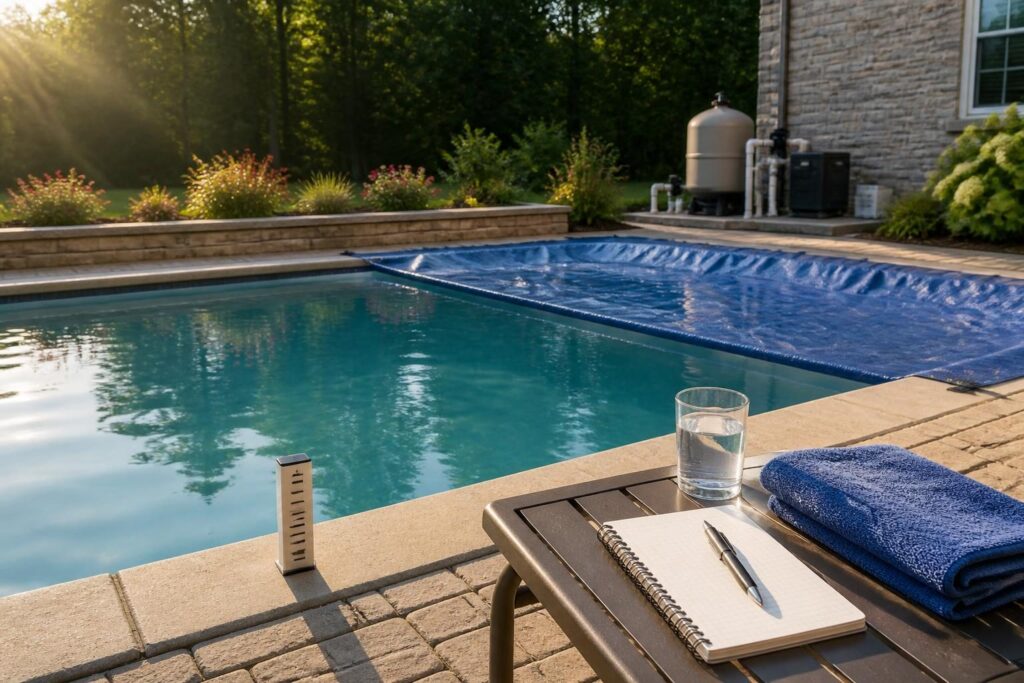
Pool water evaporation versus leak North Carolina homeowners notice can be difficult to separate during hot, humid, windy, or heavily used periods. A lower water level does not prove a leak. Evaporation, splashing, filter cleaning, cover fit, and rain can all change what you see.

A careful observation process can help you organize useful information without making an unsafe diagnosis. The goal is to identify patterns, control the comparison where practical, and know when a licensed pool professional should evaluate the plumbing, shell, equipment, or surrounding soil.
Why pool water loss changes across North Carolina
Evaporation happens when water at the surface changes into vapor. Warm water, hot air, moving air, sunlight, and low surface humidity can increase that loss. North Carolina conditions vary by region and season, so one household’s normal pattern may not match another’s.
Humidity can slow evaporation, but it does not stop it. Wind over an uncovered pool can carry away moisture. A pool heater may also increase the difference between water and outdoor temperatures. Nearby trees, open yards, and exposed decks can create different wind conditions around the same pool.
Use can produce a temporary drop that looks like evaporation. Swimmers carry water away on clothing and skin. Splashing can affect the waterline, deck, and nearby landscaping. Backwashing a sand or diatomaceous earth filter, draining a vacuum canister, or lowering the pool for maintenance can also change the level.
Rain makes the record harder to interpret. A storm can raise the pool while wind and splashing lower it. Heavy rain may also leave debris, alter drainage, or change the appearance of damp soil around the equipment area. For seasonal context, review the North Carolina humidity pool maintenance guide.
Start with a simple water-loss record
Begin with a written record rather than a conclusion. Choose a consistent reference point, such as the middle of the skimmer opening or a marked point on the tile. Do not place a permanent mark on a surface without confirming that it is appropriate for the finish.
Record the date, time, water level, weather, pool use, cover position, pump status, and any water added. A photograph taken from the same location can support the written entry. Keep readings as consistent as possible. A single observation is less useful than a pattern across several comparable periods.
- Note rain, strong wind, unusually dry air, and high temperatures.
- Record swimming, splashing, water features, and automatic cleaners.
- Write down filter cleaning, backwashing, vacuuming, and equipment service.
- Describe whether the cover was fully installed, partly open, wet, or damaged.
- Record the amount of water added and how you estimated it.
- Photograph the waterline and visible equipment-area conditions.
Check the pool at a safe time and avoid entering equipment areas that are wet, flooded, confined, or electrically hazardous. Never open electrical equipment or remove covers to search for a leak. If water is near electrical components, stop and contact a qualified professional.
Compare weather, usage, and cover conditions
The most useful early comparison is between similar days. Compare an uncovered period with another uncovered period that had similar weather and little or no swimming. Then compare covered periods when you fitted and used the cover in the same way.
For pool water evaporation versus leak North Carolina observations, a cover can reduce surface exposure, but it is not automatically a leak-control device. A loose, torn, waterlogged, or poorly stored cover may allow more evaporation than expected. Some covers also require careful handling to avoid damage or unsafe access. Follow the cover maker’s instructions, and do not treat a cover as a substitute for required barriers or supervision.
Water features deserve separate attention. A raised spillway, fountain, slide, or return feature can increase movement and surface exposure. Run the feature only as normally intended during a comparison. If you switch the feature off, record that change because it affects the result.
Swimmer behavior matters too. A busy weekend and a quiet weekday are not equivalent observations. Ask whether children played at the edge, whether towels were soaked, and whether water was carried onto the deck. These details do not prove a cause, but they make the record more useful.
A controlled comparison homeowners can discuss with a professional
Homeowners sometimes use a simple container comparison to observe whether the pool and a nearby container lose water at a similar rate. This is an observation method, not a definitive leak test. Wind, shade, container shape, rain, animals, and differences between the pool surface and container water can affect it.
Set up the comparison carefully
- Use a clean, stable container that will not tip or create a safety hazard.
- Place it near the pool where it receives similar weather exposure.
- Fill it with pool water and record the water levels in both locations.
- Keep the pump, water features, and cover conditions consistent with your comparison plan.
- Check both levels at the same time, without adding water between readings.
- Record rain, swimming, wind, and any disturbance to the container.
Do not place a container where a child or pet could reach it, where it could block a walkway, or where it could become a climbing hazard. Keep the test brief and remove the container afterward. If the pool level changes much more than the container under comparable conditions, document that result and request professional guidance. It still does not identify the leak location or confirm that a leak exists.
For another homeowner-safe observation approach, see pool leak detection clues homeowners can check. Use that information to improve your records, not to open plumbing, bypass controls, or apply pressure to a system yourself.
Inspect visible conditions without dismantling equipment
Look only at areas that are visible and safe to approach. Check for unusual wetness near the equipment pad, exposed pipes, valves, filter connections, pump housing, heater connections, and nearby drainage paths. Wet ground may result from rain, condensation, irrigation, discharge, or a leak, so location and timing matter.
Observe whether the pump basket loses water after shutdown, whether air appears in a clear lid when the system runs, or whether the water level changes differently when circulation operates. These observations can help a service professional. They do not establish a failed component or a buried plumbing problem.
Do not remove pump lids while the system is operating. Do not loosen fittings, touch wiring, enter an excavation, or perform dye testing near drains or moving water. A professional may use specialized methods based on the pool design and symptoms. Ask what test the provider proposes, what areas it covers, and what records the provider will give you.
When the pattern deserves prompt professional attention
Contact a qualified pool contractor or leak-detection specialist when water loss continues during comparable, low-use periods, especially when the pool has a cover and weather remains similar. Also request help when the level falls below a particular feature, the equipment area stays unexpectedly wet, or the surrounding soil changes without a clear weather explanation.
Other reasons to seek evaluation include repeated need for water, unexplained air in the circulation system, persistent loss after equipment service, or water movement that affects nearby structures or drainage. A professional can decide whether the next step involves equipment inspection, plumbing testing, structural review, or another method.
Keep service notes, test results, photographs, invoices, water-level records, and descriptions of conditions before and after service. Avoid claiming that a leak is confirmed until an appropriately qualified professional explains the evidence and limitations of the evaluation.
Protect water quality while you investigate
Adding water changes dilution and can affect sanitizer, pH, alkalinity, and other chemistry. Test according to your normal care routine and record additions. The CDC guidance on home pool water treatment and testing explains general residential testing and treatment considerations.
Do not add extra chemicals simply because the water level is falling. Follow product labels and your pool professional’s instructions. If water clarity, sanitizer readings, or surface conditions change, record those facts separately from the water-loss observations.
Cover use also requires attention to safety. Keep required barriers and supervision in place, and follow the cover manufacturer’s instructions. For general layers of protection, review the Pool Safely safety tips.
A practical decision checklist
Use pool water evaporation versus leak North Carolina as a comparison question, not as a definitive diagnosis.
- Monitor: The change follows hot, windy, uncovered, or heavily used conditions, with no unusual visible wetness.
- Compare: Repeat readings during similar weather and usage, while recording cover and equipment conditions.
- Pause: Stop any observation that involves electricity, unstable ground, deep water, moving equipment, or unsafe access.
- Contact a professional: Persistent or unusual loss continues, or visible conditions suggest a plumbing, equipment, structural, or drainage concern.
- Preserve records: Keep dates, photographs, weather notes, water additions, service reports, and test results together.
For pool water evaporation versus leak North Carolina questions that remain unclear, consult the local inspections department if construction or drainage questions are involved. A licensed pool contractor, electrician, engineer, surveyor, septic professional, or other qualified specialist may be appropriate depending on the suspected condition. North Carolina requirements and recommended responses can vary by jurisdiction, property conditions, adopted codes, utilities, septic systems, flood exposure, and project scope. Build a Pool in North Carolina provides homeowner education, not a definitive leak diagnosis.