
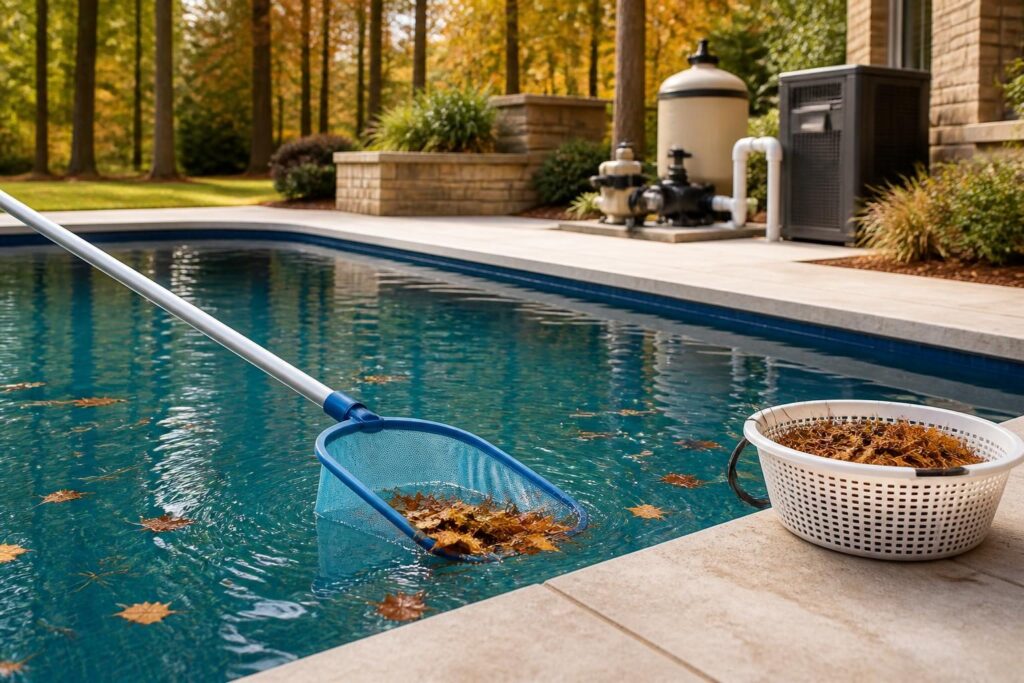
Learning to remove pool debris safely North Carolina homeowners encounter can protect water quality, baskets, pumps, filters, and the pool surface. Leaves, pine needles, pollen, twigs, and storm debris do not all require the same cleanup method. A steady sequence helps you clear the water without sending a large load into the circulation system.

North Carolina yards can produce different debris loads through spring pollen, summer thunderstorms, autumn leaves, and winter wind. Nearby trees, slopes, irrigation, and drainage patterns also affect what reaches the pool. Use this guide for general maintenance planning. Follow your equipment manuals, and ask a qualified pool professional when conditions are unclear.
Start with a safe debris assessment
Before switching on the pump or reaching into the water, look across the pool and equipment area. Identify the type, amount, and location of the debris. A few floating leaves call for a different response than branches, mud, or damaged materials after a storm.
- Check for floating leaves, pine needles, pollen, insects, and small twigs.
- Look for heavy objects, broken branches, glass, metal, or sharp materials.
- Inspect the waterline, steps, skimmer openings, and return fittings from the deck.
- Confirm that the equipment area is dry and accessible.
- Keep children and pets away while covers, poles, hoses, or electrical equipment are in use.
When you remove pool debris safely North Carolina weather conditions may change the order of work. Do not enter the pool to retrieve an object if visibility is poor or the object may be hazardous. Pause cleanup if you see exposed wiring, equipment damage, fuel, sewage, or a fallen utility line.
For broad safety principles around residential pools, review the Pool Safely safety tips. Safety barriers and supervision still matter during maintenance.
Remove large debris before using the pump
The first physical step is usually manual removal from the deck. Use a suitable leaf net or skimmer net on a telescoping pole. Work slowly, especially when the net is full. A heavy load can bend the pole, scrape the finish, or spill debris back into the pool.
Lift the net vertically when possible. Avoid dragging it forcefully across steps, benches, tile, or delicate surfaces. Empty the net away from the pool. If leaves are wet and compacted, make several small passes instead of trying to remove everything at once.
Storm debris needs extra caution
After strong wind or heavy rain, do not assume the pool is ready for normal operation. Branches can conceal sharp objects. Mud can clog skimmer throats and filters. Runoff may also introduce soil, fertilizer, animal waste, or other contaminants.
Remove branches and large objects by hand from the deck when it is safe. Use gloves and appropriate eye protection for yard debris. Do not use the pool pump to move branches, mulch, mud, or large piles of leaves. If a cover is supporting debris, follow the cover manufacturer’s removal instructions rather than pulling against the load.
Heavy rainfall can change water level and drainage conditions. The related guide on managing pool water levels after heavy rain can help you organize the next checks.
Clean skimmer and pump baskets in the right order
Baskets catch debris before it reaches the pump or filter. They work best when you empty them before they become packed. A blocked basket can reduce water flow, increase strain, or allow debris to bypass its intended path.
Turn the pump off before opening a basket housing. Follow the equipment manual for valves, lids, and pressure-release steps. Never force a lid that is under pressure. If you are unsure how to isolate the pump safely, stop and contact a pool professional.
- Switch off the pump using the normal control.
- Wait for moving water and pressure to settle according to the equipment instructions.
- Remove the skimmer basket and empty it away from the pool.
- Inspect the basket for cracks, distortion, or a loose handle.
- Check the pump basket and remove debris without damaging it.
- Rinse baskets with a garden hose if appropriate for the equipment and debris.
- Reinstall each basket and lid correctly before restoring operation.
Do not operate the pump with a missing, cracked, or poorly seated basket. Do not reach into moving equipment. After restarting, check for normal flow, unusual noise, air bubbles, leaks, or a warning display. Shut the system down again if something appears abnormal.
Use skimming and vacuuming strategically
Surface skimming removes floating material before it sinks. Move the net across the water with controlled strokes. Start near the downwind side, where leaves often collect, then work around steps and corners.
Vacuuming handles debris on the pool floor, but the correct method depends on the equipment. Some systems send vacuumed water through the filter. Others use a setting that sends water to waste. Those choices affect water level, filter loading, and chemical balance.
Questions to answer before vacuuming
- Does the vacuum connect to a skimmer, dedicated suction line, or robotic cleaner?
- Which valve position and filter setting does the equipment manual specify?
- Will the selected method discharge water from the pool?
- Is the pool water level high enough for the skimmer to operate?
- Is the debris ordinary sediment, or could it include hazardous material?
Move a manual vacuum slowly. Fast movements stir up settled debris and reduce visibility. For a robotic cleaner, inspect the filter bag or cartridge before and after use. Do not place a cleaner in the water if its cord, housing, or power connection appears damaged.
Large amounts of fine debris may load a filter quickly. Watch pressure and flow rather than relying on a fixed cleaning interval. The guide on cleaning a pool filter based on pressure and water conditions explains why those signs matter.
Protect the pump, filter, and heater
Debris removal is also equipment protection. The pump needs adequate water flow. Filters need room to collect material without becoming restricted. Heaters and controls need clear airflow and protection from wet, dirty surroundings.
- Keep leaves and mulch away from the equipment pad.
- Do not cover operating equipment with plastic or other materials that restrict airflow.
- Keep the pump basket and skimmer basket from becoming packed.
- Check filter pressure and return flow after a major cleanup.
- Look for wet connections, leaks, damaged housings, or unusual sounds.
- Keep yard tools and chemical containers away from equipment controls.
Never spray electrical controls, motors, or connections directly with a hose. If water has entered electrical equipment, keep clear and contact a qualified electrician or pool professional. Do not remove electrical covers unless you are qualified to do that work.
Equipment schedules may need temporary attention during heavy debris periods. For broader seasonal planning, see the guide to a North Carolina seasonal pool equipment schedule.
Finish cleanup with water and surface checks
Once visible debris is gone, let circulation and filtration work as the equipment instructions allow. Then inspect the pool again. Fine material can settle after the first pass, especially following wind or runoff.
Test the water after significant debris, rain, or contamination. Debris can consume sanitizer and affect clarity. The CDC’s guidance on home pool water treatment and testing provides general information about testing, chlorine, and pH.
- Record the cleanup date and type of debris.
- Note unusual water color, odor, cloudiness, or reduced circulation.
- Record test results and any filter-pressure change.
- Photograph equipment damage or unusual conditions before repairs.
- Keep receipts and service notes with your pool records.
Do not add chemicals simply because the water looks different. Test first, follow product directions, and avoid mixing chemicals. If sewage, fuel, chemical runoff, or other hazardous contamination entered the pool, keep people out and ask an appropriate qualified professional how to proceed.
A practical North Carolina debris-cleanup sequence
Use this order for routine leaves and seasonal yard material:
- Secure the area and keep swimmers away.
- Inspect for storm damage, sharp objects, runoff, and electrical hazards.
- Remove large debris with a net or by hand from a safe position.
- Turn off the pump before opening baskets or changing equipment settings.
- Empty and inspect the skimmer and pump baskets.
- Restart equipment according to the manual and check flow.
- Skim the surface again, then vacuum or run a cleaner as appropriate.
- Monitor filter pressure, water level, clarity, and equipment sounds.
- Test water after circulation and record the results.
For spring pollen, short frequent skimming can be easier on equipment than allowing a thick layer to accumulate. During autumn leaf drop, check baskets more often. After storms, focus first on safety and contamination concerns, not speed.
These steps support efforts to remove pool debris safely North Carolina homeowners encounter during ordinary leaf fall. This approach can help you remove pool debris safely North Carolina homeowners face during changing seasonal conditions. Stop when you cannot identify a safe next step. Consult the local inspections department for jurisdiction-specific questions, and contact a licensed pool contractor, electrician, engineer, surveyor, septic professional, or other qualified specialist when the issue involves their field.