
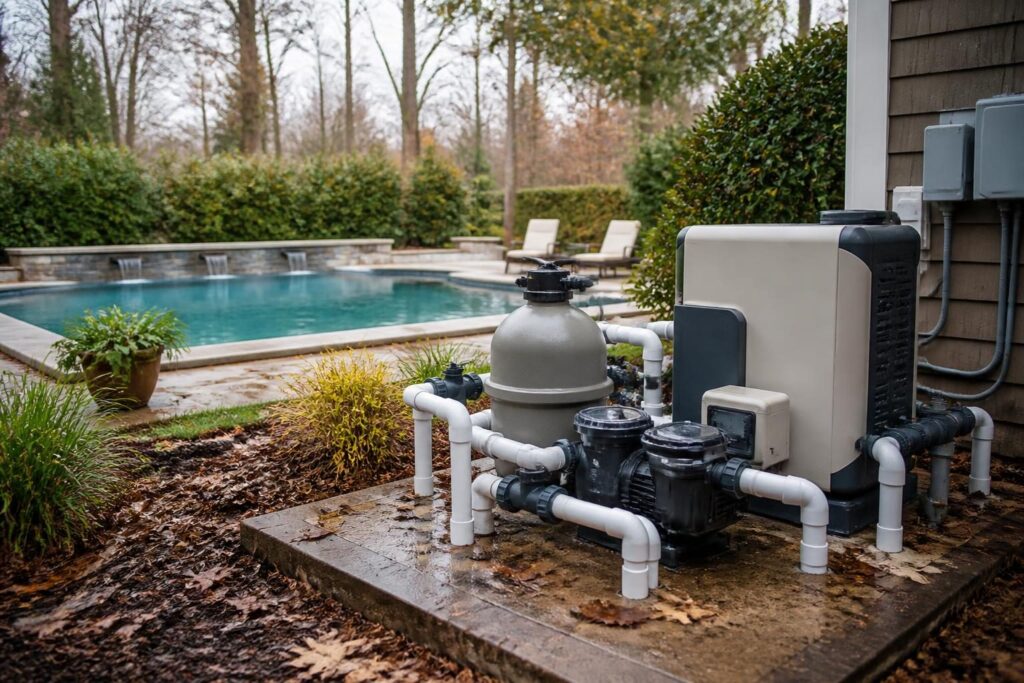
Pool equipment winter protection North Carolina homeowners need is less about one calendar date and more about preparation, monitoring, and clear instructions. Winter can bring mild afternoons, freezing nights, rain, wind, and power interruptions. Those changing conditions affect pumps, filters, heaters, exposed plumbing, valves, and automation controls.
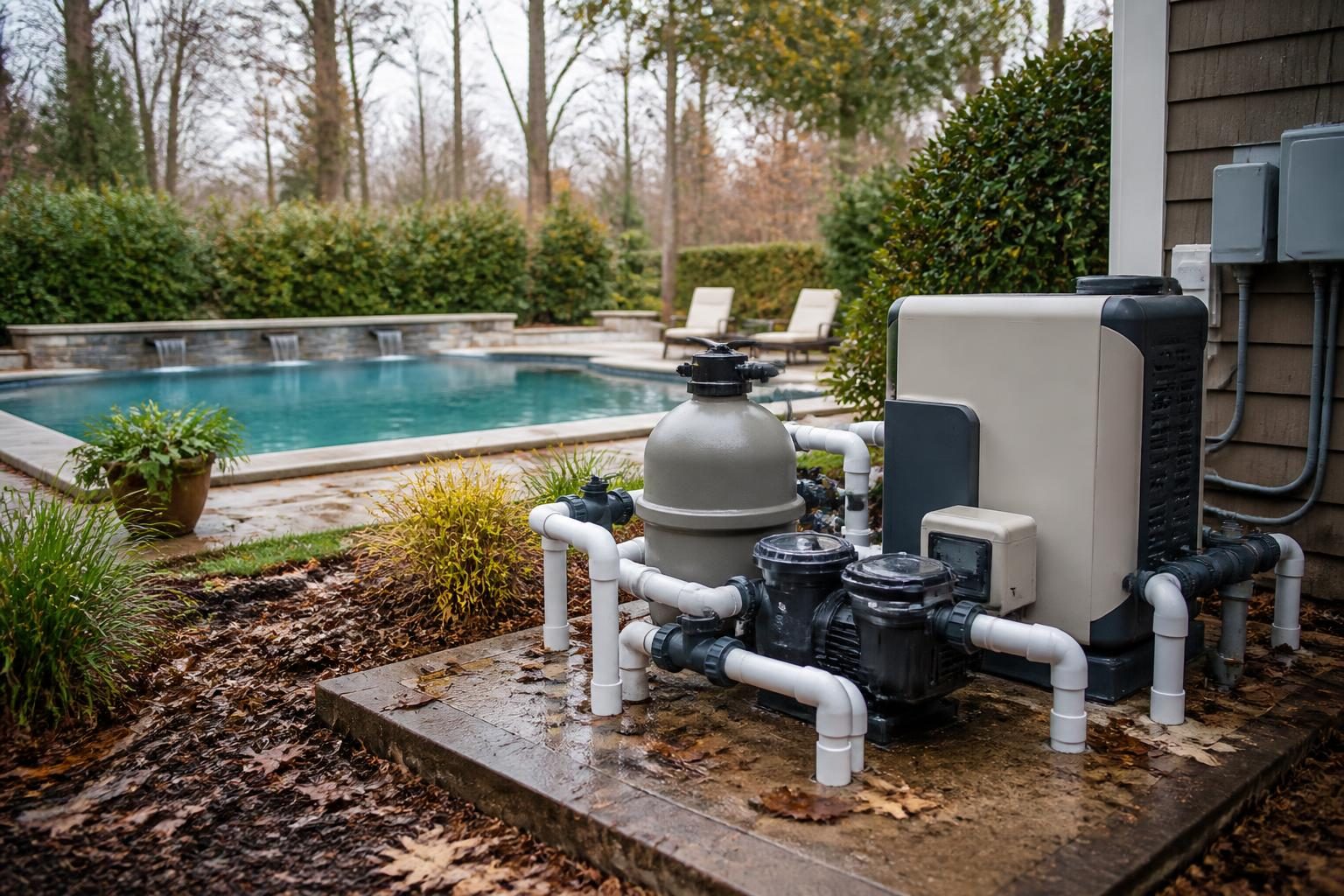
A pool may remain open during winter, receive partial winter care, or undergo a full seasonal shutdown. Each approach has different equipment needs. Before changing settings or draining anything, review the equipment manuals and ask the installing contractor or a qualified service professional what applies to your system.
Start with the equipment and the manufacturer instructions
Make a simple inventory before the first serious cold spell. Identify the circulation pump, filter, heater, salt system or chemical feeder, valves, automation panel, transformer, and any supplemental pump. Photograph labels and record model numbers. This information makes troubleshooting easier if an alarm appears or a component needs service.
Manufacturer instructions control many details that vary by model. They may specify minimum operating temperatures, freeze protection behavior, drain points, valve positions, and restart procedures. A general internet checklist cannot replace those instructions.
- Find the installation and owner manuals for every major component.
- Save the manufacturer’s freeze protection guidance with your pool records.
- Note which devices have built-in temperature sensors.
- Record the normal pump schedule and current automation settings.
- Label shutoffs and valves only if the labels remain accurate and clear.
Keep these records where someone can find them during an outage or cold-weather alert. The equipment pad should also remain reachable. Good equipment pad planning includes service access, drainage, and weather exposure.
Review freeze protection settings before cold weather
Freeze protection is a control feature that starts circulation when a sensor detects a low temperature. It may protect water in parts of the circulation system, but it does not make every exposed component immune to freezing. The feature also depends on power, a working sensor, correct programming, and an operating pump.
Check the controller display and confirm that the freeze setting is enabled if your manual and service professional recommend it. Learn what the system displays when freeze protection is active. Some systems show an alert, change the schedule, or start several connected devices.
Questions to ask about the setting
- Where is the temperature sensor located?
- Which pump, valves, heater, or water-feature lines start automatically?
- Does the system protect attached equipment or only maintain circulation?
- What happens if the automation controller loses communication?
- What should you do after power returns?
Do not assume that a running pump proves complete protection. A blocked skimmer, closed valve, low water level, air leak, or equipment fault can reduce circulation. During a freeze warning, verify that water is moving as expected without opening electrical enclosures or bypassing safety controls.
Reviewing pool equipment winter protection North Carolina procedures before a freeze gives you time to resolve unclear settings safely.
Inspect exposed plumbing and equipment connections
Exposed plumbing deserves a close visual inspection before winter. Look for pipes above ground, unions, valves, hose connections, drain plugs, filter bodies, heater connections, and low points that may hold water. Check for cracked fittings, loose connections, unsupported pipe, or signs of past leakage.
Do not wrap equipment or seal openings with materials that block ventilation, service access, or manufacturer-required clearances. Pool heaters need airflow and safe exhaust conditions. Pumps and control panels also need protection from water intrusion without being enclosed in an unsafe way.
Ask a qualified pool professional which components should remain full, circulate, drain, or receive manufacturer-approved protection. A full seasonal shutdown can require specific valve positions and removal of water from selected components. Incorrect draining or trapped water can create new problems.
- Keep leaves, mulch, and stored items away from the equipment pad.
- Check that roof runoff and downspouts do not discharge onto equipment.
- Look for standing water after rain.
- Confirm that service paths remain safe and unobstructed.
- Photograph any existing cracks, stains, or leaks before making changes.
Winter rain can expose drainage issues that are easy to miss in dry weather. Use the seasonal guidance in this North Carolina winterization overview alongside your equipment manuals.
Plan for power interruptions
Freeze protection cannot operate normally during a power outage. A storm, utility interruption, tripped breaker, failed relay, or disconnected controller can stop circulation even when temperatures are falling. Include power checks in your winter plan rather than treating them as a separate issue.
Ask a licensed electrician or qualified pool professional to review any concern about breakers, bonding, disconnects, backup power, or equipment wiring. Homeowners should not open electrical panels or alter wiring as a winter task.
Make an outage response plan
- Know how to confirm whether the pool equipment has power without touching exposed electrical parts.
- Save the service contact and equipment model information in an accessible place.
- Ask in advance what actions are safe if power fails during freezing weather.
- Find out whether a backup generator is compatible with the equipment and transfer system.
- After power returns, check for alarms, leaks, unusual noise, and normal circulation.
Never connect a generator to pool equipment without professional guidance. Improper connections can create shock, fire, equipment, or backfeed hazards. A backup plan should protect people first, then equipment.
Use weather monitoring without relying on one forecast
North Carolina weather can change quickly across the mountains, Piedmont, and coastal plain. Elevation, wind, shelter, shade, and local exposure may make the equipment area colder than a general forecast suggests. Monitor temperatures near the pool and equipment rather than relying only on a distant weather app.
Before a cold night, review the forecast for several days. Pay attention to overnight lows, wind, freezing rain, snow, and the chance of an outage. A short cold snap may require a different response from a prolonged freeze.
Use a written or digital log for unusual conditions. Record the date, forecast, freeze setting, pump status, water level, alarms, and any service visit. These notes can help identify recurring issues and support a clearer conversation with a professional.
- Check the equipment after a sharp temperature drop.
- Look at the controller for freeze or communication alerts.
- Confirm that pump operation matches the expected schedule.
- Inspect for ice, leaks, or water collecting around the pad.
- Recheck the system after wind, heavy rain, or a power interruption.
Care for water chemistry and connected equipment
Winter equipment care also depends on basic water maintenance. Incorrect water balance, debris, or poor circulation can increase strain on the system. Avoid making chemical changes based on guesswork. Follow the product label, equipment manual, and advice from a qualified pool professional.
For general testing concepts, consult the CDC guidance on home pool water treatment and testing. The CDC information does not replace product directions or local professional advice, but it can help homeowners understand why regular testing matters.
If you use a salt system, heater, automatic chemical feeder, or water feature, ask how winter operation affects that component. Some devices may require a lower operating range, a separate shutdown step, or protection from stagnant water. Do not assume that turning off one device safely shuts down the complete system.
For additional seasonal water-care considerations, review this North Carolina pool maintenance guide. Humidity, rain, and debris can continue affecting the pool even when swimming has stopped.
Keep a practical winter equipment checklist
A short checklist reduces missed steps. Adapt it to your pool, equipment, climate, and manufacturer instructions. Pool equipment winter protection North Carolina homeowners can use should be written around the specific system, not copied from a universal schedule.
- Inventory equipment and save model numbers.
- Read freeze protection instructions for each connected component.
- Confirm controller time, temperature sensor status, and freeze settings.
- Inspect exposed plumbing, unions, valves, and drain points.
- Clear debris and check drainage around the equipment pad.
- Plan for power interruptions and safe post-outage checks.
- Monitor local weather before and during freezing conditions.
- Record alarms, leaks, unusual sounds, and corrective work.
- Keep manuals, service contacts, and photographs together.
After winter, review the log before returning to normal operation. Look for repeated freeze alerts, unexplained water loss, damaged fittings, or equipment that did not restart correctly. Schedule service before the next cold event if the cause is unclear.
Pool equipment winter protection North Carolina homeowners can manage starts with preparation, but it has limits. Freeze controls, drainage, electrical systems, heaters, and plumbing each have different risks. Consult the local inspections department when a permit or code question applies. Ask a licensed pool contractor, electrician, engineer, surveyor, septic professional, or other qualified specialist when site conditions or equipment requirements exceed routine homeowner maintenance. Build a Pool in North Carolina provides homeowner education, not a substitute for those professionals.