
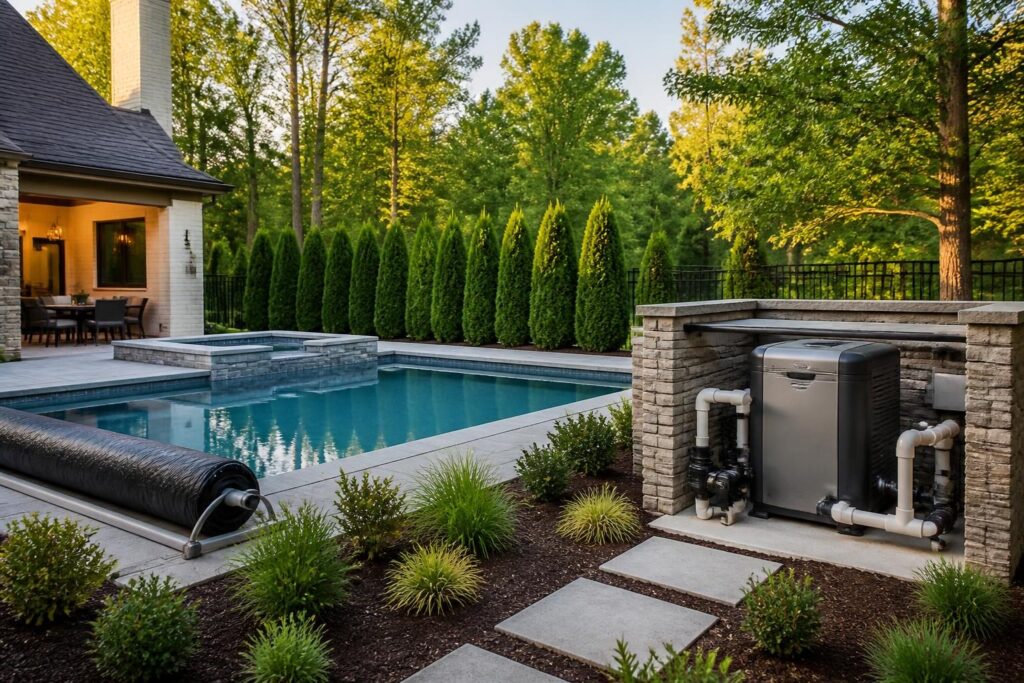
When homeowners compare heaters, pool heater sizing questions North Carolina buyers ask should focus on the whole heating plan, not only the heater’s headline output. Pool volume matters, but it is only one part of the decision.
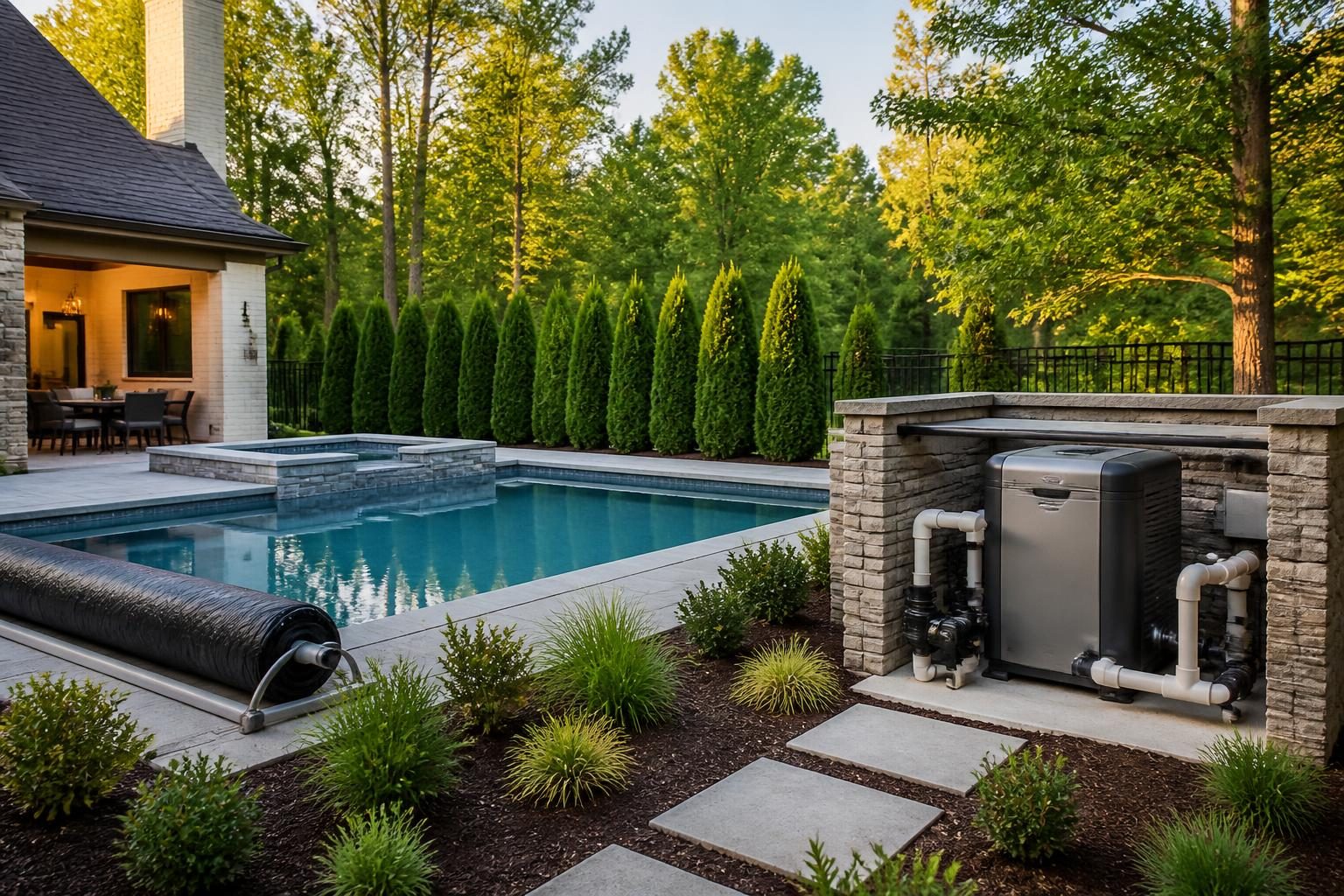
Your desired water temperature, swimming season, cover habits, wind exposure, shade, local weather, fuel source, and available electrical service all affect the right equipment. A licensed pool professional can model the project and confirm whether the proposed heater fits the pool, plumbing, controls, and site. These pool heater sizing questions North Carolina homeowners ask can also help organize that review.
Start with the pool’s actual heat demand
Pool volume is a useful starting point. A larger pool contains more water, so it generally needs more energy to raise and maintain its temperature. Shape also matters because a wide surface can lose more heat through evaporation than a compact pool with the same approximate volume.
Ask the designer to show the assumptions behind the recommendation. You do not need to perform the engineering yourself. You do need enough information to compare proposals fairly.
- What are the pool’s calculated gallons or water volume?
- What heater output does the proposal include?
- Does the output use a specific test condition?
- What water temperature does the calculation assume?
- Does the estimate include the spa, raised water feature, or attached basin?
- What performance should you expect during cooler weather?
Heater output often uses British thermal units, or BTUs. A BTU is a unit of heat energy. A higher BTU rating may heat water faster, but it can also require more fuel, larger connections, or additional planning.
Separate warm-up speed from maintenance
Some homeowners want a fast temperature increase before occasional use. Others want steady water temperature throughout the season. Those goals can lead to different equipment choices.
Ask whether the proposal addresses both initial warm-up and ongoing heat loss. A heater that maintains temperature efficiently may not deliver the same warm-up experience as a larger system. Conversely, selecting the largest available unit may not prove practical or necessary for your use pattern.
Define the temperature and season you actually want
“Comfortable” is not a precise design target. Families may prefer different temperatures for exercise, recreation, children, or spa use. Decide which water temperatures matter and when you expect to swim.
North Carolina conditions vary across the mountains, Piedmont, and coastal plain. Spring and fall mornings can be very different from summer afternoons. A pool used mainly in July has a different heating demand from one intended for frequent use in April and October.
Useful pool heater sizing questions North Carolina homeowners can ask include:
- Which months and times of day does the sizing estimate cover?
- Is the target temperature for the pool, spa, or both?
- How long might warm-up take after a cool night?
- What outdoor air and water conditions did the designer use?
- Will the system operate continuously, on a schedule, or only before use?
Do not treat a promised heating time as universal. Results depend on the starting water temperature, weather, cover use, equipment condition, and plumbing design. Request written assumptions rather than relying on a single verbal estimate.
Account for covers, wind, sun, and shade
Evaporation is a major source of pool heat loss. A properly selected and consistently used cover can reduce exposure when the pool is not in use. It does not eliminate every heat loss, and you must select and operate it with safety in mind.
Cover fit, storage, daily habits, and the pool’s shape all influence real-world results. A cover that stays rolled up may provide little energy benefit. Ask how the proposed cover works with steps, ladders, automatic tracks, water features, and the surrounding deck.
Wind can increase evaporation and cool the water surface. An exposed pool may need more heating capacity than a sheltered pool with similar dimensions. Nearby walls, fences, trees, and homes can change wind conditions, but they can also create shade or restrict equipment airflow.
Sunlight can provide helpful daytime warming. Shade may reduce that benefit, especially during cooler months. Ask the designer to consider the pool’s orientation, surrounding structures, seasonal sun, and prevailing exposure rather than using pool size alone.
For a broader comparison of cover types, fit, storage, and evaporation control, review pool cover options and energy considerations. The goal is not simply to buy a larger heater. It is to reduce avoidable heat loss first.
Review the equipment location
Heater location affects venting, clearances, service access, plumbing distance, noise, and exposure to weather. Gas equipment may require combustion-air and exhaust planning. Electric heat pumps need adequate airflow around the outdoor unit.
Do not enclose a heater or place landscaping where it blocks required airflow. Ask the pool contractor and the relevant licensed professional to confirm the proposed location. A planned equipment pad should also allow future inspection, cleaning, repair, and replacement.
Compare gas, electric, and heat-pump requirements
Fuel and electrical service can limit which heaters are practical. Gas heaters typically require an appropriate gas supply, venting, clearances, and professional installation. The available gas capacity and distance from the source may affect the design.
Electric heat pumps draw heat from outdoor air. Their performance can change as air temperature falls. They may offer a useful operating approach for some owners, but a licensed electrician must review the electrical load, breaker capacity, disconnect, wiring, and installation conditions.
Some systems combine heating approaches or use solar-assisted components. These options still need a realistic review of weather, available space, controls, and expected use. Ask for the complete system design instead of comparing heater labels in isolation.
- What fuel or electrical service does the heater require?
- Is the existing service adequate, or might an upgrade be needed?
- Who will evaluate gas sizing, electrical work, and connections?
- What happens to performance during cool, damp, or windy weather?
- Are controls compatible with the pump, automation, cover, and temperature sensors?
- What maintenance does the selected heater require?
For energy-related planning, compare the assumptions in this article with the separate guide on pool heater efficiency and operating choices. Efficiency ratings do not predict your exact bill. Utility rates, run time, weather, maintenance, and cover use all matter.
Check pump flow, controls, and connected equipment
A heater does not operate by itself. It works with the circulation pump, filter, valves, plumbing, sensors, controls, and possibly a salt system or water features. The complete system needs suitable flow and control logic.
Ask whether the proposed heater has minimum and maximum flow requirements. A pump that is too small may not provide the required flow. A pump that runs harder than needed can increase energy use and noise.
Also ask how the system responds to low water flow, a dirty filter, a closed valve, or a maintenance shutdown. Safety controls should follow the manufacturer’s instructions and applicable requirements. Qualified professionals should install and test them.
At handover, collect model numbers, manuals, startup records, warranty documents, control instructions, and service contacts. The pool equipment startup checklist can help organize those records.
Use a written comparison before choosing
Commercial proposals can look similar while making different assumptions. Build a simple comparison table for each option. Include heater type, output, energy source, estimated warm-up approach, controls, installation scope, clearances, maintenance, and exclusions.
Ask the contractor to identify what is included and what is not. For example, a proposal may not include a gas-line modification, electrical-service work, equipment pad changes, controls, permits, or drainage adjustments. The exact scope depends on the property and project.
Keep copies of the sizing worksheet, equipment submittal, manuals, model numbers, approvals, and change documents. If the design changes, ask for the revised heater assumptions in writing before approving the change.
Questions for the final review
These pool heater sizing questions North Carolina homeowners can use help expose gaps between competing proposals:
- What pool and weather assumptions support this recommendation?
- How will the cover affect the selected size?
- What temperature and swim season does the system target?
- What fuel, wiring, venting, and service work is included?
- Where will the heater sit, and how will technicians reach it?
- What operating instructions will I receive?
- Which results are estimates rather than guarantees?
Verify local requirements and professional responsibilities
Permits, inspections, adopted codes, utility rules, equipment clearances, electrical work, gas work, and property conditions can vary by jurisdiction. North Carolina homeowners should confirm current requirements with the local inspections department and qualified professionals.
The North Carolina Office of State Fire Marshal document library provides code documents and interpretations, but local officials determine how current requirements apply to a specific project. Do not use a general article as a substitute for a code review.
Consult the local inspections department, a licensed pool contractor, a licensed electrician, and any gas, mechanical, or engineering professional needed for your site. Their review should confirm the heater selection, connections, clearances, controls, and installation plan before work begins.
Build a Pool in North Carolina encourages homeowners to compare the complete heating system, not just the equipment price. The best decision reflects how you use the pool, how much heat the site loses, and what the property can safely support.