
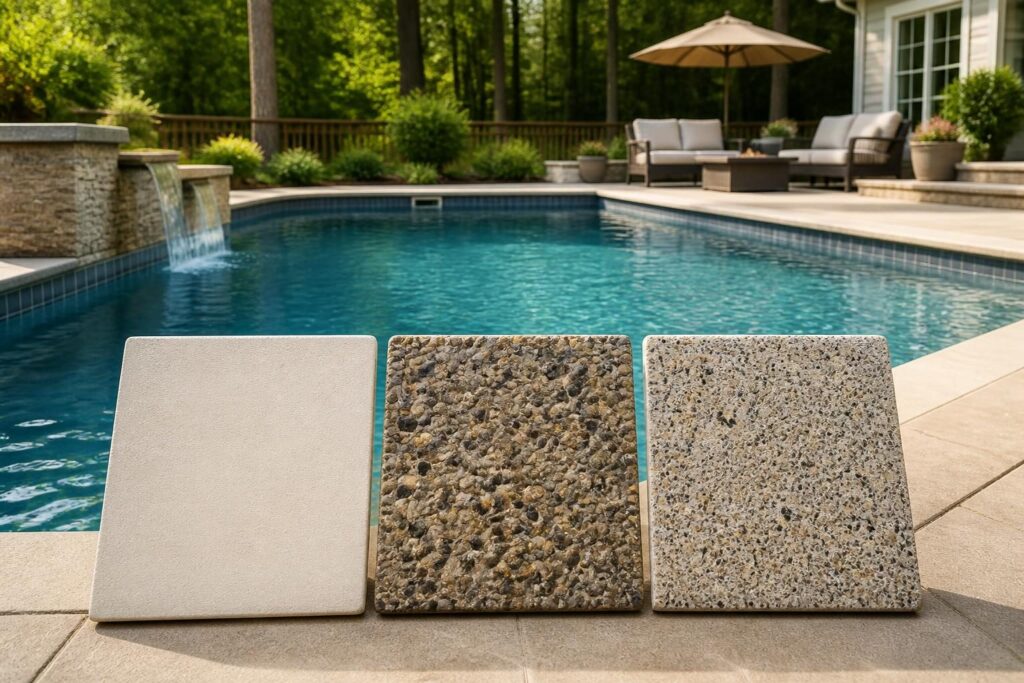
Homeowners who compare pool surface finishes for maintenance are making more than a color decision. The interior finish affects how the pool looks, feels underfoot, responds to water chemistry, and fits your cleaning routine. Plaster, pebble, and aggregate finishes can each suit a different design and ownership plan.
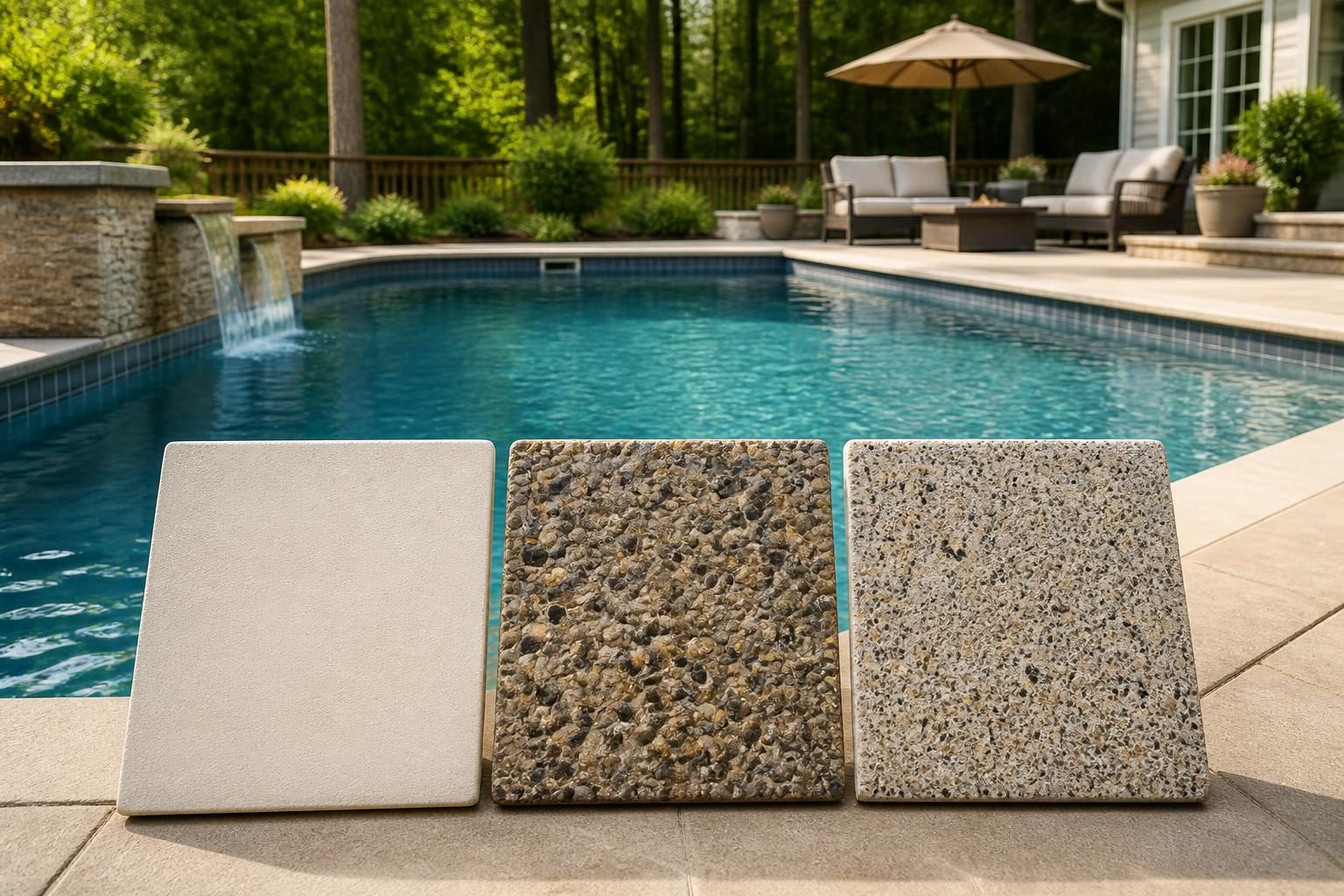
No finish eliminates routine care. Water balance, circulation, brushing, cleaning, and professional service still matter. North Carolina weather can also bring heat, rain, debris, pollen, and changing water conditions. Use finish information to ask better project questions, not to predict a guaranteed service life or future repair outcome.
What changes when you compare pool surface finishes for maintenance?
Installers apply a pool surface over the waterproof shell. It forms the visible interior and provides the surface that swimmers touch. The finish may use cement, exposed aggregate, or another specified material. Your proposal or finish schedule should identify the exact product, installation method, color, texture, and care instructions.
Maintenance differences often come from four practical factors:
- Texture: A smoother surface may feel different from exposed stone or larger aggregate.
- Color: Darker or varied finishes can change how water depth and debris appear.
- Chemistry response: Poorly managed pH, alkalinity, calcium, or sanitizer levels can affect surfaces.
- Cleaning access: Steps, benches, waterline areas, and curves may need different tools or attention.
These factors interact. A finish that hides small debris may also make early discoloration harder to notice. A textured finish may create a distinctive appearance while requiring careful brushing and inspection. Ask the installer which care practices apply to the specific product, rather than relying only on a general finish label.
Plaster finish: smooth appearance and attentive water care
Traditional white or colored plaster commonly creates a smooth, simple pool interior. It can create a bright, classic appearance and make the water look clear and reflective. Color additives or pigments may produce a different visual effect, so request a physical sample or completed-project references when appearance matters.
Smooth does not mean maintenance-free. The surface still needs balanced water, regular circulation, brushing, and debris removal. Waterline deposits, staining, and scale can become visible on a uniform finish. A smooth surface may also make color changes easier to see, which can help you notice developing water-care issues sooner.
Questions for a plaster specification
- Which exact product, color, and texture are included?
- Does the manufacturer or installer require a specific startup procedure?
- Which brush is appropriate, and when should brushing begin?
- Which water readings should you record during the initial fill and early operation?
- Are there cleaning methods you should avoid?
Do not treat a general startup routine as a substitute for the instructions supplied for your selected finish. The pool startup water chemistry checklist can help organize testing and records, but the finish-specific directions control your care decisions.
Pebble finish: texture, visual variation, and cleaning habits
Pebble finishes expose small natural or manufactured stones within a cementitious surface. They often provide a more varied appearance than plain plaster. Stone size, color blend, exposure, lighting, and water depth can change the final result. Samples are useful, but they cannot perfectly reproduce every backyard installation.
Texture is the main maintenance consideration. A pebble surface can feel different on feet, hands, and seating areas. The amount of texture also affects how a brush or automatic cleaner contacts the surface. Ask whether the proposed cleaner suits the finish and whether certain areas require manual brushing.
Debris can collect around steps, benches, fittings, corners, and changes in water depth. A consistent cleaning routine helps you inspect those areas. Avoid assuming that stronger chemicals or aggressive scrubbing will solve a surface problem. They may create a new problem if used without product-specific guidance.
Questions about pebble texture
- How should the texture feel in shallow areas and on seating?
- Which brush type and cleaning tools do you recommend?
- How should you handle waterline deposits?
- Are there areas where a cleaner may require adjustment?
- What visual variation is normal for this selected blend?
Aggregate finishes: a broad category worth defining
“Aggregate” describes a category, not one uniform surface. It may refer to exposed stone, polished aggregate, quartz blends, or another specified combination. Some products have a relatively smooth feel, while others retain more visible texture. That difference can change cleaning and comfort considerations.
Ask the pool professional to identify the exact aggregate product. Request its technical information, color selection process, finish texture, startup instructions, and recommended maintenance methods. The word aggregate alone does not tell you enough to compare two proposals fairly.
Review visual samples in natural light if possible. Pool water, depth, sun angle, interior lighting, and surrounding materials can affect the perceived color. Include the selected sample, product name, and finish notes in your project records. This creates a clearer reference during startup and future service conversations.
Water chemistry and finish care
Balanced water anchors surface care. pH measures how acidic or basic the water is. Total alkalinity helps resist rapid pH changes. Calcium hardness describes dissolved calcium in the water. Sanitizer protects water quality, but it does not replace filtration, circulation, or physical cleaning.
Incorrect chemistry can contribute to scaling, staining, etching, cloudy water, or other conditions. Several factors may contribute, including source water, contaminants, equipment operation, dosing, and testing practices. A visible mark does not prove that the finish itself caused the problem.
Use a consistent testing method and keep dated records. Follow the chemical product label and the finish manufacturer’s instructions. For general residential guidance on testing, chlorine, and pH, review the CDC home pool water treatment and testing guidance.
Source water deserves attention in North Carolina. Well water, municipal water, treatment systems, heavy rain, and refill practices may affect starting conditions. If you use a private well, coordinate water questions with the appropriate pool and water professionals. Do not add treatment products based only on a visual guess or one unverified test.
Startup instructions are part of the finish decision
New surface startup requires a controlled early-care period. It may include filling, circulation, brushing, testing, adjusting water conditions, and documenting the finish. The required steps can vary by product and installer. Some instructions may also depend on weather, fill-water quality, and the timing of other construction work.
Before the pool is filled, request written instructions that identify:
- Whether filling should remain uninterrupted and when it should begin.
- The point at which circulation and filtration should operate.
- The proper starting time and brush for initial brushing.
- Which readings to test, how often to test, and where to record them.
- Which chemicals, cleaners, or equipment settings require professional approval.
- Who should answer questions during the startup period.
Keep photographs, test results, invoices, product sheets, and service notes together. A detailed new pool startup guide can help you understand the sequence, while the finish-specific written directions remain essential.
Cleaning practices for each surface type
Every pool needs debris removal and waterline attention. Skimming, emptying baskets, brushing, vacuuming, and filter care support the whole system. The right frequency depends on weather, trees, use, equipment, and water conditions.
For plaster, inspect smooth areas for deposits, discoloration, and changes in feel. For pebble and textured aggregate, pay close attention to steps, benches, corners, and fittings. These areas may need deliberate brushing because automatic cleaners may not reach them well.
Before using a stain remover, acid-based product, abrasive tool, pressure device, or specialty cleaner, ask a qualified pool professional whether it suits the finish. Product labels and finish instructions should guide chemical use. A cleaning method that works on one surface may be unsuitable for another.
Filter maintenance also affects surface cleanliness. A filter captures suspended particles after circulation moves water through it. Compare your equipment instructions with the related pool filter types comparison when planning routine service. The filter does not replace brushing or water testing.
How to compare finish proposals before choosing
A commercial decision should include more than the initial finish allowance. Ask each pool professional to describe the product and care expectations in the same format. This makes proposals easier to review without assuming that a higher or lower allowance predicts performance.
| Comparison point | Questions to document |
|---|---|
| Appearance | What color, blend, exposure, and sample are included? |
| Texture | How will the surface feel, and where may texture vary? |
| Water care | Which chemistry ranges and testing practices are specified? |
| Cleaning | Which brushes, cleaners, and stain methods does the professional approve? |
| Startup | Who provides instructions, testing support, and records? |
| Future service | What maintenance observations should trigger a professional review? |
Also ask what is excluded. A finish allowance may not include water treatment, specialty cleaning, future resurfacing, repairs, or changes caused by site and water conditions. Include clear finish details in the contract and handover file. Your broader pool handover records should include manuals, selected products, startup notes, and care contacts.
Questions that help you choose with fewer surprises
- Can I see the exact finish sample and product documentation?
- How does the surface feel in shallow water and on seats?
- Which water-care readings matter most for this product?
- What should I do after heavy rain, a long closure, or a refill?
- Which automatic cleaner and brush are compatible?
- What signs require a service call rather than more chemicals?
- What startup records will I receive?
- Which finish details belong in the proposal?
Compare the answers, not just the finish names. A contractor should explain the selected product, installation process, startup steps, and routine care in understandable terms. If the answers remain vague, pause before treating the finish as a final selection.
A practical way to compare pool surface finishes for maintenance
Start with appearance and comfort. Then review chemistry sensitivity, cleaning access, startup support, documentation, and the equipment used to maintain the pool. Consider who will perform routine care and how often you expect professional service. This framework helps you compare pool surface finishes for maintenance without treating a finish label as a guarantee.
There is no universal best finish for every North Carolina home. Property conditions, water source, design details, household use, budget, and personal texture preferences all matter. Build a Pool in North Carolina encourages homeowners to keep the comparison specific to the product being proposed.
Before signing or approving a finish, consult the local inspections department about applicable project requirements, and ask a licensed pool contractor for product and startup guidance. Use a qualified water-care professional, electrician, engineer, or other specialist when the question reaches beyond routine homeowner information.