
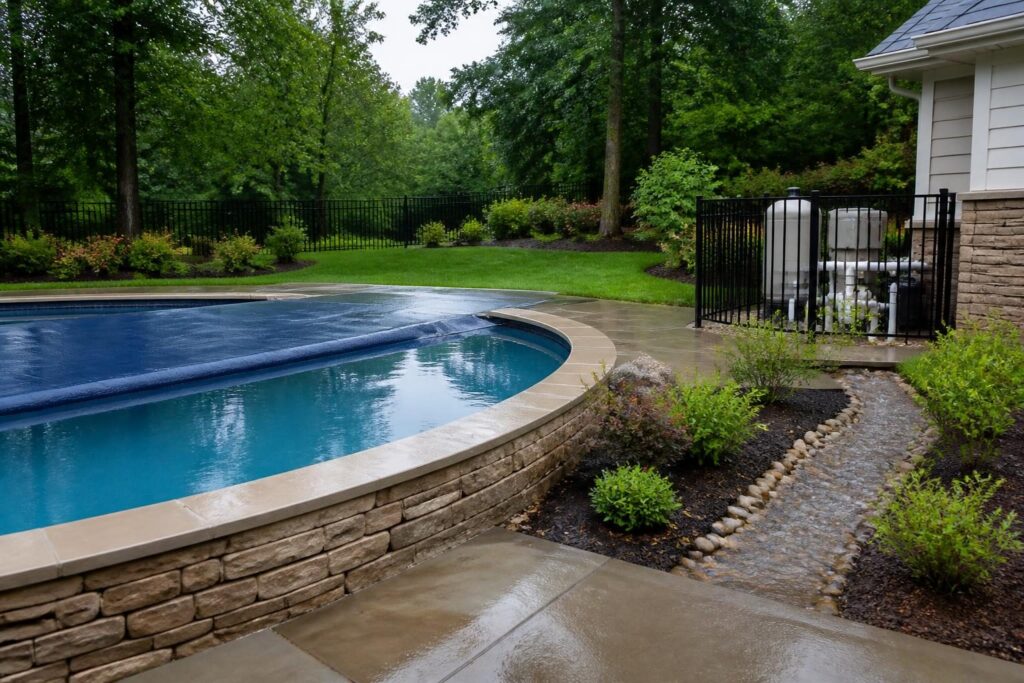
Learning to manage pool water level after heavy rain North Carolina homeowners can protect the pool, surrounding surfaces, equipment, and water quality. A storm may add only a little water, or it may push the level toward the coping and deck.
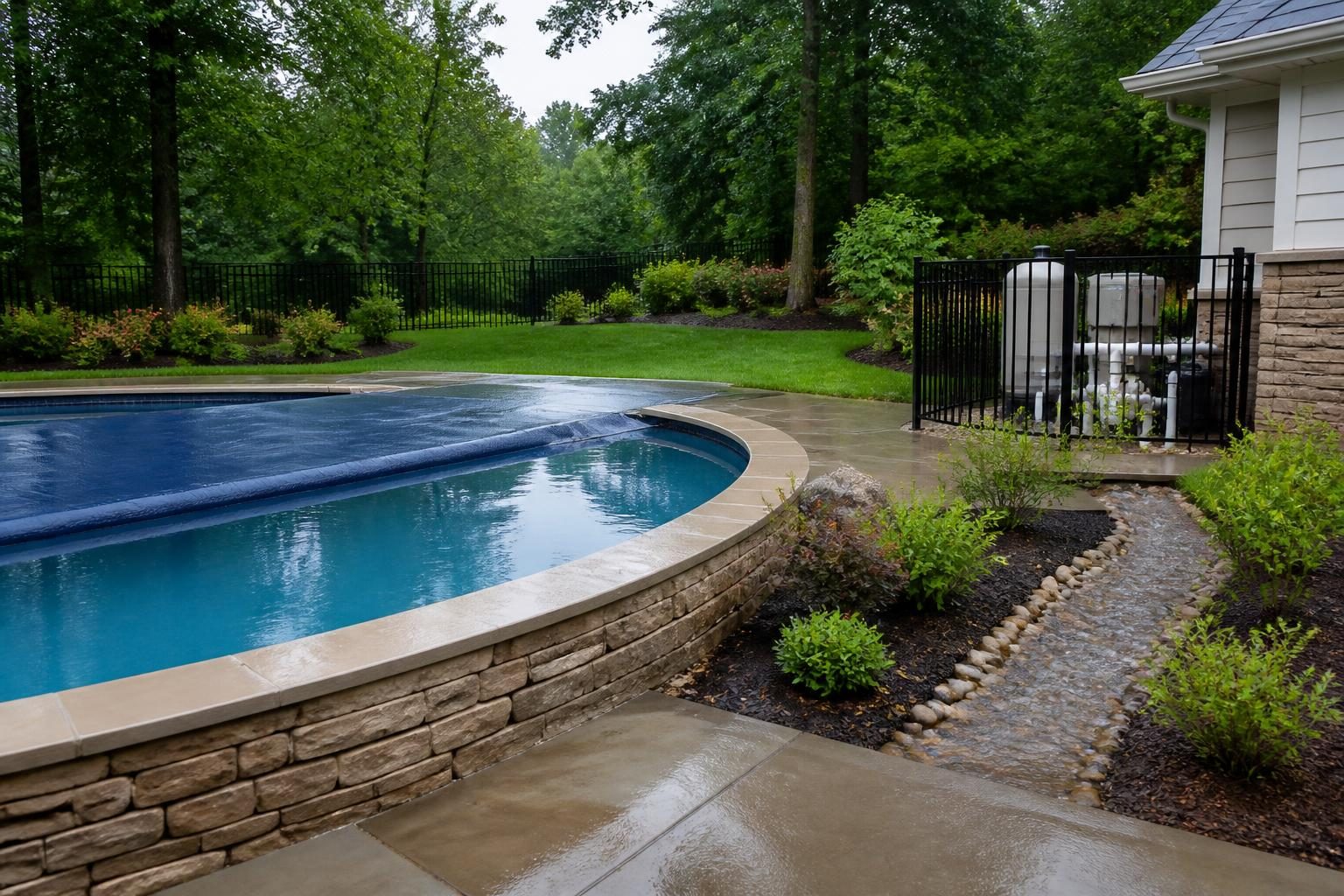
Rain also changes water chemistry. Runoff can carry soil, leaves, fertilizer, and other material into the pool. The right response depends on the pool’s current level, the storm’s intensity, the yard’s drainage, and the equipment installed at your home.
Why heavy rain creates pool water problems
Pool water has limited room to rise. When the surface reaches the coping, water may spill across the deck or into nearby planting areas. That flow can move soil, stain surfaces, wash mulch into drains, or collect near the home.
Overflow can also affect the pool itself. Water moving across the deck may enter equipment areas, erode slopes, or expose weak points in the yard’s drainage pattern. A pool that sits near a retaining wall, basement, crawl space, septic area, or low section of the property deserves extra attention.
Rainwater usually has different chemistry from treated pool water. A large volume can dilute chlorine, alter pH, and lower other measured levels. Runoff may add contaminants that make the water cloudy or increase demand on the filter.
These concerns do not mean every storm requires draining. Removing too much water can create other problems, especially when groundwater pressure, soil conditions, or the pool’s structure are involved. Use the owner’s manual and ask a qualified pool professional before making a major water-level change.
Check the pool and property after the storm
Wait until conditions are safe. Do not walk outside during lightning, floodwater, or unstable ground conditions. Once the weather clears, inspect the pool from a safe location before touching equipment or opening electrical enclosures.
Start with a visual check
- Compare the water level with the normal operating mark.
- Look for water flowing over the coping or collecting on the deck.
- Check skimmer openings, drains, and visible return fittings for debris.
- Look for mud, mulch, leaves, insects, or unusual discoloration.
- Inspect the equipment area for standing water, damaged covers, or exposed connections.
- Watch for erosion, sinkholes, soil movement, or new cracks near the pool.
Do not remove deck covers, drain plugs, or equipment panels simply to investigate. A licensed electrician or pool professional should assess equipment that may have been exposed to water. Turn off power only through a safe, known method, and never enter standing water around electrical equipment.
Photographs can help you compare conditions over time. Capture the water level, deck, drainage paths, equipment pad, and any visible erosion. Keep the date with the images. These records can also help a qualified professional understand what changed during the storm.
If you need to manage pool water level after heavy rain North Carolina weather, start with observation rather than immediate draining. The water level, visible runoff, and condition of nearby soil help determine the safest next step.
Manage excess water without creating a drainage problem
The safest method for lowering a pool depends on your pool system and property. Some systems include a waste or drain setting. Others may require a submersible pump or a professional service visit. Follow the equipment manufacturer’s instructions and confirm the discharge plan before moving water.
Never direct chlorinated pool water toward a neighbor’s property, a foundation, a septic drain field, a private well area, a stream, a storm drain, or a place where it can erode soil. Local discharge expectations can vary. Contact the local inspections, stormwater, or environmental authority when you are unsure where water may go.
Use a hose or discharge line only where the receiving area can handle the flow. Keep the outlet away from slopes and vulnerable surfaces. Watch the water while it moves. Stop if soil begins to wash away, water backs toward the house, or nearby areas become saturated.
A pool may need only a small adjustment. Lowering the water too far can expose surfaces, interfere with skimmer operation, or create conditions that the manufacturer does not recommend. Ask your pool professional what level supports normal circulation for your specific pool.
For broader property questions, review pool drainage planning for North Carolina yards. The article covers grading, roof water, deck drains, runoff, and erosion concerns that can become more visible after storms.
When homeowners manage pool water level after heavy rain North Carolina discharge conditions deserve the same attention as the pool itself. A temporary outlet can still create erosion, saturation, or runoff problems.
Test water after rain and runoff
Do not rely on appearance alone. Clear water can still have unbalanced chemistry, while cloudy water may reflect debris, dilution, filtration issues, or several causes at once.
Allow heavy debris to settle or remove it with a net first. Then test according to your normal maintenance routine and the instructions for your test kit. The Centers for Disease Control and Prevention provides general guidance on residential pool water treatment and testing, including chlorine and pH: CDC home pool water treatment and testing.
Record the results
- Write down the date and time of the test.
- Record sanitizer, pH, alkalinity, and any other readings your program uses.
- Note whether the pool received visible runoff.
- Record filter pressure before and after cleaning, if your system has a pressure gauge.
- List products added, amounts used, and the reason for each adjustment.
- Retest after circulation has operated for the period recommended for your system.
A major storm may require more than one test. If readings remain unusual, the water stays cloudy, or the pool received mud or sewage-like contamination, stop normal swimming and contact a qualified pool professional. Do not mix chemicals or add products based on guesswork.
Rain can also affect salt-based systems, automatic feeders, and chemical controllers. These systems still need verification after unusual weather. Automation does not replace visual inspection or properly collected test samples.
Testing is a central part of how to manage pool water level after heavy rain North Carolina homeowners should not treat water-level correction and chemistry correction as the same task. Lowering excess water does not automatically restore sanitizer or pH balance.
Use a cover carefully during rainy weather
A cover can reduce leaves and debris, but it does not make a storm harmless. Water can collect on top of some covers, and that weight may stress the cover, anchors, coping, or surrounding structure. Never assume a cover is designed to hold people or large amounts of stormwater.
Check the cover manufacturer’s instructions before a storm. Different cover types serve different purposes. Solar covers generally help reduce evaporation and debris but may not provide a barrier against entry. Safety covers may support a different use pattern, but they still require correct installation and maintenance.
Keep pumps, hoses, poles, and other loose objects secured. A storm can move equipment into the pool or damage the cover. Remove standing water from the cover only with equipment approved for that cover. Ask a pool professional if the cover sags, pulls away from anchors, tears, or becomes difficult to remove.
For a deeper comparison of cover fit, storage, safety, and evaporation control, see pool cover options for North Carolina conditions. Keep safety as the first consideration when selecting or using any cover.
Account for property-specific water paths
Every yard handles rain differently. A flat lot may hold water around the deck. A sloped lot may send runoff toward the pool. Roof downspouts, retaining walls, swales, driveways, patios, and neighboring properties can all change the flow.
Septic systems need special care. Do not send excess pool water toward a septic tank, drain field, repair area, or access route. Saturated soil can limit how an area receives additional water. If the pool is near septic components, ask a septic professional to review the proposed discharge area.
Flood-prone properties also need a more cautious plan. A high pool level may be only one part of a larger drainage issue. Review local information and property conditions before changing grades or installing permanent discharge features. FEMA’s Flood Map Service Center is one source for general flood-hazard map information, but it does not replace a site-specific review.
Create a storm response plan
- Mark the pool’s normal water level for easy comparison.
- Identify safe temporary discharge areas before the next storm.
- Keep the pool manual, cover instructions, and equipment details together.
- Know which professional to call for water chemistry, drainage, septic, or electrical concerns.
- Keep a clean test kit and debris net available.
- Check whether your property has an approved drainage feature or local restriction.
If construction, grading, or land disturbance is underway, stormwater concerns may extend beyond routine pool maintenance. North Carolina homeowners can review the NC DEQ Construction Stormwater Program and verify whether the project has applicable requirements.
When to stop and call for help
Contact a qualified pool professional when you cannot safely lower the water, the circulation system will not operate, equipment was submerged, or water quality does not recover after appropriate testing and filtration.
Ask a licensed electrician to assess electrical components exposed to water. Consult a septic professional before discharging near septic components. An engineer, surveyor, or drainage specialist may be appropriate when erosion, settlement, slope movement, flood exposure, or repeated runoff affects the property.
North Carolina requirements can vary by jurisdiction, adopted code, utilities, septic systems, flood conditions, and project scope. The local inspections department or stormwater authority can explain current local expectations. Build a Pool in North Carolina offers homeowner education, not a substitute for site-specific professional advice.
With a clear inspection routine, careful testing, and a discharge plan suited to your property, you can respond to rainy weather without treating every high water level as an emergency. When conditions are uncertain, pause and obtain qualified guidance before draining, altering equipment, or changing drainage paths.