
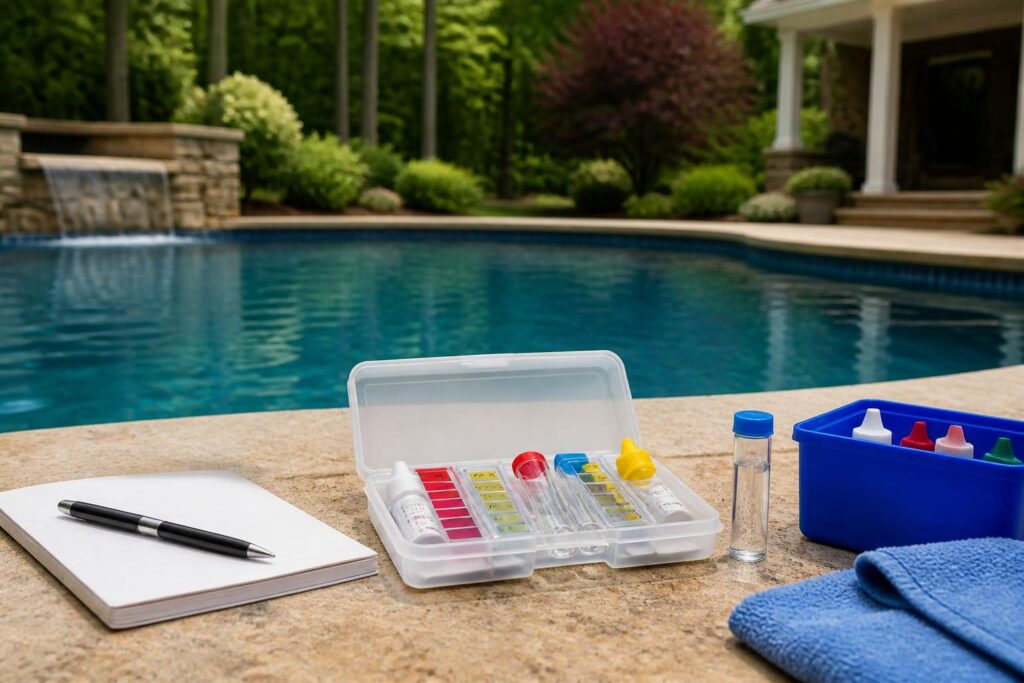
Learning home pool water testing basics gives North Carolina homeowners a simple way to notice water-care changes before they become larger maintenance problems. Testing does not replace professional advice, equipment instructions, or local health guidance. It does help you make better daily decisions about chlorine, pH, circulation, and cleaning.
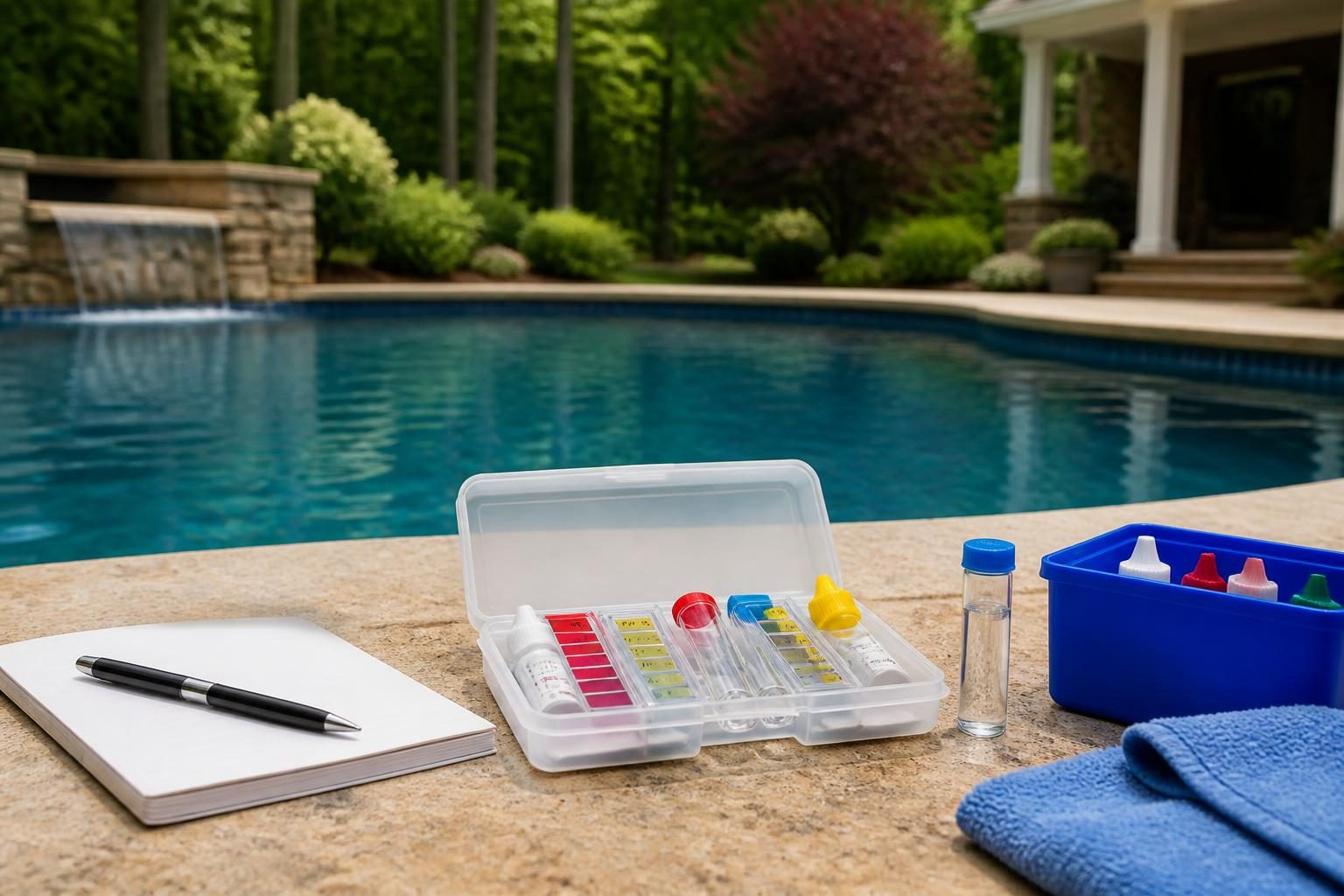
Pool water changes with weather, swimmer use, rainfall, debris, chemicals, and equipment operation. A clear-looking pool can still have unbalanced water. Consistent testing, careful dosing, and written records create a more dependable routine. These home pool water testing basics also help you explain changes clearly when you need service.
What pool water testing is meant to tell you
A basic test usually checks sanitizer and pH. Sanitizer helps control microorganisms and contaminants. In many residential pools, that sanitizer is chlorine. pH describes how acidic or basic the water is. Both readings affect comfort, equipment, surfaces, and the sanitizer’s performance.
Other results may matter as well. Depending on the pool and treatment system, homeowners may monitor total alkalinity, calcium hardness, stabilizer, salt, metals, or phosphates. The right testing plan depends on the pool finish, water source, equipment, climate, and chemical system.
North Carolina weather can create fast changes. Heavy rain may dilute chemicals or add organic material. Hot, sunny periods can increase chlorine demand. Pollen, leaves, dust, and frequent swimming also affect the water. Your routine should respond to actual test results instead of relying only on a calendar.
Chlorine and pH: the two starting points
Why chlorine matters
Chlorine is a sanitizer. It helps control contaminants introduced by swimmers, animals, soil, and the surrounding environment. The useful chlorine reading is not a fixed number for every pool. It depends on the pool’s stabilizer level, treatment system, water temperature, sunlight, and product instructions.
Read the label for the specific chlorine product. Do not mix different chemicals together, and never combine products in the same container. Follow the product directions for handling, storage, application, and waiting periods.
Some pools use a salt chlorine generator. That equipment produces chlorine from salt; it does not eliminate chlorine testing or other maintenance. Homeowners should still monitor the water and follow the generator manufacturer’s instructions. For background, see this guide to how saltwater pool systems work.
Why pH matters
pH affects swimmer comfort, water balance, and the way chlorine performs. A reading that moves too high or too low may contribute to cloudy water, scaling, surface concerns, or irritation. The correct target range can depend on the pool system and professional guidance, so use your product and equipment instructions rather than guessing.
Test results are more useful when interpreted together. For example, changing pH while ignoring total alkalinity may lead to repeated corrections. If the water does not respond as expected, stop adding chemicals blindly and ask a qualified pool professional to review the results. Understanding these home pool water testing basics can help you avoid treating one reading in isolation.
Choosing a reliable home test method
Test strips are convenient and quick. They can work well for routine screening when you store them properly and read them within the stated time. However, color comparison can challenge homeowners, especially when results fall between shades or the strip has absorbed moisture.
Liquid drop kits allow you to compare a sample with a color scale after adding measured reagents. They require more steps, but many homeowners find them easier to interpret for regular chlorine and pH checks. Keep reagents capped, dry, and within their stated use period.
Digital testers can provide a clear numerical display. Their accuracy depends on calibration, clean sample handling, battery condition, and correct use. A digital tester does not become more reliable merely because it displays a precise number.
Store every test product away from heat, sunlight, moisture, children, and pool chemicals. Replace old or damaged reagents. Follow the kit instructions for sample depth, container rinsing, reagent amounts, mixing, and reading time.
- Collect the sample away from return jets, skimmers, chemical feeders, and the pool edge.
- Use a clean sample container that has no soap or chemical residue.
- Test soon after collecting the sample.
- Read colors in the lighting recommended by the kit instructions.
- Record the result before adding any product.
The CDC guidance on home pool water treatment and testing offers general information about chlorine, pH, and residential water care. It is a useful reference, but your pool’s instructions and local professional advice may require additional steps.
How often should you test pool water?
Testing frequency should reflect conditions, not just habit. A lightly used pool during stable weather may need a different routine from a pool used by many swimmers during a hot, rainy week.
Many homeowners begin by testing sanitizer and pH several times each week during the swimming season. Test after unusually heavy use, major rainfall, visible contamination, algae concerns, equipment changes, or an extended period when circulation was off. Follow the treatment-system instructions for salt, stabilizer, and other readings.
Newly filled pools, newly resurfaced pools, and pools beginning a new treatment program may need closer monitoring. A startup routine can involve different testing and chemical steps. Do not assume that normal maintenance instructions apply to fresh finishes or newly installed equipment. This new pool startup guide explains why early water care deserves special attention.
A practical testing decision guide
- Before swimming: Check the readings if nobody has used the pool recently, if swimmers have used it heavily, or if weather has affected it.
- After storms: Look for dilution, debris, runoff, unusual water level, or drainage concerns.
- After chemical adjustment: Wait the period stated by the product instructions before retesting.
- When water looks unusual: Test before adding several products at once.
- During winter or low use: Follow the equipment and winter-care plan rather than stopping all checks.
Keep records that help explain changes
Good records turn isolated readings into a useful pattern. A notebook, spreadsheet, or maintenance app can work. Record the date, time, weather, water appearance, test method, results, products added, amount used, equipment status, and unusual events.
Note rainfall, heavy swimmer use, vacations, filter cleaning, water replacement, and changes to pump or sanitizer settings. Include the product name and concentration when the label provides that information. Avoid relying on memory, especially when more than one person maintains the pool.
Photographs can add context. Take a clear image of a test result only when the lighting makes the colors readable. Keep photos of product labels, equipment displays, and unusual water conditions with the related notes.
- Write down the result before making an adjustment.
- Make one planned change at a time when practical.
- Record when you made the change and when you retested.
- Keep current manuals and water-care instructions together.
- Save professional test reports and service recommendations.
Records are not proof that a pool is safe or code-compliant. They are maintenance information. Share them with a pool professional when the water remains unstable or the cause is unclear.
Common testing mistakes to avoid
Adding chemicals without testing can create a cycle of overcorrection. A cloudy pool does not automatically mean it needs more chlorine. Low water level, poor circulation, dirty filtration, high pH, environmental debris, or incompatible products may also contribute.
Testing immediately after adding a product may produce a misleading result. Follow the product label and equipment instructions for circulation and retesting. Never pour products into the test sample, and never mix chemicals unless the manufacturer specifically directs a compatible procedure.
Another mistake is testing only when the water looks bad. Clear water is not a complete test result. Regular checks can identify movement before appearance changes.
Finally, do not compare a home kit with a professional test as if one must be wrong. Different methods, samples, timing, and equipment can produce different results. Ask the professional to explain the difference and recommend a consistent method.
When to call a pool professional
Seek qualified help when readings remain outside the product or equipment guidance after careful testing and appropriate waiting periods. Professional support is also sensible when the pool develops persistent cloudiness, algae, scaling, strong odors, repeated irritation, unexplained chlorine loss, or unusual staining.
Call before making a major correction if you cannot identify the chemical, the water source is unusual, the pool has a new finish, or you have already added several products. A professional can review your test method, collect a separate sample, inspect circulation, and consider filtration or equipment problems.
Contact the appropriate local or licensed specialist when a concern involves more than routine water care. The local health department may be relevant to certain environmental-health questions. An electrician should address electrical equipment concerns. A pool contractor or service professional can evaluate circulation and treatment equipment. Build a Pool in North Carolina encourages homeowners to keep questions specific and bring their records to the appointment.
A simple home testing routine
Start with the same sample location and test method each time. Check sanitizer and pH on your planned schedule, then review weather, use, and equipment conditions. Record the readings before making any adjustment. Use only products labeled for the intended pool application, and follow every safety instruction. These home pool water testing basics work best when the routine stays simple and consistent.
For most homeowners, you can maintain these home pool water testing basics most easily when testing, recording, and retesting follow the same order each time. After an adjustment, allow the required circulation and waiting period. Retest and record what changed. If the result does not make sense, pause rather than stacking more chemicals on top of the first dose.
For questions involving persistent water problems, chemical exposure, electrical equipment, drainage, septic systems, or local requirements, consult the local inspections or health department, a licensed pool contractor, electrician, engineer, surveyor, septic professional, or another qualified specialist as appropriate. Requirements and best practices can vary by property and jurisdiction.