
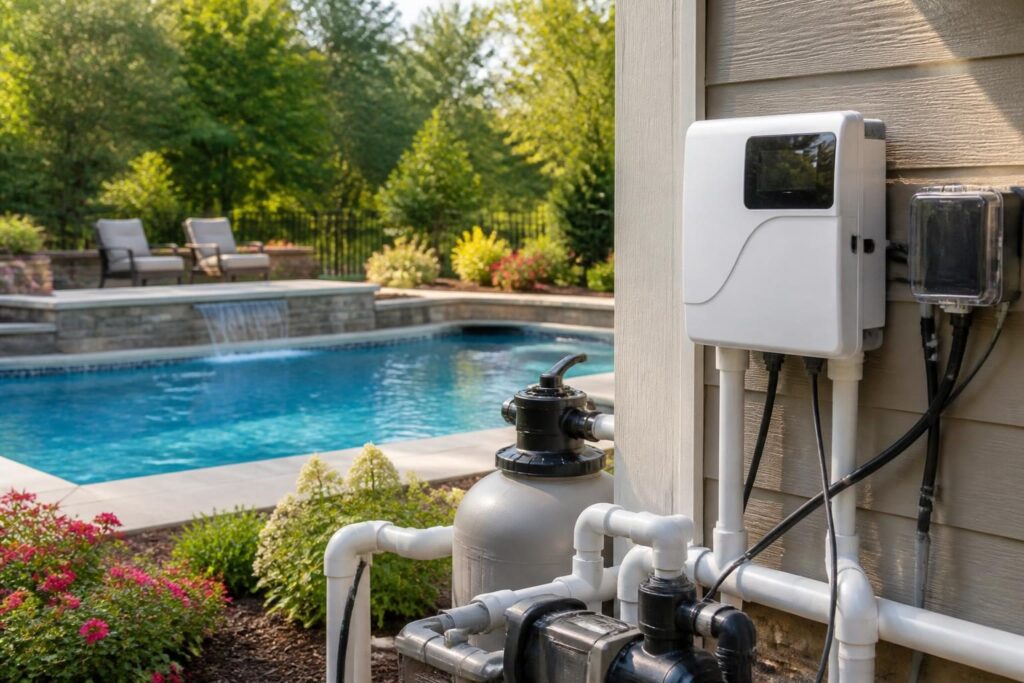
A saltwater pool system explained in simple terms is a pool that uses a salt chlorine generator to make chlorine from dissolved salt. This equipment does not create a chlorine-free pool. Instead, it changes how chlorine enters the water and how the owner manages it. For North Carolina homeowners, the system can offer convenient automation, but it still requires testing, cleaning, compatible equipment, and regular attention.
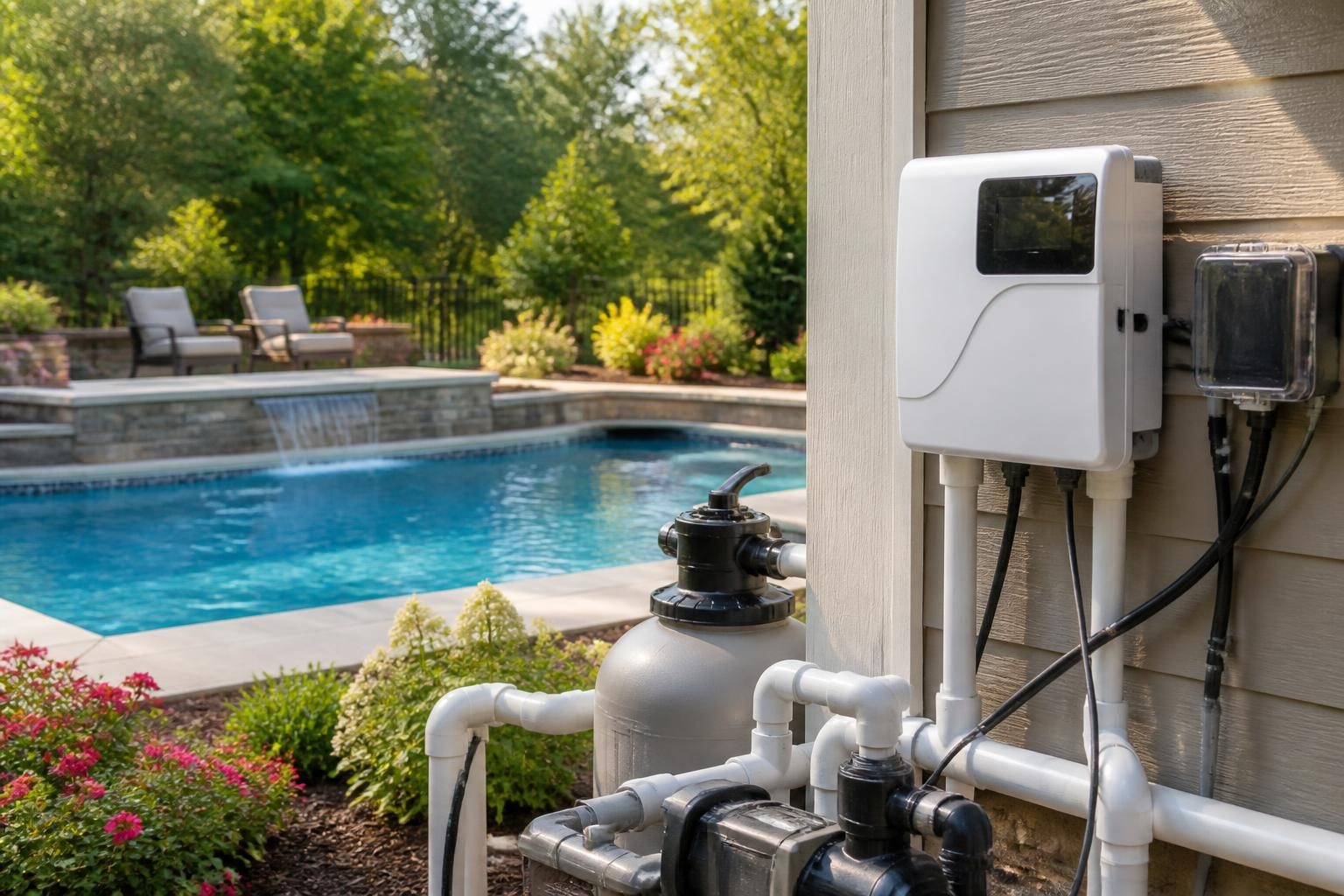
The word “saltwater” can sound like a different kind of swimming water. In practice, the salt level is much lower than seawater. The generator uses an electrical process inside a cell to produce chlorine while pool water circulates. That chlorine sanitizes the water and eventually changes back into salt, allowing the cycle to continue.
How a saltwater pool system makes chlorine
A salt chlorine generator sits in the pool’s circulation plumbing, usually after the filter and heater. Salt dissolved in the water passes through the generator cell. The cell uses electrical current to convert chloride in the salt into chlorine. That chlorine helps control microorganisms and organic contaminants in the pool.
The process does not eliminate chlorine from the water. It supplies chlorine gradually while the pump and generator operate. Output settings, pump runtime, water temperature, sunlight, bather load, and pool condition all affect how much chlorine the pool needs.
What the generator does
- Produces chlorine from dissolved salt.
- Allows a homeowner to adjust chlorine output on many systems.
- Reduces the need to handle some routine chlorine products.
- Supports ongoing sanitation when water chemistry and circulation receive proper management.
What the generator does not do
- Chlorine testing remains necessary.
- Filtration, circulation, brushing, and surface cleaning still matter.
- pH, alkalinity, calcium hardness, and stabilizer do not balance automatically.
- Poor water flow or an undersized circulation system requires separate attention.
- Every form of corrosion or surface damage remains possible.
That distinction is central to a saltwater pool system explained for first-time owners. The equipment automates one part of water care. It does not turn pool maintenance into a set-it-and-forget-it task.
Salt levels, chlorine output, and water testing
Each generator has a manufacturer-specified salt range. The correct range depends on the equipment model, so homeowners should use the product documentation rather than a general internet number. Too little salt may cause low-output warnings or prevent the cell from producing chlorine. Too much salt may require dilution with fresh water.
Salt does not evaporate with water. However, water loss from splash-out, leaks, filter cleaning, or draining can change the concentration. Adding fresh water may lower the salt level. Adding salt without testing first can push the level beyond the intended range.
Testing should include chlorine and pH at a minimum. Depending on the pool and local water conditions, homeowners may also need to monitor alkalinity, calcium hardness, and cyanuric acid. Cyanuric acid, sometimes called stabilizer, helps protect chlorine from sunlight. The generator cannot correct an unsuitable stabilizer level.
The CDC guidance on home pool water treatment and testing provides general information about chlorine, pH, and routine water care. Use it as educational guidance, then follow the generator manufacturer’s instructions and local professional recommendations.
A practical testing routine
- Test before making a major chemical adjustment.
- Record the date, readings, chemical additions, and generator setting.
- Retest after water additions, heavy use, storms, or unusual readings.
- Use a suitable test method and check that reagents are current.
- Ask a qualified pool professional to evaluate persistent imbalance.
North Carolina weather can change pool demand. Hot periods, intense sunlight, thunderstorms, pollen, and heavy use may affect chlorine consumption and water balance. A generator setting that works in one season may not work throughout the year.
Corrosion considerations for saltwater pools
Saltwater does not automatically damage every pool surface or metal component. Still, dissolved salt can increase the importance of material selection, water balance, rinsing, and equipment care. Corrosion means gradual material deterioration caused by chemical or environmental exposure. It can affect metals, fasteners, ladders, lights, heaters, automation components, and other parts when conditions are unfavorable.
Low or high pH, excessive salt, poor bonding or grounding, water intrusion, and prolonged wetness can all deserve attention. A salt system may also produce a concentrated environment near the generator cell if circulation or installation is not correct. Follow the manufacturer’s instructions when installing and maintaining the cell.
Homeowners should ask which components work with saltwater operation. Compatibility may include the heater heat exchanger, light niches, handrails, pump and filter fittings, automatic covers, water features, fasteners, and any metal near the pool. A qualified pool professional can review the proposed equipment schedule before installation.
Questions about corrosion protection
- Is each major component approved or suitable for the planned salt range?
- What materials are used for exposed metal, fasteners, and fittings?
- Does the equipment manufacturer require special installation or maintenance?
- How should the cell, heater, and nearby metal parts be inspected?
- What water readings could void a product warranty or create a service concern?
Electrical work near a pool requires particular care. Bonding connects conductive parts so voltage differences are reduced, while grounding provides a path for fault current. These terms are not substitutes for professional design or inspection. Discuss the system with a licensed electrician and use the pool electrical safety questions for your licensed electrician guide when preparing that conversation.
Equipment compatibility and installation planning
A salt generator is one part of a larger circulation system. The pump, filter, plumbing, heater, valves, sensors, controller, and power supply must work together. The generator also needs enough water flow to operate correctly. A dirty filter, closed valve, air leak, or pump problem can affect performance even when the cell itself is functioning.
Review the complete equipment list before construction or conversion. Ask for model numbers, required clearances, electrical requirements, flow requirements, and service access. Confirm where the cell will go and whether the location allows inspection, removal, and cleaning.
Equipment placement affects noise, drainage, weather exposure, and future service. The guide to pool equipment location planning can help organize those questions. North Carolina properties may also include septic systems, wells, slopes, flood hazards, or tight side yards that affect the layout.
If the pool is near septic components, review the proposed location and access needs before finalizing equipment and plumbing. This article about pool construction near septic system components covers related planning concerns. Local health officials or a qualified septic professional should address property-specific requirements.
Routine maintenance: saltwater pool system explained
Saltwater maintenance follows the same basic priorities as other pools: adequate sanitation, balanced water, effective circulation, clean filtration, and safe surfaces. The generator reduces one dosing task, but the owner still needs a maintenance plan.
Regular homeowner tasks
- Check water level so the skimmer and circulation system can operate properly.
- Test chlorine and pH on a routine schedule suited to pool use and conditions.
- Empty skimmer and pump baskets when needed.
- Clean or backwash the filter according to its design and instructions.
- Inspect the salt cell for scale and follow the manufacturer’s cleaning procedure.
- Brush walls, steps, benches, and difficult circulation areas.
- Watch for cloudy water, unusual odors, stains, leaks, alarms, or weak return flow.
- Keep a written record of readings, adjustments, warnings, and service visits.
Scale on the cell can reduce chlorine production and shorten service life. Do not scrape or clean the cell with an unapproved product. Some systems have self-cleaning features, but those features do not remove every maintenance requirement.
Winter operation also deserves a plan. North Carolina temperatures vary across the state, and winterizing decisions depend on the pool, plumbing, equipment, and local conditions. Follow the equipment instructions and ask a qualified pool professional before making seasonal changes.
Common misconceptions to set aside
“Saltwater means no chlorine.” The generator produces chlorine. The difference is the delivery method, not the absence of sanitizer.
“Saltwater pools need no chemicals.” Salt is only one input. pH, alkalinity, stabilizer, calcium hardness, and occasional corrective treatment may still matter.
“The water tastes like the ocean.” A residential salt pool is not seawater. The actual experience depends on the system’s salt concentration, water balance, and the swimmer.
“Salt prevents algae.” A properly operating system can help maintain chlorine, but low chlorine, poor circulation, or heavy contamination can still lead to algae.
“The generator replaces the pump.” The generator needs circulation. It cannot move water through the pool without a functioning pump and open, properly configured plumbing.
“A salt system fixes every water problem.” It cannot correct leaks, poor drainage, damaged surfaces, incorrect plumbing, or unsuitable equipment. A saltwater pool system explained accurately includes its limits.
Questions to ask before choosing saltwater equipment
- What generator model and salt range are proposed?
- How will the system be sized for pool volume and expected use?
- Which heater, pump, filter, lights, metal parts, and automation controls are compatible?
- Where will the cell and control unit go?
- What electrical work requires a licensed electrician?
- How will water-flow protection work?
- What maintenance does the manufacturer require?
- Which parts are covered by separate manufacturer warranties?
- What records will the homeowner receive at handover?
Keep the owner’s manual, equipment schedule, wiring information, startup records, test results, warranty documents, and service contacts together. For a saltwater pool system explained clearly, homeowners should organize these records before equipment is selected. Build a Pool in North Carolina can help homeowners organize questions, but the final design should come from qualified professionals familiar with the property and current requirements.
A saltwater system may be a useful choice for a homeowner who wants automated chlorine production and is willing to maintain the pool. Before buying, confirm equipment compatibility, electrical requirements, water-testing expectations, corrosion considerations, and service access. For project-specific questions about permits, electrical work, drainage, septic systems, structural conditions, or current North Carolina requirements, consult the local inspections department, a licensed pool contractor, licensed electrician, engineer, surveyor, septic professional, or other qualified specialist.