
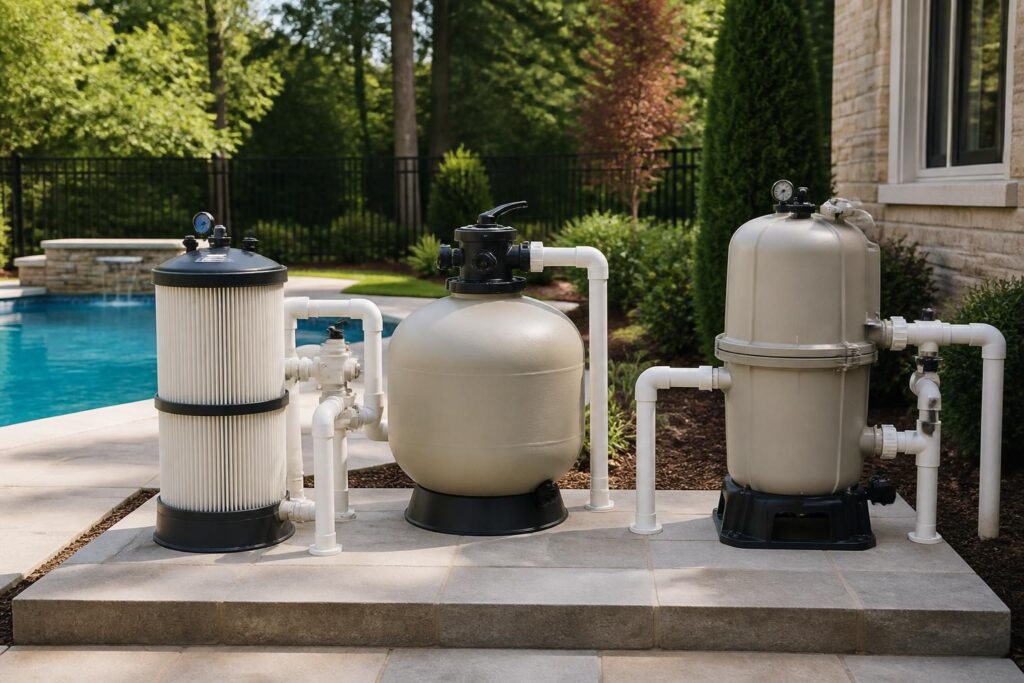
A pool filter types comparison helps North Carolina homeowners match equipment to their yard, water-care habits, and willingness to perform routine maintenance. Cartridge, sand, and diatomaceous earth (DE) filters can all support a residential pool, but they handle debris differently and create different cleaning tasks.
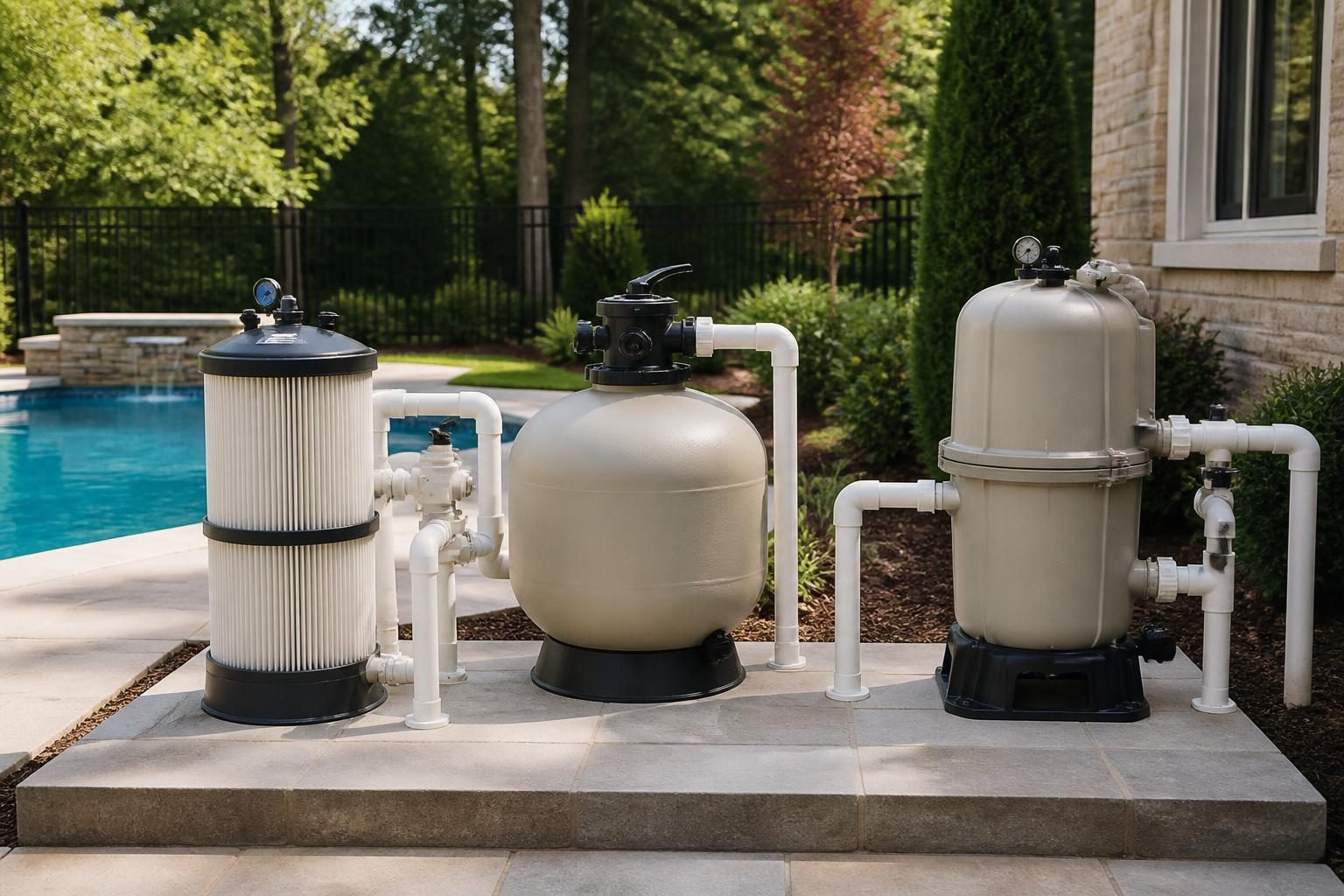
No filter is universally best. The right choice depends on the pool’s size, expected debris, available equipment space, water-saving priorities, disposal arrangements, and the recommendations of the pool designer or service professional. Ask for the filter model, rated capacity, cleaning method, replacement parts, and expected maintenance before approving an equipment package.
What each filter type does
Pool water passes through a filter after the circulation pump draws water from the pool. The filter catches suspended material, while sanitizer and balanced water chemistry address microorganisms and other water-quality concerns. Filtration does not replace testing, circulation, or proper chemical care.
Cartridge filters use one or more pleated fabric cartridges. The pleats create a large surface area that traps particles as water passes through. When pressure rises or flow changes, remove the cartridge and clean it with a hose. Eventually, the cartridge needs replacement.
Sand filters send water through a tank filled with specially graded filter media. Dirt collects between the media grains. A valve can reverse the flow during backwashing, which sends water and captured debris to an approved discharge location. Sand filters may also use alternative media, so confirm the specified media before comparing proposals.
DE filters use a fine powder made from fossilized microscopic organisms. The powder coats internal grids or a similar assembly and captures very small particles. Cleaning commonly involves backwashing or another manufacturer-specified process, followed by replacing the DE material. Follow the product instructions rather than treating every model the same.
Pool filter types comparison: maintenance and operating effort
Cartridge cleaning tasks
Cartridge maintenance usually involves shutting down the system, releasing pressure, opening the filter, lifting out the cartridge, and rinsing it carefully. Avoid damaging the fabric pleats. Deep cleaning may require a suitable cleaner, and cartridges need enough drying or handling space during service.
This work does not normally require routine backwashing. That can simplify water management, especially where discharge is difficult. However, the cartridge still needs regular inspection. A clogged cartridge can restrict flow and make the pump work harder.
Sand backwashing
Sand filters are often appealing to homeowners who prefer a straightforward cleaning cycle. Backwashing reverses water flow through the filter and carries trapped material away. The process requires a suitable waste line or discharge plan, plus enough room to operate the valve safely.
After backwashing, the system may need rinsing before returning to normal filtration. The exact sequence varies by valve and equipment design. Ask the installer to demonstrate the valve positions and provide written operating instructions.
DE handling
DE filters can provide fine filtration, but they add a consumable material to the maintenance routine. After cleaning, add the correct amount and type of DE. Too little may reduce filtration performance. Too much can restrict flow.
DE powder requires handling according to the product label and manufacturer instructions. Ask how the system works, where used DE may go, and which protective practices the manufacturer recommends. A service professional may offer a better option if the process feels inconvenient or unclear.
Water use, disposal, and North Carolina yards
Water use is a practical difference in any pool filter types comparison. Cartridge cleaning generally uses hose water to rinse the element. Sand and some DE systems may use water during backwashing. The amount and frequency depend on filter size, pool conditions, pressure readings, weather, and operating habits.
Backwash water carries dirt, concentrated pool chemicals, and filter media. Do not send it wherever it might erode soil, affect a neighboring property, enter a storm drain improperly, or damage landscaping. Local drainage conditions and discharge rules can vary, so confirm an acceptable plan with the appropriate local authority and a qualified pool professional.
North Carolina properties can have steep grades, clay soils, heavy rainfall, wooded areas, wells, septic systems, or flood-related concerns. Those conditions may affect where equipment and discharge routes can go. Review pool drainage planning for North Carolina yards before finalizing a filter that needs regular backwashing.
Do not assume that a drain, swale, yard area, or sewer connection is suitable. The local inspections department, utility provider, septic professional, or drainage specialist may need to answer site-specific questions. Put the agreed discharge approach in the project documents.
Filtration behavior and water clarity
Filter ratings and real-world results are not identical. A filter’s performance depends on its design, condition, flow rate, water chemistry, circulation schedule, and the debris entering the pool. A larger filter may allow longer periods between cleanings, but sizing must match the complete hydraulic system.
Cartridge filters can offer useful surface area and avoid frequent backwashing. They may suit homeowners who want to conserve water and can handle cartridge removal and rinsing. Their performance can decline when the pleats become coated with oils, fine dust, or other buildup.
Sand filters are familiar and forgiving for many routine applications. Their filtration behavior can change as the media becomes loaded. Correct backwashing matters. A poorly arranged discharge route or neglected pressure gauge can turn a simple routine into a recurring maintenance problem.
DE filters are often selected when fine particle capture is a priority. Their cleaning and recharging steps require more attention. Water clarity still depends on balanced chemistry and good circulation. The filter cannot correct every cloudy-water problem.
For general residential water-treatment guidance, consult the CDC guidance on home pool water treatment and testing. Follow your equipment and chemical-product instructions, and consult a qualified pool-water professional when conditions persist.
Space, access, and equipment layout
Filter size is only one part of equipment planning. Leave enough access to remove a cartridge, open a tank, inspect gauges, operate valves, and replace media or grids. Crowding equipment against a wall, fence, deck, or landscaping can make routine care harder.
Cartridge filters may need clear lifting space for the cartridge. Sand filters need room around the multiport or control valve and a practical backwash route. DE systems need storage space for fresh material and safe access for cleaning.
Compare the proposed filter with the pump, heater, sanitizer, automation controls, and plumbing layout. A filter that looks compact on paper may still require service clearance. This pool filter types comparison should happen on the equipment pad drawing, not only during a sales conversation.
Use pool equipment location planning guidance to discuss drainage, ventilation, service access, noise, and protection from roof runoff. If electrical equipment is nearby, ask a licensed electrician to review the layout and applicable requirements.
Disposal, replacement parts, and long-term ownership
Every filter creates an ownership task. Cartridge owners eventually dispose of worn fabric elements. Sand owners replace filter media when the manufacturer or service professional recommends it. DE owners must manage used powder and replace internal parts when needed.
Ask who supplies replacement cartridges, grids, seals, gauges, valves, and media. Record model numbers and take photographs of the equipment labels at handover. Those records can save time when you need a part several seasons later.
Also ask how cleaning affects surrounding surfaces. Rinsing a dirty cartridge can move fine debris into a planting bed or toward a drain. Backwashing can create muddy discharge. DE cleanup can leave powder that needs careful handling. The best maintenance plan is one you can perform without creating a new drainage or housekeeping problem.
Questions to ask before choosing a filter
- What filter type and exact model are included in the proposal?
- What flow rate and system conditions support the sizing recommendation?
- How often should the pressure gauge, cartridge, media, or grids receive inspection?
- Where will cleaning water or backwash water go?
- What replacement parts and consumables will I need?
- How much space is needed for opening, lifting, rinsing, and storage?
- What maintenance can a homeowner perform, and what should a qualified professional handle?
- Which instructions, manuals, pressure readings, and startup records will the installer provide?
- How will the filter work with the selected pump and automation schedule?
- What changes in maintenance should I expect during pollen, storms, or heavy debris seasons?
Compare answers in writing. A proposal should identify equipment, exclusions, plumbing assumptions, controls, startup responsibilities, and owner training. The North Carolina pool builder contract checklist can help organize those records without relying on informal promises.
How to make the decision
Choose a cartridge filter when water conservation, simple routine cleaning, and no regular backwash discharge are important. Confirm that you have room to remove and rinse the cartridge.
Consider sand when you value a familiar cleaning cycle and have a suitable discharge plan. Confirm the media, valve operation, and access requirements.
Consider DE when fine filtration is a priority and you accept the added material-handling steps. Confirm how the system works and how you will recharge it before installation.
A final pool filter types comparison should include total operating effort, not just the purchase price. A modestly priced system can become frustrating if its cleaning method does not fit your property or schedule.
Requirements and site decisions can vary by North Carolina jurisdiction, property conditions, adopted codes, utilities, septic systems, flood zones, and project scope. Consult the local inspections department for applicable requirements. Ask a licensed pool contractor, electrician, engineer, surveyor, septic professional, or other qualified specialist to review issues within their field before you commit to equipment or a discharge plan. Build a Pool in North Carolina provides homeowner education, not a substitute for site-specific professional advice.