
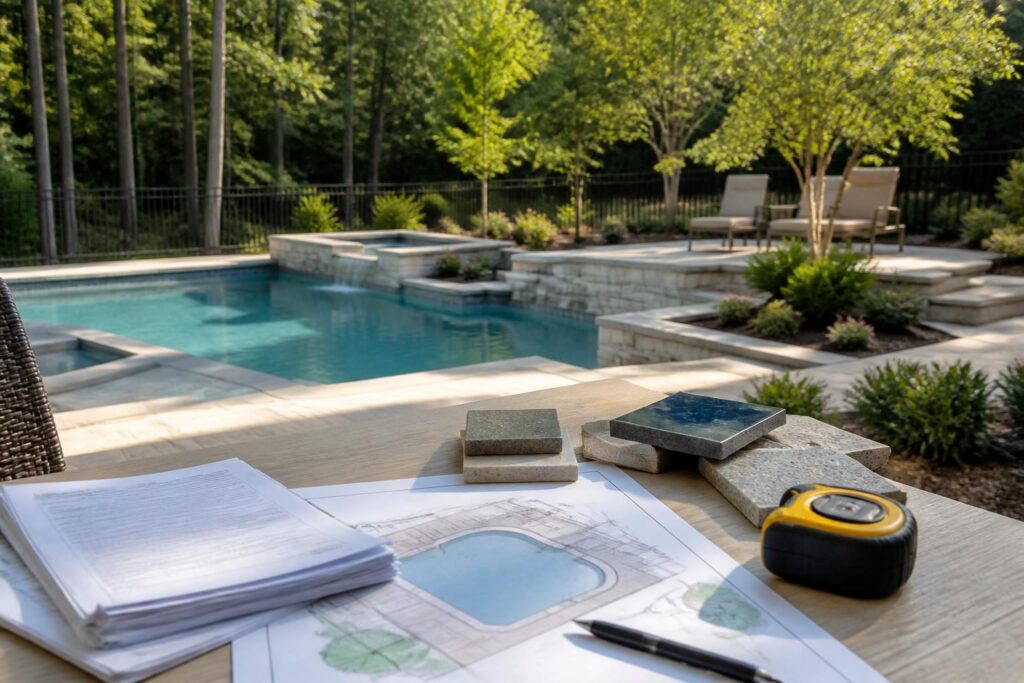
A North Carolina pool builder contract checklist helps turn a promising proposal into a clear project record. Before signing, make sure the written agreement explains what the builder will construct, who will handle each task, when payments fall due, and how the parties will document changes.
This article offers general homeowner education, not legal, engineering, electrical, or code-compliance advice. North Carolina requirements can vary by jurisdiction, property conditions, adopted codes, utilities, septic systems, flood zones, and project scope. Ask the appropriate local authority or qualified professional to confirm details for your property.
Start with a complete scope of work
The scope of work provides the contract’s main project description. It should connect the sales proposal, drawings, specifications, allowances, and signed attachments. If a detail matters to you, put it in the contract instead of relying on a conversation or display model.
Ask the builder to identify the pool location, shape, dimensions, depth profile, finish, coping, decking, steps, benches, lighting, water features, and access points. The documents should also describe the equipment package, including the pump, filter, heater, automation controls, sanitation equipment, and any covers or alarms.
- Attach the latest plan or drawing with a date and revision number.
- Describe materials by type, product, color, size, or approved selection.
- State whether excavation, hauling, grading, backfill, and final landscaping are included.
- Identify the assumed locations of equipment, drains, returns, skimmers, and control panels.
- List optional, excluded, or separately priced features.
Watch for broad phrases such as “standard equipment” or “complete installation.” Ask what each phrase means in this proposal. A useful North Carolina pool planning guide can help identify project elements that deserve written treatment.
Review specifications and allowances line by line
Specifications explain selected products and construction details. An allowance is a budget amount reserved for an item that you have not fully selected or priced. An allowance does not automatically equal the final cost.
For each allowance, ask what the amount covers. Does it include material only, or material and installation? What happens if your final selection costs more or less? Also ask about taxes, delivery, disposal, labor, and supporting work.
Questions for selections
- When must you choose tile, coping, decking, lighting, and equipment?
- Which person approves substitutions if a product becomes unavailable?
- Could a substitution affect appearance, performance, warranty coverage, or price?
- Where will you find samples, product sheets, and model numbers?
- Which selections require a signed change order?
Keep a selection schedule with dates, choices, product identifiers, and approvals. This record can prevent confusion when several documents describe the same feature.
Match payment milestones to visible work
A payment schedule should show the amount or percentage due at each stage. Compare every milestone with a clearly described deliverable. A label such as “construction start” may not explain what work has occurred or what remains.
Possible milestones may relate to contract signing, permit progress, excavation, structural work, plumbing, electrical work, finishes, equipment startup, and final closeout. The correct schedule depends on the project and contract. Define each stage in writing.
- Does each payment have a due date or measurable project event?
- Are deposits, allowances, taxes, and approved changes shown separately?
- What written notice supports a payment request?
- How will delayed selections or weather-related pauses affect the schedule?
- Does the contract explain final payment and incomplete items?
Do not treat a payment schedule as proof that a stage meets construction requirements. Inspections, engineering decisions, and electrical work may require qualified professionals or local authorities. For broader home-improvement contract considerations, review the North Carolina Licensing Board contract guidance.
Define change orders before the first change
A change order is a written amendment to the original agreement. It should describe the requested change and its effect on price, materials, schedule, and responsibilities. A verbal approval, text message, sketch, or invoice may not explain the full impact.
Your contract should state who may approve changes and how approval occurs. Ask whether work can begin before both parties sign. For urgent site conditions, ask how the builder will document the condition, proposed response, and estimated cost.
- Describe the original item and revised item.
- Show additions, credits, labor, materials, taxes, and disposal costs.
- Explain any schedule extension or effect on other trades.
- Reference revised drawings or specifications when needed.
- Keep a running change-order log with signatures and dates.
Site conditions can affect excavation, drainage, rock removal, groundwater, utilities, septic components, and retaining work. The contract should state which conditions the base price includes and which may require a documented change.
Assign permits, inspections, and site responsibilities
Do not assume the builder or homeowner handles every approval. Identify who prepares applications, pays fees, schedules inspections, responds to corrections, and provides closeout documents.
Permit needs can depend on the local jurisdiction, pool design, electrical scope, barrier arrangement, grading, flood exposure, septic system, and other site conditions. Before signing, contact the local inspections department and ask what applies to your property. You can also review current state building-code materials through the North Carolina Office of State Fire Marshal documents page. Local requirements and interpretations control the project. For related preparation questions, see North Carolina pool permit questions.
Write down responsibility for locating property lines, obtaining surveys, identifying easements, protecting trees, arranging utility markings, and coordinating septic or well professionals. For excavation planning, start with North Carolina 811, then confirm additional steps with the builder and relevant professionals.
Questions to include in a North Carolina pool builder contract checklist
- Who confirms the pool layout against the survey and approved plan?
- Which party protects driveways, structures, irrigation, landscaping, and access routes?
- How will temporary fencing and jobsite security be handled?
- Which party manages stormwater, soil stockpiles, erosion control, and final grading?
- Who coordinates septic, well, electrical, gas, or specialty inspections?
Clarify exclusions, cleanup, and restoration
Exclusions deserve the same attention as included work. A proposal may exclude rock, unsuitable soil, groundwater management, tree removal, retaining structures, extensive grading, utility relocation, permit fees, landscaping, or restoration beyond a defined area.
Ask how the builder will price an excluded condition. The contract should explain whether the builder must notify you before proceeding, provide supporting information, and obtain written approval. This creates a decision point before an unexpected cost becomes completed work.
Cleanup also needs detail. Define who removes excess soil, construction debris, temporary materials, protective coverings, and unused equipment. State what “final grading” means for this project and whether topsoil, seed, sod, mulch, irrigation repair, or planting is included. Do not assume disturbed areas will match their original condition unless the agreement says so.
Document warranties, service, and maintenance handover
Warranty language should identify the covered item, coverage period, exclusions, claim process, and responsible party. A pool project may involve separate warranties from the builder, equipment manufacturers, and specialty subcontractors. Ask how those warranties arrive and who helps with a claim.
Request written instructions for startup, water care, winterization, filter cleaning, pump operation, heater use, automation, lighting, and safety features. Keep model numbers, serial numbers, manuals, invoices, receipts, and approved substitutions together.
- Builder workmanship warranty and contact method
- Equipment and finish warranties
- Manufacturer registration requirements
- Operating limits and maintenance schedules
- Parts, service, and emergency-shutoff information
Never infer warranty coverage from a sales statement. Ask the builder or manufacturer to explain terms in the actual warranty documents. For safety planning, review Pool Safely safety tips.
Make closeout a documented project stage
Closeout means more than filling the pool. It covers the handover of the finished project, records, operating information, and unresolved items. Your contract should describe what the builder must deliver before final payment or project completion.
Build a closeout folder in paper or digital form. Include the signed contract, drawings, revisions, change orders, permits, inspection records, equipment manuals, warranty documents, product selections, invoices, payment records, and photographs. Add contact information for the builder and relevant service providers.
- Compare installed work with the latest approved scope.
- Record equipment model and serial numbers.
- Request copies of applicable approvals and inspection records.
- List incomplete items in a dated punch list.
- Confirm who will correct each item and how completion will be documented.
- Save water-care and equipment-training notes.
Keep final records after the first season. They can help with maintenance, repairs, future improvements, warranty questions, and property records.
Use this final contract review checklist
Before signing, read the complete agreement and every attachment together. Confirm that the names, property address, project description, price, payment schedule, and start conditions are correct. Ask for time to review unclear language and obtain important answers in writing.
- Scope, drawings, specifications, and selections are attached.
- Allowances explain what they cover and how adjustments work.
- Payment milestones connect to defined project stages.
- Change-order approval and pricing procedures are clear.
- Permits, inspections, barriers, utilities, septic, and site work have assigned responsibilities.
- Exclusions, cleanup, grading, restoration, and access limits are listed.
- Warranty coverage and service contacts are identified.
- Closeout records, training, punch-list work, and final payment are addressed.
Keep your North Carolina pool builder contract checklist beside each proposal as you compare scope, price, and responsibilities. A written checklist cannot remove every construction risk, but it can expose assumptions before work begins and create a shared project record.
Use this North Carolina pool builder contract checklist as a comparison tool, not as a substitute for reviewing the actual agreement and attachments. For contract language or a significant financial decision, consider advice from an attorney. Contact the local inspections department about permits and inspections. Use a licensed pool contractor, electrician, engineer, surveyor, septic professional, or other qualified specialist when the project requires expertise beyond general homeowner planning. Build a Pool in North Carolina provides educational information, not a substitute for those professionals.