
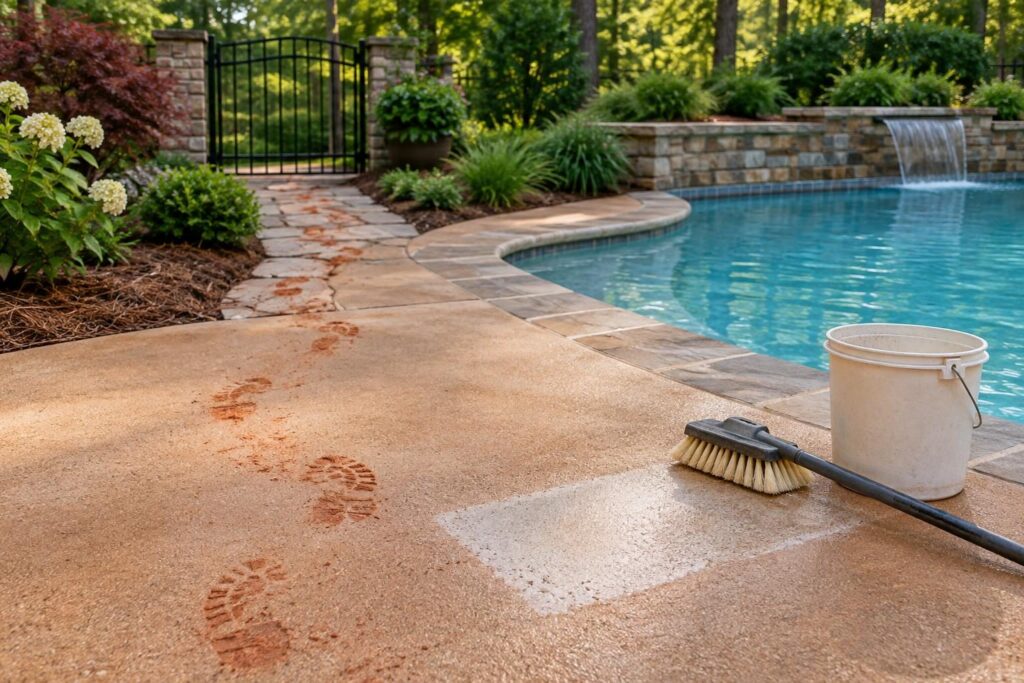
North Carolina red clay pool deck cleaning starts with identifying the surface, not choosing the strongest cleaner. Muddy footprints may cross concrete, coated decking, stone, and indoor flooring during one afternoon. Those surfaces can require different care. A method that removes dirt from one may damage another.
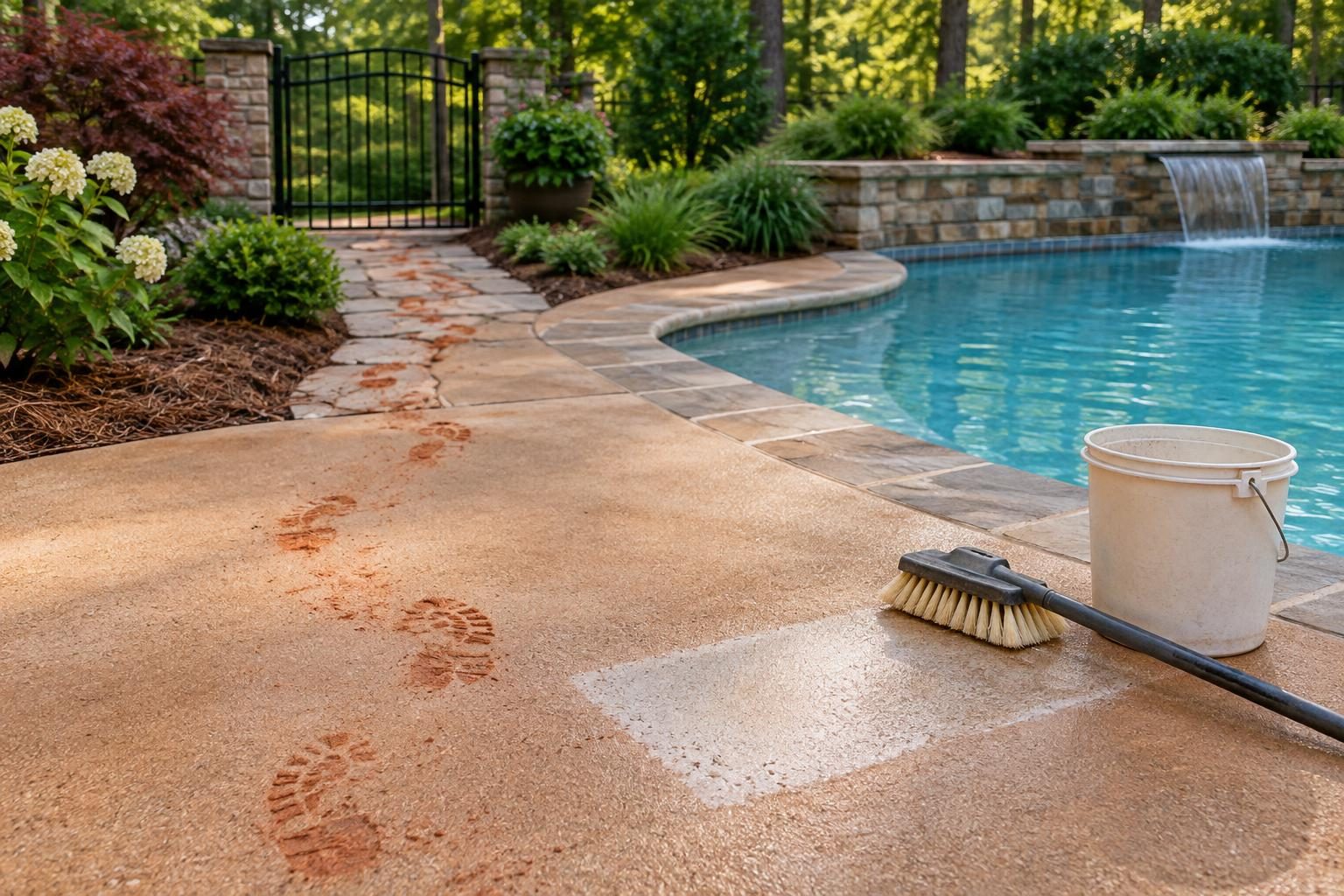
Start by stopping the tracking, removing loose soil gently, and checking the deck manufacturer’s instructions. Then test an approved method before treating a visible area. Keep muddy rinse water and cleaning products out of the pool. If the surface remains discolored, investigate before scrubbing harder.
Find where clay reaches the deck and house
Walk the route from exposed soil to the pool gate, seating area, and back door. Look for muddy shoes, pet paws, garden tools, wheeled toys, and landscaping traffic. Note whether clay arrives through footsteps or flows across the deck during rain.
Use simple controls that do not create new hazards:
- Keep muddy footwear outside the pool area and away from indoor thresholds.
- Place suitable washable mats on stable surfaces, clear of gates and walking routes.
- Clean wheels and tools before moving them onto finished decking.
- Provide a dry place for clean footwear near the house.
- Ask landscapers to protect established access routes and contain loose soil.
Mats should drain and remain secure without trapping moisture against sensitive finishes. Follow the decking manufacturer’s guidance about backing materials.
Photograph recurring muddy flow after rain. Repeated washing will not solve an upstream soil or drainage problem. Our guide to observing deck water movement explains what homeowners can record before requesting professional review.
Identify the pool deck surface before cleaning
Find the installation records, product names, finish selections, sealer information, and maintenance instructions. A sealer is a protective treatment applied to a surface. Its cleaning limits may differ from those of the material beneath it. For North Carolina red clay pool deck cleaning, these records help you check product compatibility.
Do not assume a concrete-looking surface is bare concrete. It may have a thin decorative overlay, stain, paint, or textured coating. Likewise, pavers and natural stone may have protective treatments that change their care requirements.
If records are missing, ask the installer to identify the complete surface system in writing. Include the coating or sealer brand, product version, and application date if available. A photograph alone may not establish compatibility.
Before cleaning, photograph existing discoloration, cracks, peeling, worn areas, and loose joint material. Distinguishing earlier conditions from cleaning-related changes protects both the homeowner and the service provider. If the surface is new, confirm its required waiting period before washing or applying any cleaner.
Match clay removal to the material
Concrete, decorative overlays, and coated decks
For confirmed uncoated concrete, check the installer’s care instructions before selecting a brush or cleaning product. Begin with the gentlest approved method. Do not assume that concrete tolerates every abrasive or chemical treatment.
Coatings, stains, and decorative overlays need their own written guidance. Aggressive scrubbing can change texture or appearance. Pressure washing can also damage some systems. Ask whether pressure washing is allowed and what equipment limits apply; do not borrow settings from another deck.
Pavers, natural stone, and tile
Confirm both the surface material and the joint material between pieces. Some pavers use joint sand, including sand stabilized with a binding material. Forceful washing may disturb joints, while a cleaner suitable for the paver may not suit its sealer.
Natural stone varies in composition. Acidic cleaners can damage some stone, so a product described as a masonry cleaner is not automatically suitable. For tile, verify compatibility with the tile, grout, and nearby metal or sealant.
Wood and composite decking
Use the decking manufacturer’s cleaning instructions, including approved brushes and products. Avoid improvised sanding, stiff abrasive pads, or concentrated stain treatments. Check requirements for cleaning between boards without damaging edges or fasteners.
Keep indoor cleaning separate. A deck cleaner should not travel inside on a mop or brush. Follow the indoor flooring manufacturer’s instructions for clay tracked through the doorway.
Test the approved method before treating the whole deck
A small test helps reveal changes before they spread across a prominent area. It does not replace manufacturer approval or guarantee that every section will respond identically. Treat North Carolina red clay pool deck cleaning as a staged process, not a single aggressive treatment.
- Record the starting condition. Photograph a discreet test area and an adjacent untreated area in similar light.
- Remove loose dirt gently. Use an approved soft brush or other recommended tool. Avoid grinding dry grit into the finish.
- Start with the mildest approved option. Clean water and gentle agitation may be sufficient for loose clay.
- Follow product directions exactly. Observe dilution, protective equipment, contact time, rinsing, and drying instructions.
- Inspect after drying. Compare color, sheen, texture, residue, and coating condition before expanding the work.
Do not improvise a stronger mixture because the first attempt leaves a mark. Never mix cleaning products. In particular, keep acids and ammonia-containing products away from chlorine products.
Stop if the test produces peeling, softening, unexpected color change, or visible surface loss. Send photographs and product details to the surface manufacturer or installer before continuing.
Plan where muddy water will go
Before using a hose, identify where the water will travel. Do not assume a deck drain leads somewhere suitable for cleaning wastewater. Avoid flushing clay into the pool, neighboring property, or a storm drain.
Remove as much loose soil as practical before wet cleaning. Work in manageable areas, using the least water consistent with the approved method. Where appropriate, collect muddy residue with equipment rated for wet pickup and compatible with the product used.
Keep tools and temporary collection materials out of walking routes. Never prop open a pool gate to accommodate a hose. Keep swimmers away while the deck is wet or has cleaner residue.
Ask the local stormwater or wastewater authority about disposal when cleaning products or collected wastewater are involved. North Carolina requirements can vary by jurisdiction, property conditions, utilities, septic systems, flood zones, and project scope. Consult local environmental health staff when septic or private-well protection is uncertain.
Inspect joints before washing. Our sealant maintenance checklist can help you document damaged areas that need review rather than stronger cleaning.
Separate residual staining from removable dirt
A remaining orange or reddish mark does not automatically mean clay still sits on the surface. Discoloration may involve the finish, embedded material, or another source. Appearance alone cannot establish the cause.
After the approved cleaning method, let the surface dry and compare it with the original photographs. Note whether the mark follows footprints, runoff paths, joints, or coating wear. Record whether the condition returns without new muddy traffic.
Avoid escalating to acid washing, wire brushes, abrasive wheels, or household stain-removal mixtures. A cleaner promoted for red clay still needs approval for your exact surface system and nearby materials.
If mud or cleaner enters the pool, document the product and approximate amount. Follow your pool water testing routine and consult a qualified pool service professional. The CDC’s home pool treatment and testing guidance explains routine sanitizer and pH checks. Those readings alone do not establish safety after an unknown cleaning-product spill.
Put professional cleaning commitments in writing
If you hire a cleaner, request a scope that identifies the deck material, products, tools, test area, runoff controls, and excluded work. Ask who will obtain manufacturer guidance and who will approve changes.
- Will you document the deck’s condition before starting?
- Which instructions support the proposed method?
- How will you protect pool water, joints, landscaping, and adjacent finishes?
- What happens if the test changes the surface appearance?
- Does the price include residue collection and final cleanup?
Promises to remove every stain deserve clarification, not an automatic assumption of wrongdoing. Ask what result is realistic and whether complete removal could sacrifice the finish. Reluctance to identify products is a reason to pause and verify compatibility independently.
Retain the proposal, approvals, labels, photographs, invoices, and any correction records. Match payment to the agreed scope and milestones. Document unresolved areas before accepting completion, and confirm any warranty-related maintenance requirements with the issuer.
For North Carolina red clay pool deck cleaning, consult the installer or manufacturer before escalating treatment. Use a qualified surface-care professional for uncertain finishes. Ask local inspections staff about proposed drainage alterations, and involve an engineer or septic professional when site conditions warrant specialist review.