
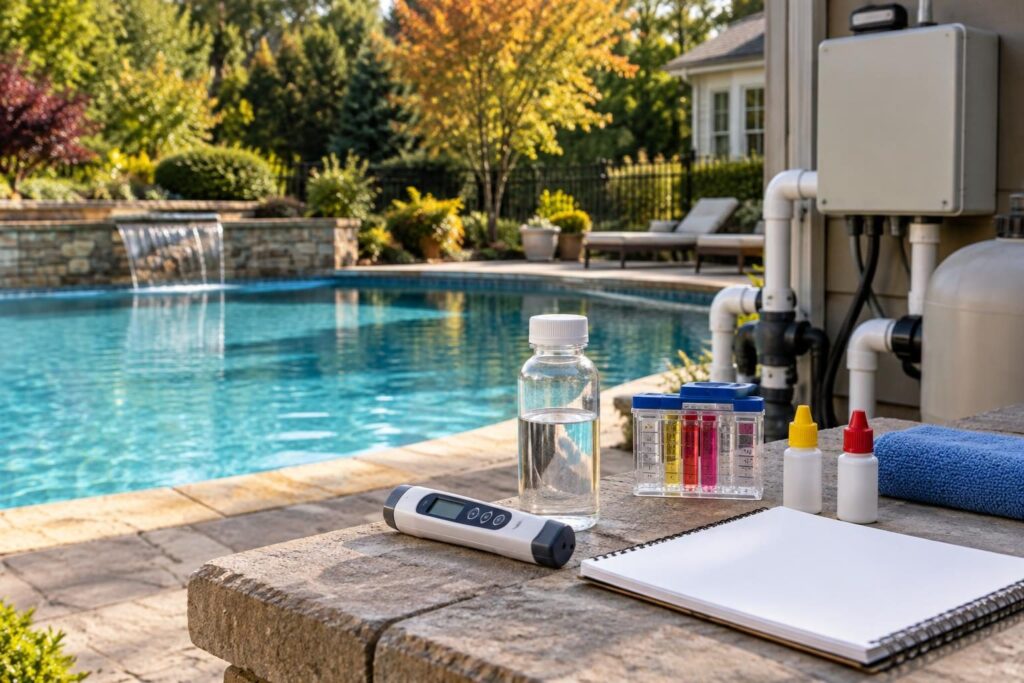
A pool salt test chlorinator reading mismatch does not automatically mean the pool needs more salt. It also does not prove that a sensor has failed. Sampling conditions, water temperature, testing technique, and display settings can explain conflicting results.
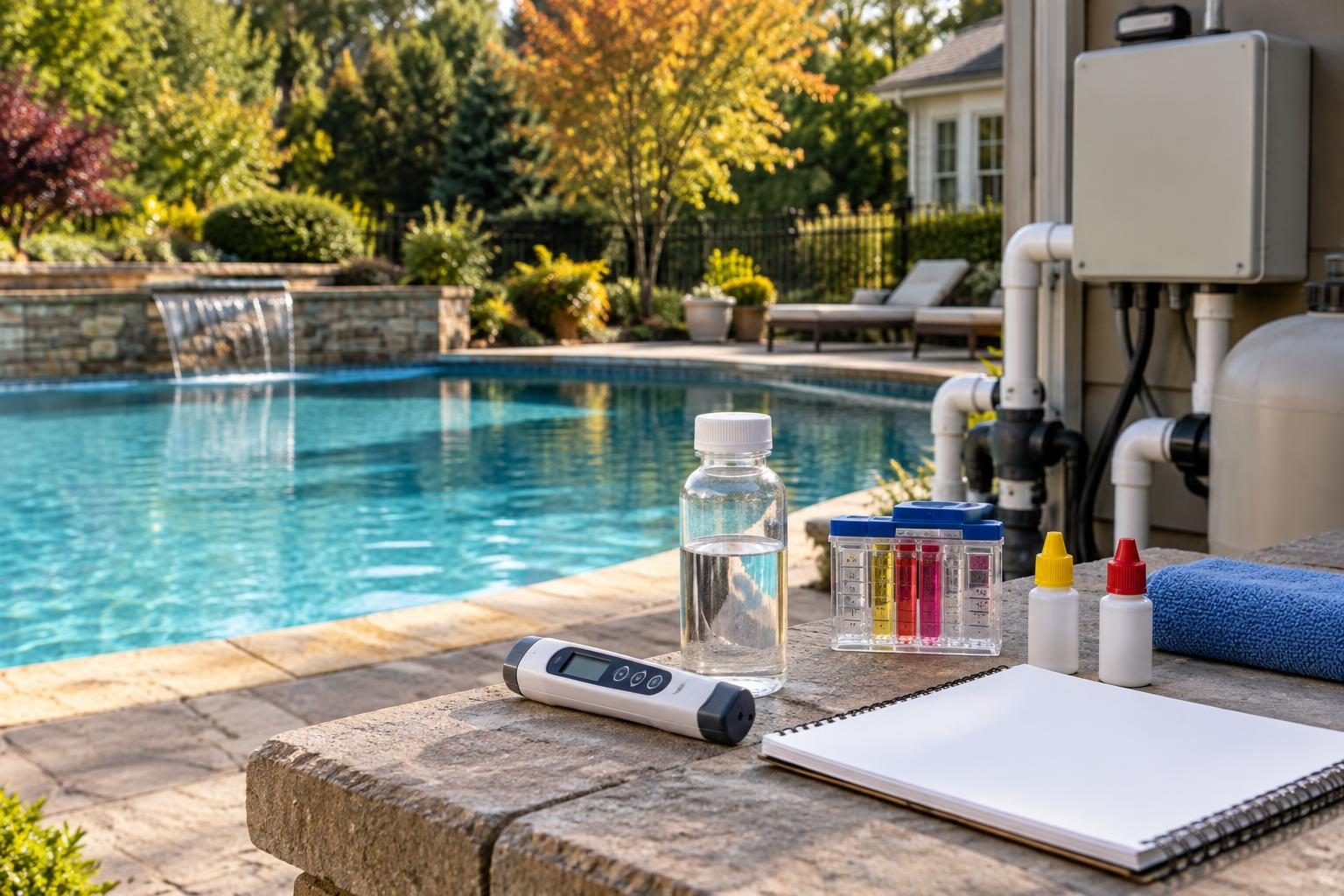
Before changing the water, establish what each reading represents. Then repeat the comparison under the conditions specified by the equipment and test manufacturers. Adding salt too soon can create another problem without resolving the original disagreement.
For North Carolina homeowners, spring warming, cool autumn water, and recent rain can complicate comparisons. Use current conditions and model-specific instructions rather than a familiar reading from last summer.
First, identify what the chlorinator display means
A salt chlorinator uses electricity to generate chlorine from salt dissolved in pool water. Its salt display may report an estimate derived from operating conditions rather than a separate laboratory-style salt measurement.
Depending on the model, the screen may show an instantaneous reading, a stored average, or another calculated value. Those values are not necessarily interchangeable. A pool automation app may also display information differently from the equipment’s local screen.
Find the manual matching both the control unit and installed cell. Record:
- The control-unit and cell model numbers.
- The selected cell type, if the system requires that setting.
- The display label, units, warning lights, and exact error message.
- Whether the displayed value is current, averaged, or stored.
- The manufacturer’s acceptable salinity range and reading-update procedure.
Do not reset a stored average or change the cell configuration just to make two numbers match. Photograph the original screen first. Ask the manufacturer or qualified service provider to explain unfamiliar settings.
Keep sanitation separate from the salt-reading question
A salt reading does not establish whether the pool has enough sanitizer. Neither does an illuminated production light. Check free chlorine, the chlorine available for disinfection, and pH with an appropriate pool-water test.
The CDC’s home pool water treatment and testing guidance explains why chlorine and pH need routine attention. Continue those checks while investigating salinity.
If sanitation is uncertain, keep swimmers out until testing and appropriate treatment establish suitable conditions. Ask a qualified pool professional about temporary sanitation if the chlorinator cannot operate. Follow chemical labels and equipment instructions rather than improvising a workaround.
Avoid changing several settings or adding several products at once. Each change makes it harder to identify what caused the disagreement.
Compare salt readings from representative water samples
Start with the sampling instructions supplied with your salt test. Use a clean container, rinse it as directed, and avoid contamination from chemical residue.
Water collected near a return fitting, fill-water outlet, or recent chemical addition may not represent the whole pool. Recent salt additions also require the manufacturer’s specified circulation and dissolving procedure before retesting.
- Record recent rain, filling, water removal, and salt additions.
- Confirm that circulation is operating normally before comparing readings.
- Use the sampling location and depth specified by the test instructions.
- Repeat the test using a fresh sample under comparable conditions.
- Note whether the pump and chlorinator were operating when each reading was taken.
Investigating a pool salt test chlorinator reading mismatch requires comparable conditions, not simply more readings. A sample taken before circulation and a display checked afterward may describe different conditions.
If recent work changed valves or circulation settings, document that too. Have unexplained flow warnings evaluated rather than bypassing them.
Check temperature before interpreting a low salt display
Electrical conductivity describes how readily water carries electrical current. Temperature affects conductivity, which matters when equipment uses electrical measurements to estimate salinity.
Systems and handheld meters handle temperature compensation differently. Compensation adjusts a measurement for temperature effects. It does not make every instrument equally accurate under every condition.
Compare the chlorinator’s reported water temperature with an independent thermometer used according to its instructions. Record both readings. A meaningful disagreement deserves manufacturer guidance; it does not automatically identify which component is wrong.
Also check the operating-temperature limits for your exact system. Cold-water production restrictions and salinity warnings can appear together, but they are not necessarily the same issue. Our guide to salt cell cold-water limits explains the separate sanitation concern.
Do not warm a sample or recalibrate equipment unless the applicable instructions call for it. Follow the specified sample-temperature conditions instead.
Understand what each salt test can—and cannot—tell you
Different methods do not measure salt in exactly the same way. Their resolution, calibration needs, and chemical interferences can differ.
- Salt strips: Follow the exact immersion, waiting, and reading procedure. Confirm that the product covers the expected concentration.
- Drop-based tests: Use the specified sample volume and endpoint, meaning the change that signals when to stop adding reagent.
- Conductivity meters: Check calibration, probe condition, temperature instructions, and the selected measurement mode.
- Pool-store testing: Ask which method was used and request the actual result, units, and testing date.
Some salt tests measure chloride and report a salt-equivalent concentration. Conductivity instruments respond to dissolved ions, not only sodium chloride. These differences can affect comparisons.
Review our pool test kit accuracy checks before treating one result as definitive. Reagent condition matters too; see the guidance on heat exposure and pool test reagents.
Do not average conflicting results and call that the correct salinity. First establish whether each method was used correctly and what uncertainty its manufacturer allows.
Use a documented decision point before adding salt
Once sampling and testing are consistent, compare the verified result with the operating range in your chlorinator manual. Avoid using a generic target from another pool or equipment brand.
- Independent tests agree within the specified range: Hold off on salt additions and investigate the display discrepancy.
- Repeat tests support low salinity: Confirm pool volume and the manufacturer’s dosing instructions before authorizing an addition.
- Tests disagree substantially: Request another appropriate test method and help interpreting the difference.
- Results support excessive salinity: Get a property-specific correction plan rather than draining immediately.
Ask whoever recommends salt to document the test result, target, estimated pool volume, product, and proposed amount. Uncertain volume can undermine an otherwise reasonable calculation.
Water removal introduces separate concerns. Discharge, groundwater, septic systems, utilities, and site conditions can affect available options. North Carolina requirements vary by jurisdiction and project scope. Verify applicable requirements locally before arranging drainage or related work.
When the mismatch needs equipment service
A persistent pool salt test chlorinator reading mismatch warrants a documented diagnosis, not an automatic cell replacement. Possible explanations include configuration errors, temperature reporting problems, deposits, aging components, or measurement limitations.
Homeowners can photograph accessible labels and displays without opening electrical compartments. Leave internal electrical testing, wiring, and component diagnosis to qualified professionals. Never defeat flow switches or other protective controls.
If deposits are suspected, follow the manufacturer’s inspection and cleaning instructions. Do not acid-clean a cell simply because the displayed salt level looks wrong. Ask whether cleaning is actually indicated.
Before approving service, request:
- The tests performed and readings obtained.
- The manual procedure or diagnostic finding supporting the recommendation.
- A written scope separating diagnosis, cleaning, parts, and labor.
- Warranty coverage confirmation and any diagnostic charges.
- Post-service readings showing what changed.
Different explanations or a missing written diagnosis do not prove wrongdoing. Ask for clarification before approving replacement work or paying for unverified conclusions.
Keep a short comparison log and close the loop
Save the date, water temperature, sample location, test method, results, display photographs, and recent water changes. Retain service communications, estimates, approvals, invoices, and correction records together.
After any authorized adjustment or repair, repeat the comparison under the manufacturer’s specified conditions. Request a written service summary identifying changed settings, installed parts, and remaining concerns. If equipment is removed, photograph its label and condition when safely accessible.
A pool salt test chlorinator reading mismatch is best resolved through repeatable testing and clear records. Consult a qualified pool service professional for unresolved salinity or equipment questions, and a licensed electrician for electrical concerns. Contact local inspections or environmental-health staff when proposed corrections involve regulated work, discharge, or septic constraints.