
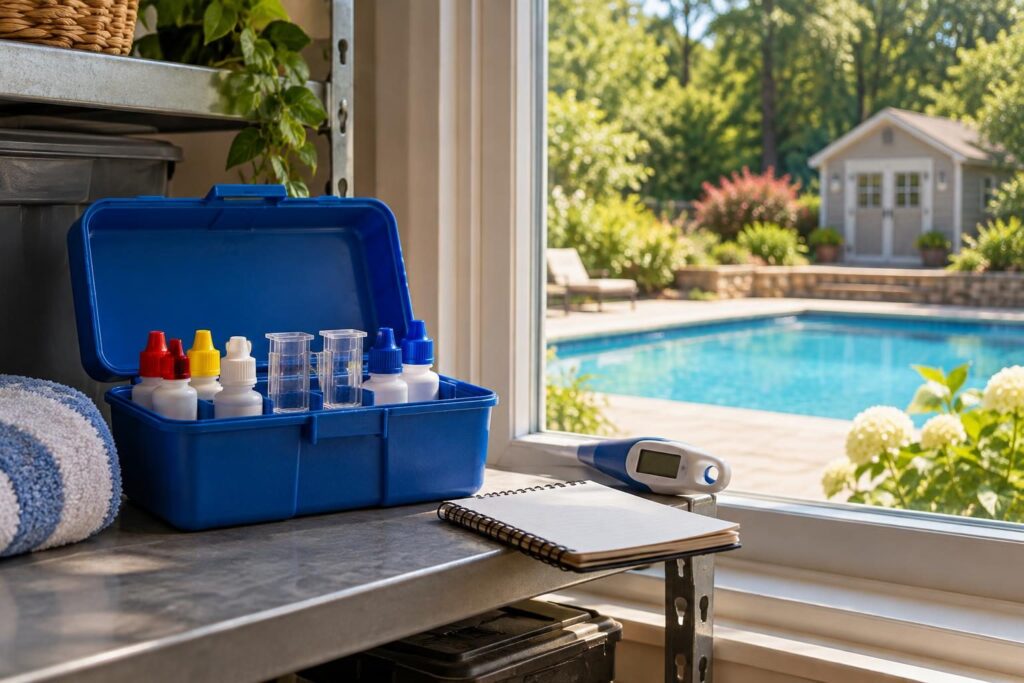
Yes, summer storage conditions can contribute to pool test reagent heat damage. Reagents are the liquids, powders, or tablets that react with a water sample to produce a reading. For North Carolina homeowners, a kit left in a hot shed or vehicle deserves closer attention. An unexpired bottle does not automatically remain reliable after storage outside its manufacturer’s instructions.
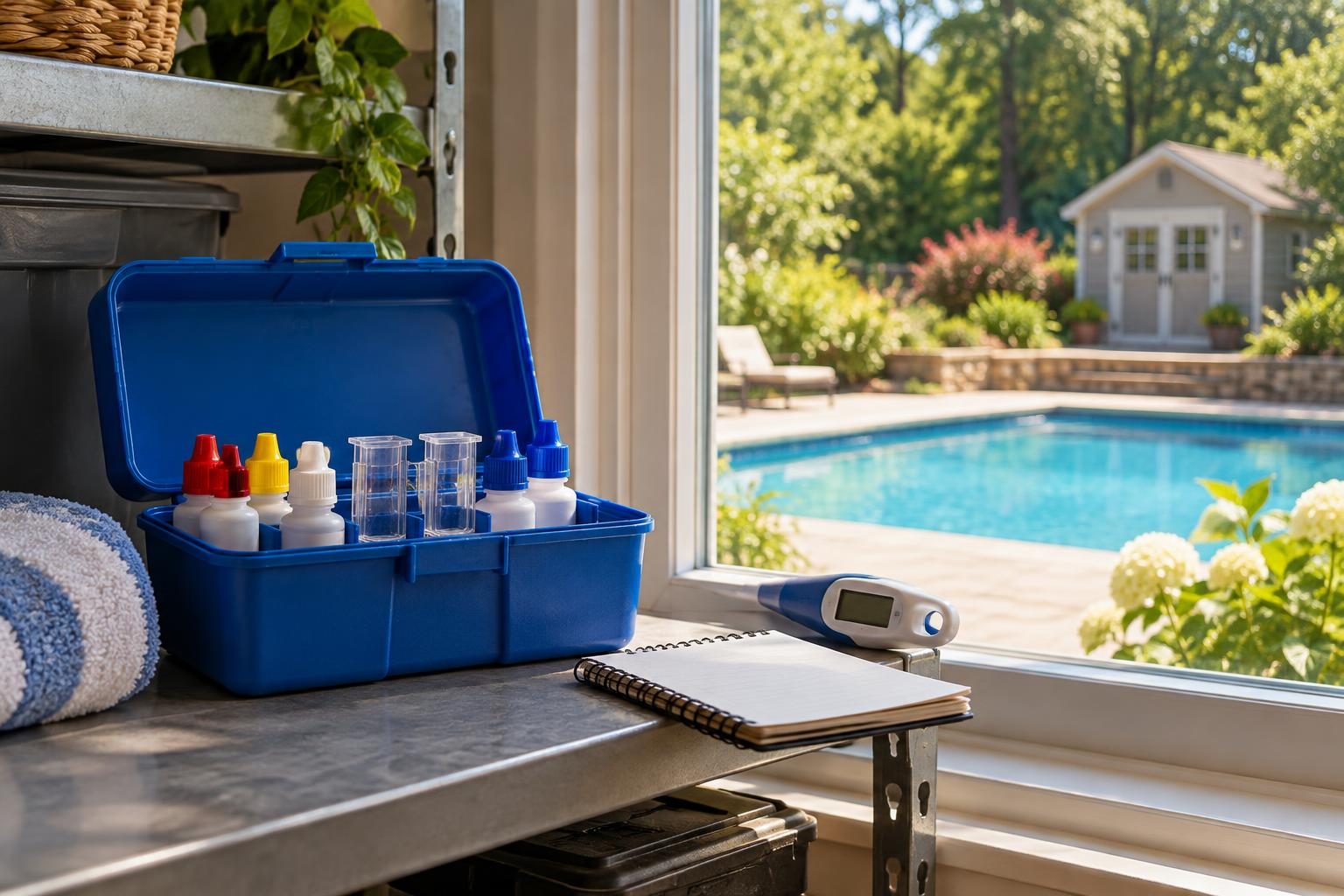
The practical response is not to assume every warm bottle has failed. Check the product instructions, document questionable exposure, and confirm unexpected readings before making substantial chemical adjustments. Focus on the kit’s storage history—not just the condition of the pool.
What pool test reagent heat damage can change
Excessive heat can shorten the useful life of some testing chemicals. The effect depends on the reagent, packaging, exposure conditions, and manufacturer specifications. There is no single safe temperature or exposure period that applies to every pool test product.
A compromised reagent may produce an unreliable result. Do not assume that heat always makes a reading higher or always makes it lower. The direction and size of an error depend on the test chemistry.
Appearance alone cannot establish reliability. A bottle may look normal even when its history raises concerns. Conversely, an unusual appearance needs comparison with the manufacturer’s description before you conclude that damage occurred.
Decision point: If you cannot establish that storage stayed within the product’s instructions, seek manufacturer guidance or replace the questionable reagent. Repeating a test with the same suspect bottle does not independently confirm its accuracy.
Check hot sheds, vehicles, and poolside storage
Review where the kit actually spends its time. A convenient location beside the pool may not provide suitable storage throughout summer. Shade alone does not establish that a cabinet meets the manufacturer’s temperature instructions.
- Sheds and garages: Check the conditions at the storage shelf, including afternoon heat.
- Vehicles: Avoid treating a trunk, glove compartment, or service vehicle as routine storage.
- Poolside boxes: Consider sun exposure, trapped heat, moisture, and access by children.
- Deliveries: Note packages left outdoors and ask about handling when exposure is uncertain.
- Equipment areas: Keep testing supplies away from heat sources and treatment-chemical fumes.
A thermometer that records minimum and maximum temperatures can help assess a proposed storage location. It cannot reconstruct earlier exposure or prove that a particular bottle remains usable.
Choose a secure location that meets each product’s instructions. Keep reagents in their original labeled containers, away from food and inaccessible to children and pets. Reducing pool test reagent heat damage starts with choosing storage based on instructions, not convenience.
Read storage instructions and expiration dates together
Check each reagent individually rather than relying on the date printed on the kit case. Replacement bottles may have different expiration dates and storage requirements. Record the date opened when the manufacturer uses opening time to determine useful life.
Review the label, kit manual, and applicable safety data sheet. A safety data sheet explains chemical hazards and handling precautions. Ask the manufacturer when these documents leave storage or shelf-life questions unanswered.
Photograph the following information before labels become worn:
- Product name and exact reagent identifier.
- Lot number, which identifies a production batch.
- Expiration date and any opening-date instructions.
- Storage directions and relevant warnings.
- Purchase receipt and supplier information.
An expiration date is not a guarantee against poor storage. Equally, the purchase date does not establish when the product was manufactured. Do not refrigerate or freeze reagents unless the manufacturer specifically directs it. Cooling a questionable bottle does not prove that its testing performance has recovered.
Separate warning signs from proof of failure
Look for leaking containers, damaged caps, unreadable labels, or an appearance that differs from the manufacturer’s description. Some reagents have an expected color or physical form. Check before interpreting cloudiness, crystals, or a color change as damage.
Loose caps, moisture exposure, or contamination may also undermine testing. Keep caps matched to their bottles and follow the instructions for handling dispensers. Never combine leftover reagent with a new bottle to stretch supplies.
When investigating suspected pool test reagent heat damage, write down what you know and what remains uncertain. “Stored in the shed during summer” is useful history. “Definitely ruined by heat” requires more evidence.
Ask the manufacturer whether the documented exposure calls for replacement. Include photographs and the lot number. If a delivered product appears compromised, retain the packaging and request written replacement guidance. These steps support a clear supplier conversation without assuming improper handling.
Confirm an unexpected result before a major adjustment
A surprising result may reflect real water conditions, damaged reagents, or a testing mistake. Do not dismiss it solely because the kit became hot. Instead, pause substantial chemical adjustments while you promptly check the result.
- Record the first reading. Include the time, reagent identifiers, recent treatment, and suspected storage exposure.
- Review the procedure. Follow the kit’s sampling, rinsing, timing, mixing, and reading instructions.
- Use suitable replacement reagents. Confirm compatibility, expiration, and storage history rather than mixing brands or methods casually.
- Obtain an independent comparison. Use another properly maintained kit or a qualified pool service’s testing process.
- Resolve material differences. Ask about sample handling, test limitations, and possible interference before choosing a treatment.
Follow the testing provider’s collection and transport instructions if taking a sample elsewhere. A delayed or poorly handled sample may complicate comparison. Do not simply average conflicting results.
Our guide to checking test technique and kit limitations covers the broader troubleshooting process. Here, the key question is whether storage history makes the original reagent trustworthy.
Keep safety separate from the urge to correct a number
A questionable reading does not justify a large treatment based on guesswork. It also does not establish that the water is safe for swimming. Keep swimmers out when you cannot confirm acceptable sanitizer and pH conditions.
The CDC’s home pool treatment and testing guidance explains why chlorine and pH testing matter. Use that guidance for general water-safety context, not as a substitute for reagent-specific storage instructions.
Once you establish reliable results, follow the treatment product’s label and pool-specific professional guidance. Keep chemical handling separate from the testing station. Never mix reagents with treatment chemicals or return tested samples to reagent containers.
If a fresh, properly stored reagent confirms the unexpected reading, investigate the water itself. For recurring pH changes, our guide to summer pH drift and possible causes provides useful observations to discuss with your service provider.
Ask service providers for testing records, not just reassurance
Homeowners using a maintenance service can ask how the provider protects testing supplies during summer routes. Vehicle transport alone does not prove that reagents were mishandled. Ask what storage instructions apply and how the provider meets them.
Before approving an unusually large treatment, request:
- The actual readings and test method used.
- Confirmation that reagents were in date and stored appropriately.
- A repeat or independent test when results conflict materially.
- The proposed products, quantities, and reason for treatment.
- Written authorization and pricing for work outside the service agreement.
Unexplained conflicting results or reluctance to provide records are reasons to seek clarification, not proof of wrongdoing. Save service reports, written communications, and follow-up readings. These records help distinguish a testing issue from an actual change in pool conditions.
Prevent pool test reagent heat damage next summer
Make storage part of your testing routine. Bring the kit out when needed, protect it during testing, and return it promptly to its designated location. Follow the manufacturer’s instructions for closing containers and protecting powders or tablets from moisture.
Keep a short exposure log after unusual events, such as discovering the kit in a parked vehicle. Record the location, approximate duration, known conditions, and manufacturer response. Do not invent a temperature estimate when none was measured.
Add replacement dates to your water-testing and equipment observation log. This helps you spot whether a change in readings coincided with new supplies.
Consult the reagent manufacturer about uncertain exposure or disposal. Ask a qualified pool maintenance professional to resolve conflicting readings before substantial treatment. Reliable testing starts with suitable supplies, clear instructions, and records that explain how each result was obtained.