
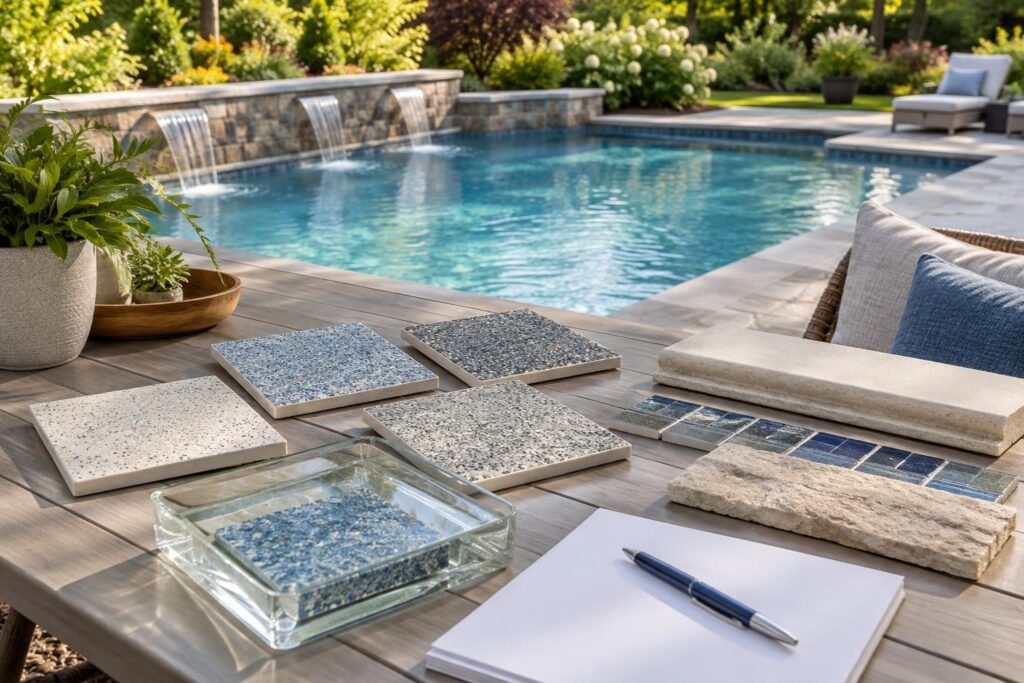
Good pool finish sample approval documentation records more than a color name and a signature. It identifies what you selected, how you viewed it, and which appearance questions remain unanswered. For North Carolina homeowners, this record helps connect a showroom choice with the material eventually installed.
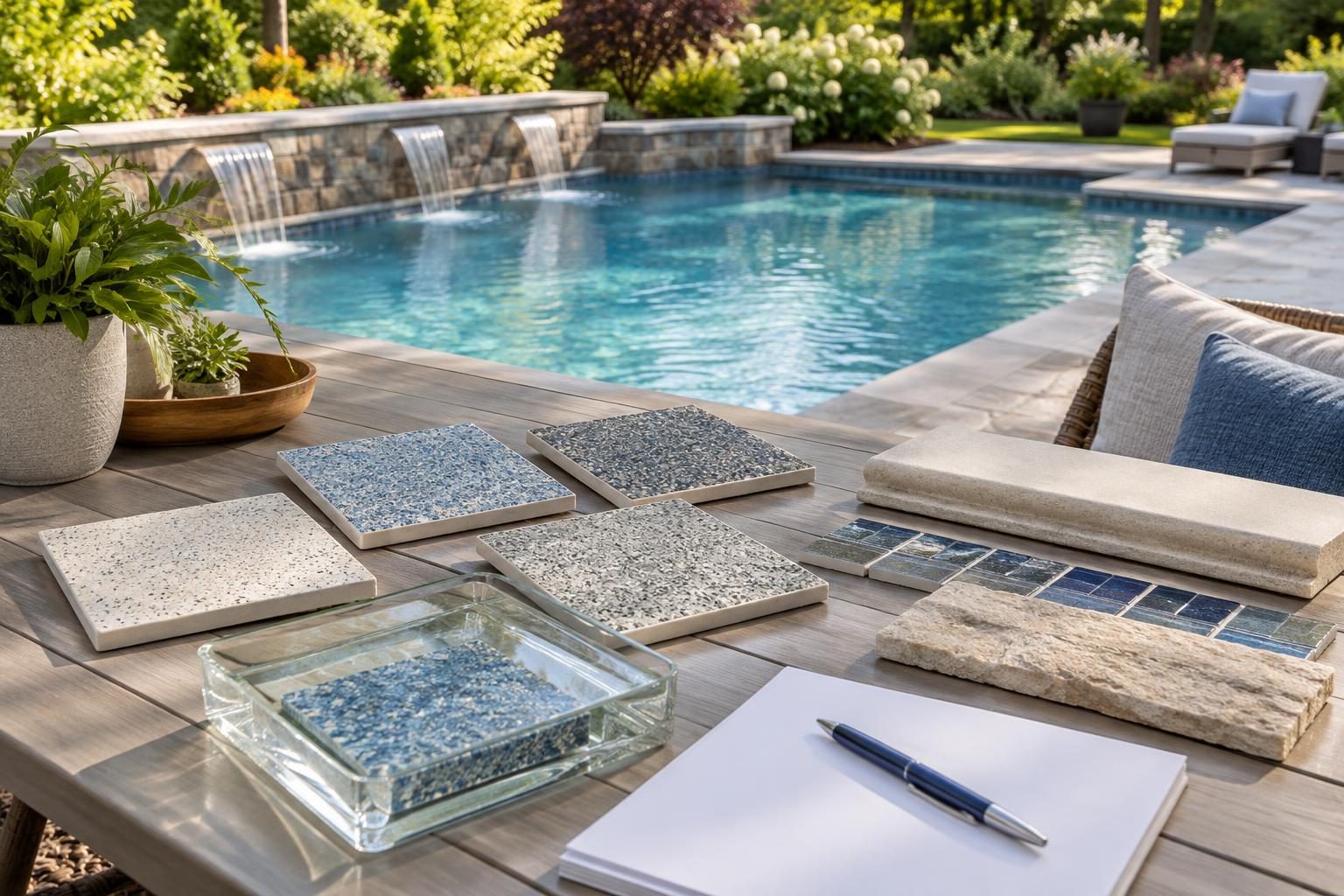
A small sample cannot reproduce every condition in a filled pool. Lighting, water depth, reflections, and viewing angle affect perceived color. Texture also deserves its own review. Before authorizing installation, establish what the sample represents and what it cannot promise.
Separate finish selection from installed-work acceptance
Start by asking what the approval form authorizes. Does it approve the product selection, release a material order, authorize installation, or acknowledge completed work? Those are different decisions.
A selection record should identify the chosen material without implying that you have inspected work not yet performed. Ask the contractor to explain broad acceptance language before you sign. Seek qualified legal advice if the language appears to waive rights or creates unclear obligations.
- Identify the specific decision being approved.
- List the pool surfaces covered by that decision.
- State which questions remain open and who will answer them.
- Request written confirmation of what happens before ordering or installation proceeds.
Read the approval alongside the contract and finish specifications. The North Carolina Licensing Board’s home-improvement contract guidance provides broader consumer guidance for contractor research and written agreements. A sample approval should support that agreement, not quietly replace unclear terms.
Identify the exact pool finish product
Color names alone are weak identifiers. Similar names may appear across different product lines, and a photograph may not reveal those differences.
Request a written selection sheet containing:
- Manufacturer, product line, finish type, color name, and product code, if assigned.
- Aggregate description, meaning the stone or other particles within the finish.
- Any optional pigment, accent material, or additive included in the selection.
- The surfaces receiving that finish, including steps, benches, and shallow ledges.
- Sample label, reference number, source, and review date.
- Manufacturer literature and installation instructions, with revision dates when available.
Do not assume a color selection includes every feature shown in a display pool. Confirm whether decorative accents or different step finishes are separate selections.
Keep these records with your pool material submittals and product information. A submittal is the product information provided for review before use. Ask who checks delivered materials against the approved selection. Include that person’s role in your pool finish sample approval documentation.
Record the sample’s lighting and water conditions
A useful comparison includes the conditions surrounding the sample. Note whether you reviewed a dry display board, wetted sample, submerged sample, photograph, or completed pool.
Record the location, date, approximate time, weather, shade, and light source. For a submerged sample, note the water depth if known. For an existing pool, identify which areas you viewed and whether the water appeared clear.
Photograph the sample label and the full sample together. Take additional images showing its surroundings and nearby tile or coping. Coping is the material that caps the pool edge.
- View the sample in more than one lighting condition when practical.
- Compare it beside your actual tile and coping selections.
- Keep original image files rather than only screenshots.
- Note filters, editing, or display settings that could affect a photo comparison.
Phone images are supporting records, not dependable color standards. Ask whether the manufacturer offers a viewing method intended for that product. Do not wet, submerge, or alter a display sample without permission.
Discuss color and texture as separate selections
A finish can look appealing while feeling different from what you expected. Ask to handle an appropriate physical sample when available. Review both its overall texture and the visibility of individual particles.
Discuss the surfaces people will touch: steps, seats, ledges, and the main pool floor. Ask whether the same finish and application method will cover each area. Record any planned differences.
Useful questions include:
- How representative is this sample of the installed surface texture?
- Does the manufacturer describe texture differences caused by application or finishing?
- What maintenance instructions apply to this surface?
- Can a completed installation help illustrate the texture, with the owner’s permission?
A hand-held sample cannot establish slip resistance or guarantee barefoot comfort. Avoid treating a brief touch test as proof of safety. Ask the contractor and manufacturer about product suitability for the planned surfaces, particularly entries and shallow areas.
Make expected variation specific and attributable
Statements such as “all finishes vary” leave too much unresolved. Request the manufacturer’s written description of expected variation for the exact product. Save the document or correspondence with your selection sheet.
Ask which differences the manufacturer discusses: color range, particle distribution, shading, application-related appearance, or changes during initial curing. Curing is the process through which a cement-based finish hardens and develops its properties.
Do not assume every finish has the same characteristics. Have the contractor identify which explanations come from manufacturer guidance and which reflect the installer’s own assessment.
Your pool finish sample approval documentation should name the reference used to explain variation. Avoid accepting an undefined phrase such as “normal variation” as the sole review standard.
Ask how the team will evaluate an appearance concern after installation. Who reviews it? Which documents guide that review? When should the surface be assessed under the product’s instructions? A sample difference alone does not establish defective work, but neither does a general variation statement resolve every concern.
Use a written approval record with open questions
A short form can capture the decision without burying it in email. Adapt these fields to your project:
- Selection: Exact product, color, additives, and installation areas.
- Sample reviewed: Identifier, physical or digital format, and sample custodian.
- Viewing conditions: Lighting, wet or dry condition, surroundings, and photo filenames.
- Reference documents: Manufacturer literature and written variation explanations.
- Open questions: Specific concern, responsible person, and required response.
- Decision: Selected, pending clarification, or not selected.
- Authorization: What may proceed, who approves it, and the approval date.
For an unresolved question, record the actual concern. For example, ask whether the shallow ledge is expected to appear different from deeper areas. Do not replace that question with a vague note saying “color discussed.”
Send the completed record to the person authorized to manage selections. Request acknowledgment and preserve the response. Confirm that the installer receives the final approved version, not an earlier selection. Date each revision to your pool finish sample approval documentation so the current decision remains clear.
Set a clear checkpoint before installation
Before work starts, ask the contractor to reconcile the approved selection with the materials planned for installation. Request product-label photographs and batch or lot information where provided. A batch or lot identifies a production grouping.
Confirm who checks those identifiers and whether any substitution requires another written approval. A different product should not be treated as equivalent merely because its color name sounds similar.
Clarify ordering consequences before releasing materials. Review custom material cancellation and purchasing terms, including responsibility for changes after an order.
Warning signs include missing labels, inconsistent product names, unanswered appearance questions, and requests to approve an unidentified sample. These do not prove wrongdoing. Ask for the missing information and a written explanation before deciding whether to authorize the next step.
Check payment requests against the contract’s milestones. Selection approval alone does not document material delivery, completed installation, or satisfactory workmanship.
Preserve the record through startup and closeout
Keep the approved sample when practical, or document where it remains available. Preserve selection sheets, original photographs, change orders, written communications, and manufacturer instructions.
Ask the contractor to photograph the prepared surface before the finish covers it, where safe and appropriate. Retain installation, startup, water-testing, and correction records supplied for the work. Follow product-specific care instructions rather than experimenting to change an unexpected appearance.
If a concern develops, record its location and viewing conditions. Ask for a written evaluation that distinguishes observations from possible explanations. Use clear punch-list completion criteria for any agreed follow-up. Do not drain the pool or attempt aggressive treatment just to compare it with a sample.
Complete pool finish sample approval documentation before installation, then retain it for later review. Consult the licensed pool contractor and manufacturer about product appearance and care. Seek an independent qualified specialist when explanations remain unresolved. For resurfacing or related work, verify current permit and inspection requirements locally; they vary with jurisdiction, adopted code, and project scope.