
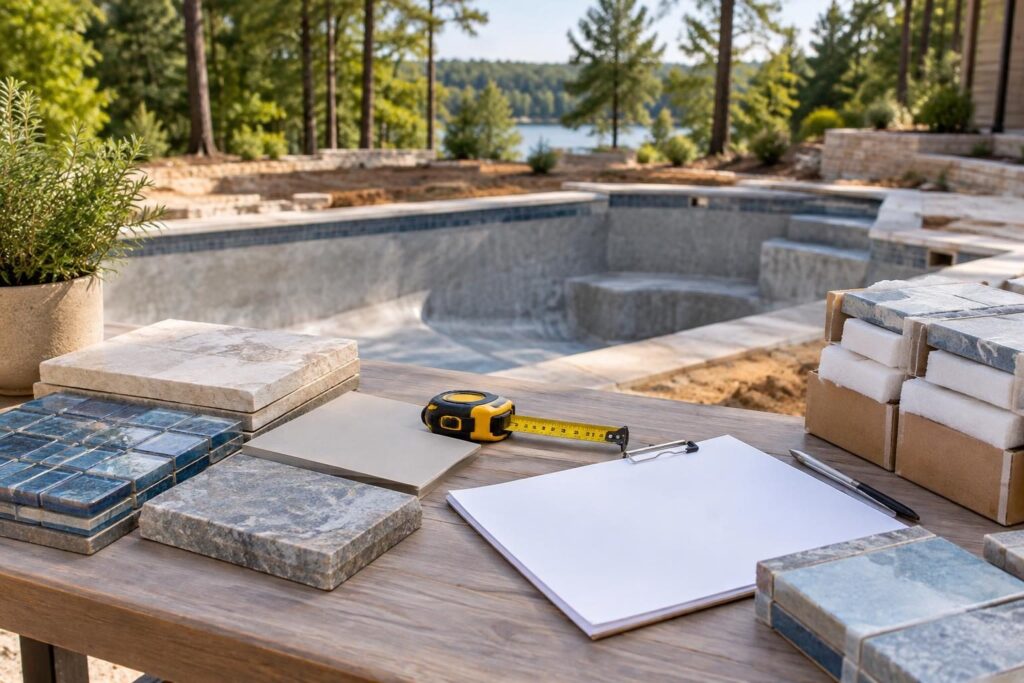
Review custom pool material order cancellation terms before approving tile, coping, a liner, or another project-specific purchase. A color selection should not leave you guessing whether you also authorized a nonreturnable order. For North Carolina homeowners, the practical goal is clear documentation before anyone commits money.
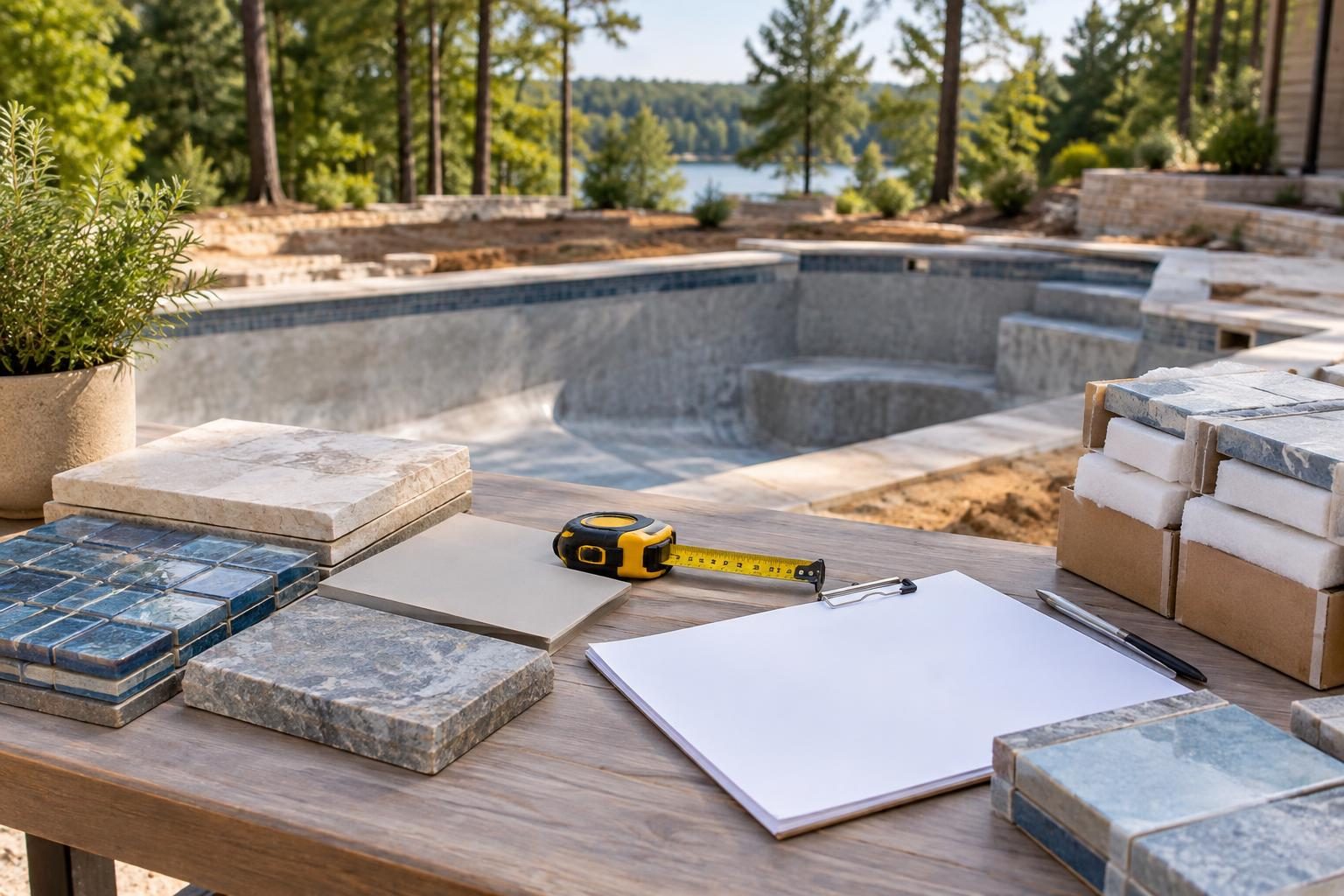
Separate three decisions: whether the product suits the design, whether records support the quantity, and whether to authorize purchasing. Each decision needs its own written record. Ask qualified counsel to interpret cancellation rights, disputed charges, or conflicting contract language.
Separate sample approval from permission to order
A sample review answers whether you want a particular appearance. Purchasing approval answers whether the contractor may commit money under stated terms. Do not assume everyone treats those steps separately.
Ask your builder to explain what a signature, email reply, or selection-portal click authorizes. Does it approve only the color? Does it release the entire order? Does it accept supplier restrictions that you have not received?
- Identify the person authorized to approve purchases for your household.
- Name the contractor representative who may release orders.
- Request a purchase summary before each custom order.
- Define how revisions replace earlier selections.
- Keep dated copies of approvals and their attachments.
Use a separate written purchasing authorization when practical. For broader coordination, review how to identify who may approve project extras. A salesperson’s discussion, designer’s recommendation, and homeowner’s authorization should not become interchangeable records.
Verify the actual material, not just its display name
Descriptions such as blue tile or light stone leave too much unresolved. Record the manufacturer, product name, identifying number, color, finish, dimensions, and intended location. Include edge shapes and corner pieces where relevant.
Photograph physical samples alongside their labels. Keep the approved sample if possible, or document who holds it. Ask whether the sample represents expected variation rather than an exact match.
- Is the sample the same product and finish being ordered?
- Will the order come from one production batch or several?
- What variation should you expect across installed pieces?
- Who confirms suitability for the intended pool application?
- What happens if the delivered material differs from the approved selection?
Ask the installer to review technical suitability, including exposure and installation requirements. Appearance approval should not replace that review. For custom fabrication, obtain the final drawing and identify who verifies dimensions before production begins.
Check quantities before accepting purchasing risk
Request the quantity calculation, not merely the purchase total. Ask which drawing revision supports it and whether measurements reflect the final layout. Distinguish installed quantities from ordered quantities.
An order may include extra material for cuts, breakage, packaging increments, or future repairs. Ask the contractor to explain each addition. Do not assume all excess represents waste or an error.
- What area, length, or piece count requires coverage?
- Which quantities cover corners, steps, curves, or special details?
- How much extra material is included, and why?
- Are unopened packages potentially returnable?
- Who bears costs if an ordering or measurement error occurs?
Keep the calculation with the approval. If the design changes afterward, require a revised order summary before another release. The same records support checking quantities on later change orders. Clarifying responsibility now is easier than reconstructing it after materials arrive.
Read custom pool material order cancellation terms by stage
Ask what changes when the contractor submits an order, the supplier accepts it, fabrication starts, or shipping begins. Those events may carry different restrictions. Request the applicable written policy rather than a general statement that everything is custom.
For each stage, identify who receives a cancellation request and how that recipient confirms receipt. Also ask whether stopping fabrication and cancelling delivery require separate instructions.
- When does the order become noncancellable, if applicable?
- Can quantities change without cancelling the entire order?
- Are deposits refundable, partially refundable, or applied elsewhere?
- What documentation supports any cancellation charge?
- Who requests cancellation and follows up with the supplier?
A supplier policy does not, by itself, resolve your obligations to the builder. Ask how that policy relates to your contract. Have qualified counsel review unclear language, conflicting documents, or claims that you have no cancellation rights.
Distinguish returns, restocking, and problem deliveries
Cancellation stops an order before a defined stage. A return sends received goods back. A restocking fee is a charge associated with accepting returned goods. Ask whether each option actually applies to your selected products.
Request an itemized explanation of possible costs. These might include return freight, handling, restocking, or custom work already performed. Do not accept an unexplained percentage without knowing what amount it applies to.
- Who must authorize a return before shipment?
- What packaging, condition, and documentation are required?
- What return deadline applies, and when does it start?
- Who receives the credit, and how will you see it?
- How are incorrect, damaged, or disputed goods handled?
Keep unwanted selections separate from delivery problems in your records. Do not assume the same policy governs both. If a supplier refuses a return, request the written reason and relevant order documents before drawing conclusions.
Confirm readiness before releasing a custom purchase
A design can look finished while important site questions remain open. Ask the project team which approvals and field measurements must be settled before ordering. Identify who accepts responsibility for releasing a purchase before those checks are complete.
North Carolina requirements can vary by jurisdiction, adopted code, property conditions, utilities, and project scope. Setbacks, barriers, drainage, septic systems, or structural details may affect selections or dimensions. Verify applicable requirements with local inspections staff and qualified professionals.
Use the North Carolina Licensing Board’s home-improvement contract guidance as a general consumer resource. It does not replace review of your specific purchase documents.
Before approval, ask for a short readiness statement identifying outstanding decisions. If ordering early offers a scheduling benefit, document the tradeoff and financial exposure. An urgent delivery claim should prompt verification, not automatic approval.
Connect payments to identifiable orders and records
A material payment request should identify what it funds. Ask for the approved selection, quantity, purchasing milestone, and applicable restrictions. Where supplier documents contain unrelated information, request a project-specific confirmation or appropriately redacted record.
Review custom pool material order cancellation terms again if the requested payment differs from the approved summary. Clarify the difference before authorizing a new commitment.
- Who is purchasing from the supplier?
- What document confirms that the supplier accepted the order?
- Where will the materials be delivered or stored?
- Who handles damage, loss, storage charges, and release?
- How will refunds or credits appear in the project accounting?
If goods will remain elsewhere, use additional verification steps for offsite material payments. An invoice alone may not answer storage, release, or delivery questions. Missing records call for follow-up, not an automatic conclusion of wrongdoing.
Decide who keeps unused materials
Resolve leftovers before purchasing, not during final cleanup. Ask who owns unused material under the agreement and who may approve returning, retaining, or disposing of it.
Some matching pieces may be useful for future repairs. Ask the installer which items are worth retaining and how to store them safely. Keep labels and batch information with the material records.
- Separate planned repair stock from unexplained excess.
- Record unused quantities at project closeout.
- Confirm who arranges eligible returns and pays associated costs.
- Request documentation showing credits received and applied.
- Approve disposal in writing after reviewing useful leftovers.
Photograph deliveries, labels, and installed materials before identifying information disappears. Ask the contractor to document work before it is covered when relevant. Retain inspection and correction records separately; approval of a product does not establish acceptance of its installation.
Use a final written approval checkpoint
Before releasing a custom purchase, assemble one dated packet: the selection, sample record, quantity calculation, fabrication drawing, price, payment schedule, and return policy. Add the authorized purchaser’s approval and any unresolved conditions.
Pause for clarification if documents conflict, explanations change, or important commitments remain verbal. Those warning signs do not prove misconduct. They identify facts that need verification before additional money is committed.
Clear custom pool material order cancellation terms help everyone understand the purchasing decision. Consult qualified counsel for legal interpretation or disputed responsibility. Contact local inspections staff when approvals affect the order, and use a qualified pool contractor or relevant specialist for technical suitability and measurements.