
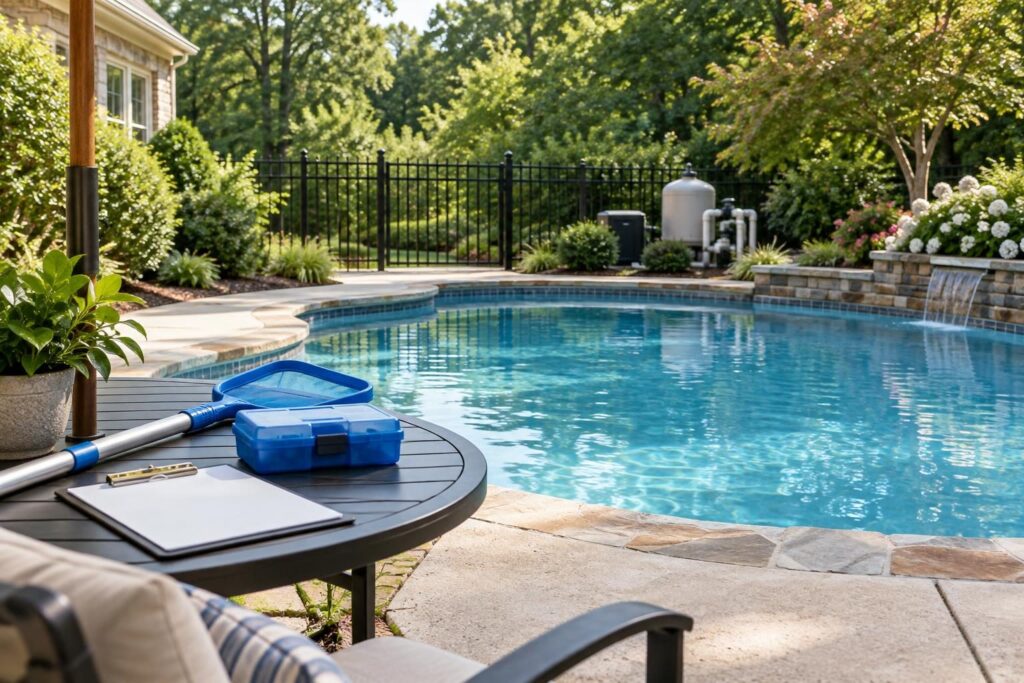
A North Carolina pool vacation maintenance plan should tell your caretaker what to check, what to record, and when to stop. It should also identify tasks that require a trained pool professional. A neighbor who can photograph a display may not know how to handle chemicals or troubleshoot circulation.
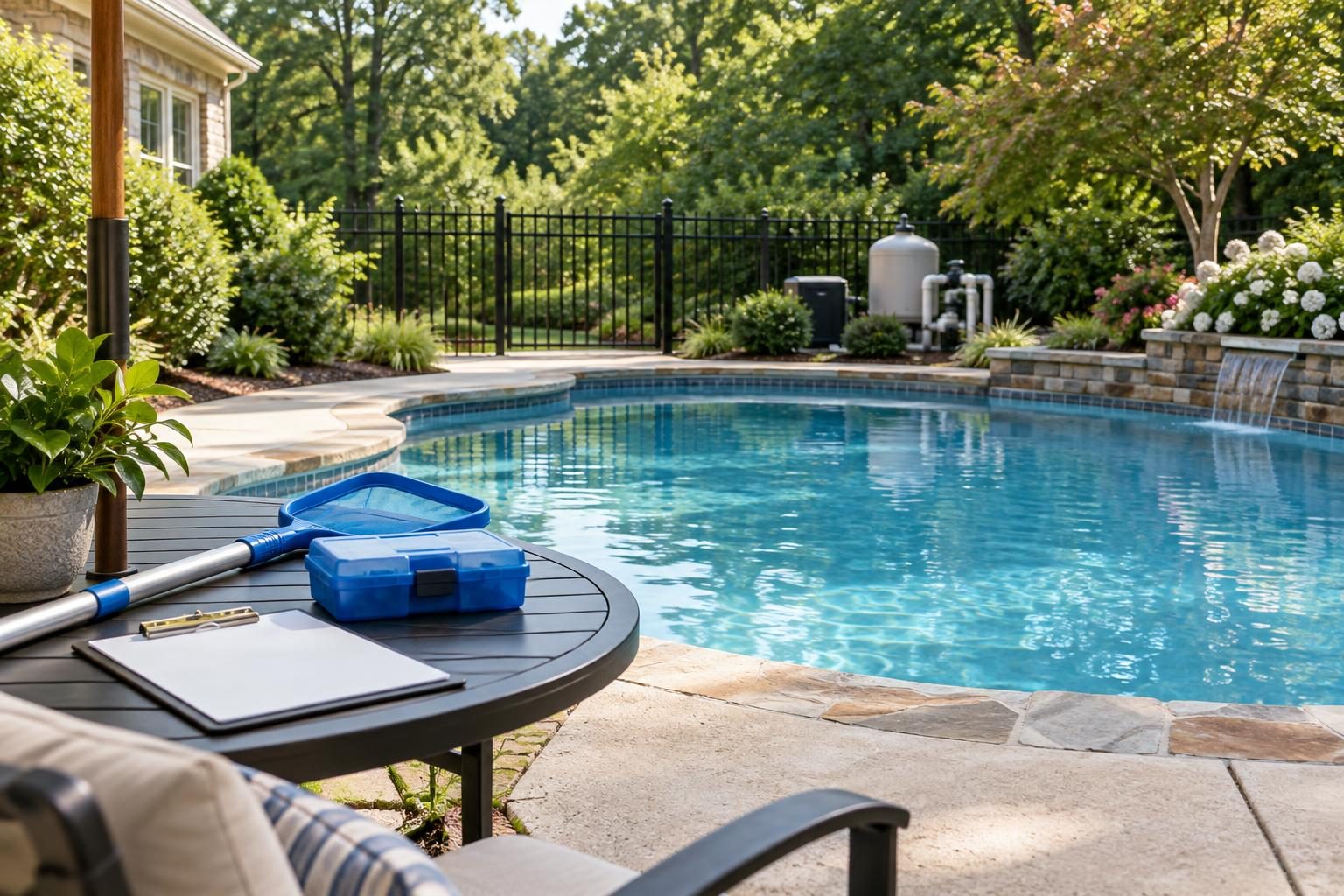
Before leaving, separate routine observations from authorized maintenance. Assign a backup person, confirm service coverage, and establish a clear response when you cannot answer. The goal is continuity of care without asking an inexperienced helper to improvise.
Assign vacation pool care responsibilities before departure
Choose a primary caretaker and a backup who can actually reach the property. Confirm their availability rather than assuming a text message will be enough. For an inexperienced helper, limit the role to demonstrated, low-risk tasks.
Use a pool service professional when the pool needs chemical dosing, equipment service, or care beyond the helper’s abilities. Ask who covers missed visits and after-hours problems.
- List visit dates, expected tasks, and how completion will be confirmed.
- Identify who tests water, reviews results, and authorizes adjustments.
- State whether swimming is prohibited while you are away.
- Give the backup person the same instructions and access arrangements.
- Require a report when a visit cannot happen.
Put paid service commitments in writing, including exclusions, visit charges, and approval limits for extra work. Verify important promises directly with the provider. Your North Carolina pool vacation maintenance plan needs confirmed coverage, not just a name on a contact sheet.
Prepare the pool and demonstrate the routine
Address known water-quality or equipment problems before departure. A trip is not a good time to leave unexplained water loss, repeated alarms, or uncertain chemical readings unresolved.
Walk through the property with the caretaker. Show safe access, testing supplies, cleaning tools, and the normal equipment display. Have the helper demonstrate assigned tasks while you watch.
- Photograph normal water level, equipment screens, and relevant operating readings.
- Record existing settings without changing them solely for the trip.
- Locate manuals, service records, and warranty contact information.
- Check that gates close and latch as intended.
- Secure chemicals and keep them separate from the helper’s routine supplies.
Explain that a pool cover does not automatically make the area safe. Do not assign cover operation unless the helper understands that system’s instructions and hazards.
Keep access routes clear and share your pool emergency access arrangements. Never prop open a gate for convenience.
Write testing instructions with firm chemical limits
Set testing frequency with your pool professional using your sanitizer system, expected conditions, and public-health guidance. Review the CDC’s home pool water treatment and testing guidance. A service visit schedule does not automatically provide enough testing coverage.
Write down the exact kit, sampling method, readings to record, and acceptable ranges for your pool. Include sanitizer and pH, which measures how acidic or basic the water is. Explain how to report readings outside the kit’s measurement range.
Demonstrate the test and watch the caretaker repeat it. Our guide to planning a pool testing routine can help organize coverage around changing conditions.
Default rule for an inexperienced helper: test and report, but do not add chemicals. Do not authorize guessed doses, mixed products, feeder refills, or changes to a salt chlorine generator’s output. That device produces chlorine from dissolved salt; it does not eliminate testing.
Any authorized chemical work needs a competent person following product labels and system instructions. Never mix chemicals or substitute products. Uncertain readings call for verification, not speculative treatment.
Define safe water-level and cleaning checks
Give the caretaker a dated photo showing the normal water level and a professional-approved range for your pool. Avoid a generic instruction such as “keep it near the skimmer.” Pool arrangements differ.
Specify who may add water and how that person will supervise filling. If the pool has an automatic filler, explain that it does not rule out a leak. Unusual refill activity deserves a report.
- Photograph the waterline from the same location during each visit.
- Report unexpected rises, drops, or water running toward the house.
- Remove reachable surface debris only with demonstrated tools and safe footing.
- Keep loose items away from gates, drains, and walking routes.
- Report a full basket or blocked intake rather than opening unfamiliar equipment.
Do not ask an inexperienced helper to drain water, backwash a filter, or change valves. Backwashing reverses flow through certain filters to remove trapped material. It requires system-specific instructions and an appropriate discharge arrangement.
Never enter the water to retrieve equipment, clear an intake, or investigate a problem. Cleaning tasks can wait for qualified help when conditions are unsafe.
Turn equipment alerts into clear escalation steps
Automation provides useful information, but it cannot replace an onsite check. Confirm that alerts reach both you and the designated backup. Use separate access permissions where available rather than sharing unnecessary account credentials.
Create a short equipment response sheet. List normal displays, known scheduled pauses, and conditions requiring a service call. Include photographs so the caretaker can identify equipment without guessing.
- App offline: report the connection loss; do not assume the pool has stopped operating.
- Unexpected alarm: photograph the full message and note the time.
- Unusual noise, visible leakage, or absent circulation: keep swimmers out and contact the designated professional.
- Smoke, sparking, electrical shock, or other immediate danger: stay clear and call emergency services.
Do not authorize repeated resets, breaker operation, wiring work, opening filters, or removing pump lids. Filters can contain hazardous pressure. Any shutdown task assigned to a caretaker must be safe, accessible, and demonstrated for that system. Never approach flooded or damaged electrical equipment.
Set emergency contacts and spending authority
Prepare contacts in priority order: emergency services for immediate danger, primary pool service, backup service, homeowner, and backup decision-maker. Include the property address, safe gate-access instructions, equipment details, and service account information.
Ask each provider whether they serve the property during your travel dates. Confirm their contact method and whether they accept instructions from your caretaker.
For paid work, document:
- Who may authorize a diagnostic visit or repair.
- Your approval limit and what requires separate written consent.
- Whether after-hours charges apply.
- Who receives estimates, photographs, invoices, and service reports.
- What happens if nobody with approval authority responds.
A request for immediate payment or broad repair authority is a reason to clarify scope, not proof of wrongdoing. Verify unexpected payment instructions through a previously confirmed contact.
Keep people away from chemical spills or fumes and seek emergency guidance. Do not ask the helper to neutralize a spill. For outages, include your summer power outage response instructions rather than relying on memory.
Give the caretaker a simple visit log
Keep the working copy of your North Carolina pool vacation maintenance plan short enough to use at the pool. Store detailed manuals separately. Each visit should leave a record, even when nothing appears wrong.
- Visit: date, time, caretaker name, and relevant weather.
- Access: gate and barrier condition; any security concern.
- Water: test results, clarity, waterline photo, and visible debris.
- Equipment: displayed status, alarm message, and unusual observations.
- Actions: cleaning completed, notifications sent, and professional instructions received.
- Follow-up: responsible person, next step, and confirmation when resolved.
Require a direct call for urgent concerns. A photo buried in a group chat is not a reliable escalation method. Document approvals and retain written communications.
After returning, review missed visits, unusual readings, water additions, and service work before resuming normal use. Obtain correction records and invoices for any repairs. Unresolved water-quality, electrical, or barrier concerns need review before swimming.
Know when the plan needs professional review
North Carolina requirements can vary by jurisdiction, adopted code, property conditions, utilities, septic systems, flood zones, and work scope. Verify proposed drainage, discharge, barrier, or electrical changes with local inspections staff and the appropriate qualified professional.
Your North Carolina pool vacation maintenance plan should reduce uncertainty, not transfer technical responsibility to an untrained friend. Consult a qualified pool service professional for water care, a properly licensed contractor for applicable repairs, and a licensed electrician for electrical concerns. Bring in an engineer or septic professional when site conditions require that expertise.