
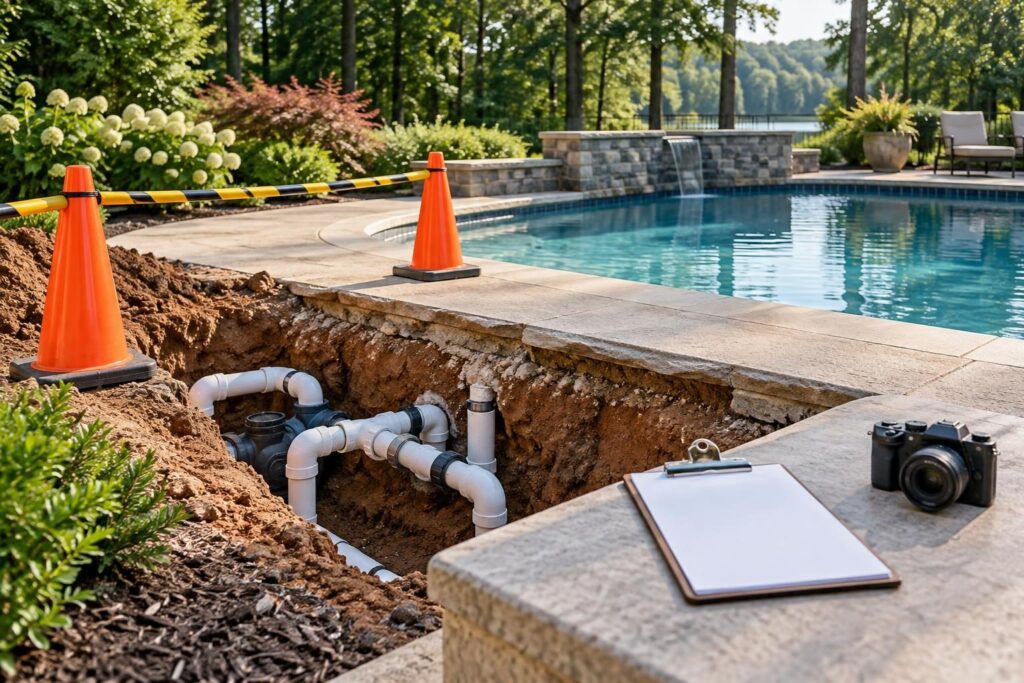
Before soil, concrete, or finishes hide a repair, request pool concealed repair verification records while the work remains visible. Photographs, written repair details, test results, and applicable inspection confirmations answer different questions. Together, they help you understand what changed and what remains unresolved.
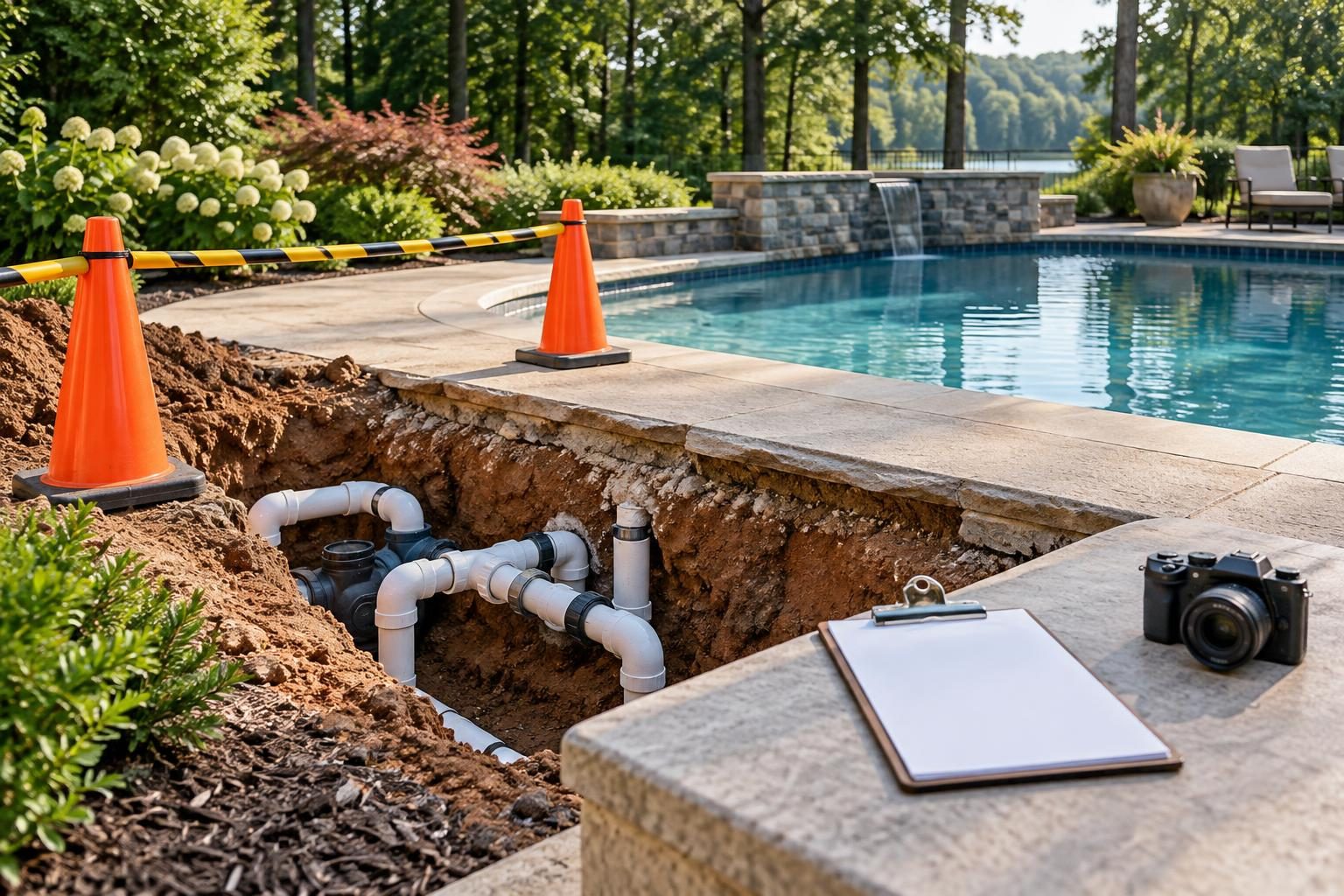
This checkpoint matters for repaired underground plumbing, electrical components, drainage, shell work, and connections beneath decking. Once covered, these areas can become difficult to examine without reopening finished work. The goal is a documented review—not a homeowner attempt to certify technical workmanship.
Agree on a review point before the repair disappears
Ask the contractor to identify when the repaired area will become inaccessible. Backfill means soil or another specified material placed around or over installed work. Concrete placement, waterproofing, tile, and equipment enclosures can also conceal repairs.
Before repairs begin, agree in writing on the records expected before covering. List the expected pool concealed repair verification records in that written agreement. Identify who collects them, who reviews technical questions, and who confirms readiness for the next step. Give the contractor a clear notice process so the review does not depend on an unexpected site visit.
- Which repair stages must remain visible for testing or inspection?
- Who will notify you before backfill or finish work starts?
- What happens if required records or confirmations are missing?
- Who protects the open work while questions are resolved?
Coordinate this checkpoint with the signed repair scope and schedule. Our guide to reviewing a pool repair proposal explains how to establish expectations before work starts.
Request a repair description tied to the exact location
A note saying “pipe fixed” offers little help during a future service call. Request a dated description that identifies the location, affected system, reported problem, and work performed. Distinguish observed conditions from the contractor’s diagnosis.
The description should explain what was removed, retained, replaced, or modified. Ask for relevant material names, product identifiers, and installation instructions. If the repair differs from the agreed scope, obtain the written change order and technical explanation.
- What condition did the contractor find after opening the area?
- How far did the repair extend beyond the visible problem?
- Which existing components remain in service?
- Does the repair alter routing, elevations, connections, or future access?
Elevations describe vertical positions relative to a reference point. Changed elevations can matter for drainage and buried connections. Ask the appropriate professional to explain those effects rather than judging them from a photograph.
Build useful concealed repair photo records
Request images showing the area before removal, during repair, and after completion but before covering. A useful sequence connects the original condition to the completed correction. One close-up rarely establishes that connection.
Include wide views with permanent landmarks, middle-distance views showing the repaired system, and close-ups of relevant connections or materials. Ask the contractor to identify the location and date in the accompanying record. Preserve original image files rather than relying only on compressed message screenshots.
- Keep related photographs under one repair identifier.
- Label orientation and nearby fixed features.
- Request visible product markings where practical.
- Record dimensions only when someone can measure them safely.
Photographs show visible conditions; they do not establish hidden quality, test performance, or code compliance. Never enter an excavation, move protective coverings, or open electrical equipment for a better picture. Request documentation from the responsible professional instead.
Ask what each repair test actually demonstrates
Testing should match the repaired system and the question being investigated. A plumbing pressure test evaluates a defined portion of piping under specified conditions. An operating check observes equipment or water movement during use. Neither automatically answers every question about the repair.
Ask the qualified professional to select the appropriate method and acceptance criteria—the conditions used to judge the result. Homeowners should not choose test pressures, durations, electrical methods, or structural evaluation procedures.
Useful pool concealed repair verification records identify:
- The test date and person or company performing it.
- The repair location and components included.
- The method, conditions, and relevant instrument information.
- Recorded readings or observations, not just “tested OK.”
- The stated acceptance criteria and reported result.
- Limitations, excluded areas, and any follow-up needed.
Ask whether covering the repair prevents a later test from locating a problem. Also clarify whether startup checks remain necessary after restoration. Never operate test equipment or energize unfinished electrical work yourself.
Verify applicable inspection confirmations independently
Ask the local inspections department whether the repair needs a permit, inspection, reinspection, or revised documentation. Confirm which stages must remain exposed. North Carolina requirements can vary by jurisdiction, adopted code, property conditions, utilities, septic systems, flood zones, and repair scope.
The North Carolina Office of State Fire Marshal’s documents and interpretations provide official code resources. Your local department should confirm the requirements that apply to this repair.
When an inspection applies, request the permit or case reference, inspection type, date, status, and correction notes. Verify the record through the issuing department rather than relying only on a verbal statement.
An inspection approval addresses its recorded scope. It is not a blanket warranty or proof that every concealed component was examined. Ask whether outstanding corrections affect permission to cover this specific area.
Use a correction and reinspection tracking checklist when the department identifies items requiring follow-up.
Match the evidence to the repaired system
Different repairs need different supporting records. Ask the contractor which documents apply rather than treating every item as mandatory.
- Buried plumbing: Request routing updates, identified fittings and materials, connection photographs, and relevant test reports.
- Electrical or bonding work: Request the electrician’s description and applicable inspection records. Bonding connects specified conductive parts to reduce electrical potential differences; homeowners should not evaluate it themselves.
- Drainage: Request revised routes, outlets, elevation references, and professional observations about intended water movement.
- Shell or structural repairs: Request the repair detail, material records, and any specified professional review or testing.
- Waterproofing beneath finishes: Request product identification, preparation records, and documentation of relevant installation conditions.
If repair excavation expands, revisit utility-location planning with the contractor and North Carolina 811. Ask separately how private pool lines and other privately installed utilities will be identified. Nearby septic or well concerns need property-specific review by the appropriate professional or local authority.
Resolve missing records without assuming misconduct
Missing photographs, inconsistent explanations, or pressure to cover immediately deserve follow-up. They do not, by themselves, prove defective work or wrongdoing. Ask what is missing, why it is unavailable, and how the underlying condition can still be verified.
A practical decision point is whether the available evidence answers the important questions before access disappears. Request a written response when it does not. The contractor may need to supply additional records or arrange professional review.
- Identify the exact unanswered question.
- Name the person responsible for resolving it.
- Record the proposed verification method.
- Clarify whether covering must wait under the agreed process or applicable requirements.
Do not direct unsafe work stoppages or leave open trenches unprotected. Ask the contractor how to maintain site safety while resolving documentation gaps. Avoid signing a broad completion statement when you intend only to acknowledge receiving photographs.
Connect covering, payment, and final repair closeout
Compare any payment request with the contract’s milestone and the documented repair status. Distinguish repair installation, testing, permission to cover, surface restoration, and final completion. These steps may occur separately.
If an invoice arrives before agreed records, request clarification in writing. Do not assume you can change payment terms unilaterally. Contract disputes or uncertainty about payment obligations may require legal advice.
Keep pool concealed repair verification records together with approved changes, invoices, inspection reports, and written communications. Add an updated location sketch showing the repair relative to permanent features. Preserve unresolved items on the punch list, the written list of remaining work.
After covering, request restoration photographs and any remaining operating checks. Confirm who handles follow-up concerns and whether written warranty terms address the repair. For the broader closeout process, see verifying warranty repair completion.
Keep one clear record of the covering decision
Before the next phase begins, assemble a short summary. Identify the repair, supporting files, applicable inspection status, unresolved questions, and responsible parties. Record who confirmed readiness to cover and the basis for that confirmation.
Your pool concealed repair verification records should remain understandable months later, without reconstructing scattered texts. Save original files and written approvals in a backed-up project folder. A homeowner acknowledgment should clearly state its limited purpose, not suggest technical certification.
Consult the local inspections department about permits and inspection stages. Use a qualified pool contractor, licensed electrician, engineer, surveyor, or septic professional for questions within their expertise. Seek that review before concealment when safety, structural conditions, drainage, or the adequacy of verification remains uncertain.