
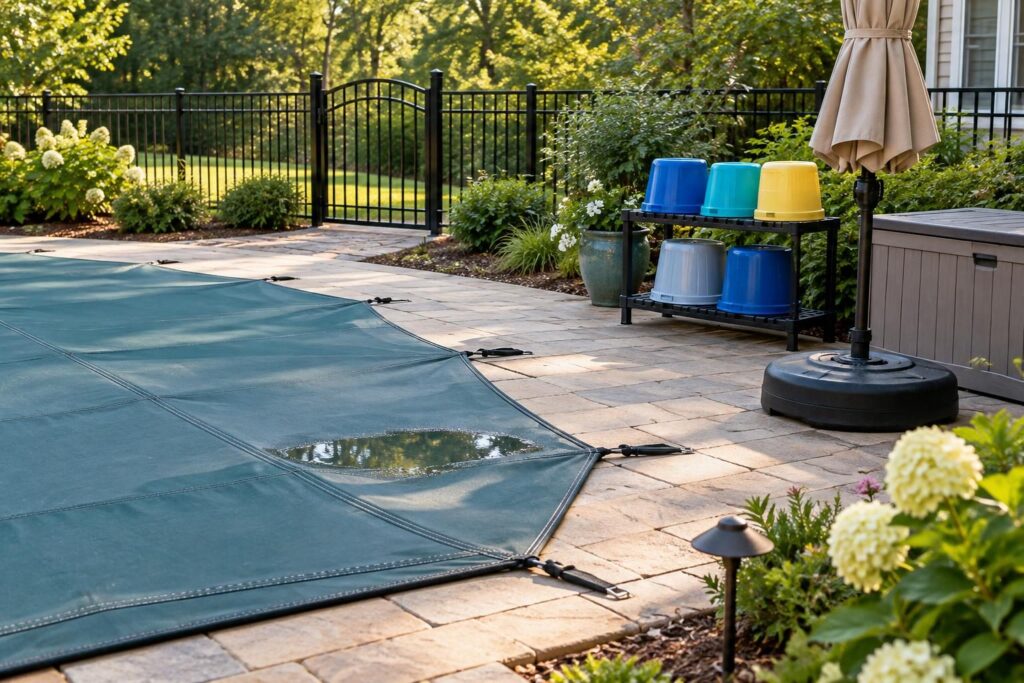
Effective mosquito prevention around pool covers and accessories starts with finding water that ordinary pool cleaning misses. Rain can collect in cover folds, toy bins, furniture recesses, and containers beside the equipment pad. During North Carolina’s warm season, these small pockets deserve a separate housekeeping routine.
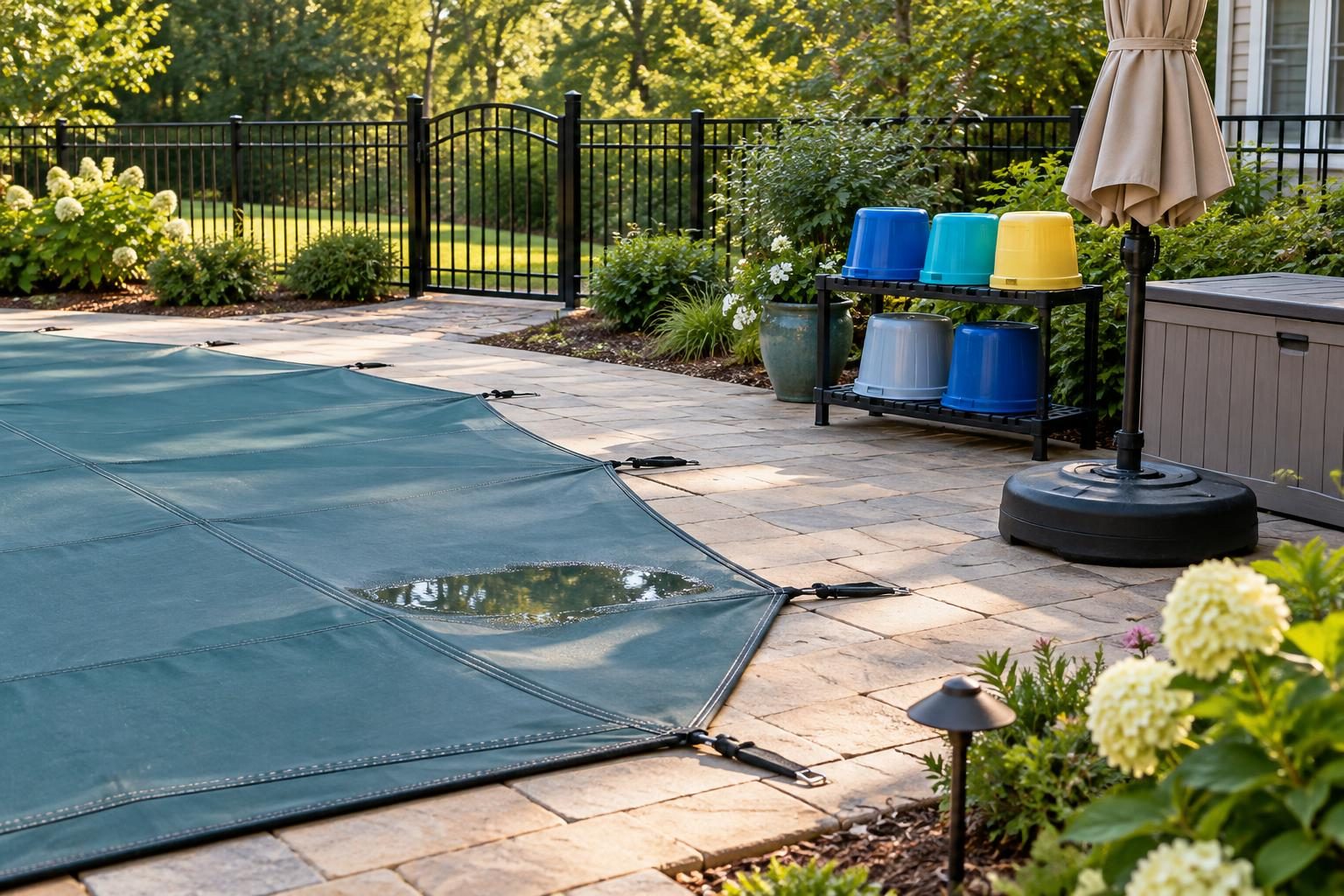
The goal is not simply to empty everything. Some accessories need water for ballast, and some covers require specific drainage methods. Remove unwanted water without changing safety equipment, damaging products, or creating another puddle nearby.
This guide focuses on movable accessories and cover surfaces. For a wider yard review, use our guide to finding standing water beyond the swimming pool.
Find standing-water pockets around the pool cover
Inspect from the deck or another stable surface. Never step onto a cover, even when it appears firm. Keep children and pets away during inspection and water removal.
Check locations that are easy to overlook:
- Low spots and folds on the installed cover.
- Exposed cover edges where leaves collect.
- Recessed cover housings, viewed only through safe, permitted access.
- Folded covers or protective tarps awaiting storage.
- Cover storage bags left outdoors.
- Pump discharge hoses that empty into containers or low areas.
Photograph each pocket from a safe position. Note whether it follows rain, irrigation, or cover operation. Repeated pooling in the same place deserves a model-specific review, not an improvised adjustment.
Standing water alone does not establish faulty installation. Cover design, debris, support conditions, and equipment operation may all need evaluation. Ask the installer to explain the likely cause in writing.
Match cover water removal to the manufacturer’s instructions
A solid cover, mesh safety cover, automatic cover, and floating solar blanket do not work the same way. A safety cover is designed for a protective purpose; a solar blanket is not a substitute for a barrier.
Find the exact model and current care instructions before choosing a removal method. If the manual is missing, request it from the manufacturer or installer.
- Does this cover require or permit a cover pump?
- Where should an approved pump sit?
- How should leaves be removed without damaging the material?
- Must accumulated water be removed before opening the cover?
- Which adjustments require an authorized service technician?
Do not puncture material, drill drainage holes, alter anchors, or loosen attachments to release water. Avoid pulling water-loaded fabric or adding improvised supports beneath it.
For stored covers, follow the manufacturer’s cleaning, drying, and folding instructions. Choose protected storage that does not collect rain. A sealed bag is not a solution if wet material remains inside.
Use cover pumps without creating electrical or drainage risks
If the manufacturer specifies a pump, use equipment approved for that application. Follow its instructions for placement, connections, operation, and inspection. Do not improvise extension-cord arrangements or electrical repairs.
Keep cords and hoses out of walking routes and away from gate hardware. A hose must not prop open a gate or prevent it from latching.
Before starting, identify where the discharge will go. Avoid sending water toward the house, neighboring property, a septic area, or another container. Rainwater on a cover may contain leaves, dirt, or other contamination; do not assume every discharge location is acceptable.
Local requirements can vary with jurisdiction, site conditions, utilities, septic systems, and project scope. Verify uncertain discharge arrangements with the appropriate local authority or qualified drainage professional.
Stop using equipment with damaged cords or plugs, repeated electrical trips, or unusual operation. Keep people away from the affected area and arrange evaluation by a licensed electrician or qualified equipment technician.
Drain and dry toys before putting them away
Toy storage can become a collection of small reservoirs. Scoops, buckets, floating seats, and folded inflatables may hold water even when the storage bin looks dry. Make drying part of mosquito prevention around pool covers and accessories, rather than relying on a covered bin.
After use, empty accessible cavities and follow each product’s cleaning instructions. Let items dry in a secure location before storage. Keep drying toys away from fences, where stacked objects could create a climbing aid.
- Store empty buckets upside down where practical.
- Check inflatable folds and recessed cup holders.
- Empty removable trays beneath storage racks.
- Inspect bin lids for depressions that collect rain.
- Confirm that designed drainage openings remain clear.
Do not drill a storage product unless the manufacturer permits it. Consider a purpose-built, draining storage system instead.
Retire damaged accessories that cannot be emptied or cleaned as intended. Before buying replacements, check drainage and drying instructions—not just appearance or storage capacity.
Inspect furniture bases without removing required ballast
Umbrella bases can hold water in two different ways. Rain may collect in an exposed recess, while an internal chamber may contain required ballast. Ballast is weight that helps stabilize the product.
Do not empty a water-filled base while leaving the umbrella in use. Check the manual for approved fill materials, cap maintenance, cleaning, and seasonal storage.
If a cap is missing or cracked, request the correct replacement. Do not assume an improvised plug will seal properly or preserve stability. Ask the manufacturer how to handle water inside the chamber if contamination is suspected.
Inspect chair feet, hollow furniture parts, side-table recesses, and protective furniture covers. Remove exterior rain pockets only through approved handling methods. Avoid tipping heavy furniture alone.
Move unused furnishings to suitable storage when practical. Maintain clear walking routes, emergency access, and the barrier clearances required for your property.
Check containers and runoff destinations nearby
A cover-care routine can fail when the surrounding storage area keeps collecting water. Look beneath shelves and behind furniture, not just across the open deck. For mosquito prevention around pool covers and accessories, check where removed water ends up.
- Empty unused plant saucers and containers.
- Check watering cans, wheelbarrows, and cleaning buckets.
- Remove discarded packaging and loose plastic sheeting.
- Inspect equipment-storage totes and their lids.
- Watch for irrigation repeatedly filling the same recess.
Never repurpose pool-chemical containers as general storage or water-removal buckets. Follow their labels for handling and disposal.
Distinguish removable-container water from persistent deck pooling. If water returns without new rain or use, document possible sources rather than assuming the cause.
Our deck slope observation guide explains what homeowners can record safely. New drains, grading changes, or excavation need appropriate professional and local review.
Preserve barriers and avoid improvised mosquito treatments
Water removal should never weaken protection around the pool. Keep gates closed and latched. Do not remove fence panels for routine access or leave a cover unsecured while gathering supplies.
The federal Pool Safely safety tips explain layers of protection around pools. Confirm current barrier requirements with your local inspections department; general safety guidance does not replace local requirements.
Do not add household chemicals, extra pool chlorine, oils, or improvised mixtures to cover pockets, toys, or furniture bases. Treating pool water does not address separate rainwater containers.
If water cannot be removed safely, contact your local health department or a qualified pest-management professional. Ask whether treatment is appropriate for that exact location and product.
Any pesticide recommendation needs verification against the current label, intended use, and applicable requirements. Also confirm compatibility with cover and accessory materials. This article does not recommend a pesticide or application rate.
Document recurring pooling before authorizing repairs
A repeatable routine makes mosquito prevention around pool covers and accessories easier to manage. Use a weekly warm-season inspection as a starting point, with additional checks after rain, irrigation changes, or outdoor storage changes.
Keep a simple record:
- Date, location, and likely water source.
- Photographs before and after safe removal.
- Product model and relevant manual instructions.
- Removal method and discharge destination.
- Service recommendations and completed corrections.
If recurring pooling needs service, request a written scope. It should identify the diagnosis, proposed work, parts, exclusions, and any changes to drainage or cover operation. Ask whether proposed work affects the manufacturer’s warranty.
Vague explanations or reluctance to document adjustments are reasons to seek clarification, not proof of wrongdoing. Verify important claims with the manufacturer rather than relying only on verbal assurances.
Before final payment, confirm agreed work and retain correction records. Photograph accessible work before it is covered. Add manuals and service reports to your seasonal pool handover file.
Know when housekeeping needs professional support
Most loose-container problems call for emptying, drying, and better storage. Persistent cover sagging, inaccessible water, damaged hardware, or repeated runoff problems need a different response.
Consult the cover manufacturer or a qualified pool contractor for product concerns. Use a licensed electrician for electrical problems. Ask the local inspections department about barrier changes and current requirements. Involve a drainage professional, engineer, or septic professional when site conditions require specialized review. Safe housekeeping should support the pool’s protective systems, never work around them.