
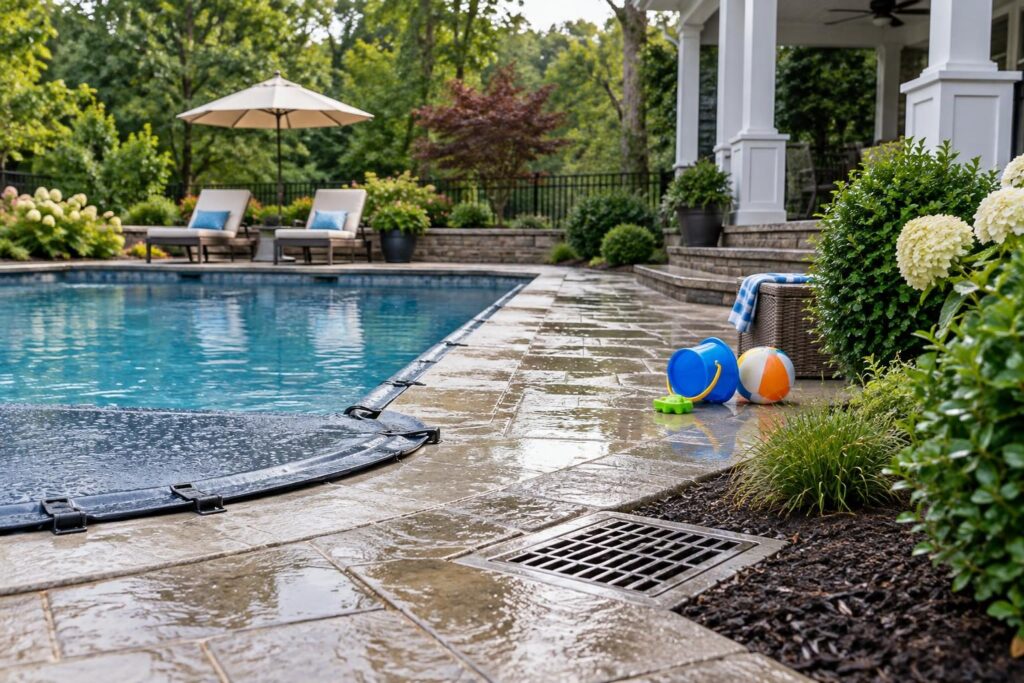
Mosquito prevention around North Carolina swimming pools requires more than keeping the pool water clear. A properly maintained pool is only one part of the outdoor environment. Cover folds, toys, planters, clogged drains, tarps, and low spots can hold small amounts of water after rain or irrigation.
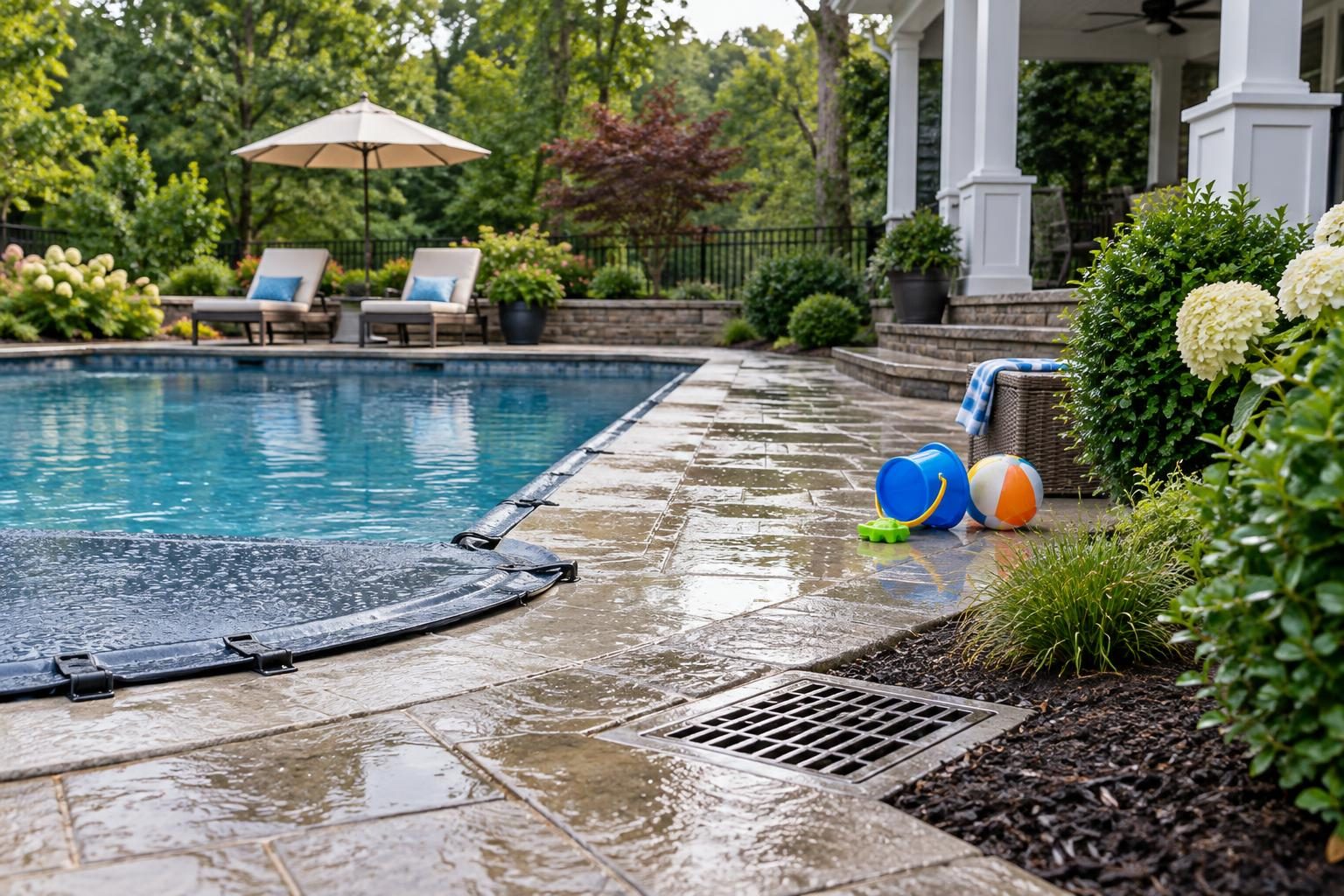
The goal is not to treat every wet surface as an emergency. Instead, build a repeatable inspection routine. Remove or correct small water-holding areas when practical, document recurring problems, and seek qualified local guidance when water remains in the landscape. That simple habit supports mosquito prevention around North Carolina swimming pools without confusing pool chemistry with yard maintenance.
Separate pool water maintenance from habitat management
Pool water maintenance focuses on circulation, filtration, sanitizer, pH, and other water-quality tasks. Those tasks help manage the water inside the pool. They do not automatically address water outside the pool.
Habitat management means looking across the entire yard for places where water can collect. A pool cover may be clean while a nearby bucket, planter saucer, drain inlet, or folded tarp holds rainwater. The surrounding landscape deserves its own review.
For pool chemistry, follow the product instructions and a consistent testing routine. The pool water testing frequency guide can help organize observations around weather and use. The CDC also provides general guidance on residential pool treatment and testing, but water chemistry guidance does not replace a yard inspection.
Use two separate checklists
- Pool water: Record test results, equipment operation, water level, debris, and cover condition.
- Surrounding yard: Check containers, cover folds, drains, toys, irrigation areas, planting beds, and low spots.
- After weather: Inspect after heavy rain, thunderstorms, irrigation changes, and long periods of humid weather.
This separation prevents a common mistake: assuming a good sanitizer reading means the whole pool area has been checked. It also makes follow-up clearer when a recurring wet spot needs drainage or landscape review.
Inspect cover folds, toys, and unused containers
Pool covers can collect water in folds, low pockets, seams, or areas that sag between supports. Follow the cover manufacturer’s instructions for safe handling. Do not walk on a cover unless it is specifically designed and approved for that use.
During a routine check, look for water sitting on or beside the cover. Note whether the same pocket returns after each storm. A repeated pattern may point to cover support, grade, drainage, or installation questions. Photograph the condition and ask the cover provider or pool contractor what should be corrected.
Walk the pool perimeter
- Turn over or empty outdoor toys that can hold rainwater.
- Store buckets, watering cans, and unused containers under cover or upside down.
- Check plant saucers, decorative vessels, and furniture cavities.
- Inspect folded tarps, spare liners, inflatable items, and bags left outdoors.
- Look beneath ladders, loungers, umbrellas, and removable equipment.
- Empty water only where doing so will not create a slip, erosion, or drainage problem.
Do not pour questionable water onto a walkway, toward a foundation, or across a neighboring property. Choose a location that will not create another pool of standing water. If you are unsure how to dispose of water safely, ask a qualified landscape or drainage professional.
The Pool Safely safety guidance reinforces the importance of layers of protection around residential pools. Removing loose objects can support cleaner, safer pool surroundings, but it does not replace a compliant barrier, supervision, or other safety measures.
Check drains, grading, and landscape water traps
Small drains and inlets can become blocked by leaves, pine needles, mulch, soil, or lawn clippings. A blocked inlet may leave water near the pool deck or create a wet depression in a planting bed. Inspect visible openings without removing covers or entering confined spaces.
Watch what happens after rain. Does water leave the area, or does it remain in the same location? Does irrigation spray into a low spot? Does mulch wash against a drain? Is a downspout sending water toward the pool area? These observations help identify whether the issue is a simple obstruction or a broader drainage condition.
Homeowners can often remove loose surface debris safely, but avoid changing drain components, digging near buried utilities, or altering an outlet without professional direction. Drainage work can affect foundations, septic areas, neighboring properties, erosion, and local requirements.
Keep a recurring-water record
Use a simple log with the date, recent weather, location, approximate duration, photographs, and actions taken. Record whether the water followed rain, irrigation, pool use, cleaning, or equipment operation. Include notes about odors, soil movement, algae-like growth, or damage to nearby plants.
A record turns a vague concern into useful information. It can also show whether a cleaning step solved the problem. If the same area fills again despite reasonable maintenance, stop guessing and request a drainage assessment from an appropriately qualified professional.
For related observations near the pool deck, see the pool deck slope and water-movement guide. Visual checks can help you describe a concern, but they do not establish slope, code compliance, or the correct repair.
Build a practical North Carolina inspection routine
Effective mosquito prevention around North Carolina swimming pools works best when inspections fit existing household routines. A short walk after a storm may find problems before they become established maintenance issues. A longer monthly review can catch items that are easy to overlook.
After rain or irrigation changes
- Walk the cover and remove standing water only as the manufacturer permits.
- Empty toys, containers, saucers, and other small items.
- Check visible drain inlets for leaves and mulch.
- Look beneath furniture and around equipment enclosures.
- Photograph recurring puddles and note how long they remain.
Monthly during the swimming season
- Review the full perimeter, not just the deck immediately beside the pool.
- Check gutters, downspout discharge, landscape edges, and low planting areas.
- Look for irrigation overspray or a changed sprinkler pattern.
- Confirm that stored items are not creating hidden containers.
- Review your log and schedule follow-up for repeated water.
North Carolina weather can shift quickly between dry periods, heavy rain, heat, and humid conditions. Adjust the timing of inspections to your property. A yard with dense planting, uneven grades, nearby woods, or drainage structures may need closer observation than a simple, open site.
Know when standing water needs more than cleanup
Some water disappears after a routine emptying or a minor blockage is cleared. Persistent water deserves a different response. Warning signs include the same puddle returning in the same place, water remaining after several dry days, soil washing into a drain, water moving toward the house, or a drain that backs up repeatedly.
These signs do not prove that the pool, landscape, or contractor is at fault. They show that the cause should be verified. Keep the written scope, landscape plan, grading information, drainage details, irrigation plan, and relevant project photographs together. Ask who designed, installed, owns, and maintains the affected feature.
Questions to ask before changing the yard
- Where is the water coming from: rain, irrigation, pool use, groundwater, or a plumbing source?
- Where is it intended to go, and is that outlet clear and stable?
- Could a proposed fix direct water toward a foundation, septic area, walkway, or neighboring property?
- Would changing soil, mulch, drains, or planting affect the pool deck or barrier?
- Does the proposed work require a licensed professional, local approval, or utility review?
Do not fill a low spot, cover a drain, or add a trench without understanding the flow path. A quick change can hide the symptom while moving water somewhere more damaging.
When to seek local mosquito-control guidance
Contact your county or local public-health or mosquito-control office when standing water persists, covers a broad area, is difficult to access, or appears across multiple properties. Ask what local service is responsible for the concern and what information it needs. Procedures vary by location, season, and the type of water source.
Ask whether the office wants photographs, an address, dates of observation, or details about nearby drainage. Follow local instructions about any treatment. Do not apply pesticides, larvicides, or household chemicals to a pool, drain, ditch, wetland, or landscape area unless the product label and a qualified professional support that use.
Also consider a licensed drainage professional, landscape professional, septic professional, or engineer when the source is unclear or the water affects structures, septic features, steep grades, or a shared drainage path. A pool contractor may help with cover, deck, equipment, or water-use questions. The right specialist depends on the suspected source.
Keep records that make follow-up easier
Good documentation supports calm decisions. Keep a seasonal file with inspection dates, photographs, weather notes, drain-cleaning observations, irrigation changes, contractor messages, and professional recommendations. Save invoices and written instructions for cover service, drainage work, landscape changes, and pest-control treatment.
When someone recommends a correction, ask for the proposed location, intended water path, maintenance responsibility, and any limitations in writing. Clarify whether the work addresses a temporary symptom or the suspected source. Vague promises, undocumented changes, conflicting explanations, or pressure to approve work immediately are reasons to pause and verify the details. They do not, by themselves, establish wrongdoing.
For construction-related drainage, North Carolina homeowners can review current state information from the NC DEQ Construction Stormwater Program. Applicability and local requirements depend on the project and property, so confirm current information with the appropriate authority.
Consistent mosquito prevention around North Carolina swimming pools starts with looking beyond the waterline. Empty small containers, inspect cover folds, keep visible drains clear, observe landscape flow, and record recurring conditions. When standing water persists, ask a qualified local professional or mosquito-control office to help identify the source before making a major change.
For questions involving permits, drainage design, septic systems, electrical equipment, barriers, or property impacts, consult the local inspections department and the appropriate licensed pool contractor, electrician, engineer, surveyor, septic professional, landscape professional, or mosquito-control authority. General homeowner observations are useful, but they do not replace site-specific professional review.