
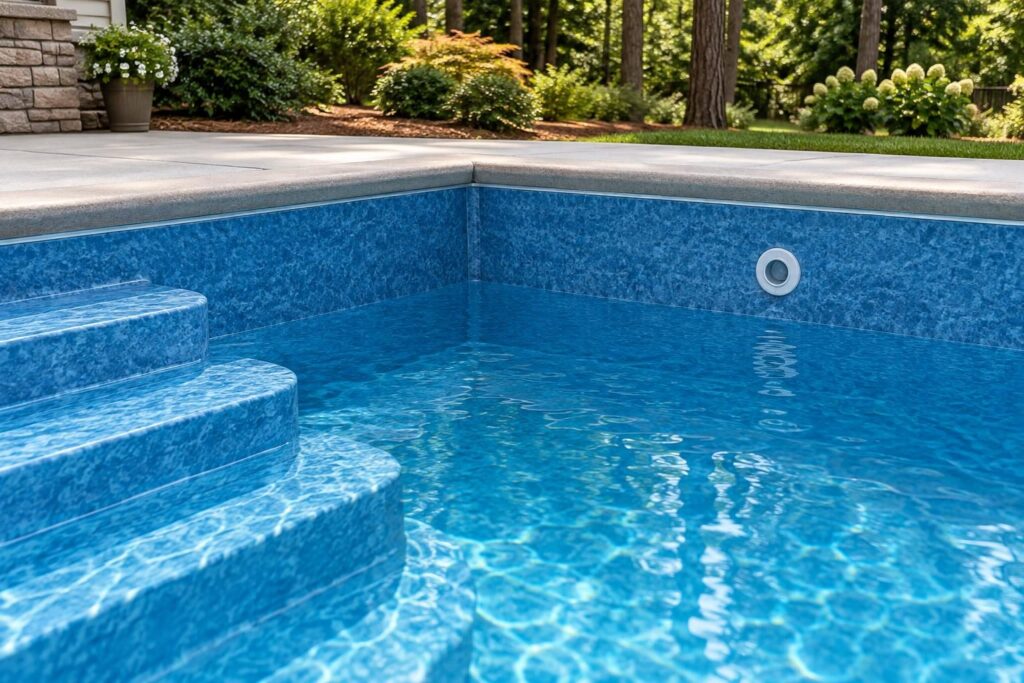
For homeowners, new vinyl pool liner installation acceptance should involve more than a quick look across clear water. Corners, steps, seams, and fittings deserve a documented review. A visible ripple does not establish a defect. Likewise, a verbal assurance does not explain whether the installed liner meets its manufacturer’s guidance.
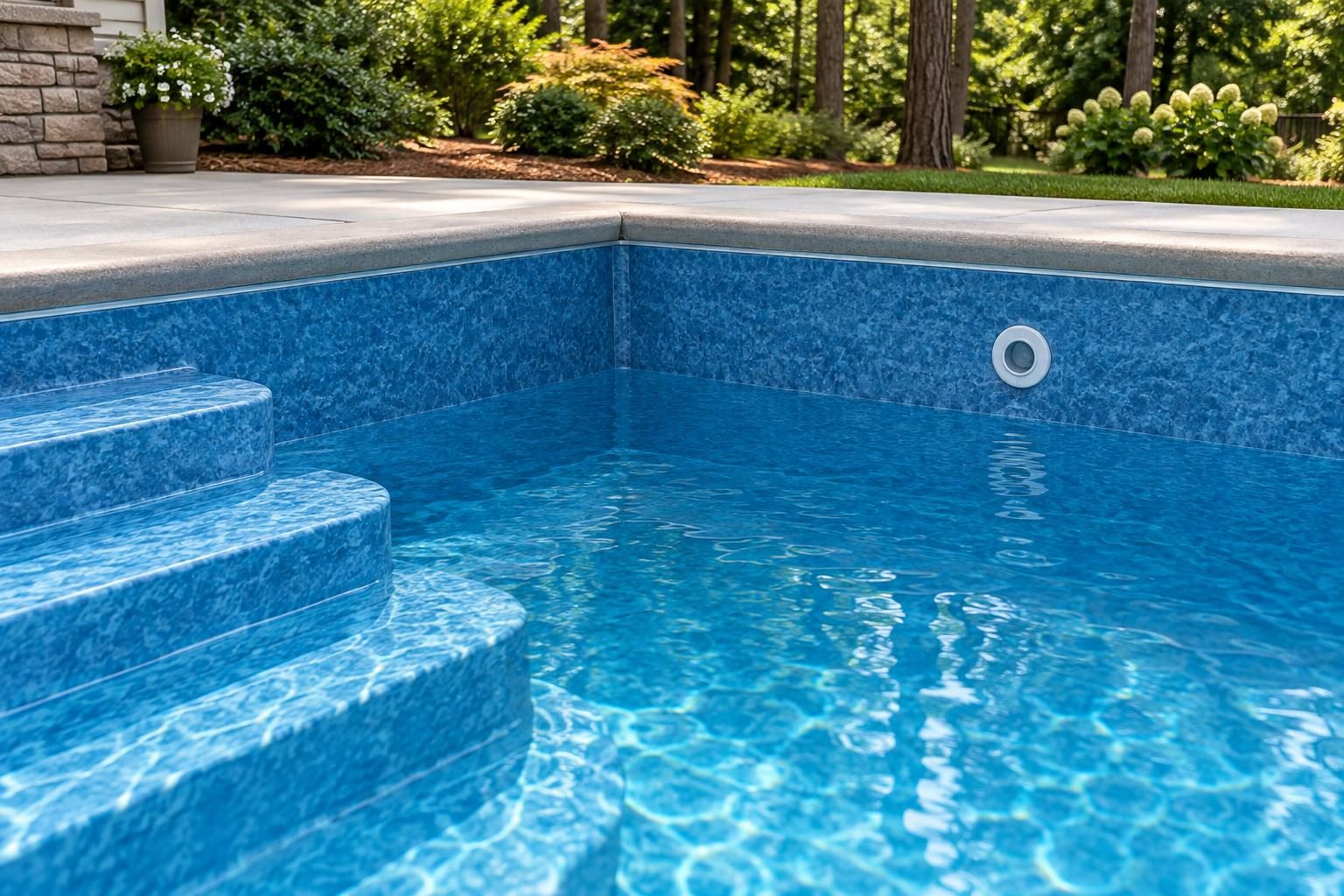
Your role is to record what you can see and request product-specific answers. The installer and manufacturer should address cause, acceptable fit, and any correction method. Keep this review separate from permission to swim, required inspections, and broader project completion.
Define liner installation acceptance before the walkthrough
Ask what the proposed sign-off actually confirms. Does it acknowledge delivery, completed installation, satisfactory appearance, or final contract completion? Those milestones may carry different responsibilities. Read the document alongside your contract before signing.
Request the liner’s manufacturer, product identification, pattern, specified thickness, and available order records. Compare them with approved selections and written changes. Ask which installation instructions apply to that exact liner and step configuration.
- Who measured the pool and approved the liner order?
- Which drawings or measurement records describe the installed shape?
- Who evaluates fit concerns: the installer, supplier, or manufacturer?
- What work remains before the agreed acceptance review?
- Which payment milestone does the proposed sign-off trigger?
Request written acceptance criteria before debating an individual wrinkle. This gives both parties a shared reference instead of relying on memory or general claims about vinyl liners.
Record observations without diagnosing the liner
Describe location, appearance, and change over time. A raised line near a step is an observation. Calling it a sizing error assigns a cause that photographs alone may not establish.
For new vinyl pool liner installation acceptance, use one simple issue log. Give each concern an identifier and mark its location on a pool sketch. Record the date, filling stage, water level, lighting, and whether installation work was still underway.
- Take a wide photograph showing the location.
- Add a closer view from a safe, stable position.
- Repeat photographs from similar angles during follow-up.
- Save original files and related written communications.
- Label the installer’s explanation separately from your observation.
Reflections, shadows, and water movement can change appearances. Request an in-person assessment when images remain unclear. Do not enter an unfinished pool, lean over an unsafe edge, or press the liner to investigate.
Check liner fit at corners and steps
Walk the accessible perimeter with the installer. Ask them to identify the liner bead, the edge that seats in a retaining track. Photograph visible areas where that edge appears loose or uneven without pulling on it.
Corners and wall-to-floor transitions
Record folds, apparent gaps, and changes in the printed pattern near each corner. Include the transition where the wall meets the floor. Do not assume that apparent stretching, slack, or pattern distortion reveals the underlying cause.
Ask whether the observed shape reflects the installation stage or needs further evaluation. If the installer expects it to change during filling, request the manufacturer’s basis for that expectation. Also establish when they will reassess it.
Steps, benches, and ledges
First confirm which features receive liner coverage. Some pools use separate step units; others have liner-covered steps or benches. Their installation details differ.
For covered features, photograph tread surfaces, risers, inside corners, and edges. Ask how the liner should conform to each feature. Request the applicable detail for any fasteners or retaining components used there.
If a fold may affect footing, ask the installer to evaluate it before use. Do not smooth it with your foot or test whether it moves under pressure.
Review seams and fittings without disturbing them
Seams join sections of liner material. A visible seam alone does not establish poor workmanship. Ask the manufacturer what seam appearance and placement are expected for your product.
Photograph areas that appear puckered, separated, uneven, or different from nearby seams. Describe what you see rather than declaring a failed weld. Ask who will assess the concern and what evidence they need.
Fittings include skimmers, water-return openings, and other components that pass through the liner. A faceplate is a component that clamps the liner at certain openings. Ask the installer to explain the applicable sealing arrangement.
- Are there visible folds entering a faceplate?
- Does any accessible area appear torn or displaced?
- Are installation photographs available from before fittings concealed the liner edges?
- What checks support the installer’s conclusion that the fittings are properly sealed?
Do not tighten screws, remove plates, probe seams, or touch suction outlets. Photographs cannot verify concealed gaskets or prove a watertight seal. Keep people out if covers or fittings appear incomplete, and request professional review.
Ask manufacturer-specific questions about wrinkles
There is no useful universal wrinkle allowance to apply to every liner from a photograph. Product instructions, pool geometry, installation stage, and site conditions matter. Request the relevant manufacturer’s written guidance rather than an unrelated product manual.
Use these questions to resolve each logged concern:
- Is this appearance expected at the current water level?
- What should the same location look like at completed installation?
- Does the manufacturer publish fit or appearance criteria for this product?
- What supports the proposed explanation for this specific area?
- Should the manufacturer review photographs or inspect the liner?
- What correction method is authorized, if correction is needed?
- Who pays for associated water, treatment, labor, or replacement?
- How would the proposed correction affect warranty coverage?
If someone says a wrinkle will disappear, ask when and under what conditions they will check again. Record that commitment without treating the prediction as a confirmed outcome.
Independently confirm important manufacturer representations through contact information in the product documents. Save any case number and written response.
Do not drain, heat, or reposition the liner yourself
Water helps hold an installed liner against its supporting surfaces. Lowering the level can change its support and position. Groundwater around the pool can create additional risks, depending on site conditions and construction.
Do not drain the pool, pull the bead, apply heat, or push folds toward an edge. Improvised tools and unauthorized adjustments can damage material or sealing details. They can also complicate the record of the original condition and warranty review.
If you notice a concern during filling, contact the installer promptly. Ask for clear instructions about the fill process. Do not independently change that process based only on appearance.
Before any proposed water removal, review pool-draining risks and planning questions. The responsible professional should evaluate groundwater, weather, discharge, and manufacturer instructions. Obtain the repair scope and authorization before work begins.
Turn unresolved concerns into a written correction plan
A practical new vinyl pool liner installation acceptance review separates completed items from open questions. Create a punch list: a written list of unfinished work or concerns awaiting resolution.
For each item, record the observation, responsible party, next action, and agreed review date. Attach supporting photographs and manufacturer responses. After work occurs, retain before-and-after images and the service report.
Repeated reassurance without product-specific support is a reason to request clarification, not proof of wrongdoing. Conflicting explanations, missing records, or pressure to sign a concern-free form also deserve follow-up.
Compare payment requests with your written milestones. Do not assume this checklist changes contractual obligations or authorizes withholding payment. Seek legal advice if acceptance language or payment duties remain disputed.
A visit alone does not establish resolution. Use the same approach outlined in verifying completed pool warranty repairs: document the explanation, work performed, and follow-up result.
Keep startup, safety, and final records together
Save the liner warranty, registration information, installation instructions, care guidance, and completed issue log. Identify separate responsibilities for the liner product and installation labor. Request any exclusions or limitations in writing.
Keep initial water tests and treatment records too. They establish a startup baseline without proving why a wrinkle appeared. Review fill-water testing questions with whoever manages startup.
Maintain access controls throughout installation and corrections. The CPSC’s Pool Safely guidance explains protective layers and supervision. Liner sign-off is not a substitute for safety readiness.
In North Carolina, requirements vary by jurisdiction, adopted code, property conditions, utilities, septic systems, flood zones, and scope. Verify applicable inspections locally and retain inspection and correction records separately from the liner review.
Before completing new vinyl pool liner installation acceptance, consult the installer and manufacturer about unresolved fit questions. Use a qualified, appropriately licensed pool contractor for correction planning. Contact local inspections staff about approvals and an engineer or drainage specialist about groundwater concerns. Bring in a licensed electrician if work affects electrical components.