
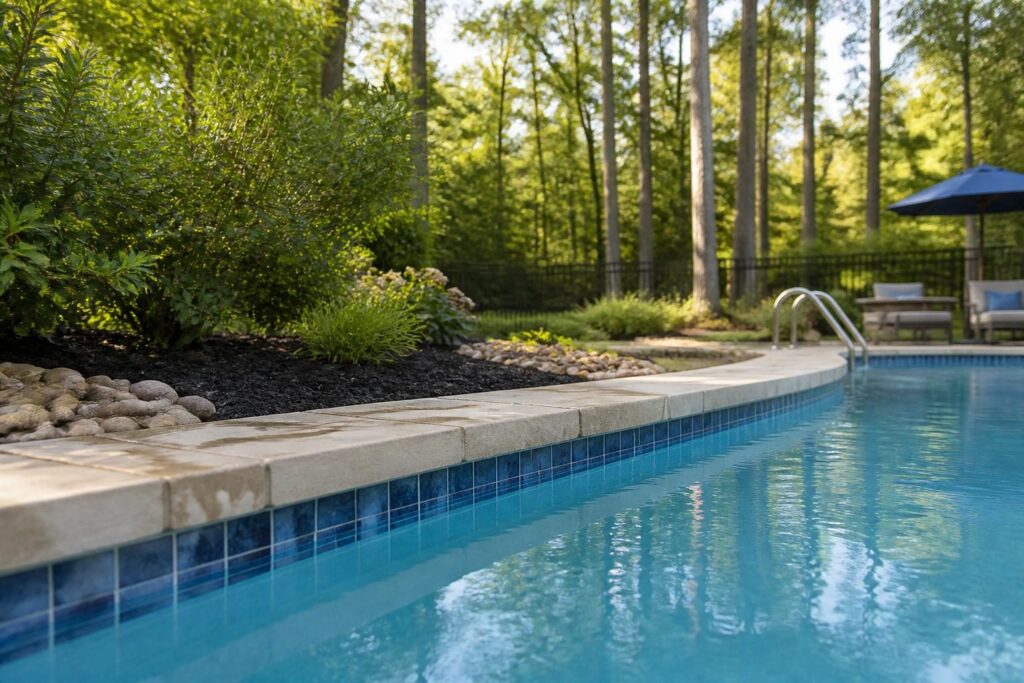
Pool waterline tile cleaning North Carolina homeowners choose should match the deposit, the tile finish, and the cause. A pale ring may come from mineral scale. A dark line may collect oils, pollen, dirt, or organic residue. Each pattern needs a measured response.

Routine cleaning helps your tile look better, but it does not replace water testing or surface care. North Carolina rain, humidity, pollen, irrigation, and landscape runoff can all change the conditions around the waterline. This guide compares practical approaches and explains when to stop cleaning and ask a qualified pool professional for help.
Start by identifying the waterline deposit
The waterline is the band where pool water meets the tile. It receives repeated wetting, drying, splashing, and exposure to airborne material. Deposits can build slowly, so take a close look before choosing a tool or product.
- White or gray crust: This may indicate mineral scale, often associated with calcium or other dissolved minerals.
- Cloudy white film: This can come from water conditions, cleaning products, or repeated evaporation.
- Green, brown, or black marks: These may relate to algae, leaves, soil, pollen, metals, or other organic and mineral material.
- Sticky or greasy band: Sunscreen, body oils, cosmetics, and airborne pollution can collect at the waterline.
- Rust-colored spotting: This may point to metal staining or material introduced by water, equipment, or nearby work.
These clues do not provide a diagnosis. A deposit can have more than one cause, and tile, grout, plaster, glass, and natural stone respond differently to cleaning. Photograph the area in natural light. Record where the mark appears, how quickly it returns, and whether it changes after rain or irrigation.
Compare routine cleaning approaches for pool tile
Regular light cleaning usually creates less risk than occasional aggressive scrubbing. Choose the least abrasive approach that removes the material. Test any method in a small, less noticeable area first.
Soft brush and pool-safe cloth
A soft nylon brush or pool-safe cloth works well for fresh film, pollen, and loose grime. Use gentle pressure along the tile face and grout lines. Rinse the tool often so it does not spread grit across the surface.
This approach suits a frequent maintenance routine. It is inexpensive and gives you a chance to notice loose grout, cracked tiles, or changes in the waterline before they become more obvious. Avoid using a stiff household brush unless the tile or surface professional confirms it is suitable.
Nonabrasive cleaner approved for the surface
A product labeled for swimming-pool tile may help with greasy residue or light film. Follow the label, use the stated protective equipment, and keep cleaners separate from pool chemicals. Never mix products.
Check whether the product is intended for ceramic tile, glass tile, grout, stone, or another finish. A cleaner that works on one material may dull, etch, discolor, or weaken another. Ask the tile installer or pool contractor for the surface-care instructions supplied with the project.
Mechanical tools and professional cleaning
Specialized cleaning tools may remove harder mineral deposits. Some use controlled media, water pressure, or other mechanical action. The correct method depends on the tile and the deposit.
Do not assume that a blade, pumice stone, abrasive pad, pressure washer, or acidic product is safe. These methods can scratch tile, damage glaze, erode grout, or affect adjacent coping. For heavy scale, recurring stains, delicate tile, or uncertain material, request an evaluation from a qualified pool tile or surface-care professional.
For broader maintenance planning, compare manual and automated debris-cleaning approaches in pool cleaning system options. Those systems do not replace waterline work, but they can reduce the debris that reaches the pool.
Use water balance to reduce recurring scale
Cleaning removes material that is already present. Water care helps reduce the conditions that allow some deposits to form. Test and record the water according to your pool professional’s instructions and the product labels.
Pay attention to pH, sanitizer, total alkalinity, calcium hardness, and water temperature. These factors interact. Evaporation can leave dissolved minerals more concentrated. Rain can dilute some chemicals while adding debris or changing water conditions. Frequent topping off can also alter the water profile.
The CDC explains residential pool water treatment and testing, including the importance of chlorine and pH. Review its home pool water testing guidance, then verify your routine with a qualified pool professional when results remain inconsistent.
Keep a simple tile and water log
- Date and location of visible deposits or stains.
- Water test results and the test method used.
- Rainfall, heavy use, water additions, or unusual evaporation.
- Cleaning method, product name, and surface area treated.
- Changes to irrigation, mulch, planting, or nearby construction.
- Photos taken from similar angles and lighting.
A log can show whether the ring returns after water-level changes, storms, or a particular landscape activity. It also gives a service professional useful context without relying on memory.
How landscaping affects tile appearance
Poolside landscaping can improve comfort and appearance, yet it can also introduce material to the waterline. Plants shed pollen, flowers, leaves, and organic residue. Bare soil can move during rain. Mulch may float or wash toward the pool. Irrigation can spray hardscape, soil, or fertilizer residue into the water.
Observe the pool after irrigation and after a strong rain. Look for muddy water, floating mulch, soil trails, damp areas beside the deck, or a recurring stain on the side facing a planting bed. A pattern that follows one runoff path suggests a landscape or drainage issue, not only a cleaning issue.
Maintain groundcover and erosion controls where appropriate. Keep irrigation heads aimed away from the pool and tile. Do not change grades, drainage paths, or discharge routes without reviewing the effects on the home, deck, neighboring property, and local requirements. The guide to soil erosion control near a North Carolina pool offers related planning considerations.
Plants can also create shade and drop organic matter. Shade may slow drying, while leaves and pollen give residue more opportunity to collect. Discuss mature plant size, root behavior, irrigation coverage, and maintenance access before adding or replacing beds. Root-management questions are covered in pool root barrier planning.
Build a practical cleaning routine
A repeatable routine is easier to manage than waiting for a thick ring. The right frequency depends on the tile, pool use, weather, water conditions, and nearby landscaping.
- Inspect the waterline during normal skimming or brushing.
- Remove loose debris before rubbing the tile.
- Use a soft, clean tool with water or a surface-approved cleaner.
- Work in a small section and check the result.
- Rinse the tool frequently and avoid pushing grit into grout joints.
- Record any persistent mark, loose tile, cracked grout, or color change.
- Test the water if deposits return quickly or appear across much of the pool.
For pool waterline tile cleaning North Carolina homeowners can manage routinely, keep tools dedicated to the pool. Household products may contain fragrances, solvents, abrasives, or other ingredients that do not belong in pool water. Store tools so they stay clean and dry between uses.
When a stain needs professional evaluation
Stop experimenting when a mark does not respond to gentle cleaning, spreads beyond the waterline, or changes the tile surface. Also seek help when you see persistent scale, pitted grout, loose tiles, damaged glaze, metal-colored stains, or discoloration that returns soon after removal.
Bring your photos, water log, test results, product labels, and landscape notes to the appointment. Ask the professional to identify the material, explain whether testing could help, recommend a method suited to the tile, and address the suspected cause.
If water conditions are difficult to control, review your testing sequence and source water records. Ask a qualified professional about municipal, well, or delivered water and how it may affect pool waterline tile cleaning North Carolina homeowners perform.
Questions to ask before approving a cleaning method
- Which type of tile and grout does the pool have?
- Could the mark represent mineral scale, organic residue, metal staining, or a combination?
- Will the method affect the pool water or require water replacement?
- Could the process scratch tile, remove glaze, or weaken grout?
- How will nearby coping, plaster, stone, sealers, and landscaping stay protected?
- Which water tests should you complete before and after treatment?
- What change would reduce the chance of the deposit returning?
- Which photos and service notes should you keep for future maintenance?
A calmer way to manage waterline tile
Effective pool waterline tile cleaning North Carolina homeowners perform is usually gentle, consistent, and connected to observation. Clean light residue before it becomes difficult. Identify patterns instead of treating every mark as the same problem. Watch irrigation, runoff, pollen, mulch, and water-level changes around the pool.
Requirements and appropriate methods can vary with the property, tile material, water source, landscaping, and local conditions. Consult your local inspections department for applicable property or project questions, and contact a licensed pool contractor, water-care professional, tile specialist, engineer, surveyor, septic professional, or other qualified specialist when the issue involves their expertise. Build a Pool in North Carolina provides homeowner education, not a substitute for that advice.