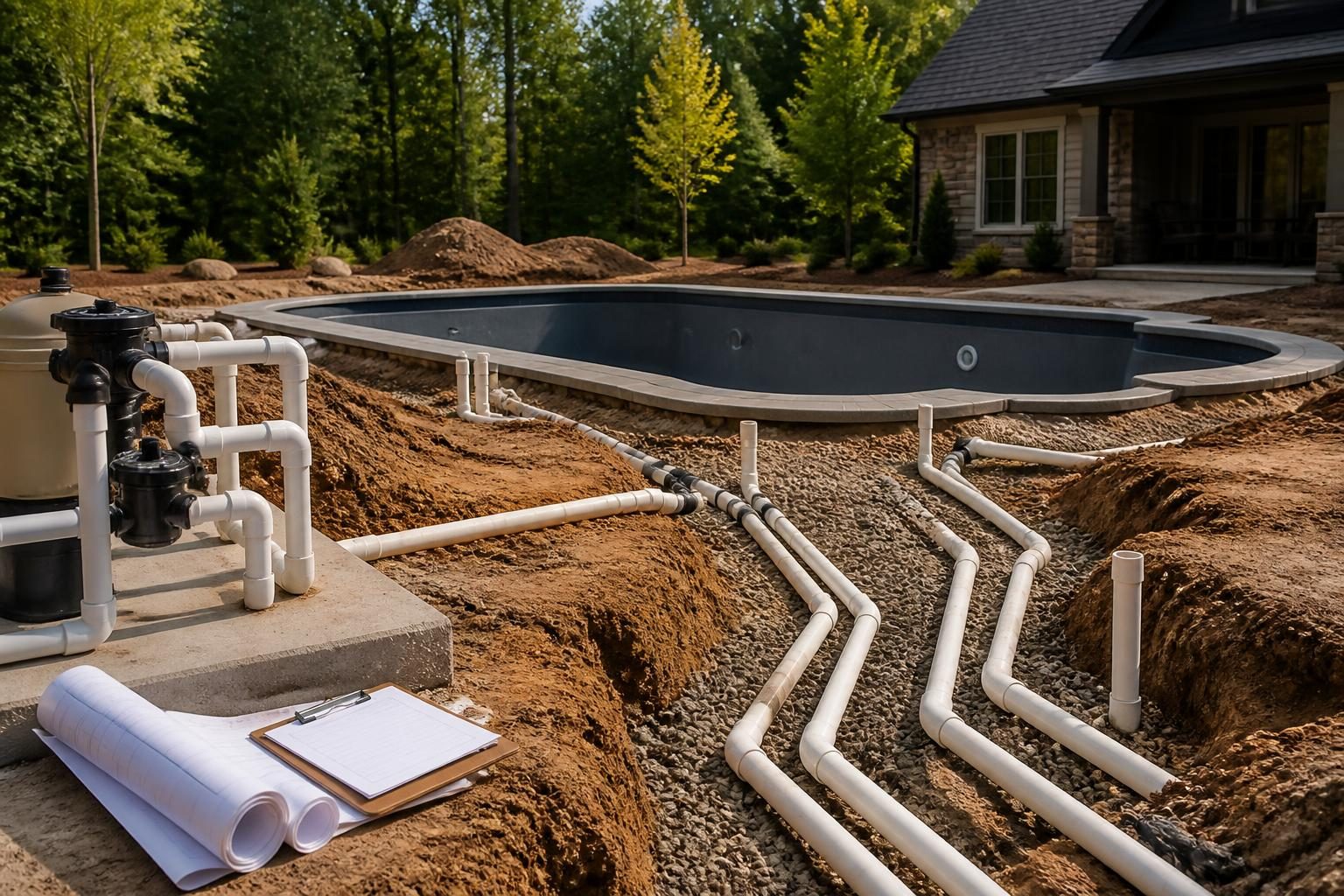

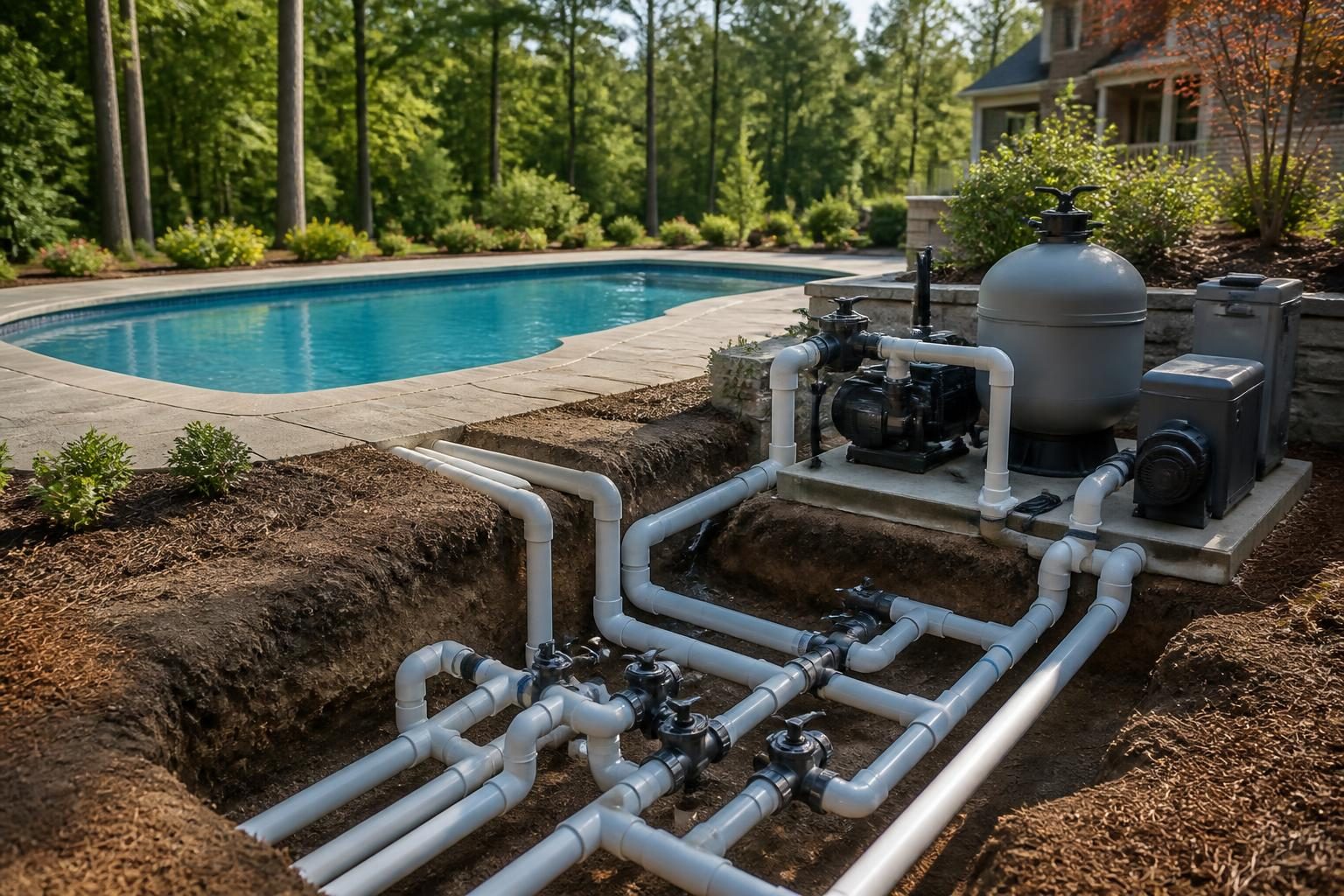
Plan filter placement, valves, unions, drainage, lifting space, and walkways before construction so routine pool care and future service remain practical.
Learn how to build a useful pool plumbing as-built diagram homeowner record with pipe routes, valves, drains, returns, equipment connections, and access notes.
Create a clear valve map for your residential pool with labels, normal-position photos, flow-path notes, and safe handover records.
Learn how debris, sunlight, pool shape, steps, shelves, and equipment routing can guide conversations about skimmer and return locations.
Plan a poolside outdoor shower or rinse station with practical questions about location, plumbing, drainage, privacy, freeze protection, and site coordination.
Learn what a pool check valve does, where homeowners may notice its benefits, and why placement must match the equipment and plumbing design.
Learn how labeled photos and location notes can preserve useful records of pool plumbing penetrations and fittings before backfill, decking, or finishes hide them.
Learn which pool plumbing components are vulnerable to freezing, how circulation and weather response work, and what to record in your operating manual.
Use this practical checklist to protect pool pumps, filters, heaters, plumbing, controls, and electrical components during North Carolina’s changing winter weather.
A thoughtful pool plumbing layout can improve water circulation, simplify troubleshooting, and make future service less disruptive. Learn what to review before construction.