
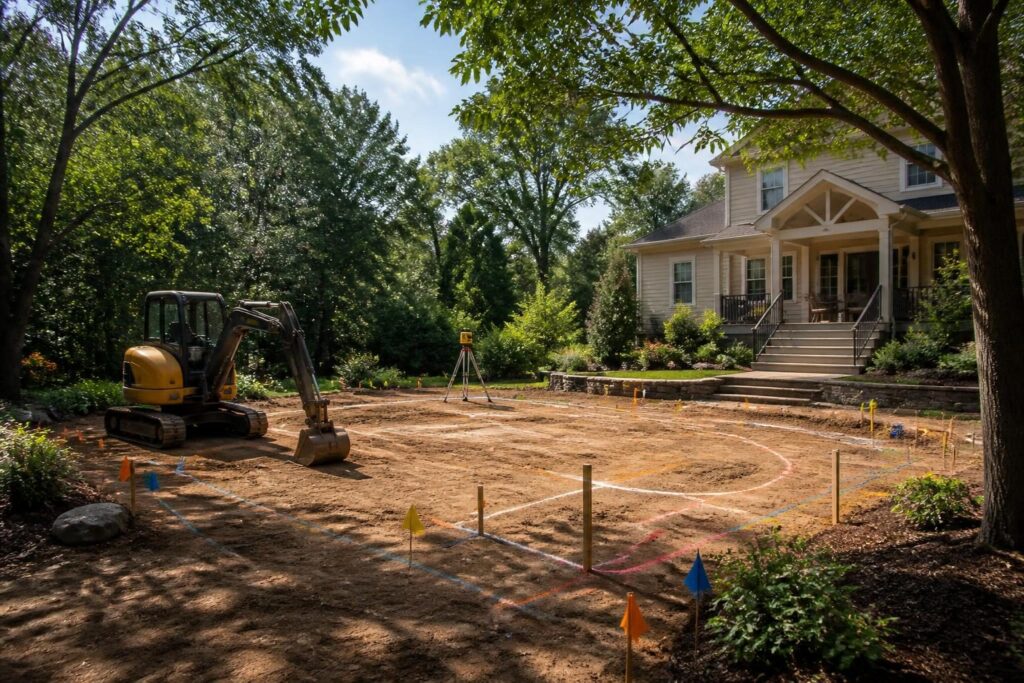
North Carolina 811 pool excavation should begin with verified utility information, not a guess about where underground lines run. A pool dig can affect electric, gas, water, communications, sewer, irrigation, lighting, and other buried services. Before excavation, homeowners and project teams should understand the notification process, its limits, and the steps needed to protect marked areas.
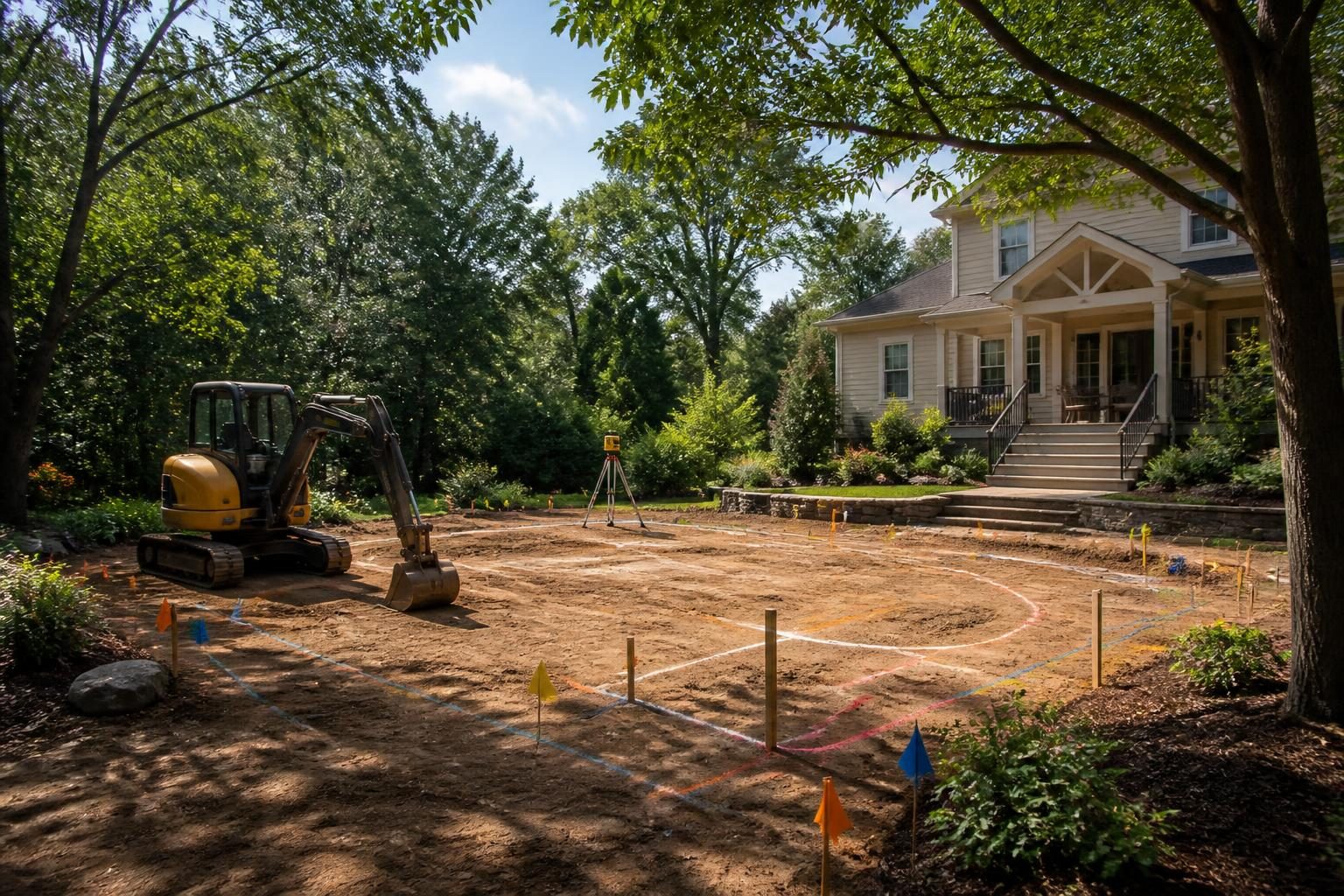
North Carolina 811 is the state’s utility-notification resource for planned excavation. Its process helps participating utility operators identify and mark many utility-owned lines. It does not automatically reveal every buried feature on a property. Use the official North Carolina 811 resource for current instructions and request details.
Why North Carolina 811 pool excavation planning matters
Pool excavation removes a large volume of soil from a defined area. Heavy equipment may also need access routes, staging space, spoil storage, drainage work, and temporary grading. Those activities can extend beyond the final pool outline.
A property can contain utilities that do not appear on an old survey or site sketch. Lines may have been installed during later landscaping, an addition, a detached structure, or an equipment upgrade. The visible location of a meter, cleanout, valve, or service panel may offer clues, but it does not prove the path of a buried line.
Utility marks also communicate approximate locations. They are not a substitute for careful excavation practices, a complete site review, or professional judgment. Ask the pool contractor how the excavation plan accounts for marked lines, access, spoil placement, and work outside the pool shell.
For many homeowners, North Carolina 811 pool excavation planning is the point where a sketch becomes a coordinated site-preparation task. Confirm the notice, private-line review, and field-marking steps before equipment arrives.
- Confirm who will submit the 811 notice and when.
- Ask which work areas the notice covers.
- Request a copy of the ticket or confirmation information.
- Discuss private lines and features that the public locate may not cover.
- Agree on what happens if marks are missing, unclear, or disturbed.
What a North Carolina 811 request can and cannot locate
A standard 811 request is intended to notify participating utility operators about planned excavation. Those operators may mark their underground facilities in the work area. The specific process, notice timing, marking status, and ticket requirements can change, so verify current instructions directly with North Carolina 811.
Public utility locating often focuses on facilities owned or maintained by utilities. Private lines can fall outside that scope. A private line is a buried service installed or owned by a property owner or another private party. Examples may include an underground line to a detached garage, landscape lighting, irrigation, a private water service, a septic component, or wiring to a gate.
Some properties also contain buried drainage systems, abandoned lines, low-voltage cables, fuel lines, or older site features that are not obvious from the surface. An 811 mark does not certify that the entire property is free of underground hazards.
Make a private-line list
Before the request, walk the property and list every possible buried service. Review closing documents, surveys, septic records, well information, landscape plans, and records from prior improvements. Ask the homeowner’s association or utility providers about shared systems when relevant.
Give the contractor this information in writing. If a private line may cross the pool area or equipment route, ask whether a private utility locator, surveyor, electrician, plumber, septic professional, or other qualified specialist should evaluate it. The right specialist depends on the line and the property.
Timing the locate before excavation
Do not treat an 811 request as a same-day excavation clearance. North Carolina 811 provides current guidance about when to submit a notice and what must occur before digging. Build that step into the construction schedule rather than waiting for an excavator to arrive.
Timing matters because marks can fade, wash away, be covered by grass, or become difficult to interpret. Weather and site activity can also affect visibility. A long gap between marking and excavation deserves a fresh review with the responsible project team.
Ask for a written sequence that identifies:
- Set the planned notice date.
- Record the expected marking period.
- State the proposed start of excavation.
- Identify the person responsible for checking marks before equipment arrives.
- Explain the process for a delayed start or changed excavation limits.
Include North Carolina 811 pool excavation in the schedule review whenever the pool footprint, access route, or staging area changes. If the pool location moves, the excavation footprint expands, or access work changes, the original request may no longer describe the complete work area. Pause and ask whether a new or updated notice is needed. Only the appropriate authority or project professional can confirm what the current situation requires.
Reading and maintaining utility marks
Utility marks may use paint, flags, stakes, or other visible indicators. Their color and format can help distinguish facilities, but homeowners should not rely on memory or informal color charts. Ask the contractor to explain the marks present on the property and confirm the meaning through the applicable utility-locating process.
Take dated photographs after marking. Include wide views that show the marks in relation to the house, driveway, property features, and proposed pool. Add closer images for individual flags or paint lines. Keep the ticket information, messages, sketches, and photographs in the project file.
Protect the marks until excavation begins. Do not mow over paint, move flags, cover marks with soil, or allow materials to obscure them. Temporary fencing, equipment, foot traffic, rain, and grading can disturb the layout. The person managing the site should inspect marks immediately before digging.
When marks are unclear
Stop the planned work if a mark is missing, incomplete, or inconsistent with the site plan. Do not infer a line’s route by extending a visible mark or measuring from a neighboring property. Ask the responsible party to resolve the uncertainty through the proper utility-notification channel or a qualified private locating service.
Keep the discussion factual. Record the date, affected area, photographs, and requested next step. Excavation should resume only after the project team confirms that the work area is sufficiently understood for the planned activity.
Questions about private lines, septic, and wells
Utility locating is only one part of site preparation. North Carolina properties may use private wells, onsite wastewater systems, septic tanks, drainfields, pumps, and other features that need separate review. A pool can also alter access, grading, drainage, and future service access.
Before finalizing the layout, identify the location of the septic tank and drainfield if the property uses onsite wastewater. Do not assume that a tank lid, cleanout, or drainfield boundary shows the entire system. Contact the local health department or a qualified septic professional for property-specific questions. State resources are available through North Carolina Environmental Health.
For a private well, identify the wellhead, supply line, pressure equipment, and any related electrical service. A well record may help, but a record does not necessarily show every buried connection. Ask a qualified professional how the proposed pool and excavation route affect access and service needs.
Drainage deserves the same attention. Excavation, retaining features, fill, and new hard surfaces can change where rainwater flows. If the project includes substantial grading or soil disturbance, review current requirements and design guidance with the local authority and an appropriate professional. The NC DEQ Erosion and Sediment Control Manual is a useful official reference, but it does not replace a site-specific determination.
What homeowners should document before the dig
A clear record helps everyone work from the same information. It also preserves the project’s starting condition without assuming that a later problem will occur.
- Save the proposed pool plan and excavation limits.
- Mark the planned work area on a copy of the site plan.
- Keep the 811 ticket, confirmation, and marking date.
- Photograph utility marks from several angles.
- List private lines, septic components, wells, drains, and irrigation features.
- Record changes to access routes, equipment areas, and spoil placement.
- Note who inspected the site before excavation.
- Keep written responses to questions about uncertain lines.
For broader planning context, compare this checklist with the site-evaluation discussion in How to Plan an In-Ground Pool in North Carolina. The excavation-specific soil and access issues in Pool Excavation North Carolina Clay Soil: Planning Guide may also help you prepare questions.
A practical pre-excavation checklist
Use this checklist during the final review, not as a replacement for professional instructions:
- Confirm the pool footprint and all planned digging areas.
- Confirm that the 811 request covers the current work area.
- Verify that required marks are visible and understandable.
- Identify private lines and arrange separate locating when needed.
- Confirm septic, well, drainage, and access information.
- Photograph the marked site and save the records.
- Ask what to do if equipment encounters an unexpected line or feature.
- Pause work when field conditions differ from the plan.
Never begin excavation because a line “probably” runs somewhere else. A previous project, an old drawing, or a visible utility connection may be incomplete evidence. Treat uncertainty as a reason to investigate before the bucket enters the soil.
Final takeaway for North Carolina homeowners
Safe North Carolina 811 pool excavation planning combines an official utility notice, a review of private lines, clear marking practices, and careful site documentation. The process reduces avoidable uncertainty, but it does not identify every buried feature or answer every site question.
Before work begins, consult North Carolina 811 for current notification instructions. Contact the local inspections department, licensed pool contractor, electrician, engineer, surveyor, septic professional, utility provider, or other qualified specialist when the project involves their area of expertise. Local requirements can vary by jurisdiction, property conditions, utilities, septic systems, flood zones, adopted codes, and project scope.