
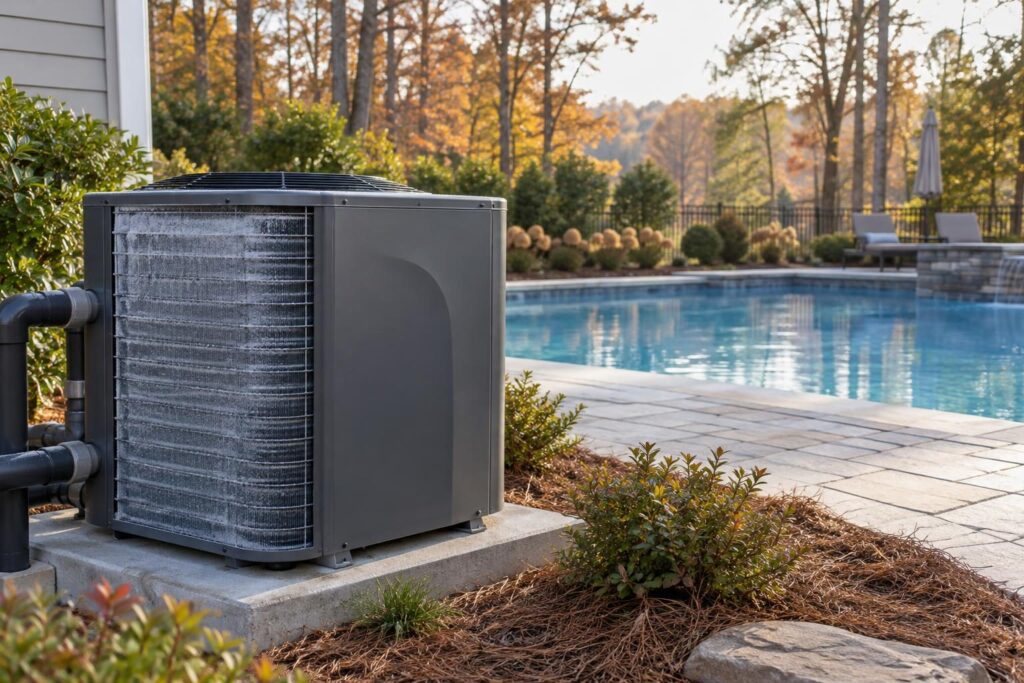
Understanding pool heat pump defrost starts with your equipment manual, not the appearance of ice alone. During cool weather, homeowners may notice frost, operating pauses, or unfamiliar display messages. These observations need context before anyone labels them normal operation or a repair problem.
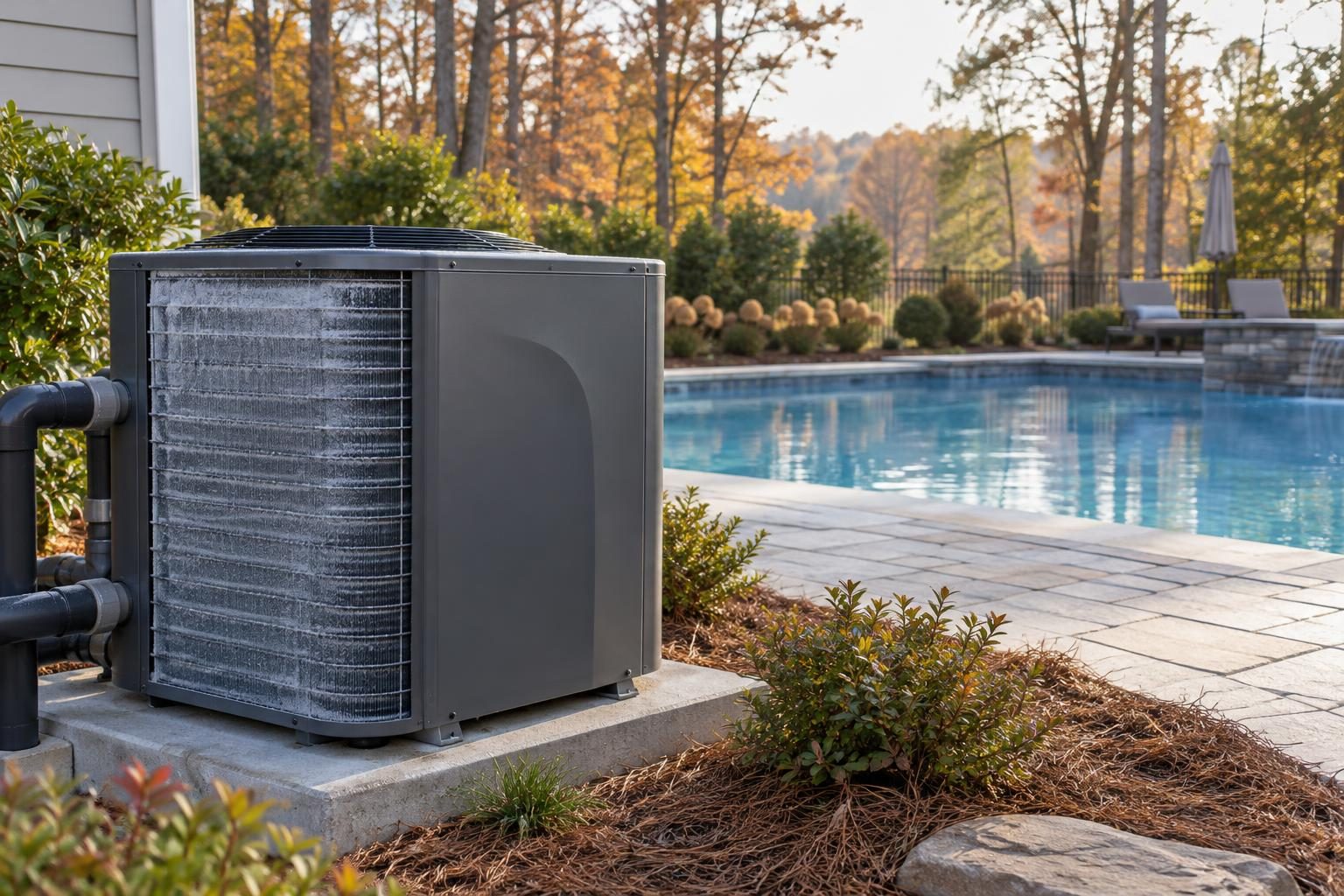
Record outdoor conditions, controller messages, visible airflow obstructions, and whether ice clears or returns. Compare that information with instructions for your exact model. This approach helps North Carolina homeowners request useful service without guessing at a mechanical cause.
Why cold weather can change heat pump operation
A pool heat pump moves heat from outdoor air into pool water. Its outdoor coil is the finned surface where the equipment exchanges heat with surrounding air. Under some conditions, moisture can freeze on that surface.
Manufacturers use different cold-weather controls. Depending on the model, equipment may pause heating, enter a defrost mode, or stop below its operating limits. Do not assume another homeowner’s unit follows the same sequence.
A cool morning in the mountains may present different conditions than an afternoon near the coast. Even nearby weather reports may not describe a shaded equipment pad accurately.
For broader equipment comparisons, see our guide to temperature-specific heat pump performance. A performance rating does not establish whether today’s operating sequence matches your model’s instructions.
Find the model-specific defrost instructions first
Locate the model and serial number without removing a cabinet panel. Save the owner’s manual and photograph the accessible equipment label. Confirm that the manual covers your installed model and controller.
For pool heat pump defrost questions, find these items in the manufacturer’s documentation:
- The stated outdoor operating range and any cold-weather limits.
- The meaning of defrost, standby, and fault messages.
- Any described fan, heating, or restart behavior during defrost.
- Homeowner actions permitted when frost or an alert appears.
- Conditions requiring shutdown or qualified service.
If the instructions are unclear, ask the manufacturer or authorized service provider for written clarification. Request the applicable manual page rather than accepting a general assurance that all heat pumps behave that way.
Record outdoor conditions without diagnosing the cause
Write down the date, time, and approximate outdoor temperature when the behavior appears. Identify whether the temperature came from a nearby weather report or a thermometer near the equipment.
Also note rain, fog, shade, wind, and visible frost elsewhere in the yard. Record humidity when available, but identify its source. These details provide context for pool heat pump defrost; they do not establish why the equipment iced.
Save the water temperature, heating setpoint, operating mode, and circulation schedule shown by accessible controls. The setpoint is the temperature you asked the heater to maintain.
Do not change several settings just to see what happens. Multiple changes can obscure the original sequence. If a professional recommends an adjustment, document the previous setting, new setting, and reason.
Capture display messages and the operating sequence
Photograph the complete display, including symbols and punctuation. Copy messages exactly instead of translating them into “heater broken” or “normal defrost.” Similar-looking messages may have different meanings across models.
From a safe position, record what you can observe:
- Whether the display identifies heating, defrost, standby, or a fault.
- Whether the fan appears to run, stop, or change behavior.
- When the message appeared and when it changed.
- Whether heating appears to resume afterward.
- Any sound or vibration that differs from previous operation.
Use time-stamped notes rather than estimating a sequence later. Do not repeatedly reset equipment or cycle its power to clear a message. Follow the manual or obtain service instructions first.
A short video may help a technician understand the sequence. Keep clear of moving parts and never reach through a grille.
Observe airflow without opening the cabinet
Airflow means air moving into and out of the heat pump. Landscaping, stored supplies, leaves, covers, or nearby structures can interfere with the space intended for that movement.
Compare visible surroundings with the manufacturer’s clearance instructions. Clearances are the required open spaces around equipment, and they differ by model. Do not substitute a generic spacing recommendation.
Photograph nearby shrubs, fences, walls, and anything above the discharge area. Note recent changes, such as a new privacy screen or seasonal equipment cover.
Remove loose items only when access is safe and the manual permits the action. Leave coil cleaning, cabinet access, and mechanical adjustments to qualified service when required.
Visible obstructions are useful observations, not proof of the cause. Ask the technician to document whether the installation meets the applicable manufacturer instructions.
Distinguish clearing frost from recurring ice
Light frost that clears during a manufacturer-described sequence is different from ice that remains or repeatedly builds. Still, appearance alone cannot confirm proper operation.
Photograph the same visible area from the same safe position. Record whether frost clears completely, partially, or not at all during the observed sequence. Note whether outdoor conditions changed between observations.
Ask for service guidance when ice persists after the documented sequence, repeatedly returns, or appears to obstruct equipment operation. Also report repeated fault messages or failure to resume heating as described in the manual.
Do not chip ice, pour hot water over the unit, or use a heat gun. These actions can damage equipment or create hazards.
Do not treat defrost as plumbing freeze protection. Ask your provider how cold-weather operation fits the pool’s separate winter-protection plan.
Know when observation should stop
Do not wait for a complete log if you notice smoke, a burning smell, damaged wiring, or violent vibration. Stay clear and seek urgent qualified help. Call emergency services for fire or immediate danger.
If ice contacts moving parts or the unit makes severe mechanical noises, stop experimenting. Use normal shutdown controls only if safe, and obtain professional instructions.
Switching off the heater does not establish a safe winter arrangement for the entire pool. During freezing weather, request coordinated guidance for the heater, circulation system, and exposed plumbing.
Never bypass a sensor, defeat a protective control, or open an electrical compartment. A display message cannot establish electrical safety. Electrical concerns belong with a qualified electrician or appropriately qualified service professional.
Request a written service scope and findings
A useful pool heat pump defrost service request includes the model, manual reference, weather notes, photographs, and exact messages. State the observation without naming an unverified cause.
Ask the provider to document:
- Whether the observed sequence matches the manufacturer’s instructions.
- Which checks support the findings and any proposed repair.
- Whether the unit should remain off pending service.
- Diagnostic charges, authorization limits, and warranty-review responsibility.
- What follow-up evidence will show whether the concern is resolved.
For larger repair or replacement proposals, review the NC Licensing Board’s home-improvement contract guidance. Verify the credentials appropriate to the actual work; a general-contractor license alone does not establish every specialty qualification.
Vague findings or requests for unapproved work warrant clarification, not an automatic accusation. Obtain a written scope before authorizing added work or payment.
Close the record after service or seasonal shutdown
Keep the invoice, findings, approved changes, parts information, and warranty communications together. If safe and accessible, photograph completed work without opening the cabinet.
Ask what operating conditions are needed to verify pool heat pump defrost behavior after the correction. A warm-day visit may not reproduce a cold-weather concern. If verification remains pending, document who will follow up and what observations they need.
Add the outcome to your seasonal pool handover records. Preserve unresolved items rather than marking them complete solely because a visit occurred.
Consult qualified heat-pump service for recurring ice or unclear operating behavior, and an electrician for electrical concerns. For replacement, relocation, or altered drainage, verify current requirements locally. North Carolina requirements can vary by jurisdiction, adopted code, property conditions, utilities, septic systems, flood zones, and project scope.