
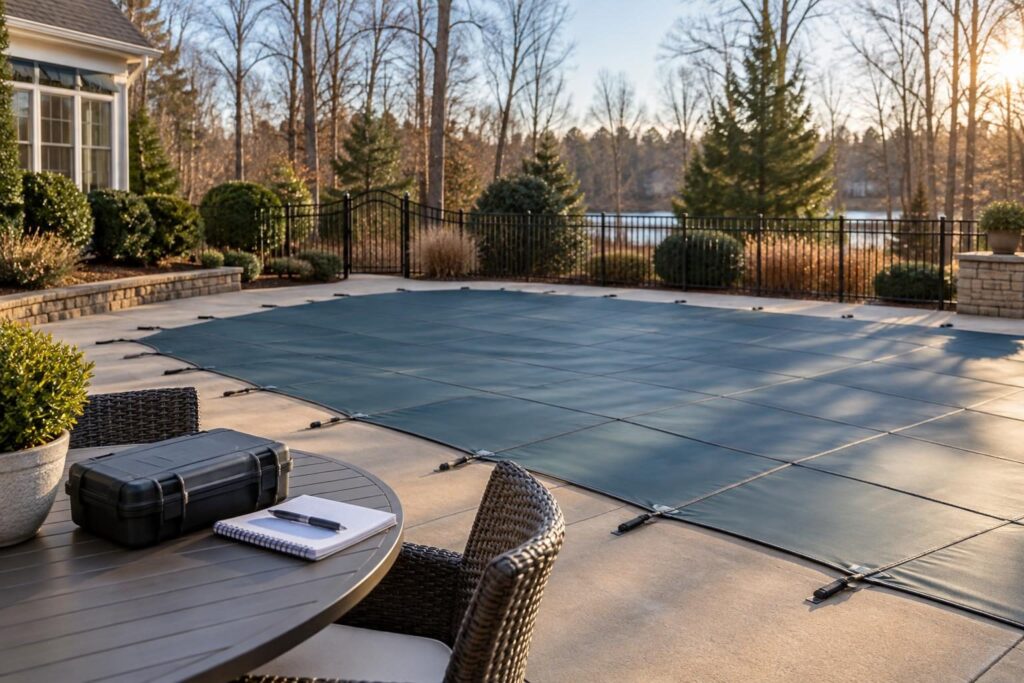
North Carolina covered pool winter algae monitoring starts with a simple distinction: closed does not mean maintenance-free. A warm stretch can change water conditions, even when nobody swims. However, checking the water should never mean improvising access beneath a secured cover.
The practical goal is to recognize when conditions need review, arrange safe sampling, and preserve the pool’s winter protection. Your cover manual, closing records, and written service instructions should guide that process.
Why warm winter weather deserves a water-care review
Cold water generally slows algae growth; it does not guarantee that algae cannot develop. Warmer water, available light, debris, and declining sanitizer can create more favorable conditions. Sanitizer is the chemical treatment that controls germs and helps prevent algae.
A sunny afternoon does not establish the temperature beneath the cover. Water responds differently from air, and shaded pools may behave differently from sunny ones. Avoid treating the forecast as a water-test result.
Cover construction also matters. Mesh covers allow some light and precipitation through. Solid covers behave differently, but neither type eliminates the need to follow its maintenance instructions.
Ask the winter-service provider what weather changes should trigger contact or a visit. Do not adopt a universal testing interval or chemical dose from another homeowner’s pool.
Start with the closing report and cover instructions
Before touching the cover, locate its manufacturer, model, operating instructions, and maintenance requirements. Confirm whether it is a safety cover or another type of covering. Do not assume that every winter cover provides the same protection.
Then review the provider’s closing procedure. A fully winterized system may have drained equipment and protected plumbing. Another pool may retain an approved cold-weather operating arrangement. Those conditions require different responses.
- Find the closing water readings and treatment record.
- Identify equipment that must remain off.
- Confirm the specified winter water-level range for this installation.
- Locate instructions for cover drainage and seasonal checks.
- Record who may open, sample, treat, and resecure the cover.
Keep these documents together using a seasonal pool handover file. If the written record conflicts with verbal instructions, request clarification before acting.
Keep winter algae monitoring separate from unsafe access
A closed pool remains a drowning hazard. Keep children and pets away during checks, and maintain the surrounding barriers. Never walk, kneel, or lean onto a cover to reach the water, even if the manufacturer labels it a safety cover.
Do not release anchors, loosen straps, or lift a corner unless the manufacturer’s procedure permits it. The person doing the work must also know how to restore the cover correctly.
Sampling should not involve reaching through an improvised gap or balancing on wet coping, the edge around the pool. Leave the cover secured when the deck is icy, access is unstable, or conditions prevent safe work.
The CPSC Pool Safely safety guidance explains layers of protection around residential pools. A water-care check must not weaken those protections. Verify local barrier requirements with your inspections department rather than assuming a cover replaces a fence.
Decide whether homeowner sampling is appropriate
Safe sampling requires more than owning a test kit. First, confirm that the cover instructions allow a suitable access method. Next, obtain the provider’s procedure for collecting pool water and securing the cover afterward.
Ask these questions before agreeing to sample:
- Can I collect water while standing securely on the deck?
- Does the procedure require tools, training, or a second trained person?
- How will access remain controlled throughout the check?
- Can I restore every attachment exactly as instructed?
- Who should respond if I cannot secure the cover afterward?
If any answer is unclear, arrange professional service. Do not cut an access opening or alter the cover.
North Carolina covered pool winter algae monitoring can remain a homeowner observation task without becoming a homeowner sampling task. Photograph visible conditions from a safe location and send them to the provider instead.
Collect useful readings without treating blindly
When the provider approves safe sampling, follow the test-kit instructions and the provider’s collection method. Test pool water, not rainwater sitting on the cover or water collected by a cover pump.
Record the sample location, collection time, water temperature if available, and test results. Note whether circulation was off. A sample from still water may not represent conditions throughout the pool; ask the provider how to interpret it.
Free chlorine, the chlorine available for sanitation, and pH are useful water-care measurements. The CDC’s home pool treatment and testing guidance explains their importance. It does not replace a winter procedure specific to your pool.
Check reagent expiration dates and permitted testing temperatures. Reagents are the chemicals a test kit uses. Share unexpected results before adding treatment, especially when the water cannot circulate.
Know which changes warrant a service call
A cloudy or green appearance deserves investigation, but color alone does not identify the cause. Debris, staining, and water conditions can complicate what you see through a limited opening.
Contact the provider when approved testing shows a concerning trend or when you notice:
- Visible discoloration beneath the cover.
- A torn cover, loose attachment, or unusual sagging.
- Water levels outside the installation’s written winter instructions.
- Persistent standing water where the cover instructions call for drainage.
- Missing instructions for responding to extended mild weather.
Do not drain the pool or adjust cover tension merely to improve visibility. Water level can affect cover support and pool protection. Ask the installer or qualified service professional to assess the condition.
Photographs help document changes, but they do not establish a diagnosis or prove faulty service.
Do not undo winterization to circulate chemicals
A warm forecast is not permission to restart winterized equipment. Plumbing may contain winterizing plugs. The provider may have drained equipment and positioned valves for seasonal protection.
Likewise, do not assume a salt chlorine generator is producing sanitizer in cold water. Its operating limits and current status require confirmation from the equipment instructions and service provider.
Avoid pouring chemicals through the cover or placing products underneath it without an approved procedure. Concentrated chemicals can damage materials, and some treatments require circulation or specific application methods.
Request a written treatment plan identifying the product, application method, circulation requirements, and follow-up testing. Never mix pool chemicals. Any equipment change should also address how the provider will restore winter protection before freezing conditions return.
Make winter-service responsibilities specific
A seasonal closing visit does not necessarily include later monitoring. Read the service agreement rather than assuming it includes warm-weather checks.
For North Carolina covered pool winter algae monitoring, ask the provider to confirm:
- Who tracks weather and requests additional visits.
- Whether the agreement includes sampling, treatment, and cover reattachment.
- What added work costs and how you authorize it.
- Which readings and photographs each visit will document.
- How the provider reports urgent cover or access concerns.
Vague responsibilities or inconsistent instructions call for clarification, not an assumption of wrongdoing. Verify important commitments against the cover manual and written agreement.
Review any warranty maintenance obligations as well. Ask how you or the provider can complete required care safely while the pool remains closed.
Keep a short winter check log
Record the date, recent weather, safe exterior observations, test results, and person contacted. Preserve written recommendations, approved charges, treatment records, and follow-up instructions.
After service, request confirmation that the provider resecured the cover and restored winter protection. If something remains unresolved, record the next step and responsible person. Keep photographs of accessible conditions without disturbing the installation.
Effective North Carolina covered pool winter algae monitoring protects both water quality and safe access. Consult a qualified pool-service professional when sampling or treatment requires opening the cover. Use a licensed pool contractor for installation concerns and a qualified electrician for electrical issues. Ask local inspections staff about barrier requirements, which can vary with jurisdiction, adopted code, and project conditions.