
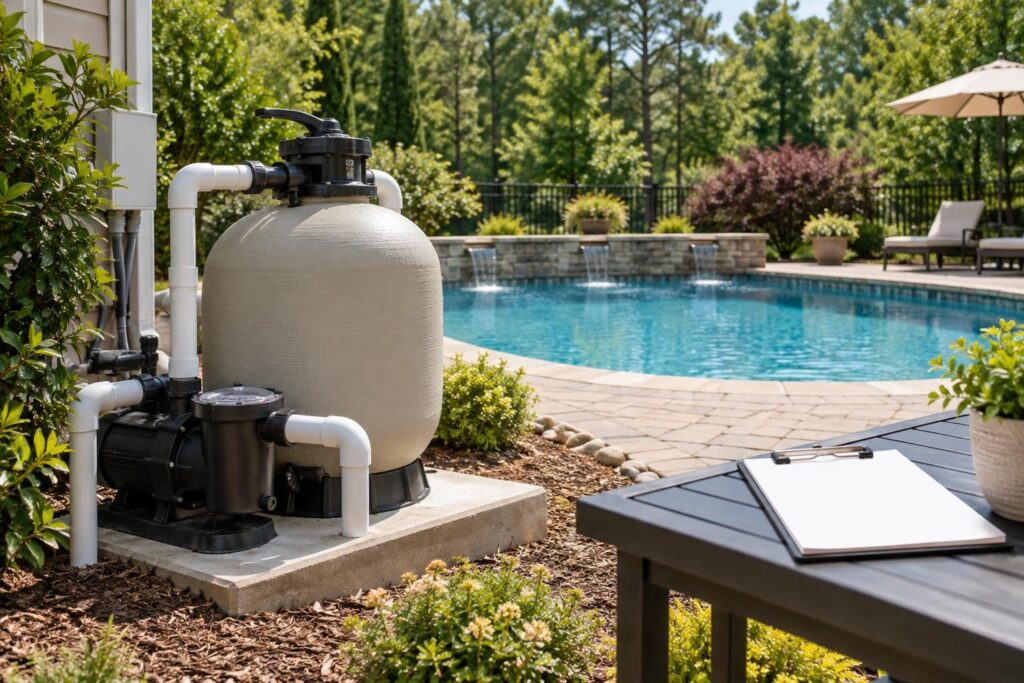
Recognizing possible pool sand filter channeling symptoms starts with recording changes, not opening the filter. Persistent cloudiness, disappointing filtration, or unusual pressure patterns may warrant professional evaluation. None of those observations confirms channeling by itself.
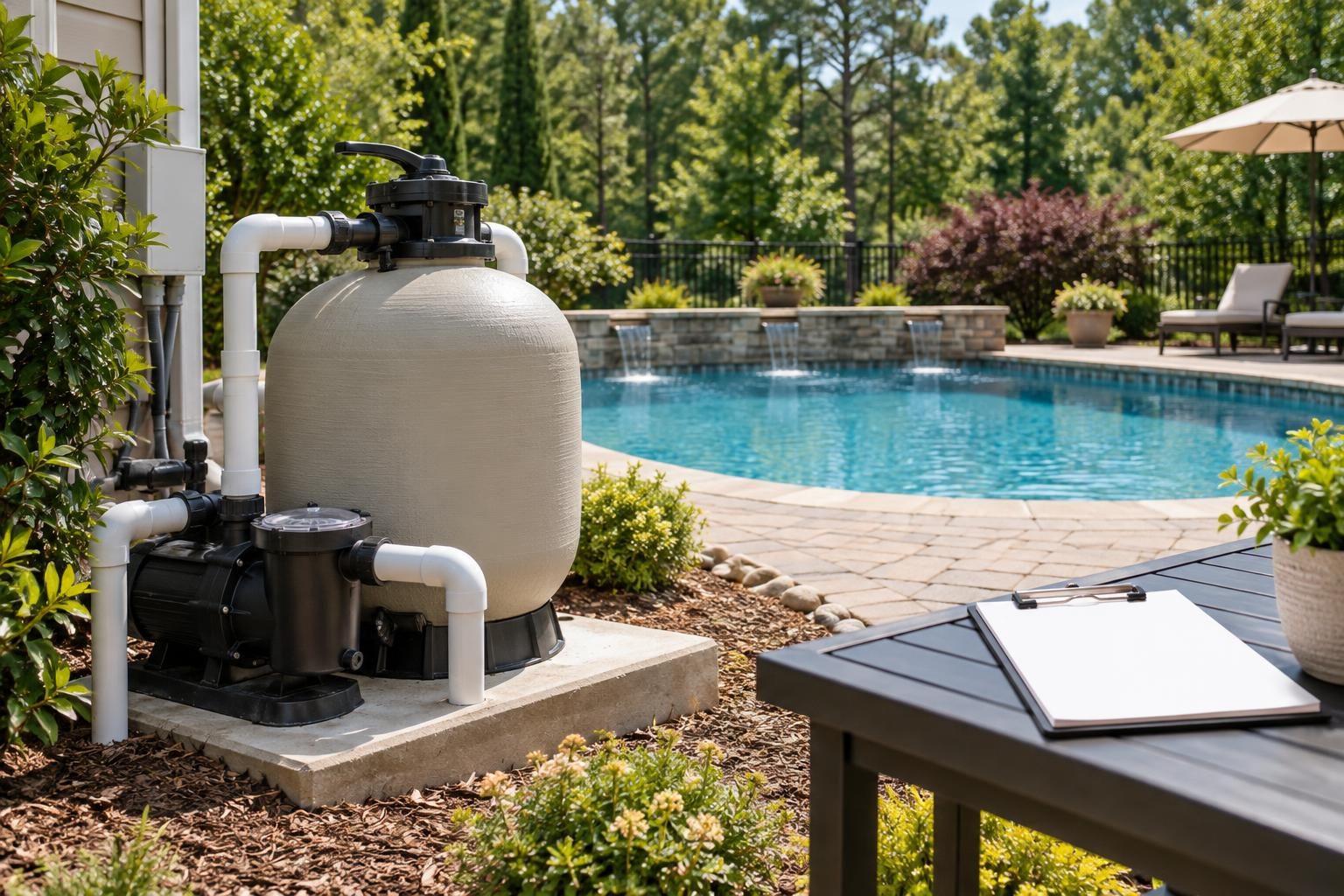
Your most useful contribution is a clear history of what changed and under which operating conditions. Keep photographs, water-test results, equipment settings, and service records together. These details help a technician evaluate competing explanations before recommending repairs or replacing filter media.
What sand filter channeling means—and what it does not prove
A sand filter passes water through a bed of filtering material, called media, which captures suspended particles. Channeling describes preferential paths through that bed. Water may follow those paths instead of moving evenly through the media, reducing filtration effectiveness.
Homeowners generally cannot confirm that internal condition by looking at the pool or reading one pressure gauge. Cloudy water can also involve water chemistry, algae, circulation, heavy debris loads, or other equipment problems. A faulty gauge can make pressure observations misleading.
Sand-like material on the pool floor does not establish channeling either. A professional may need to distinguish outside debris from escaped filter media and investigate separate internal problems.
Use “possible filtration problem” when requesting service. That description preserves the distinction between your observation and the technician’s eventual findings.
Set firm limits around pressurized equipment
Pool filters contain pressurized water and can trap compressed air. Opening or loosening components can cause serious injury. This article does not provide a disassembly, pressure-release, or internal inspection procedure.
- Do not loosen clamps, lids, gauges, fittings, or valves to investigate a symptom.
- Never move a filter control valve while the pump operates.
- Do not lean over the filter or approach it to capture a closer photograph.
- Avoid starting equipment solely to reproduce a concerning condition.
- Leave unfamiliar controls and pressure-release procedures to qualified service personnel.
If you notice spraying water, a shifting clamp, visible damage, or sudden severe vibration, keep people away. Stop the pump only through a familiar control you can reach safely. Do not approach wet electrical equipment. Seek qualified help before restarting.
Keep swimmers out whenever cloudiness prevents a clear view of the pool bottom. Filtration observations do not establish that water is safe for swimming.
Record persistent poor filtration without labeling the cause
Describe what you can actually see. “The deep-end floor looks hazier each afternoon” gives a technician more useful information than “the sand is bad.” Note whether the condition affects the entire pool or only certain areas.
- Photograph the same pool area from the same safe location.
- Record the date, weather, recent swimming activity, and visible debris.
- Save current water-test results, including the test method.
- List recent chemical additions, with product names and application dates.
- Note when the cloudiness began relative to maintenance or equipment changes.
North Carolina pollen, storms, and yard runoff can change the debris entering a pool. Record those events without assuming they explain everything.
For a broader assessment, review cloudy-water checks beyond a chlorine reading. Water treatment and filtration need evaluation together, rather than as competing explanations.
Pressure patterns: compare matching operating conditions
A filter pressure gauge reports pressure at its connection point. It does not directly measure filtration quality or prove that water passes evenly through the sand.
Compare readings only when operating conditions are similar. Pump speed, active water features, and valve settings can change pressure. A variable-speed pump operates at adjustable speeds, so different settings may produce different readings.
Without changing settings or touching equipment, record:
- The displayed pressure and the time of observation.
- The displayed pump speed or programmed operating mode.
- Which water features or cleaning functions were active.
- Any visible bubbles, weak returns, or equipment alerts.
- Whether the reading stayed steady or visibly fluctuated.
Potentially useful patterns include a departure from the established baseline, unexplained fluctuations, or poor clarity despite apparently familiar pressure. These warrant questions, not a diagnosis. Restrictions, air, pump conditions, valve problems, or gauge faults may also need evaluation.
Older equipment startup readings can provide comparison points. Do not substitute another pool’s pressure reading for your equipment’s documented baseline.
Build a log for possible pool sand filter channeling symptoms
Keep the log simple enough to maintain consistently. One entry should connect the water’s appearance with the equipment conditions at that moment. A record of possible pool sand filter channeling symptoms helps organize the service request.
- Observation: Describe cloudiness, visible particles, return flow, or an unusual sound.
- Conditions: Record pump settings, pressure, weather, and recent pool use.
- Water testing: Attach results rather than writing only “chemistry good.”
- Recent work: Note cleaning, backwashing, repairs, or control changes.
- Supporting record: Add a dated photograph or relevant service invoice.
Backwashing reverses flow through the filter to flush captured debris. Record previously completed backwashing and its apparent effect, but do not repeat it as a diagnostic experiment. Follow the specific equipment manual and your service provider’s established instructions.
A useful history states whether clarity improved, stayed unchanged, or worsened afterward. Include who performed the work. Avoid guessing about internal conditions you could not see.
Gather media and maintenance records before the visit
The technician needs to know what equipment is installed and what work has already occurred. Retrieve model information from existing paperwork or safely visible labels. Do not remove covers to find it.
Look for invoices showing the media type, product specification, quantity, and installation date. If those details are missing, say so. Do not assume ordinary sand and alternative filter media have interchangeable requirements.
Also collect the manufacturer’s manual, prior pressure records, service reports, and warranty terms. Include records of pump replacements, speed changes, valve repairs, or added water features. Send your record of possible pool sand filter channeling symptoms ahead of the appointment.
If recent work preceded the symptoms, describe the sequence without assigning blame. Timing can guide an investigation, but it does not establish causation.
Ask the previous provider for missing documentation in writing. Preserve the request and response. An incomplete invoice calls for clarification; it does not automatically prove improper work.
Ask for an evaluation before authorizing a repair
When reporting pool sand filter channeling symptoms, send your observations and ask how the provider will evaluate alternative causes. Clarify whether the initial charge covers diagnosis, maintenance, or an agreed repair.
- What observations support the proposed explanation?
- How will you assess gauge reliability and operating conditions?
- Will circulation, water chemistry, and valve operation also be considered?
- What findings would justify opening the filter or replacing media?
- Which model-specific media requirements will guide the work?
- What additional work requires separate written approval?
Request a written scope identifying labor, materials, exclusions, and payment terms. Ask what credentials and insurance apply to the proposed work, and independently verify relevant representations. The North Carolina Licensing Board’s home-improvement guidance offers broader consumer-protection information.
A confident verbal diagnosis is not a substitute for documented findings. Reluctance to explain a recommendation warrants clarification or another qualified opinion, not an automatic accusation.
Close the service visit with evidence, not just an invoice
Ask the technician to distinguish confirmed findings from suspected causes. If the filter was opened, request photographs taken during their safe service procedure. Homeowners should not approach opened equipment to obtain their own pictures.
The final record should identify inspected components, completed work, replacement materials, and any unresolved concerns. Obtain operating readings with the pump settings noted. Ask what improvement to expect, how to monitor it, and when to call again.
When conditions permit, compare later observations with your original log. An immediate pressure change alone does not establish restored filtration. Follow the agreed monitoring plan and preserve written follow-up messages.
For covered work, use a warranty repair completion review to connect the original concern with the documented result.
Know when the next step needs a specialist
Bring persistent filtration problems or unusual pressure patterns to a qualified pool service professional. Use a licensed electrician for electrical concerns. If repairs expand into replacement equipment, wiring, or discharge changes, verify applicable requirements with local inspections staff or other appropriate authorities.
North Carolina requirements can vary by jurisdiction, adopted code, property conditions, utilities, and project scope. Build a Pool in North Carolina encourages homeowners to preserve clear records and seek qualified review before authorizing uncertain work.