
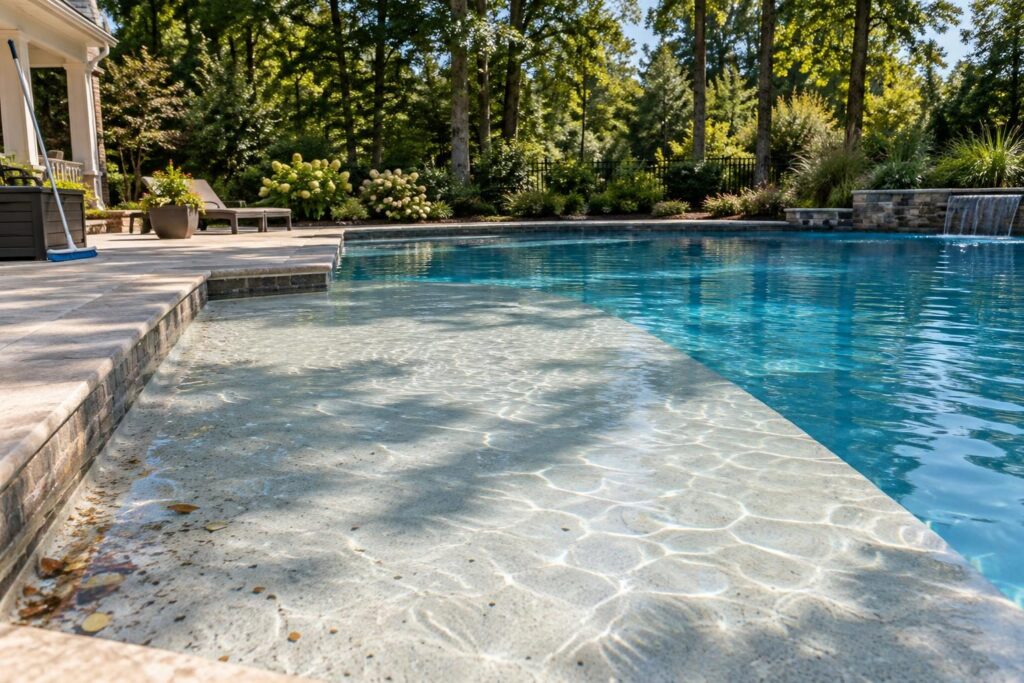
Good shallow pool ledge water circulation maintenance starts before anyone fills the pool. A broad sun shelf may look inviting while creating different care needs from the deeper swimming area. Sun exposure, shelf depth, corners, furniture, and water movement all influence what collects there.
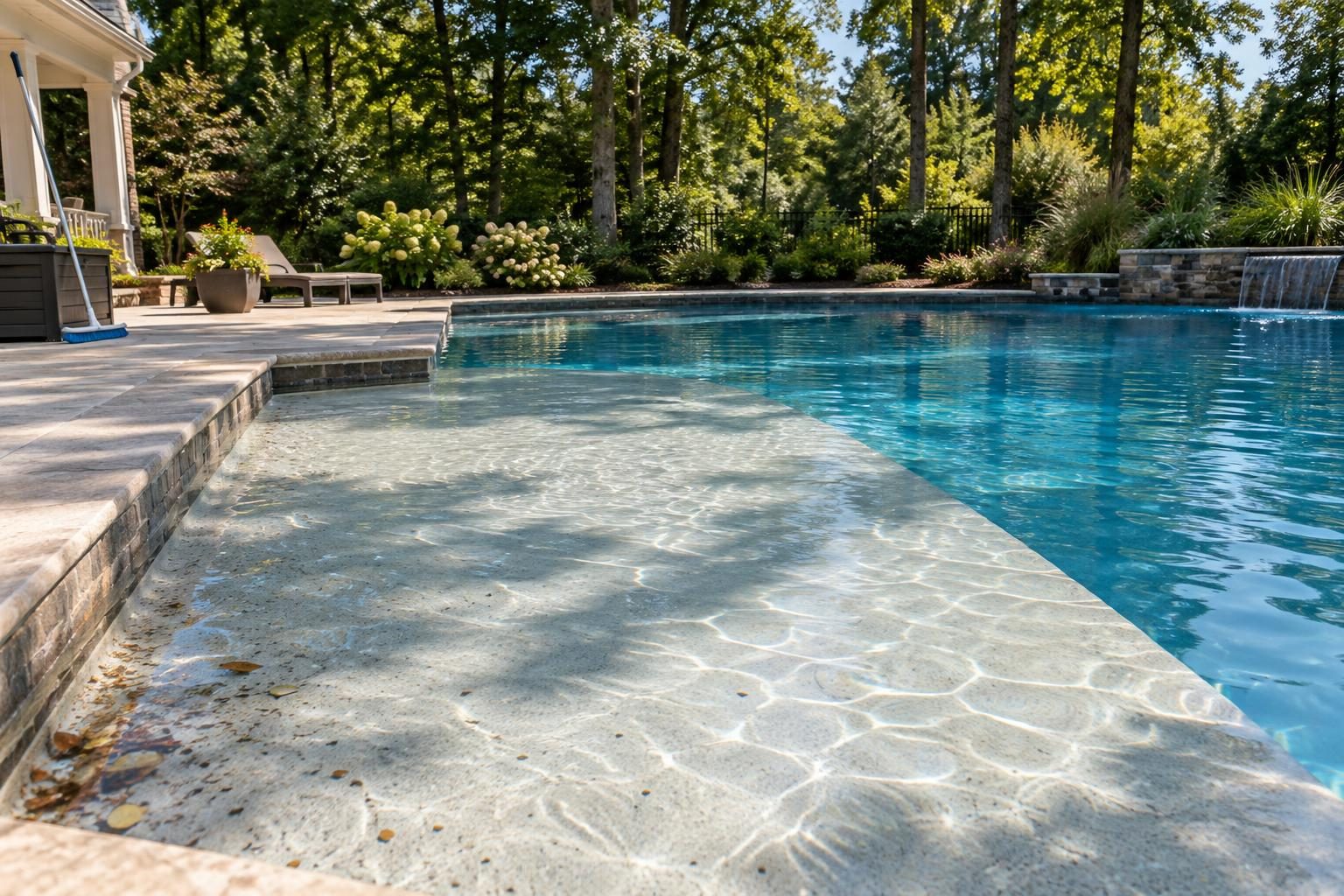
A warm patch or recurring debris does not automatically prove a design defect. It does give you something specific to discuss and document. The goal is to connect the proposed design with a realistic cleaning routine, then check actual performance after startup.
Why shallow ledges can behave differently
A shallow ledge holds less water above each area of floor than a deeper section. In direct sun, that shallow water can warm more noticeably, especially when mixing is limited. Wind, shade, weather, and the operating schedule also affect temperatures.
Circulation means water moving through the pool and its treatment system. Return fittings send filtered water back into the pool. Their placement and direction help determine how water moves across shelves, around corners, and toward collection points.
Visible movement is not a complete test of water treatment. A rippling surface may hide limited movement near the ledge floor. Conversely, a calm-looking shelf does not establish that circulation is inadequate.
Think of warmth, settled debris, and repeated cleaning needs as observations to investigate together. None tells the whole story alone.
Review ledge geometry before approving drawings
Geometry means the shelf’s shape, dimensions, depth, and relationship to nearby steps or walls. A wide shelf, recessed corner, or curved bench may create areas that need targeted cleaning. Ask the designer to explain the proposed water movement rather than relying on a rendering.
- What water depth will the ledge have at the intended operating water level?
- How will filtered water reach the far edge and inside corners?
- Will steps, benches, or raised features interrupt that movement?
- Where could leaves and fine sediment settle?
- Can an adult reach the entire shelf with an approved cleaning tool?
- How will the planned furniture affect access and water movement?
Request dimensions and fitting locations on the drawings. Clarify whether a decorative bubbler also serves a circulation purpose. Do not assume a visible spray provides adequate treatment throughout the shelf.
If the explanation remains vague, request clarification before approving the layout. Changes become harder to evaluate after plumbing and finishes conceal the work.
Make circulation commitments specific and written
A useful shallow pool ledge water circulation maintenance plan connects design choices with operating instructions. Ask what equipment settings the contractor expects to use and how the ledge will be evaluated during startup.
“The pump will handle it” leaves important questions unanswered. A larger pump alone does not establish that water reaches a particular corner. Request an explanation of return placement, plumbing arrangements, and any adjustable features.
- Identify included fittings and equipment in the written scope.
- Record who sets return directions and operating schedules.
- Clarify whether startup includes reviewing shelf cleaning needs.
- Require written approval for proposed equipment or layout substitutions.
- Ask how reported circulation concerns will be assessed.
Photograph accessible plumbing and fitting locations before concealment, from outside the work area. Keep approved drawings, change orders, inspection records, and correction records together.
Reluctance to document a commitment is a reason to clarify it, not proof of wrongdoing. Independently compare installed components with approved specifications and manufacturer instructions.
Account for sun, shade, and furniture
Consider when the shelf receives direct sun, not just whether the backyard is generally sunny. Morning shade may disappear during the afternoon. Nearby buildings and seasonal tree cover can change exposure.
Ask whether the proposed ledge depth and location suit your intended use. If temperature comfort matters, discuss alternatives before construction. No drawing can guarantee a particular water temperature under changing weather conditions.
Furniture adds another variable. Loungers may interrupt flow, trap debris underneath, or limit brushing access. Use products approved for the pool surface and intended water depth. Follow their placement and care instructions.
Shade can improve comfort, but some shade sources introduce leaves, pollen, or other cleaning demands. Avoid treating landscaping as a guaranteed solution to warm shelf water.
Keep shallow-water safety separate from comfort. A ledge is not a supervised childcare area, and shallow water still presents drowning risks. Maintain appropriate barriers and active adult supervision.
Observe the operating pool without creating hazards
Start with ordinary observations from a stable, dry location. Note where debris settles before cleaning and whether the same pattern returns. Do not enter the pool just to investigate suspected poor circulation.
A simple observation log can include:
- Date, time, weather, and sun or shade conditions.
- The displayed operating mode and pump setting.
- Recent swimming, storms, landscaping work, or equipment interruptions.
- Furniture placement and visible return activity.
- Photos showing repeated debris patterns from the same viewpoint.
- Water-test results and the sampling method used.
Use this log to keep shallow pool ledge water circulation maintenance focused on repeatable patterns rather than impressions.
If your service provider recommends temperature comparisons, ask for a consistent, safe method. Record sampling location and time. Touch alone is not a reliable measurement, and temperature differences do not establish sanitary conditions.
Never block suction fittings, remove covers, open pressurized equipment, or introduce dyes or other products to trace flow yourself. Ask a qualified pool professional to investigate water movement when observations suggest a recurring problem.
Separate circulation concerns from water-care problems
Warm water, sunlight, debris, and swimmer use can affect treatment needs. However, neither clear water nor a comfortable temperature proves the pool is safe for swimming.
Follow a testing routine suited to your system and conditions. The CDC’s home pool treatment and testing guidance explains the importance of disinfectant and pH checks. Use current product labels and qualified advice for treatment decisions.
When comparing samples from different areas, have your service provider explain collection methods and interpretation. A single unusual result may reflect testing error or temporary conditions. Repeated differences deserve a documented review.
Do not respond to a warm corner by adding chemicals directly onto the ledge. Follow product directions and protect swimmers and the pool finish.
If cloudiness accompanies the concern, review what a chlorine reading can and cannot explain about cloudy water. Pause swimming when visibility or water conditions are questionable and seek qualified guidance.
Plan for debris removal, not just moving water
Even a well-planned shelf can need manual cleaning. Pollen, fine sediment, sunscreen residue, and leaves behave differently. Moving water does not guarantee that every material reaches a skimmer, which collects floating debris.
Ask which brush and cleaning tools are approved for the finish. Confirm whether your proposed automatic cleaner can actually operate on the ledge. Review robotic cleaner compatibility with steps and ledges before depending on a machine for shelf care.
Look beneath movable furniture according to its handling instructions. Photograph recurring accumulation before cleaning, then note how quickly it returns under similar conditions.
Repeated debris in one corner is a useful clue, not a diagnosis. Wind direction, nearby plants, furniture, and cleaning frequency may contribute. Ask the service provider to review those factors before recommending equipment changes.
Close out concerns with records and a clear next step
Keep shallow pool ledge water circulation maintenance in the handover discussion. Request operating instructions, approved cleaning methods, equipment manuals, and a written explanation of any unresolved concern.
List each concern separately: recurring sediment, unusual warmth, visible residue, or inconsistent test results. Record the proposed action, responsible party, and follow-up method. Preserve service reports and photos showing conditions before and after adjustments.
Check payment milestones against your contract rather than verbal assurances about future work. Do not treat a promised later adjustment as completed work. Review homeowner maintenance obligations in pool warranties so your records support both routine care and service requests.
Consult a qualified pool contractor for persistent circulation concerns and a water-care professional for testing or treatment questions. For proposed alterations, verify current requirements with the local inspections department and appropriate licensed specialists. North Carolina requirements vary with jurisdiction, adopted code, property conditions, utilities, septic systems, flood zones, and project scope.