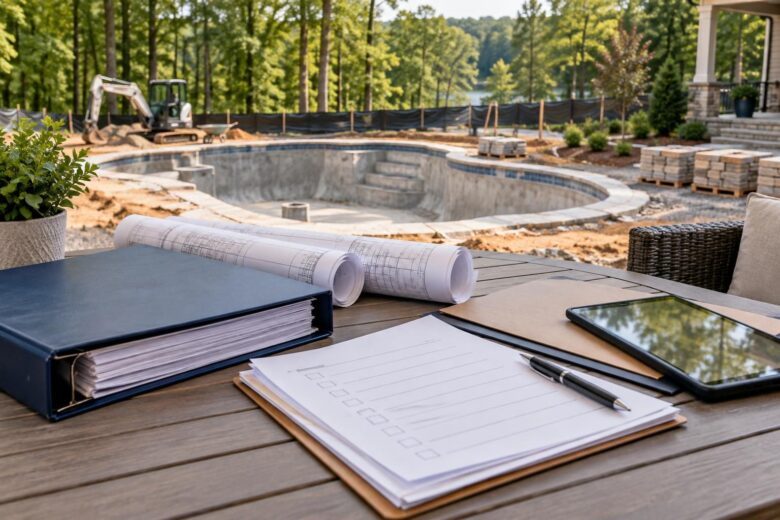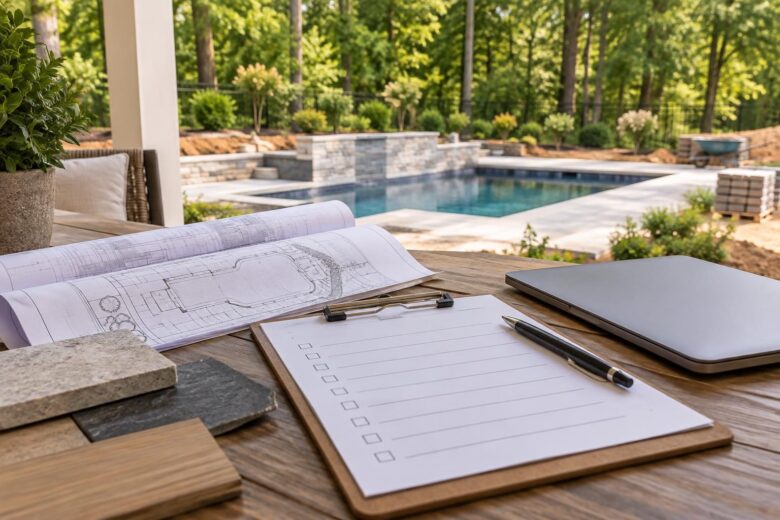
A steep lot can support a well-designed pool, but slope, grading, retaining structures, drainage, access, and safety must be resolved before construction.
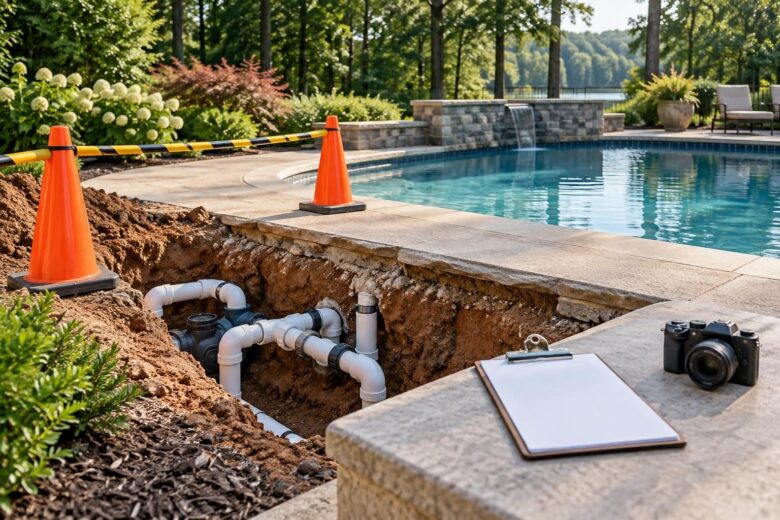
A utility easement can affect pool placement, excavation, access, drainage, and future repairs. Use this North Carolina homeowner checklist before approving a site plan.
Use a practical seasonal routine to inspect pool tile, grout, coping joints, stains, movement, freeze concerns, and waterline buildup in North Carolina.
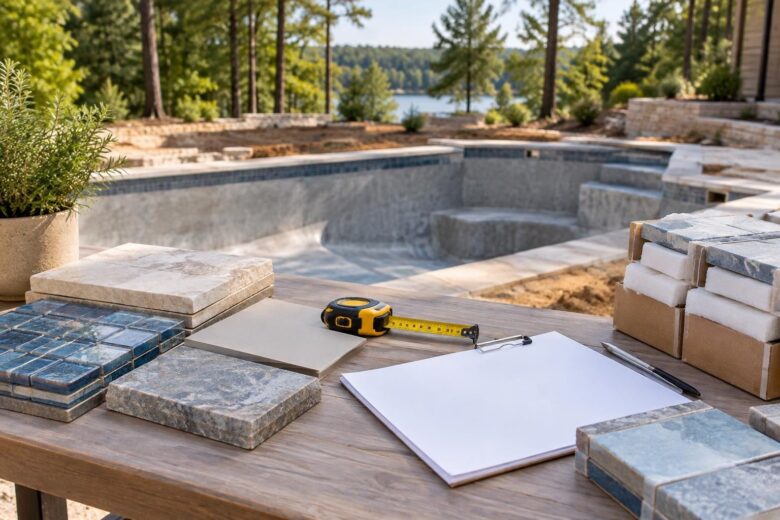
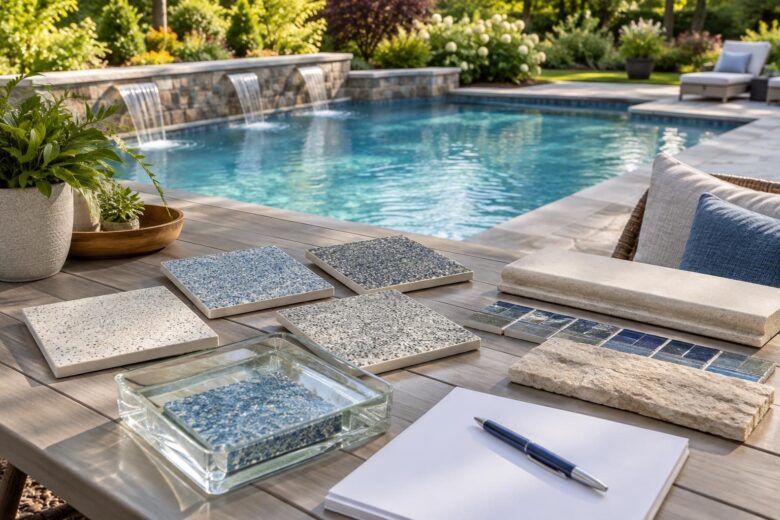
Compare plaster, pebble, and aggregate pool finishes by appearance, texture, chemistry care, cleaning, startup, and long-term ownership considerations.
Plan irrigation zones, spray patterns, drainage, soil protection, and equipment safeguards for a healthier, cleaner finished pool area.
Choose poolside plants with North Carolina weather, roots, leaf litter, thorns, wildlife, water exposure, and maintenance access in mind.
Learn how to monitor pool deck slopes, joints, drains, soil settlement, downspouts, and runoff paths after installation in North Carolina.
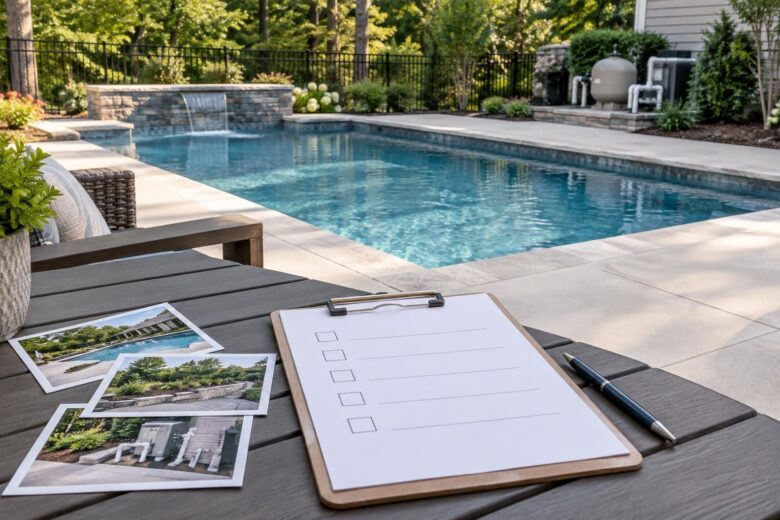
Use this practical checklist to manage water testing, balancing, circulation, brushing, cleaning, and records after a newly built pool is filled.
Humidity, heat, rain, and debris can change pool water and equipment conditions. Use this seasonal North Carolina routine to stay ahead of algae and wear.
Heavy rain can raise pool levels, dilute chemicals, stress drainage, and affect nearby property. Learn practical steps for testing, covering, and safe water management.