
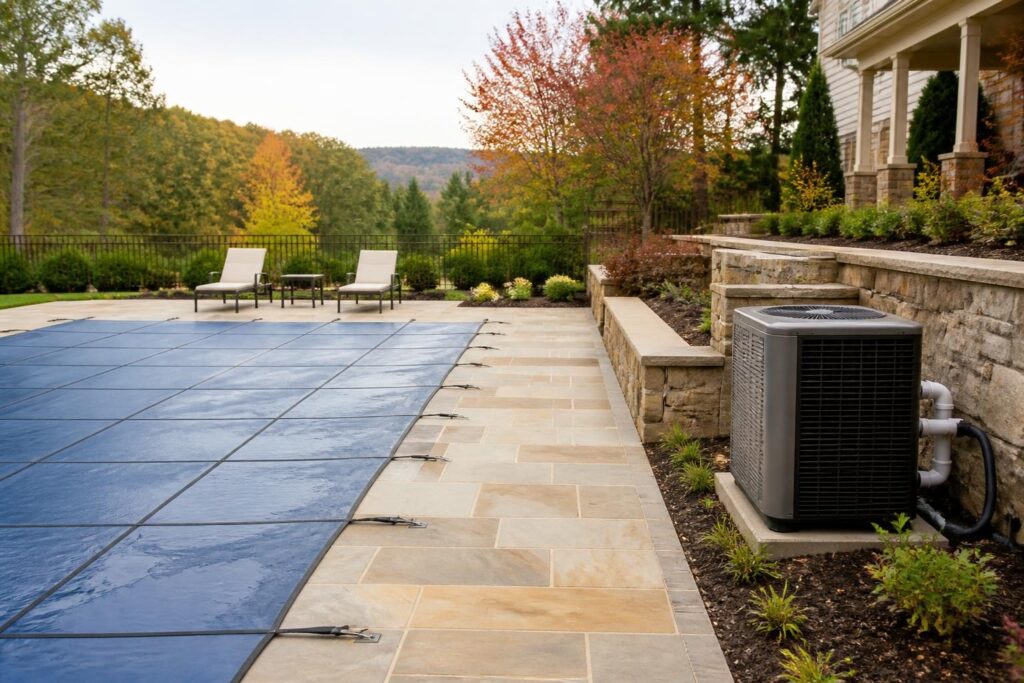
Choosing among pool heater options North Carolina homeowners can use starts with a practical question: when do you want to swim? A heater for occasional spring and fall use may need a different plan from one intended to support regular swimming through cooler months.

North Carolina has varied conditions across the mountains, Piedmont, and coast. Air temperature, wind, humidity, shade, water temperature, pool size, utility availability, and your cover habits all affect performance. No single system is best for every property.
This guide compares heat pumps, gas heaters, solar assistance, and covers. It also explains installation constraints and operating factors to review with a qualified pool professional.
Start with your desired swimming season
Heating decisions should follow your use pattern. Write down the months and times when you expect to swim. Include whether you want a quick temperature boost for weekends or steady warmth for frequent use.
- Occasional shoulder-season use: A cover and a heat pump may suit a homeowner who can plan ahead.
- Fast warm-up: A gas heater may be worth comparing when speed matters more than fuel cost.
- Longer, planned use: A heat pump, cover, and suitable control strategy may work as a combined system.
- Warm-weather assistance: Solar heating may reduce reliance on another heater during favorable conditions.
Pool heater options North Carolina homeowners compare should reflect the actual swimming schedule. Pool water loses heat through evaporation. Wind and cool nights can increase that loss. A cover can reduce exposure when the pool is not in use, but you must select and use it with safety in mind.
Consider asking: Will the pool be used mostly during the day? Is the site shaded? Can someone put the cover on after each swim? Will swimmers expect a warm pool after a sudden cool evening? These answers help define the heating goal before equipment is priced.
Compare the main pool heater options North Carolina properties may support
Heat pumps
A pool heat pump transfers heat from outdoor air into the pool water. It normally uses electricity and may operate efficiently when the air is mild. Output can decline as air temperatures fall, so the local climate and desired season matter.
Heat pumps often work well for homeowners who prefer gradual heating and regular use. They may need more time than a gas heater to raise water temperature. Ask the contractor to explain expected performance under the conditions you actually plan to use.
Confirm the required electrical service, disconnect location, airflow clearances, drainage, sound level, and service access. Do not box the unit into a tight enclosure, because restricted airflow can affect operation and maintenance.
Gas heaters
Gas heaters burn fuel to heat water. Depending on the property and equipment, that fuel may be natural gas or propane. Gas systems can provide strong heat output and fast temperature changes, but fuel availability and operating cost require careful review.
Ask whether a suitable gas connection exists and whether the proposed installation needs new piping, a larger meter, a propane tank, combustion-air provisions, or venting. A licensed professional should evaluate fuel, gas, and venting requirements.
Gas heaters may appeal to owners who use the pool irregularly and want a quick warm-up. They may be less attractive when the pool runs warm for long periods or when fuel access is difficult. Compare the full installation scope, not just the heater price.
Solar assistance
Solar pool heating uses roof-mounted or ground-mounted collectors to warm water with sunlight. It may reduce the work required from another heater during sunny periods. Performance depends on available sun, collector area, orientation, shading, weather, and plumbing design.
Solar assistance is not the same as guaranteed heating in every condition. Cloudy days, cool nights, shade, and high wind can limit the available heat. A homeowner may still want a heat pump or gas heater for backup.
Review roof structure, roof condition, visual impact, collector location, pipe routing, controls, and maintenance access. A qualified installer should determine whether the proposed surface and support system are suitable.
Do not treat the cover as an optional accessory
A cover can support almost any heating plan by limiting evaporation when the pool is closed. It does not create heat, and it cannot correct an undersized or poorly located heater. Its value depends heavily on fit, condition, storage, and consistent use.
Compare manual, automatic, solar-absorbing, and safety-oriented cover designs with the actual pool shape. Ask how the cover will be stored, who will operate it, and whether the design affects access to skimmers, drains, ladders, or equipment.
Safety must remain separate from energy discussions. Do not describe a cover as a substitute for required barriers or supervision. Review current local requirements with the inspections department and consult federal consumer guidance such as Pool Safely’s safety tips.
For a more detailed comparison of evaporation control, fit, storage, and owner habits, see pool cover energy savings and selection factors.
Match the system to climate and site conditions
North Carolina’s climate changes by region and season. A coastal property may face salt exposure and wind. A mountain property may experience cooler air and longer periods when heating demand is higher. Piedmont conditions can include warm summers, cool nights, heavy rain, and changing shoulder seasons.
Pool heater options North Carolina homeowners consider should match the site’s exposure. Shade affects both comfort and heating. Trees, buildings, privacy screens, and rooflines can block sunlight or reduce wind. Ask the designer to evaluate the pool’s exposure during the hours when you expect to swim.
Equipment location also matters. A heater needs suitable clearances and access for service. Combustion equipment needs appropriate fuel and venting arrangements. Heat pumps need adequate airflow and may produce condensate water. The finished plan should show equipment, connections, drainage, and service space.
Review the property before selecting equipment. A site evaluation can identify access, utilities, slope, drainage, and usable yard constraints. The North Carolina pool site evaluation checklist offers a useful planning framework.
Check utilities and installation constraints early
Utility questions can change the preferred heater. An electric heat pump may require an electrical review. A gas heater may need fuel-line and venting work. Solar equipment may need roof or ground space and longer plumbing runs.
Ask for a written description of every connection and included task:
- What electrical circuit, disconnect, controls, and protection does the proposal include?
- Is gas service available, and who verifies capacity and venting?
- Will the heater sit on a suitable base with clear service access?
- How will condensate, rainwater, or discharge water be managed?
- Do trenching, sleeves, pipe runs, roof work, or equipment relocation appear in the scope?
- What work requires a licensed electrician, gas professional, engineer, or other specialist?
Construction can also expose underground utility conflicts. Before excavation, use the official North Carolina 811 resource and confirm the required process for the project. Utility marking does not replace a complete review of private lines or property records.
Local permit and inspection requirements can vary by jurisdiction, adopted code, utilities, flood conditions, and project scope. Ask the local inspections department which approvals apply to the pool, heater, electrical work, gas work, structural supports, or solar installation.
Compare operating factors, not just equipment type
Equipment labels do not tell the whole operating story. Compare the expected run pattern, target water temperature, cover use, air conditions, fuel source, electricity rate structure, maintenance needs, and service access.
A heat pump may use electricity over longer periods. A gas heater may consume more fuel during rapid heating. Solar assistance may reduce demand when sunlight is available but provide less help during cloudy or cool conditions. A cover may lower heat loss only when you use it correctly.
Ask the installer to separate assumptions from guarantees. Request documentation for model numbers, required connections, control compatibility, clearances, manufacturer instructions, warranty terms, startup steps, and maintenance responsibilities.
Energy planning should also include the circulation system. Pump schedules, filtration needs, automation, and heater controls affect how the entire system operates. The U.S. Environmental Protection Agency’s ENERGY STAR pool pump information can help homeowners understand certified pump considerations, although it does not select a complete heating system.
Use a side-by-side decision worksheet
Before approving a proposal, compare each option under the same assumptions. Record the following for every heater or combination:
- Heating source and model number
- Target swimming season and water temperature
- Expected warm-up approach and control method
- Required electrical, gas, plumbing, roof, or structural work
- Equipment location, airflow, venting, drainage, and service clearance
- Cover type, storage plan, and operating responsibility
- Routine maintenance and winter protection steps
- Warranty documents and service contact process
- Items the proposal excludes or lists as allowances
Pool heater options North Carolina homeowners review should use consistent assumptions. Record the same pool size, cover assumption, target temperature, and use schedule for every proposal. Otherwise, a low initial price may simply reflect fewer included tasks or different performance assumptions.
For questions about output, weather, covers, fuel, and electrical service, review the related pool heater sizing and selection questions. Sizing remains a project-specific task for the qualified professional designing the system.
Plan the handover before the heater is installed
At handover, ask for operating instructions that match the installed equipment. Learn how to set temperature limits, use the cover, monitor error codes, clean required components, and shut down the system safely.
Keep model numbers, serial numbers, manuals, invoices, permits, inspection records, startup notes, warranty terms, and service recommendations together. Photograph labels and valve positions without changing settings you do not understand.
Confirm who handles startup, balancing, winter preparation, repairs, and warranty communication. North Carolina weather can change quickly, so ask how the equipment should be protected during cold periods, storms, power interruptions, or extended vacancy.
The best heating plan balances comfort, use habits, climate, utilities, installation space, safety, and long-term care. Consult the local inspections department, a licensed pool contractor, licensed electrician, gas professional, engineer, roofer, or other qualified specialist when the project involves their area of expertise. Verify current local requirements before work begins.