
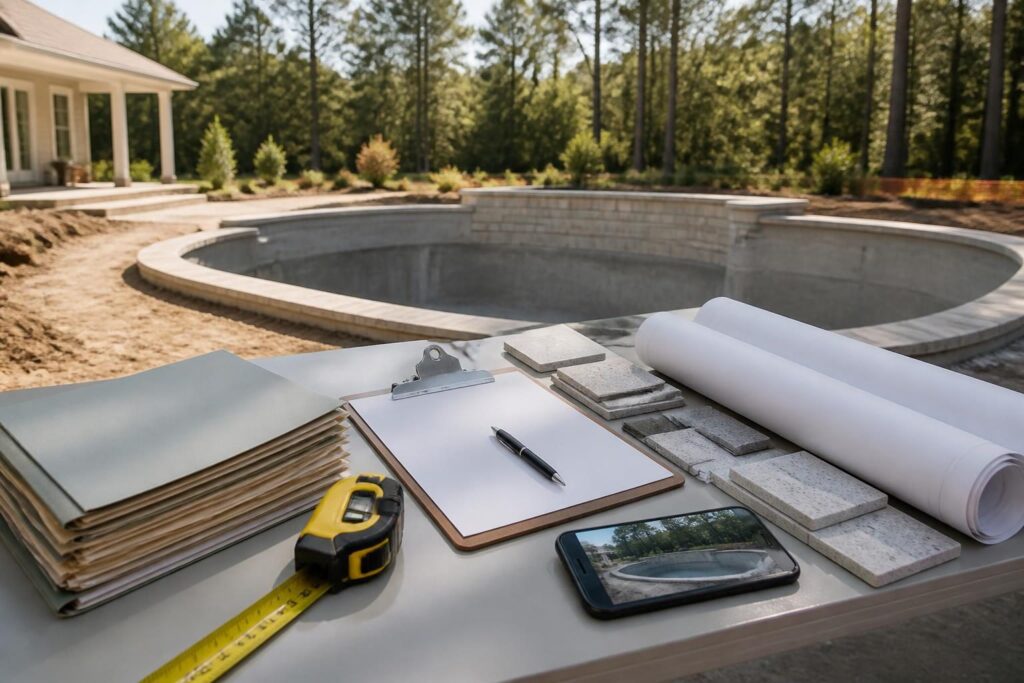
To document pool construction well, create a simple record of what was planned, what changed, and what was completed. Photos, measurements, daily notes, inspection records, material labels, invoices, and communications can help you understand the project later.

This record is not a substitute for a contract, inspection, engineering review, or legal advice. It gives you an organized factual history. North Carolina requirements can vary by jurisdiction, adopted code, property conditions, utilities, septic systems, flood zones, and project scope.
Start with a clear documentation system
Before work begins, choose one digital folder and one backup location. Use folders that follow the project sequence rather than storing every file in one large collection.
- 01 Plans and approvals: signed drawings, permits, revisions, and written approvals.
- 02 Daily records: dated notes, weather observations, site access details, and questions.
- 03 Photos and video: images grouped by date and construction stage.
- 04 Materials and equipment: labels, model numbers, delivery slips, and manuals.
- 05 Money and changes: invoices, receipts, payment records, and approved changes.
- 06 Inspections and testing: inspection notices, results, test reports, and correction records.
Name each file with the date, location, and subject. For example, “2026-08-14-east-wall-rebar.jpg” is easier to find than “IMG_4312.” Keep original files when possible. Avoid editing an image in a way that removes its date or other useful information.
A written pool construction document organization system can help you keep records consistent. Add a short index that lists the latest plan version, open questions, and documents still owed.
To document pool construction efficiently, update the index whenever a drawing, approval, invoice, or inspection record arrives. This small habit reduces confusion when several versions exist.
Photograph the site before and during construction
Take wide photographs from each side of the yard before mobilization. Include the home, driveway, fences, retaining features, trees, decks, irrigation components, utility areas, and nearby drainage paths. These images establish context.
Then take closer photographs of surfaces or features that could be covered, moved, or damaged. Include existing cracks, low spots, gates, steps, walls, landscape edging, and utility markers. Use a ruler or another familiar object when scale matters. Keep the object beside the feature, not in front of it.
Use repeatable photo points
Stand in the same locations at major stages. Useful stages include:
- Before equipment and materials arrive.
- Once layout markings are placed.
- When excavation is complete, before changes are concealed.
- With reinforcing steel and plumbing installed.
- Before concrete, backfill, or decking covers work.
- After equipment installation and final cleanup.
Photograph labels, valves, pipe routes, junction boxes, drains, lights, and equipment connections. Do not enter an excavation, climb unstable materials, open electrical equipment, or approach active machinery for a better image. Ask the contractor when a safe viewing point is available.
For underground work, photos should show both detail and location. A close-up may show a pipe label, while a wider image shows its position relative to the house or pool wall. A simple sketch can connect those images to the plan.
When you document pool construction with photographs, include the date and stage in the file name. A photo is more useful when another person can identify what it shows without guessing.
Record measurements and concealed work
Measurements make photographs more useful. Record the distance from fixed reference points, such as the house corner, property feature, or another permanent structure. Note the measurement method and the date.
Do not treat your measurements as a survey or engineering record. They are homeowner observations. A surveyor, engineer, licensed contractor, or local official may need to verify critical locations.
Before work is covered, ask what records will be provided for plumbing, reinforcement, drainage, electrical conduits, lighting, and equipment connections. Ask whether pressure testing or other testing applies to the work. Request the result, date, system tested, test conditions, and person or company responsible for the record.
For a focused review of underground lines, see this pool plumbing inspection checklist. It should supplement, not replace, the project’s approved plans and professional inspections.
Keep daily notes that separate facts from questions
A daily note does not need to be long. Record the date, people or trades present without making judgments, work observed, materials delivered, weather conditions that affected the site, and questions that need an answer.
Use factual wording. “Excavation stopped near the north side at 2:15 p.m.” is clearer than “The crew abandoned the work.” If you do not know why something happened, write “Reason not confirmed” and ask for clarification.
Useful daily-note prompts include:
- List the work planned for the day.
- Record the work actually completed.
- Identify areas that remain open or unfinished.
- Note changes from the current drawing.
- List materials or equipment that arrived.
- Record decisions needed from the homeowner.
- Note the next expected inspection, test, or approval.
Keep a separate question log. Give each question a number, date, responsible party, response, and status. Link the answer to a drawing, invoice, change document, photo, or approval when appropriate.
Daily notes help you document pool construction without turning ordinary site observations into conclusions. Keep facts, questions, and confirmed answers in separate fields.
Track plans, approvals, and construction changes
Save every plan version. Use a file name that includes the revision date or identifier. Keep the superseded version rather than deleting it. Mark the current version clearly, but confirm which version the project team is using.
Record approvals for layout, finishes, colors, equipment, lighting, decking, landscaping, drainage, and access. An approval should identify what was approved and any limits or assumptions. If a conversation happens by phone, send a short written summary and invite correction if your understanding is wrong.
Construction changes may affect scope, price, schedule, materials, dimensions, drainage, access, or future maintenance. Before approving a change, ask for the revised drawing or written description, reason for the change, cost effect, schedule effect, and required decision date.
This pool construction change order checklist covers the information homeowners should request before accepting a revision. Keep the signed or otherwise accepted version with the related invoice and communication.
Do not assume that a field conversation changes the contract. Follow the contract’s process for written approvals. If the change involves structural design, electrical work, drainage, septic protection, grading, or code requirements, ask the appropriate licensed professional or local authority to review it.
Save material labels, invoices, and payment records
Material records can matter during maintenance, replacement, troubleshooting, and warranty discussions. Photograph labels before packaging is discarded. Record manufacturer, product name, model number, serial number, color, finish, size, and installation location when available.
For equipment, save manuals and note the pump, filter, heater, control system, lighting transformer, valves, and other installed components. Keep delivery tickets if they identify quantities or substitutions. If a product differs from the plan, request written confirmation of the substitution and its effect.
Invoices should be easy to match to the contract and approved changes. Record the invoice date, amount, description, payment date, payment method, and related document. Avoid relying only on bank statements or text messages. Preserve the complete invoice and proof of payment together.
Build an inspection and approval record
Ask which inspections, permits, approvals, and test records apply to your project. The local inspections department is the right place to confirm current requirements and inspection status. North Carolina code documents and interpretations appear through the North Carolina Office of State Fire Marshal, but local implementation and the currently adopted code still require verification.
For each inspection or approval, record the date, type, result, document number if provided, correction items, responsible party, and closeout evidence. Save inspection cards, emails, signed forms, and approved plans. Do not describe an item as “approved” unless the responsible authority or professional has confirmed it.
Excavation and site work may also involve utility notifications, erosion control, stormwater, septic, or drainage issues. Keep relevant notices and approvals. North Carolina 811 provides the official utility-notification resource, while local authorities and qualified professionals can explain project-specific requirements.
Prepare a handover record while work is still visible
Do not wait until the final day to assemble records. At each stage, note missing documents and request them before the relevant person or trade leaves the project.
- Final plans and approved revisions.
- Permit and inspection records.
- Equipment manuals, model numbers, and serial numbers.
- Material labels and finish information.
- Test results for applicable systems.
- Approved change records and final invoices.
- Warranty terms and required maintenance conditions.
- Training notes for controls, cleaning, water care, and safety features.
- Photos of concealed work and final conditions.
After completion, keep the file where household members can access it. A later service technician may need more than a purchase receipt. The project record should show what was installed, where it is located, and which documents support it.
For a longer-term record list, review pool project records to keep after completion.
A calm record protects clarity
Good documentation is not about creating conflict. It helps everyone discuss the same drawing, date, measurement, material, or decision. Keep copies, use neutral language, and ask questions promptly. Store personal information securely, and avoid posting identifiable workers or private property details publicly.
When you document pool construction, remember that records support clarity but do not replace professional review. When a question involves permits, barriers, electrical work, excavation, drainage, septic systems, grading, or structural conditions, consult the local inspections department or a qualified specialist. Depending on the issue, that may include a licensed pool contractor, electrician, engineer, surveyor, septic professional, or other authorized expert. Build a Pool in North Carolina provides homeowner education, not project-specific professional advice.