
Finding pool leak detection clues homeowners can check can help you separate normal evaporation from a water-loss problem. A lower waterline does not always mean a plumbing leak. Hot weather, wind, rain, splashing, backwashing, automatic water features, and cover use can all change the level.

Homeowners can make useful observations without opening electrical equipment, digging near plumbing, or attempting a pressure test. The goal is to collect clear information for your pool professional. North Carolina properties also face changing weather, varied soil, drainage conditions, and different equipment layouts. Treat these steps as routine checks, not a substitute for professional diagnosis.
Start with safe pool leak detection clues homeowners can check
Begin with a simple baseline. Record the date, air temperature, weather, water level, pump schedule, cover status, and any recent maintenance. Use the same reference point each time, such as a mark on the tile or a photograph taken straight across the waterline.
Check the pool when people and pets are not using it. Avoid adding water during the observation period unless the level becomes a safety concern. If you must refill the pool, write down how much you added and when. That information helps a technician understand the pattern.
- Photograph the waterline from the same location.
- Record whether the pump is running or off.
- Note rain, wind, heat, humidity, and unusual splashing.
- Write down filter cleaning, backwashing, vacuuming, or equipment work.
- Look for wet areas that remain after normal rain or cleaning.
Do not remove electrical covers or reach into a running equipment area. Turn off the system and contact a qualified professional if you see damaged wiring, burning smells, standing water near electrical parts, or unsafe conditions.
Compare evaporation before assuming a leak
Evaporation is often the first explanation to examine. A pool can lose water during warm, dry, or windy conditions. Waterfalls, spillways, raised spas, fountains, and uncovered pools may lose more water than a still pool with a properly fitted cover.
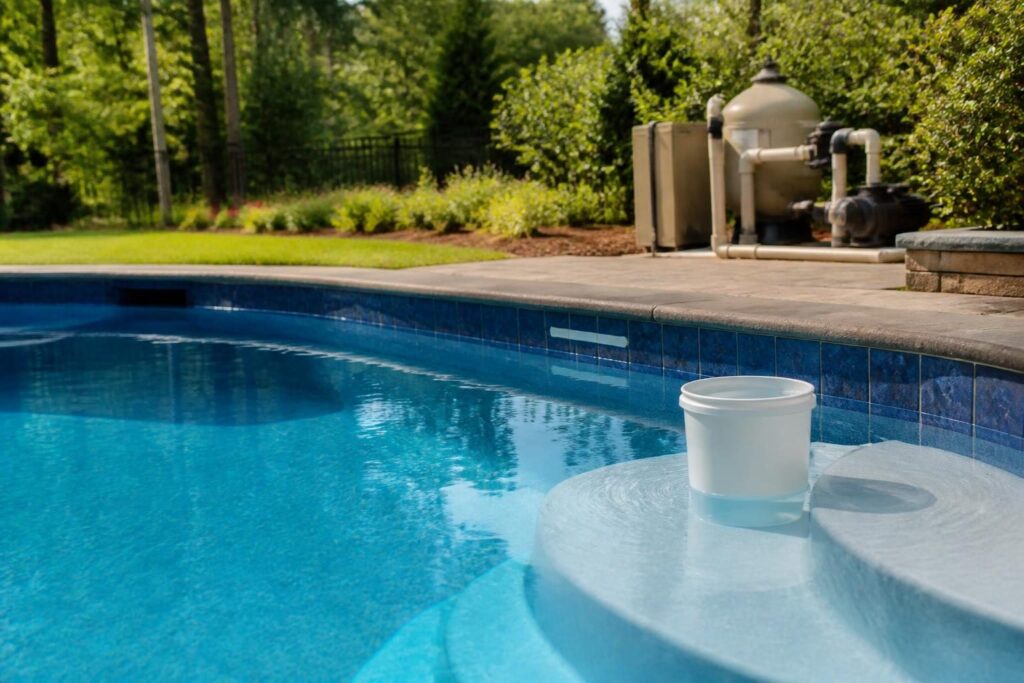
A simple bucket comparison can provide a useful clue. Place a clean, weighted bucket on a pool step. Add pool water to the bucket so its level is close to the pool level. Mark both levels with removable tape or a pencil on the outside of the bucket. Keep the bucket stable and away from children.
Compare the pool and bucket after a similar period, such as one or two days. Do not treat the result as a precise measurement. Sun, wind, splashing, a loose bucket, and different water temperatures can affect the comparison. If the pool level falls noticeably more than the bucket, record the result and seek professional advice.
Make the comparison more useful
- Use the same pump and cover settings throughout the test.
- Keep swimmers out of the pool during the comparison.
- Avoid testing immediately after heavy rain or major maintenance.
- Repeat the comparison under similar conditions if the result is unclear.
- Photograph the starting and ending levels.
A covered pool may show a different evaporation pattern from an uncovered pool. Follow the cover manufacturer’s safety and operating instructions. A cover is not automatically a substitute for a compliant barrier or supervision. For broader water-care guidance, review the North Carolina humidity pool maintenance guide.
Watch the equipment area for water-loss patterns
Equipment-area observations are another group of pool leak detection clues homeowners can check. Look around the pump, filter, heater, valves, salt system, automatic filler, and visible connections. A small drip may appear only while the pump runs. Another leak may leave a damp spot after the system shuts down.
Use a flashlight during a dry period. Look for fresh moisture, mineral deposits, rust-colored marks, softened soil, or water collecting below a fitting. Do not rely on one observation. Photograph the area and note whether the pump was operating.
Some water near equipment is expected. Filter cleaning, backwashing, relief valves, condensate, and normal drainage can discharge water by design. The meaning depends on the equipment type and installation. Do not block a drain, cap a discharge, tighten unfamiliar fittings, or adjust valves without instructions from the equipment maker or a qualified pool professional.
Questions for the equipment check
- Does moisture appear only when the circulation system runs?
- Does the pump basket lose prime after the system sits?
- Do visible joints show deposits or repeated dampness?
- Has the automatic water-level device been adjusted recently?
- Does a nearby drain or discharge point operate during normal cycles?
If the equipment pad floods, water reaches electrical components, or the pump behaves differently, stop and get qualified help. Electrical diagnosis and repairs belong to an appropriately licensed professional.
Track water-level patterns across different operating conditions
Water-level behavior can narrow the next question. These pool leak detection clues homeowners can check include recording the level with the pump running, after the system has been off, and after a normal swimming day. These comparisons do not identify the leak location, but they may show when water loss changes.
For example, water loss that increases while the pump runs may point a professional toward pressure-side plumbing, equipment connections, or water features. Loss that continues while the system is off may require attention to the pool shell, fittings, skimmer area, or other components. These are investigation directions, not homeowner conclusions.
Also inspect the pool surroundings. Look for persistent wet soil, washed-out mulch, unusual plant growth, settled areas, damp decking joints, or water appearing downhill from the pool. Rain can create the same signs, especially on sloped lots. Compare the area after dry weather before assuming the pool caused it.
Water chemistry can add context. Frequent dilution may change test results, while a leak can require repeated top-offs. Keep copies of test results and refill notes. The CDC guidance on home pool water treatment and testing explains basic residential testing considerations. It does not diagnose structural or plumbing leaks. Seasonal debris can also affect observations; see this North Carolina pollen pool maintenance guide.
Document observations before requesting professional testing
Good records reduce guesswork. Create one page or digital note for each observation period. Include the pool’s approximate water level, weather, cover status, pump schedule, equipment condition, and any water added.
Use consistent descriptions. Instead of writing “the yard is wet,” write “a damp area remained beside the filter after two dry days; the pump ran from 8 a.m. to 4 p.m.” Avoid measuring beyond your ability or making claims about hidden conditions.
Useful records to gather
- Time-stamped photographs of the waterline and equipment pad.
- Evaporation comparison photos and notes.
- Water additions, hose use, and automatic-filler activity.
- Pump operating hours and water-feature settings.
- Recent service invoices, filter-cleaning notes, and repair records.
- Water-test results before and after repeated refilling.
- Weather notes, including rain, wind, and unusually hot periods.
Keep original photographs and avoid editing out surrounding details. If a professional performs testing, ask for the method used, the area tested, the limits of the result, and any recommended next step. Keep that report with your maintenance records.
Know when routine checks are no longer enough
Home observations cannot reliably locate a concealed plumbing leak or confirm a structural problem. Professional testing may involve specialized equipment, isolation of plumbing circuits, pressure testing, dye testing, acoustic methods, or other techniques. The correct method depends on the pool design and the suspected location.
Ask for an explanation before authorizing work. A useful conversation covers the suspected leak area, the proposed test, whether the system must be shut down, what the test can and cannot show, and how results will be documented. Request written findings when practical.
Stop routine testing and seek help promptly if water approaches electrical equipment, the pool shell appears damaged, the ground is sinking, a retaining structure changes, or a child-safety feature becomes unreliable. Keep people away from unsafe areas until a qualified professional evaluates them.
North Carolina requirements and professional responsibilities can vary by jurisdiction, property conditions, adopted codes, utilities, flood zones, septic systems, and project scope. For installation changes, excavation, electrical work, structural concerns, drainage, or repairs, consult the local inspections department and the appropriate licensed pool contractor, electrician, engineer, surveyor, or other qualified specialist. Build a Pool in North Carolina offers homeowner education, not a substitute for site-specific professional advice.