
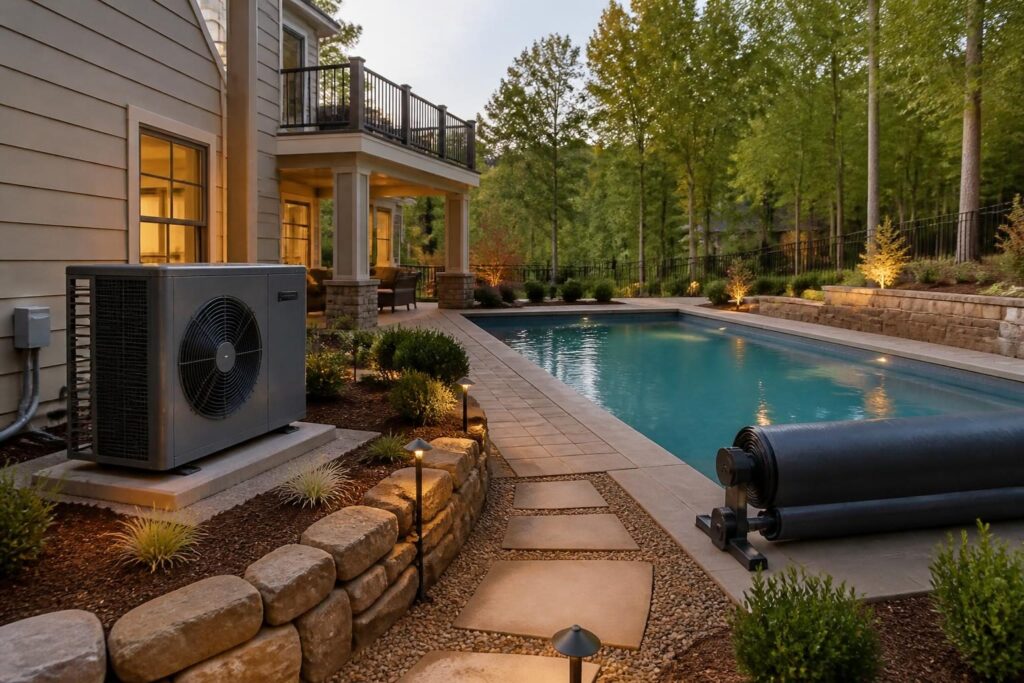
Good pool heater energy efficiency planning North Carolina starts before equipment arrives. Your choice depends on pool use, preferred water temperature, local weather, available utilities, equipment space, and the pool’s ability to hold heat.
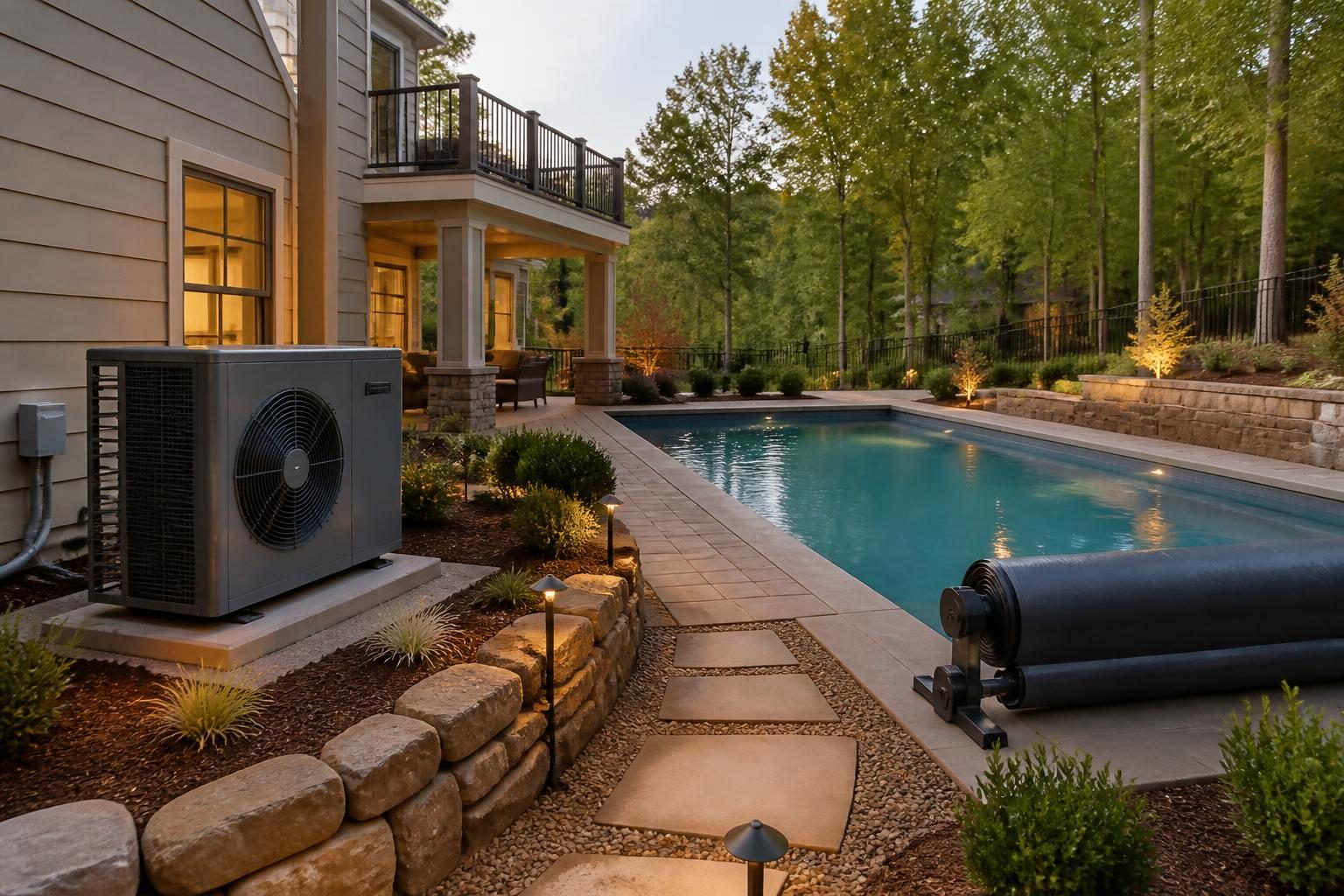
No heater guarantees a particular operating cost or swimming season. A useful comparison shows the assumptions behind each option. Ask the pool contractor and relevant licensed professionals to explain capacity, fuel or electrical needs, controls, maintenance, and installation limits in writing.
Start with how you plan to use the pool
Heating a pool occasionally differs from maintaining a preferred temperature throughout the season. Before comparing equipment, write down your intended use. Include the months you expect to swim, the days and times you want the pool ready, and whether comfort or lower energy demand matters most.
- Will you heat the pool for weekends, special events, or regular daily use?
- Do you expect to warm the water quickly, or can the heater operate over a longer period?
- Will you cover the pool when nobody swims?
- How much shade, wind, and nighttime exposure will the water receive?
- Will a spa or separate body of water need different temperatures?
These answers affect heater sizing and controls. A heater that suits occasional use may not match a plan for frequent temperature maintenance. A qualified pool professional can evaluate pool volume, surface area, desired temperature, outdoor conditions, and equipment performance.
Compare heat pumps, gas, and solar-assisted systems
Heat pumps
A pool heat pump transfers heat from outdoor air into pool water. It usually needs electrical service and works best when outdoor air conditions support heat transfer. Performance can vary with air temperature, humidity, wind, water temperature, and the desired temperature increase.
Heat pumps may suit homeowners who value steady heating and have suitable electrical capacity. They can respond differently from combustion heaters, so ask about expected warm-up behavior under the conditions you expect in North Carolina. Request the manufacturer’s operating range and performance information for the proposed model.
Gas heaters
Gas systems create heat by burning fuel. Depending on the equipment and property, that fuel may be natural gas or propane. Gas heaters can offer strong heating output, but the project must account for fuel availability, gas-line sizing, venting, combustion air, clearances, and professional installation.
Ask which party will evaluate the fuel supply and install or modify the gas connection. A pool contractor may coordinate this work, but a qualified gas professional should confirm the installation requirements. Do not assume an existing household line has enough capacity for a pool heater.
Solar-assisted options
Solar-assisted heating uses solar collectors or another solar component to add heat. Its usefulness depends on roof or ground area, orientation, shading, mounting, plumbing distance, weather, and the temperature you want to maintain. Some designs use solar as a supplement rather than a complete replacement for another heat source.
Ask whether the proposal includes a backup heater, a controller, temperature sensors, and a realistic operating description for cloudy or cool periods. Review roof loading, penetrations, access, and future repair responsibilities with the appropriate contractor or professional.
Pool heater energy efficiency planning North Carolina should include the cover
A pool cover can reduce heat loss when the pool is not in use. It does not make every heating system efficient by itself, and you must select and use it correctly. The cover should match the pool shape, surrounding deck, storage plan, and safety requirements.
Ask how you will open, remove, and store the proposed cover. Also ask how you will keep it clear of equipment. If the pool has an irregular shape or attached spa, confirm how the cover handles those areas. A cover may also affect daily convenience. If homeowners find it difficult to use, they may use it less often than planned.
Safety requires separate attention. A cover does not automatically replace required barriers or other protective measures. Review local requirements with the inspections department and consult recognized safety guidance such as the Pool Safely safety tips.
Account for North Carolina operating conditions
North Carolina has varied conditions across the mountains, Piedmont, and coastal plain. A site’s elevation, wind exposure, shade, humidity, nighttime temperatures, and seasonal use can affect heating performance. Even nearby homes may have different results because their pools and landscapes behave differently.
Water temperature is only one part of the decision. Evaporation can remove heat, especially when wind crosses the water surface. Rain can change water temperature and chemistry. A shaded pool may gain less solar heat, while a sunny pool may gain more natural warmth but still lose heat overnight.
During pool heater energy efficiency planning North Carolina, ask the designer to document the assumptions behind any performance estimate. Request a clear explanation of what happens when the cover is off, the air is cool, the wind increases, or the pool sees frequent use. Treat estimates as planning tools, not promises of savings.
Review electrical, fuel, and equipment requirements
Heating equipment affects more than the heater itself. The proposal should identify required electrical circuits, disconnects, controls, grounding and bonding coordination, fuel lines, venting, gas regulators, condensate handling, and service clearances when applicable.
Ask a qualified electrician to evaluate and complete electrical work. Ask the appropriate qualified professional to review gas work. Requirements can vary with the equipment, property, utility, adopted code, and local inspection process.
- What voltage, amperage, breaker, and circuit arrangement does the equipment require?
- Will the existing electrical service support the new load?
- Will the heater share controls with the pump, automation system, or spa?
- What fuel pressure and line capacity are required?
- Where will combustion exhaust or equipment discharge go?
- What service space must remain open after landscaping?
- Which permits and inspections apply to the electrical or fuel work?
Keep these answers with the equipment schedule and contract. You can also review related control questions in this guide to pool automation system planning.
Check the site before selecting a heater
Equipment location can influence noise, pipe length, service access, drainage, and the cost or complexity of utility connections. A heater should not sit wherever open space happens to exist. Confirm that technicians can reach it and that future planting will not block airflow, access, vents, or controls.
Drainage also matters. Rainwater, roof runoff, condensation, and equipment discharge need a place in the site plan. Poor drainage can affect the equipment pad and surrounding soil. Review the proposal alongside your pool drainage planning documents.
For a sloped property, the heater location may depend on retaining walls, grading, access routes, or longer utility runs. Coordinate those conditions before construction instead of treating them as a late equipment decision.
Compare proposals without relying on a savings promise
A commercial comparison should make each proposal easier to evaluate. Ask every supplier or contractor to provide the same categories of information. This prevents a lower initial price from hiding missing electrical, fuel, controls, cover, or installation work.
| Item to compare | Questions for the proposal |
|---|---|
| Heating method | What heat source does the contractor propose, and what operating conditions affect it? |
| Capacity | How did the designer select the size for this pool, cover, use pattern, and target temperature? |
| Utilities | What electrical, gas, propane, plumbing, venting, or solar work does the proposal include? |
| Controls | How will the heater coordinate with pumps, sensors, schedules, and automation? |
| Site work | Does the proposal include the pad, drainage, access, permits, inspections, and restoration? |
| Ownership | What maintenance, service access, warranty terms, and replacement parts should you expect? |
For the pump portion of the system, ENERGY STAR provides information about certified pool pumps and energy-performance considerations. Review its pool pump guidance, then ask your pool professional how the proposed pump and heater will operate together.
Build a practical decision record
Before approving equipment, create a short record of your priorities and assumptions. Note the target use season, preferred water temperature, cover plan, heater type, utility requirements, controls, equipment location, and unresolved questions.
Keep copies of equipment model numbers, manufacturer documentation, drawings, utility evaluations, permits, inspection records, and written exclusions. If a proposal uses words such as “efficient,” “low cost,” or “fast heating,” ask what those words mean for your pool and which conditions apply.
Also confirm who handles startup, owner instruction, winter operation, freeze protection, service contacts, and troubleshooting. North Carolina requirements can vary by jurisdiction, property conditions, adopted code, utilities, and project scope. Do not treat a general comparison as confirmation that a proposed installation has approval.
Pool heater energy efficiency planning North Carolina works best when it connects equipment choice with real use, site conditions, and utility capacity. Before committing, consult the local inspections department about permits and current requirements. Use a licensed electrician for electrical work, an appropriate qualified gas professional for fuel work, and a qualified pool contractor for pool-system sizing and coordination. A solar installer, engineer, surveyor, or other specialist may also help with site-specific questions.