
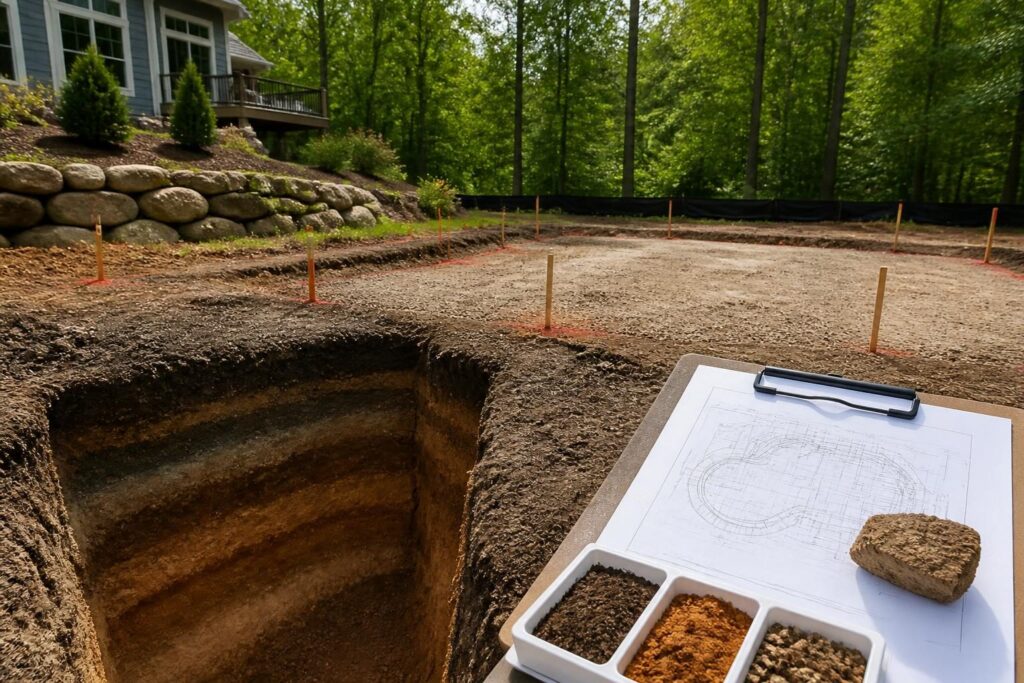
Soil testing before pool construction in North Carolina can help homeowners understand conditions that a basic visual inspection may miss. Soil, fill, groundwater, buried rock, and slope can all affect the assumptions behind a pool design.
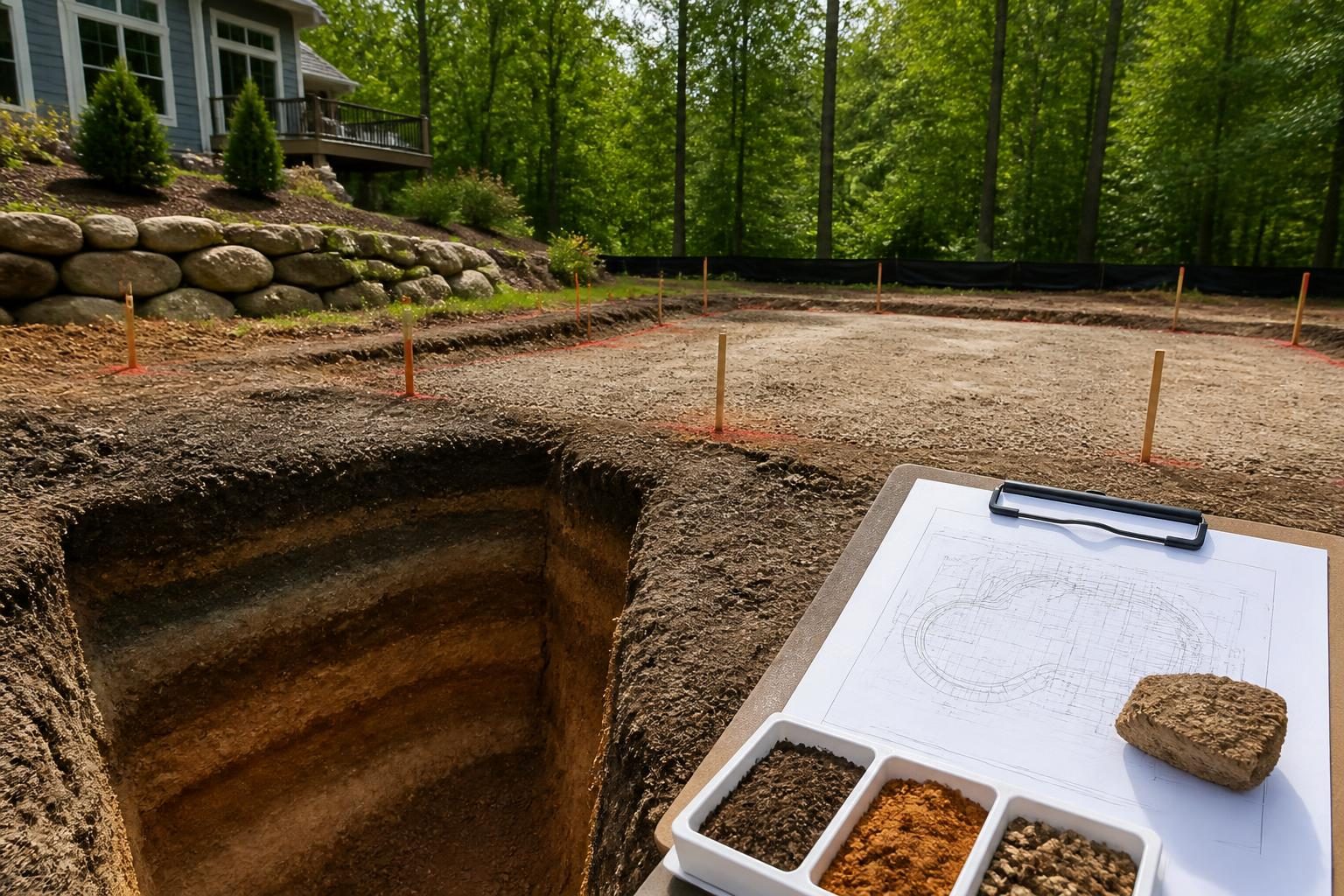
A pool proposal often begins with a preferred shape, depth, and location. Those choices still need to work with the actual ground. North Carolina properties can vary across short distances, especially where yards include old grading, imported fill, steep terrain, or wet areas.
Testing does not remove every construction risk. It can, however, provide useful information before excavation begins. The right level of review depends on the property, pool type, site history, local requirements, and advice from qualified professionals.
Why soil conditions deserve attention before excavation
An in-ground pool transfers loads into the surrounding ground. The excavation also changes how water moves through the site. If the soil differs from the design assumptions, the project may need revised details, additional drainage measures, different excavation methods, or professional review.
Common concerns include loose fill, soft or wet soil, dense clay, rock, buried debris, and changes between soil layers. A sloping lot adds another question: whether the pool, deck, nearby structures, and any required walls can remain stable while the ground is opened.
Homeowners should not treat a soil report as a guarantee of performance. It is one piece of project information. A licensed engineer, pool designer, surveyor, or other qualified specialist must determine whether testing is appropriate and how results affect the design.
Site history can reveal hidden uncertainty
Ask whether the yard was graded, used for a previous structure, or built with imported material. Look for clues such as abrupt changes in vegetation, low spots, patched areas, old driveways, buried concrete, or records of removed structures.
Neighbors may know whether the area has experienced standing water or major grading. County records, previous site plans, septic documents, and survey information may also help. These sources provide useful leads, but they do not replace current site evaluation.
Conditions that can change design assumptions
Several ground conditions deserve specific questions. The goal is not to diagnose soil from a handful of observations. Instead, ask how the project team will identify and respond to conditions that could affect excavation or support.
- Fill: Imported or reworked soil may vary in depth, density, and material. Fill can include soil from different sources or buried debris.
- Groundwater: A high water table or perched water can enter an excavation. Seasonal conditions may differ from what is visible during a dry visit.
- Rock: Rock near the planned pool can affect excavation equipment, spoil handling, vibration planning, and the working area.
- Slope: A hillside can create elevation changes, runoff paths, and temporary excavation concerns. It may also require coordinated wall or drainage design.
- Soft or organic soil: Poorly supported areas may need evaluation before the final pool and deck details receive approval.
- Clay and expansive behavior: Some clay soils change volume with moisture. The design professional should determine whether this matters for the proposed work.
These conditions do not automatically make a pool impractical. They do make early communication more important. For related background, see this guide to pool excavation and North Carolina soil conditions.
When should a homeowner ask for soil testing?
There is no single test that fits every North Carolina pool site. A homeowner should ask about testing before approving a final design when the property presents visible or documented uncertainty.
Testing deserves early discussion when the lot has a steep slope, a history of grading, known fill, frequent wetness, nearby retaining structures, unusual settlement, or exposed rock. It also makes sense when the pool will sit close to a home, wall, driveway, outbuilding, or other feature that excavation could affect.
Ask before excavation if the proposal relies on assumptions about soil bearing, groundwater, stable excavation sides, or the need for special support. If a professional says testing is unnecessary, ask what observations or records support that decision and how the team will handle unexpected conditions. Soil testing before pool construction in North Carolina can clarify which assumptions need professional review before excavation.
Questions to ask before ordering a test
- What specific design question will the test answer?
- Who will select the testing method and review the results?
- Where will samples or test locations sit relative to the pool, deck, walls, and equipment area?
- Could conditions vary between the test location and the excavation?
- Will the report address fill, groundwater, rock, soil strength, or slope concerns?
- Who receives the report, and will the design professional acknowledge it in writing?
- What happens if excavation reveals materially different conditions?
A qualified professional can explain whether a geotechnical investigation, test pits, borings, drainage review, survey, or another evaluation suits the site. Do not choose a test only because it costs less.
Documentation homeowners may request
Good records help connect site information to design decisions. Ask for documents that identify the information used, the professional responsible for interpreting it, and any limits on its use.
- A written soil or geotechnical report, if testing occurs.
- Test locations shown on a sketch, survey, or site plan.
- Notes about observed fill, groundwater, rock, debris, or soft areas.
- Recommendations affecting excavation, drainage, support, backfill, or construction sequencing.
- Updated drawings when soil information changes the pool or site design.
- Written clarification of exclusions, such as areas not tested or seasonal conditions not observed.
- Photographs and dated notes from pre-excavation site reviews.
- Copies of approved plans, permits, inspection records, and change documentation.
Do not assume that a marketing description, verbal comment, or generic plan provides a soil evaluation. Ask whether the document addresses this site and whether a licensed professional prepared or reviewed it.
Keep the records with your other project documents. The broader North Carolina pool site evaluation checklist can help organize questions about slope, access, drainage, utilities, and existing site features.
How soil information can affect the construction plan
Soil information can influence more than the pool shell. It may affect the location, finished elevations, excavation limits, equipment access, temporary protection, drainage paths, and the sequence of work.
For example, groundwater may require a plan for managing water during excavation. Rock may change the equipment needed or the expected handling of excavated material. Fill may prompt closer review of support and backfill assumptions. A slope may require coordination among the pool designer, surveyor, engineer, and drainage professional.
These are design and construction decisions. Homeowners should not direct excavation methods or structural changes without qualified advice. Instead, request an explanation of the proposed response and ask whether revised drawings, permits, or professional approvals are needed.
Land disturbance can also create runoff and erosion concerns. North Carolina homeowners can review the NC DEQ Erosion and Sediment Control Manual for general state guidance. Confirm local applicability and project-specific requirements with the appropriate authority.
A practical pre-excavation soil checklist
Use this checklist during design meetings and before excavation is scheduled:
- Confirm the planned pool location on a current site plan or survey.
- Describe visible wet areas, slopes, settlement, exposed rock, and past grading.
- Ask whether the proposed design assumes native soil or existing fill.
- Request a written opinion on whether site-specific testing is appropriate.
- Identify who will review testing and incorporate recommendations into the design.
- Ask how groundwater, rock, unsuitable soil, and buried debris will be documented.
- Review how runoff and exposed soil will be managed during construction.
- Clarify the process for stopping work, notifying the homeowner, and revising plans if conditions differ.
- Keep reports, drawings, photographs, approvals, and written decisions together.
Also review how ground conditions could affect the schedule. Excavation uncertainty is one factor among many that can change a pool project’s sequence and duration; this article explains other pool construction timeline factors.
Questions about cost and changes
Testing and excavation allowances should be clear before work starts. Ask whether the proposal includes site investigation, ordinary excavation, rock removal, water management, spoil removal, backfill, drainage, and restoration. The exact scope may vary, so compare definitions rather than relying on headings alone.
Ask how an unexpected condition becomes a documented change. The written process should identify the condition, proposed response, design responsibility, cost effect, and approval point. Homeowners should have time to seek professional advice before authorizing work that changes the design or price.
A low allowance does not prove that a project is underpriced, and a high allowance does not prove that every condition received evaluation. Request enough detail to understand what the proposal includes and what remains uncertain.
What to do when excavation reveals different soil
Unexpected soil is a reason to pause and document, not a reason to guess. Ask the project team to record the location, depth, photographs, visible water, material description, and affected design area.
Then ask which qualified professional should review the condition. Depending on the issue, that may include a pool engineer, geotechnical professional, surveyor, drainage specialist, or other licensed expert. Updated plans may help before the work continues.
Keep copies of notices, reports, revised drawings, approvals, and written authorizations. Avoid changing the scope through informal instructions that cannot be reviewed later.
Final questions before the excavator arrives
Before excavation, confirm that the project team has current plans, required approvals, utility information, access arrangements, and a documented response to known soil concerns. North Carolina requirements can vary by jurisdiction, adopted code, property conditions, utilities, septic systems, flood zones, and project scope.
For additional permit questions, review the guidance on North Carolina pool permits before design begins, then verify current requirements with your local inspections department.
Soil testing before pool construction in North Carolina is best viewed as a planning question, not a guarantee. Consult the local inspections department, a licensed pool contractor, electrician, engineer, surveyor, septic professional, or other qualified specialist when site conditions or project decisions fall within their expertise. Build a Pool in North Carolina provides homeowner education, not a substitute for site-specific professional advice.
When the site includes fill, groundwater, rock, or a slope, ask about soil testing before pool construction in North Carolina early enough to inform the design rather than reacting after excavation begins.