
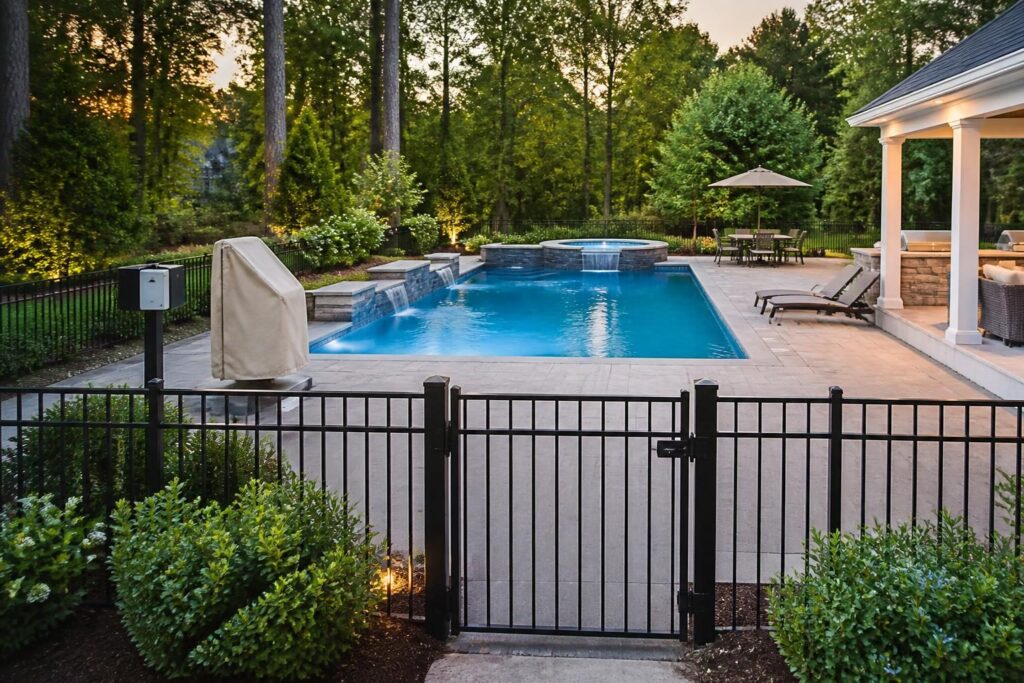
A fence is important, but layers of pool safety give North Carolina families a broader plan. Supervision, barriers, alarms, covers, water skills, CPR knowledge, drain awareness, household rules, and emergency preparation each address a different risk.
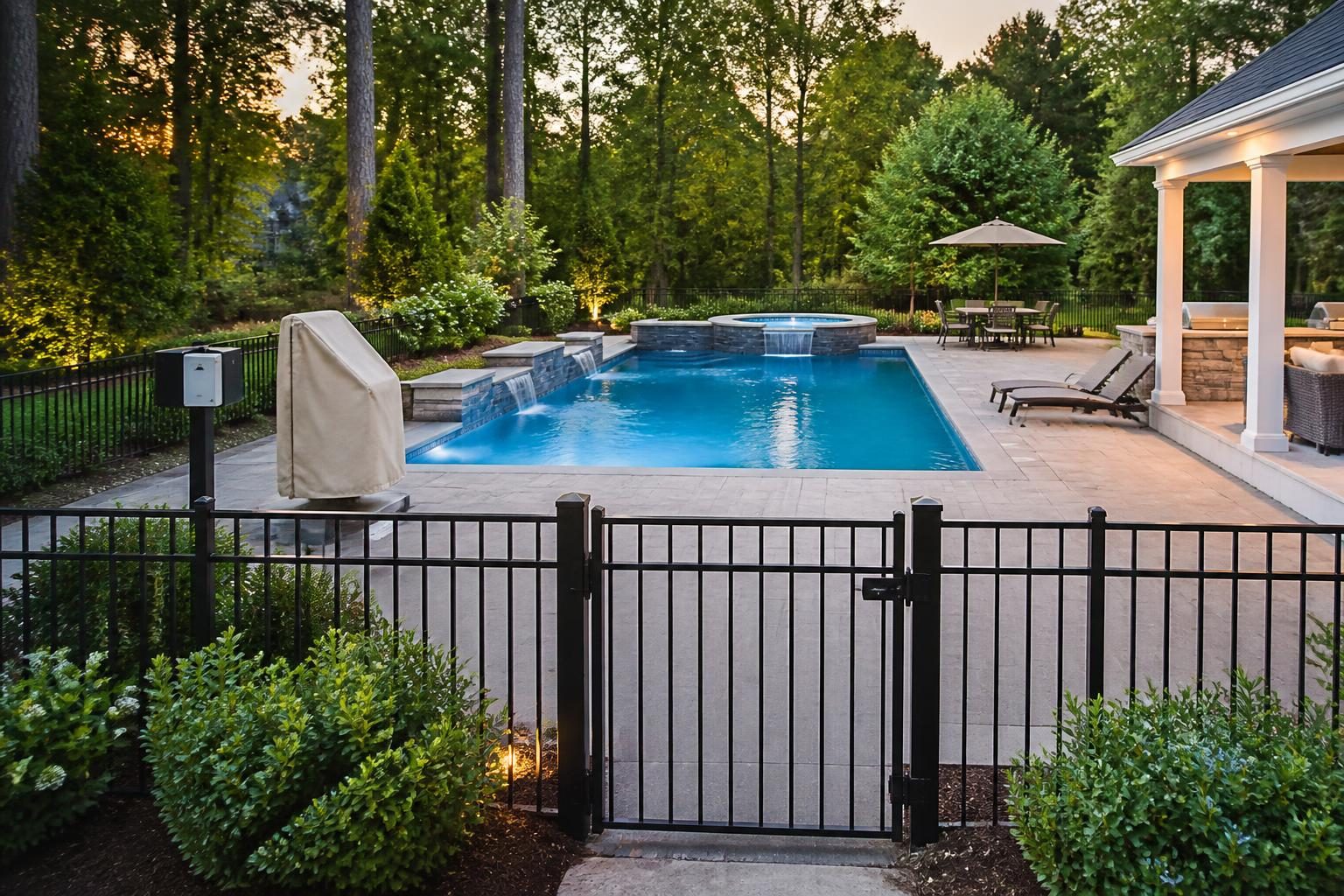
No single measure replaces the others. Someone can leave a gate open. Someone can ignore an alarm. A strong swimmer can become tired or injured. The goal is to make an unexpected entry less likely and a response more organized if something goes wrong.
Requirements can vary by local jurisdiction, adopted code, property conditions, and project scope. Use general guidance as a starting point, then confirm current requirements with the local inspections department and qualified safety professionals. A complete plan treats layers of pool safety as connected controls, not separate products.
Start with active supervision
Supervision means watching swimmers closely and staying within a practical reach of young or inexperienced swimmers. It is not the same as being nearby, checking a phone, or assuming another adult is watching.
Choose one responsible adult as the water watcher. That person should stay focused on the pool and know who is swimming. Rotate the role deliberately rather than letting responsibility become unclear. Active supervision remains one of the most important layers of pool safety, even when other safeguards are in place.
- Keep phones and distractions away from the water-watching position.
- Count swimmers when they enter and leave.
- Take regular breaks, but assign another adult before stepping away.
- Watch children even when they use flotation equipment.
- Keep young children close enough for immediate assistance.
During gatherings, write down who is watching and when the handoff occurs. A visible schedule can help prevent the common assumption that someone else has noticed a child near the water.
Build physical barriers as pool safety layers
Barriers create separation between the pool and the home, yard, or neighboring areas. A barrier may include a fence, wall, approved cover, or other access-control feature, depending on the property and applicable requirements.
Review the planned barrier as a system. Look for climbable objects, low areas, landscaping, furniture, stored equipment, and other features that could make access easier. The best location may change as the yard develops.
For a detailed planning discussion, see the guide to pool barrier planning in North Carolina. It explains why fences, gates, doors, alarms, and covers should be considered together.
Pay attention to gates and doors
Gates should remain closed and controlled when the pool is not in use. Check that the latch works as intended and that household members understand its purpose. Do not prop a gate open for convenience.
Doors from the house can create another access route. Ask the local inspections department or a qualified professional which alarms, locks, self-closing features, or other measures apply to your situation. Do not assume a product label proves local compliance.
Use alarms and covers as safety backups
Alarms can alert you to an unexpected entry or an open access point. They do not replace supervision or a physical barrier. Select equipment for the specific location, such as the pool surface, gate, door, or surrounding area.
Before relying on an alarm, learn its controls, battery needs, test method, range, and limitations. Test it according to the manufacturer’s instructions. Household members should know what the sound means and what action follows.
A pool cover can reduce access and help keep debris out, but treat it as a safety measure only when you select and use the product correctly. Ask a qualified pool professional how the cover works, what it supports, and when you must secure it. Keep people and pets away from a cover that the manufacturer did not design for that use.
The U.S. Consumer Product Safety Commission discusses connected protective measures in its Pool Safely safety tips. Its guidance is useful for household planning, while local requirements remain a separate question.
Teach water skills without reducing supervision
Swimming lessons can improve confidence and basic water skills. They do not make a child “drown-proof,” and they do not remove the need for an attentive adult.
Match instruction to age, ability, health, and comfort. Practice simple actions such as turning toward the wall, reaching for an exit, floating, calling for help, and returning to shallow water. A qualified instructor can help set suitable goals.
Explain that flotation devices have limits. Some devices support learning or recreation, but they can shift, deflate, or create false confidence. Use equipment as directed and continue close supervision.
Adults also benefit from knowing the pool’s layout. Identify shallow and deep areas, ladders, steps, exits, lighting controls, and emergency equipment before guests arrive. If the design includes different depths or special features, discuss them with swimmers in plain language. Related design considerations appear in this guide to pool shape and depth planning.
Teach drain awareness and safe equipment habits
Pool drains and suction fittings are part of the circulation system. Swimmers should not sit on, cover, or play near them. Long hair, loose clothing, and body parts can create hazards around damaged or improperly maintained fittings.
- Tell children never to play with drain covers or suction outlets.
- Keep loose hair secured during swimming.
- Tell swimmers to leave the water if a fitting appears broken, loose, or missing.
- Stop using the pool and seek qualified help if circulation equipment behaves unexpectedly.
- Keep service areas controlled and follow manufacturer instructions.
Do not attempt an electrical, plumbing, or structural repair based only on a general article. A licensed professional can evaluate equipment and identify the appropriate response.
Set rules that are easy to follow
Rules work best when they are short, visible, and repeated before swimming. Adapt them to the ages, abilities, and needs of your household.
- No swimming alone.
- Walk near the pool.
- No pushing, wrestling, or breath-holding contests.
- Keep glass and unsafe objects away from the deck.
- Ask before entering the pool.
- Leave the water during storms or when directed by the supervising adult.
- Keep gates closed and return safety equipment after use.
Consider a written guest briefing. It can identify the water watcher, explain the entry rules, and show where household members store emergency supplies. Clear expectations are especially helpful when visitors are unfamiliar with the pool.
Prepare for a real emergency
Emergency planning should be practical enough to use under stress. Post the property address near a phone and ensure that adults know how to give directions to the pool. Confirm that gates and access routes will not delay emergency responders.
Keep a stocked first-aid kit, a reaching or throwing aid, and a charged phone in a known location. Do not rely on a flotation toy as rescue equipment. Choose supplies that household members can use safely. These emergency steps complete the broader layers of pool safety around daily supervision and access control.
CPR and rescue readiness
Adults who regularly supervise a pool should consider recognized CPR and first-aid training. Training should cover how to respond to a drowning emergency, contact emergency services, and provide care within the responder’s level of training.
Practice a simple household response:
- Alert others and remove the person from danger if it is safe to do so.
- Call emergency services and send someone for the emergency kit.
- Begin appropriate first aid or CPR based on current training.
- Continue until help arrives or another trained responder takes over.
Do not delay emergency care while searching for a manual or trying to diagnose the event. Local emergency guidance and certified instruction should control your household plan.
Review every layer through the season
Safety measures can weaken as children grow, furniture moves, landscaping changes, or equipment ages. Inspect the barrier, gate, alarms, cover, lighting, rescue equipment, and posted rules at the start of the swimming season and after major yard changes.
Keep a small record of tests, repairs, training dates, and replacement needs. Note who completed each check and what still requires professional attention. This record supports maintenance without suggesting that a checklist alone proves compliance.
For broader public-health guidance on supervision, barriers, and healthy swimming, review the CDC’s pool safety and health recommendations.
These layers of pool safety work best when they support one another. A barrier limits access, supervision catches problems, alarms provide notice, skills help swimmers respond, and emergency planning improves the chance of a fast response.
When your plan involves barriers, alarms, covers, electrical equipment, drainage, or local inspections, consult the local inspections department, a licensed pool contractor, electrician, engineer, surveyor, or other qualified specialist as appropriate. Confirm current North Carolina and local requirements before relying on any design or safety measure.