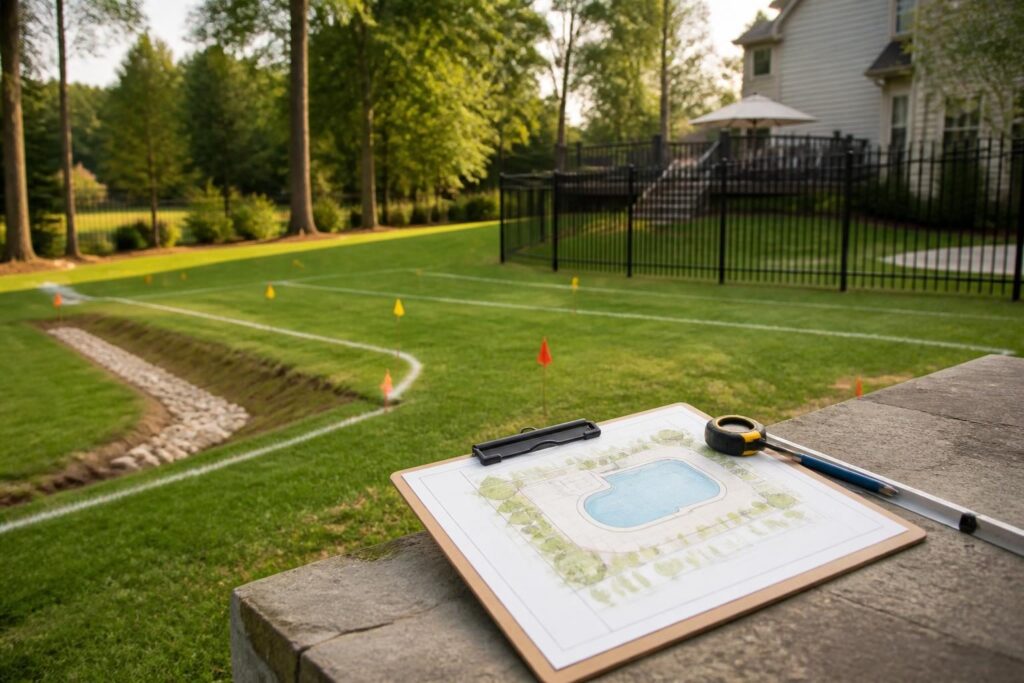
Asking North Carolina pool permit questions before final design can prevent expensive changes later. A backyard pool may involve building, electrical, grading, erosion-control, septic, well, flood-zone, and zoning concerns. The right answers depend on your local authority having jurisdiction, or AHJ. This term usually means the local department that reviews and enforces applicable requirements.
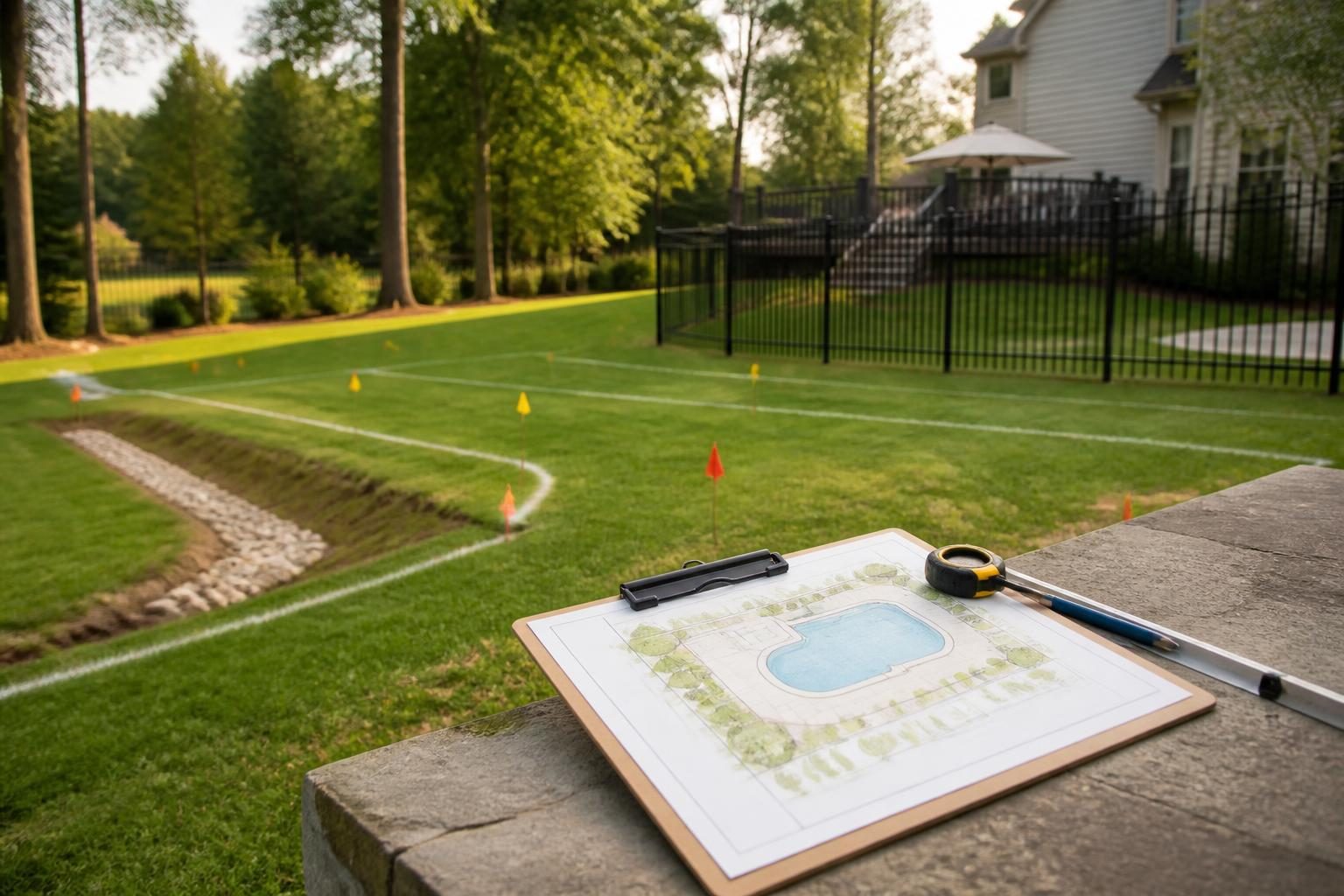
Do not assume a pool company’s standard plan answers every local question. Rules and review processes can vary by county, city, project scope, property conditions, and adopted code. Contact the appropriate local office before you approve a final layout or schedule excavation.
Why contact the local authority before design?
The early design stage is when changes are easiest to make. Moving a pool later may affect retaining walls, patios, fencing, drainage, utilities, equipment lines, and landscaping. A permit conversation can also identify documents the reviewing office expects, such as a site plan, survey, grading information, septic records, or electrical details.
Start with the inspections department or permitting office that serves the property. Ask whether another office must review part of the work. Depending on the site, that may include zoning, environmental health, stormwater, erosion and sediment control, floodplain staff, or the utility authority.
For general code documents and interpretations, review the North Carolina Office of State Fire Marshal resources. These materials do not replace a local determination. Confirm which code edition and local interpretation apply to your project.
Bring basic property information
- Property address and parcel identification, if available.
- A rough drawing showing the proposed pool, house, lot lines, driveways, and major slopes.
- Known septic, well, utility, easement, stream, drainage, or flood-zone information.
- Questions about the proposed pool type, deck, fence, equipment pad, and related structures.
North Carolina pool permit questions about the application
Permit names and application steps can differ between jurisdictions. Ask the local office to describe the complete approval path, not only the first form. Some projects may require separate applications or reviews for building, electrical, land disturbance, grading, or related site work.
- Which department accepts the initial pool application?
- What permits or separate reviews may apply to this scope of work?
- What site plan, survey, construction drawings, or engineering documents do you need?
- Who must prepare, sign, or seal each document?
- Does the proposed deck, retaining wall, screen enclosure, or equipment shelter change the review?
- Are there local zoning setbacks, easements, height limits, or lot-coverage concerns to check?
- How should revisions, substitutions, and change orders reach the reviewing office after approval?
Ask for the answer in writing when possible. Keep the email, application instructions, plan comments, receipts, and approved drawings in one project folder. Written records help you compare the installed work with the approved plan.
A useful starting point is the North Carolina pool planning guide. Use it for broader preparation, then confirm project-specific details with local officials.
Questions about the site, excavation, and drainage
A pool changes the ground. Excavation removes soil, construction traffic can compact areas, and rain can move sediment. Slopes may require special design or review. Existing drainage patterns can also affect neighbors, foundations, driveways, and the pool shell.
Before finalizing the pool location, ask these North Carolina pool permit questions:
- Is a land-disturbance, grading, or erosion-control review required?
- Does the site’s slope or soil condition require a survey, plan, or engineer?
- How should stormwater be managed during and after construction?
- Are there limits on directing water toward a property line, street, ditch, or neighboring lot?
- Are retaining walls, swales, drainage pipes, or other improvements part of the approval?
- Could a floodplain, stream, wet area, or drainage easement affect the location?
- What inspections or approvals must occur before backfilling or covering work?
Ask who will prepare erosion and sediment measures. The NC DEQ erosion and sediment control manual provides state guidance, but local requirements and site-specific decisions still need verification.
Utility locating is another pre-excavation step. Contact NC 811 before digging and follow its current process. A utility locate does not answer every private-line question, so ask how to identify privately owned lines, irrigation, septic components, and well piping.
Septic and private-well questions before choosing a layout
Properties with septic systems or private wells need extra coordination. The pool, deck, equipment pad, excavation, and drainage changes may interact with the system’s approved area. Do not rely on a rough assumption about where those components are located.
Contact the county environmental health office or another appropriate local authority before committing to the design. Ask:
- What records show the septic tank, drainfield, repair area, and approved wastewater layout?
- Do setbacks or clearance requirements apply to the pool and related excavation?
- Could the proposed pool affect future septic repair or replacement access?
- What professional should evaluate the site if records are incomplete or conditions have changed?
- How should you address private-well location, well access, and drainage around the well?
North Carolina Environmental Health provides statewide resources about onsite wastewater and private wells. The state environmental-health site is a useful reference, but the county office should confirm property-specific requirements.
Electrical, equipment, fence, and deck decisions
Pool equipment often includes pumps, filters, heaters, lighting, controls, and other electrical components. The equipment location can affect wiring routes, disconnects, drainage, noise, access, and the size of an electrical service. Have a properly qualified professional evaluate and perform electrical work.
Ask the inspections department and electrician these North Carolina pool permit questions:
- What electrical permit and inspection process applies?
- Which equipment and lighting details must appear on the plans?
- Where should plans show bonding, grounding, disconnects, and equipment?
- Will the existing electrical service support the planned loads?
- Does a service change require a separate utility or electrical review?
Barrier planning should happen before the pool shape is final. A barrier is a fence, wall, gate, cover, or other safety feature designed to limit unsupervised access. Local requirements control. Ask which barriers apply to the pool, doors, gates, ladders, raised decks, and other access points.
Also ask:
- When will the barrier inspection occur?
- Must the fence or gate appear on the permit plan?
- Could a patio, retaining wall, screen enclosure, or house door affect the barrier arrangement?
- What must remain accessible for inspection and safe equipment service?
Federal guidance can help frame a safety discussion. The CPSC residential pool barrier guidelines are not a substitute for the local code or inspection department.
Questions to ask the pool contractor about permits
Permit responsibility should be clear before signing or paying for design work. A contractor may prepare drawings, submit applications, coordinate inspections, or perform only part of that work. Do not infer responsibility from a sales conversation.
- Who applies for each permit?
- Who pays application, revision, inspection, and resubmittal fees?
- Which plans will I receive before construction begins?
- Who schedules each inspection, and how will the contractor document results?
- What happens if the approved plan changes during construction?
- Who handles correction notices or requests for additional information?
- Which licensed professionals perform electrical, structural, surveying, engineering, or septic-related work?
Record names, dates, permit numbers, approved plans, inspection results, and change documents. You can also review the questions to ask a pool builder before hiring, while keeping the permit discussion specific to your property and jurisdiction.
A practical pre-design permit checklist
Use this sequence before approving the final drawing:
- Identify the local inspections department and other reviewing offices.
- Ask North Carolina pool permit questions about permits, plans, inspections, setbacks, and site reviews.
- Confirm septic, well, utility, easement, slope, drainage, and flood-zone information.
- Have qualified professionals review electrical, structural, grading, or septic concerns.
- Coordinate the pool, equipment, fence, deck, drainage, and access routes on one plan.
- Obtain approvals before excavation, electrical installation, or work that the local office says must wait.
- Keep the approved plan and update the project file when conditions or materials change.
Before excavation or construction, confirm the current requirements directly with the local inspections department. Consult a licensed pool contractor, electrician, engineer, surveyor, septic professional, or other qualified specialist when the site or work requires expertise beyond general homeowner planning. Build a Pool in North Carolina can help homeowners organize questions, but local officials and licensed professionals must provide project-specific direction.